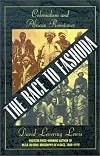
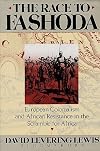
The Race to Fashoda
by David L. Lewis
On This Page
Description
The fortress of Fashoda is on an obscure junction of the Nile, but from 1870 onwards, because of its strategic position and the rise of European colonialism, it became the subject of conflict between the rival Western powers of Britain, France, Belgium, Germany and Italy.Tags
Recommendations



























Member Reviews
An interesting new look at the famous Fashoda incident, which brought Britain and France to the brink of war.
However Lewis approaches it much more broadly, and indeed the Fashoda incident itself is only a hook on which he hangs an exploration of African resistance to colonial incursions, and the extent to which African rulers were able to manipulate the European invaders. Although they lost in the end, they were far from passive bystanders.
Lewis also suggests that Fashoda, rather than avenging Gordon or re-establishing Egyptian political and economic dominance over Sudan, was the main reason for Kitchener's rush to Omdurman and beyond. French attempts to establish an east-west route across Africa would have blocked Rhodes' ambitions for show more a Cape to Cairo route. Although I have read widely on Sudan, I think it is the first time I had realised the significance of Fashoda in this regard.
An excellent book in all respects. My only slight criticism would be of the maps. Main places are marked on the maps, but still the text refers to smaller places which are not marked. Irritating. show less
However Lewis approaches it much more broadly, and indeed the Fashoda incident itself is only a hook on which he hangs an exploration of African resistance to colonial incursions, and the extent to which African rulers were able to manipulate the European invaders. Although they lost in the end, they were far from passive bystanders.
Lewis also suggests that Fashoda, rather than avenging Gordon or re-establishing Egyptian political and economic dominance over Sudan, was the main reason for Kitchener's rush to Omdurman and beyond. French attempts to establish an east-west route across Africa would have blocked Rhodes' ambitions for show more a Cape to Cairo route. Although I have read widely on Sudan, I think it is the first time I had realised the significance of Fashoda in this regard.
An excellent book in all respects. My only slight criticism would be of the maps. Main places are marked on the maps, but still the text refers to smaller places which are not marked. Irritating. show less
Ratings
Members
- Recently Added By
Author Information
3 Works 578 Members
Common Knowledge
- Canonical title
- The Race to Fashoda
- Original publication date
- 1987 (1st edition) (1st edition)
- People/Characters
- Jean-Baptiste Marchand
- Important places
- Kodok, Western Nile, South Sudan (formerly called Fashoda); African colonies; France; United Kingdom
- Important events
- Fashoda Crisis (1898); Scramble for Africa; Western imperialism
- Disambiguation notice
- Full title (1987): The race to Fashoda : European colonialism and African resistance in the scramble for Africa / David Levering Lewis; reprinted 1995 wi... (show all)th slightly different title: The race to Fashoda : colonialism and African resistance / David Levering Lewis
Classifications
Statistics
- Members
- 100
- Popularity
- 324,076
- Reviews
- 1
- Rating
- (4.25)
- Languages
- English
- Media
- Paper
- ISBNs
- 5
- ASINs
- 1