On This Page
Description
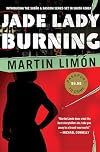
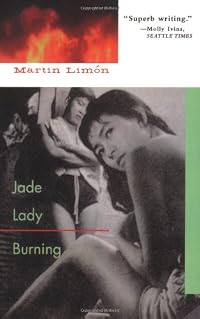
Meet Sergeants George Sueño and Ernie Bascom in their first investigation, set in 1970s South KoreaAlmost twenty years after the end of the Korean War, the US Military is still present throughout South Korea, and tensions run high. Koreans look for any opportunity to hate the soldiers who drink at their bars and carouse with their women. When Pak Ok-suk, a young Korean woman, is found brutally murdered in a torched apartment in the Itaewon red-light district of Seoul, it looks like it show more might be the work of her American soldier boyfriend. Sergeants George Sueño and Ernie Bascom, Military Police for the US 8th Army, are assigned to the case, but they have nothing to go on other than a tenuous connection to an infamous prostitute. As repressed resentments erupt around them, the pair sets out on an increasingly dangerous quest to find evidence that will exonerate their countryman.
From the Trade Paperback edition.. show less
Tags
Recommendations









































Member Reviews
This is a very intriguing and original mystery set in Korea in the early 1970s and told through the narration of George Sueño, one of the American 8th Army CID investigators. He and his partner, Ernie Bascom, have been tasked with discovering who murdered Miss Pak Ok-Suk, a young Korean prostitute who worked the bars frequented by American soldiers.
George and Ernie are tremendously flawed characters but believable for the context of the time and the place. They drink, stop off at clubs for quickies with the local bar girls, and overlook much of the corruption they witness on a daily basis. They are total opposites and it makes sense that George narrates the story since he is the analytical one and Ernie is the stubborn one. This show more combination seems to work well for them and despite more dead bodies, threats and even physical assaults they continue their investigation. It becomes clear to George that the only reason for this to be happening is because it must involve powerful people.
I think many readers may be offended by the portrayal of the Korean business “girls” but these woman were struggling to survive and the American soldiers were a good way to do it. This was a great noir style, gritty mystery set in an exotic location and realistically combining both Korean and US Army culture. show less
George and Ernie are tremendously flawed characters but believable for the context of the time and the place. They drink, stop off at clubs for quickies with the local bar girls, and overlook much of the corruption they witness on a daily basis. They are total opposites and it makes sense that George narrates the story since he is the analytical one and Ernie is the stubborn one. This show more combination seems to work well for them and despite more dead bodies, threats and even physical assaults they continue their investigation. It becomes clear to George that the only reason for this to be happening is because it must involve powerful people.
I think many readers may be offended by the portrayal of the Korean business “girls” but these woman were struggling to survive and the American soldiers were a good way to do it. This was a great noir style, gritty mystery set in an exotic location and realistically combining both Korean and US Army culture. show less
Heavy on the military procedure but South Korea in the 1970's is full of characters, contradictions, culture, and the US Army. ML does a good job with his detectives. It was a little disconnected in a couple of places but it moved along fast and the chase scene near the end and how the book ended worked. Some deaths, some escapes, some happy, some sad, with surprises. A good first effort and I am looking forward to the second.
So, in the end, I liked this book...a lot. I like police procedurals and this one was made even better because I had a sense for the location. I lived in Korea for 8 years and Limón gives the reader an accurate portrait of the dysfunctional relationship between everyday Korean life and the culture of the American military.
Why 3 stars? The writing is clumsy, especially at the beginning and the pace was slow. In the end, however, the author seemed to find firmer footing and I could not put the book down. I am going to try more of his books because I get a sense his books will only get better and I like the two main characters of Sueño and Bascom.
Why 3 stars? The writing is clumsy, especially at the beginning and the pace was slow. In the end, however, the author seemed to find firmer footing and I could not put the book down. I am going to try more of his books because I get a sense his books will only get better and I like the two main characters of Sueño and Bascom.
First Line: Ernie and I finished the black-market case in Pusan, did a little celebrating, and caught the Blue Line night train back to Seoul.
It's not often that you'll see me reading books set in Asia during the Vietnam War era whose main characters are young men more concerned with having fun in the red light district than anything else. But in my quest to be a more complete armchair traveler, I've been branching out. I'd heard good things about Martin Limón's series from trusted sources, and I had the vague notion that these books were about more than two young men spending all their money on wine, women and song in Seoul. I was right.
The bizarre murder of a young Korean prostitute has the Eighth Army command spluttering and show more twitching. Although the investigation should have been left to the Korean police, the young woman was known to have many clients amongst the American servicemen stationed in and around Seoul. The Korean media would have a field day with this American angle, so the Eighth Army's criminal investigation division takes charge. Sergeants George Sueño and Ernie Bascom are put in charge of finding out who murdered the young woman.
Their investigation leads them to Itaewon, the section of Seoul known for alcohol, music and prostitution. It is a neighborhood with which the two are very familiar. Sueño is Hispanic, from East LA. He appreciates the housing, the regular meals, and the pay of Army life. He speaks some Korean and is often told that he's "too soft" on the natives. This is probably because he sees the country differently from most:
" I loved Korea. It was a whole new world of different tastes and smells, and a different, more intense way of looking at life. People here didn't take eating and breathing for granted. They were fought for."
He also sees his job differently from most. He doesn't want to focus solely on black market cases, and "phone in" his results. He truly cares:
" I owed something to Miss Pak Ok-suk and Mr. Watkins. Not because they were friends or relatives but just because they had been assigned to me: my responsibility. I'd be damned if I'd take the easy route and not do my best for them."
There's a lot to like about Sergeant George Sueño. On the other hand, I felt that his partner, Ernie Bascom, was greatly under-utilized almost to the point of being a non-entity. There was just enough information given about him to lead me to believe I might be looking at a prime crime fiction psychotic.
The pace of the book seemed very leisurely most of the time, but I didn't really mind because Limón had immersed me in a completely alien atmosphere, and I wanted to check everything out slowly. As the two investigators strolled through bars asking questions and sometimes accepting propositions from the prostitutes they talked to, I wasn't concerned with their morals. They were no different than tens of thousands of other young men finding themselves with money in their pockets and light years away from home.
What did concern me was the clipped, almost military flow of the language that transported me into the midst of an absorbing mystery in unfamiliar country-- a mystery populated with interesting people, in particular Sergeant George Sueño. I definitely want to continue with this series, one reason being that I have to find out if I'm right about Ernie Bascom! show less
It's not often that you'll see me reading books set in Asia during the Vietnam War era whose main characters are young men more concerned with having fun in the red light district than anything else. But in my quest to be a more complete armchair traveler, I've been branching out. I'd heard good things about Martin Limón's series from trusted sources, and I had the vague notion that these books were about more than two young men spending all their money on wine, women and song in Seoul. I was right.
The bizarre murder of a young Korean prostitute has the Eighth Army command spluttering and show more twitching. Although the investigation should have been left to the Korean police, the young woman was known to have many clients amongst the American servicemen stationed in and around Seoul. The Korean media would have a field day with this American angle, so the Eighth Army's criminal investigation division takes charge. Sergeants George Sueño and Ernie Bascom are put in charge of finding out who murdered the young woman.
Their investigation leads them to Itaewon, the section of Seoul known for alcohol, music and prostitution. It is a neighborhood with which the two are very familiar. Sueño is Hispanic, from East LA. He appreciates the housing, the regular meals, and the pay of Army life. He speaks some Korean and is often told that he's "too soft" on the natives. This is probably because he sees the country differently from most:
" I loved Korea. It was a whole new world of different tastes and smells, and a different, more intense way of looking at life. People here didn't take eating and breathing for granted. They were fought for."
He also sees his job differently from most. He doesn't want to focus solely on black market cases, and "phone in" his results. He truly cares:
" I owed something to Miss Pak Ok-suk and Mr. Watkins. Not because they were friends or relatives but just because they had been assigned to me: my responsibility. I'd be damned if I'd take the easy route and not do my best for them."
There's a lot to like about Sergeant George Sueño. On the other hand, I felt that his partner, Ernie Bascom, was greatly under-utilized almost to the point of being a non-entity. There was just enough information given about him to lead me to believe I might be looking at a prime crime fiction psychotic.
The pace of the book seemed very leisurely most of the time, but I didn't really mind because Limón had immersed me in a completely alien atmosphere, and I wanted to check everything out slowly. As the two investigators strolled through bars asking questions and sometimes accepting propositions from the prostitutes they talked to, I wasn't concerned with their morals. They were no different than tens of thousands of other young men finding themselves with money in their pockets and light years away from home.
What did concern me was the clipped, almost military flow of the language that transported me into the midst of an absorbing mystery in unfamiliar country-- a mystery populated with interesting people, in particular Sergeant George Sueño. I definitely want to continue with this series, one reason being that I have to find out if I'm right about Ernie Bascom! show less
Noir it is, and not a better setting for it: US army bases in Korea circa early 70s. This mystery has a lot going for it: piquant characters, humor and heart, but it dragged sometimes. There were dangling facts (who took those incriminating photos? Kimiko?) but it gets four stars from me for the way it reverses sleaze - those we expect to be sleazy are complex and those we expect to uphold civic values - are corrupt. The corrupt, on the other hand, have evolved a different system altogether.
The end:chilling.
The end:chilling.
I came to this book from other Asian detective stories, and when I realised the US military involvement I didnt expect to like it. However it grew on me.
The main characters are believable and not beset with the relationship problems that haunt many detectives.
Being young GI's they face a different set of challenges that make the story engaging and interesting, and show a side of Korea I hadnt seen before
The main characters are believable and not beset with the relationship problems that haunt many detectives.
Being young GI's they face a different set of challenges that make the story engaging and interesting, and show a side of Korea I hadnt seen before
Limon knows his turf, the world of American soldiers stationed in Korea in the late 1960s and early 1970s. HE really brings it to life in this noir mystery, the first of an ongoing series.
Members
- Recently Added By
Lists

Best Crime Fiction
262 works; 39 members
Author Information

34+ Works 955 Members
Series

Belongs to Publisher Series
Common Knowledge
- Canonical title
- Jade Lady Burning
- Original publication date
- 1992
- People/Characters
- George Sueño; Ernie Bascom; Jake Burrows; Felix Slabem; Frank Winkle; Johnny Watkins (show all 11); Tom Kurz; Milt Gorman; Fred Lindbaugh; Clarence T. Bohler; Harvey Strange
- Important places
- South Korea
- Epigraph
- "Ship me somewhere's east of Suez, where the best is like the worst, Where there aren't no Ten Commandments, an' a man can raise a thirst"
~ " Mandalay" Rudyard Kipling - Dedication
- For Aaron, Maria and Michelle
- First words
- We finished another black-market case in Pusan, did a little celebrating, and caught the Blue Line night train back to Seoul.
- Last words
- (Click to show. Warning: May contain spoilers.)It's only when the rice wine flows, and won't stop, that I think of Kwok and Miss Pak, and the Jade Lady dances, burning in my soul.
Classifications
Statistics
- Members
- 209
- Popularity
- 155,822
- Reviews
- 10
- Rating
- (3.55)
- Languages
- English
- Media
- Paper, Ebook
- ISBNs
- 5
- ASINs
- 5