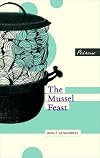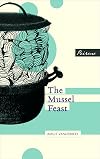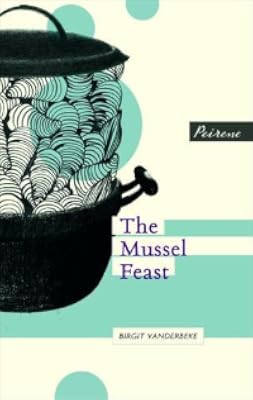
The Mussel Feast
by Birgit Vanderbeke
On This Page
Description
The modern German classic that has shaped an entire generation.A mother and her two teenage children sit at the dinner table. In the middle stands a large pot of cooked mussels. Why has the father not returned home? As the evening wears on, we glimpse the issues that are tearing this family apart.'I wrote this book in August 1989, just before the Fall of the Berlin Wall. I wanted to understand how revolutions start. It seemed logical to use the figure of a tyrannical father and turn the show more story into a German family saga.' Birgit VanderbekeWhy Peirene chose to publish this book: 'I love this monologue. It's the first Peirene book which made me laugh out loud with tears in my eyes. The author lays bare the contradictory logic of an inflexible mind. This is a poignant yet hilarious narrative with a brilliant ending.' Meike Ziervogel'We are playing catch-up here with something of a contemporary European classic.' David Mills, Sunday Times'The novella brilliantly renders both the power of the revolutionary moment and the uncertainty of the future it unleashes.' Jane Yager, Times Literary Supplement'This is one of those books that doesn't tell us what to think, but sets us off thinking . . . Who writes this kind of nuanced work in Britain?' Nicholas Lezard, Guardian'Sinister, funny and heartening, this taut novella reflects, within the microcosm of the family, the dissolution of the East German state, with an insight, economy and controlled fury that have made it a modern German classic.' Chris Schuler, Independent'There is a political edge to Vanderbeke's provocative examination of patriarchal violence, and part of the power of this darkly comic tale is how well it succeeds as an allegory for political tyranny.' Lucy Popescu, Independent on Sunday'Astute, darkly funny, provocative, often uncomfortable in its devastating depiction of patriarchal oppression but ultimately uplifting.' Pam Norfolk, Lancashire Evening Post'An extraordinary book, the story unspooled with masterful restraint, and written with simplicity and precision.' Francesca Segal, StandpointSHORTLISTED FOR THE INDEPENDENT FOREIGN FICTION PRIZE 2014WINNER OF THE SCHLEGEL-TIECK PRIZE FOR GERMAN TRANSLATION 2014FOYLES BOOKS OF THE YEAR 2013. show lessTags
Recommendations






























Member Recommendations
RidgewayGirl Similar feel of rising dread, although in this book the narrator is all too reliable.
Member Reviews
"Suddenly I no longer wanted him to come home"
By sally tarbox on 12 December 2016
Format: Kindle Edition
A mother and her teenage daughter (the narrator) and son are gathered round the table, on tenterhooks, waiting for Father's return from a business trip. And very quickly the reader sees that this is no normal family dynamic: the happy, easy-going life of the last few days is dissipating as they await the heavy presence of the head of the house.... And as his return is delayed, the conversation and memories start to reveal the truth.
The author wrote this just before the fall of The Berlin Wall in 1989: "I wanted to understand how revolutions start. It seemed logical to use the figure of a tyrannical father and turn the story into a show more German family saga."
And the analogies between the two situations are there throughout: the constant fear that he can hear their rebellious thoughts; the way that they are encouraged to inform on one another, to garner his praise, causing them to distrust each other, and not join forces against him...
A short (105p) but powerful work which I read in one sitting show less
By sally tarbox on 12 December 2016
Format: Kindle Edition
A mother and her teenage daughter (the narrator) and son are gathered round the table, on tenterhooks, waiting for Father's return from a business trip. And very quickly the reader sees that this is no normal family dynamic: the happy, easy-going life of the last few days is dissipating as they await the heavy presence of the head of the house.... And as his return is delayed, the conversation and memories start to reveal the truth.
The author wrote this just before the fall of The Berlin Wall in 1989: "I wanted to understand how revolutions start. It seemed logical to use the figure of a tyrannical father and turn the story into a show more German family saga."
And the analogies between the two situations are there throughout: the constant fear that he can hear their rebellious thoughts; the way that they are encouraged to inform on one another, to garner his praise, causing them to distrust each other, and not join forces against him...
A short (105p) but powerful work which I read in one sitting show less
In this slender novel by German author Birgit Vanderbeke, a son, daughter and their mother wait for the man of the house to return from a business trip. For this reunion dinner, the mother has prepared mussels. As they prepare the mussel feast and then wait for his arrival, they begin to talk to each other. Narrated by the daughter, the book begins by giving a picture of a household that relaxes a bit when the father is out of town, with informal mealtimes and an easier routine, but there are soon ominous hints that life with this man is maybe harsher than is usual. As they wait at the table around the bowl of mussels, the three unhappy family members finally begin to speak honestly with one another and as the hour grows later and show more later, and it becomes evident that something has happened, the mood grows more convivial as what life is like for them with their father and husband is slowly revealed to be worse and worse.
The Mussel Feast reminds me of Herman Koch's The Dinner in its slowly rising level of unpleasantness. It's not over-blown, however, and the narrator is all too reliable. The story is told in one, breathless segment, with few paragraph breaks and enormous run-on sentences. This is a masterful work, with the sense of growing dread perfectly controlled right through the book's final sentences.
The Mussel Feast was shortlisted for the Independent Foreign Fiction Prize, the winner of which will be announced later this month. show less
The Mussel Feast reminds me of Herman Koch's The Dinner in its slowly rising level of unpleasantness. It's not over-blown, however, and the narrator is all too reliable. The story is told in one, breathless segment, with few paragraph breaks and enormous run-on sentences. This is a masterful work, with the sense of growing dread perfectly controlled right through the book's final sentences.
The Mussel Feast was shortlisted for the Independent Foreign Fiction Prize, the winner of which will be announced later this month. show less
One evening at dinnertime a family sit around the kitchen table waiting for Father to come home from work. The food on the table is a pot of mussels: it’s not something they particularly care for, but Father does, and so they accommodate him. But this time he’s late, and the family realizes they are waiting to eat food only Father likes, listen to music only he likes, obey rules only he thinks are important. The absurdity of the situation dawns on them.
It turns out Father is a full-blown narcissist, who rules his family with an endless parade of double standards that without fail end up in his favour. While the children are allowed to practice the piano (even though art and music are inferior to proper skills like engineering), show more they can only do so between the end of school and when Father comes home, for he wants peace and quiet. Father won’t visit his mother back in East Germany, for Father is a successful businessman and cannot be asked to put up with his poor Ossi mother and her sub-par living conditions. Father wants his children to get good marks at school -- that reflects well on him -- but when they do it’s not good enough: today’s subjects are watered-down versions of the ones Father had in his day, and so a good mark today really only translates to a middling-to-bad mark from his own schooldays, and approval is withheld.
Father excuses everything with the mantras of “this is how things should be in a proper family” and “appearances must be kept up”, and obedience is obtained on pain of punishment and violence. And because the family have been overaccommodating for so long, they don’t even realise how crooked they’ve grown placating someone who’ll never be satisfied. Until the night when they sit by themselves around the cooling mussels, increasingly less willing to slide into their role as Proper Family Members.
After finishing the book, I read that it was written as an almost allegorical tale of life in East Germany just before the Berlin Wall fell. Sure, why not? I didn’t spot that, and I actually think I would have found that a fairly cumbersome reading of the book. What I saw, and what I really liked, was the expert breakdown of a raging narcissist’s behavioral patterns, a dismantling of his power structures. I saw an excellent psychological portrait of abuse victims finally recalibrating their normal meters and recognizing their victimhood. And that, I thought, was very well done. show less
It turns out Father is a full-blown narcissist, who rules his family with an endless parade of double standards that without fail end up in his favour. While the children are allowed to practice the piano (even though art and music are inferior to proper skills like engineering), show more they can only do so between the end of school and when Father comes home, for he wants peace and quiet. Father won’t visit his mother back in East Germany, for Father is a successful businessman and cannot be asked to put up with his poor Ossi mother and her sub-par living conditions. Father wants his children to get good marks at school -- that reflects well on him -- but when they do it’s not good enough: today’s subjects are watered-down versions of the ones Father had in his day, and so a good mark today really only translates to a middling-to-bad mark from his own schooldays, and approval is withheld.
Father excuses everything with the mantras of “this is how things should be in a proper family” and “appearances must be kept up”, and obedience is obtained on pain of punishment and violence. And because the family have been overaccommodating for so long, they don’t even realise how crooked they’ve grown placating someone who’ll never be satisfied. Until the night when they sit by themselves around the cooling mussels, increasingly less willing to slide into their role as Proper Family Members.
After finishing the book, I read that it was written as an almost allegorical tale of life in East Germany just before the Berlin Wall fell. Sure, why not? I didn’t spot that, and I actually think I would have found that a fairly cumbersome reading of the book. What I saw, and what I really liked, was the expert breakdown of a raging narcissist’s behavioral patterns, a dismantling of his power structures. I saw an excellent psychological portrait of abuse victims finally recalibrating their normal meters and recognizing their victimhood. And that, I thought, was very well done. show less
It's a very short book — you can easily read it in two or three hours — but quite absorbing. It's written in a sort of Thomas Bernhard looping narrative style, with long run-on sentences and characters who don't have names, but are just identified by their relationship to the narrator ("mein Vater", "meine Mutter", "mein Bruder"). If you could imagine Thomas Bernhard as a teenage girl born in the fifties (scary thought!), this is how he might write. It's a pretty angry book too: probably only "mildly irritated" by Bernhard's demanding standards, but measured on any normal scale there's a serious quantity of anger built in to the narrator's slow dissection of what's wrong with the family she lives in.
Given the time and the place, show more it's fairly clear that we are supposed to read it more broadly than as a simple attack on selfish and abusive fathers/husbands. It's very hard to find stories that can survive the weight of a load of political symbolism shovelled on top of them without either the story or the politics seeming crude and bolted-on, but Vanderbeke handles it very subtly and leaves us to do most of the work. We have to draw our own parallels to what was going on in Germany at the end of the eighties without any direct help from the author, and we're free to ignore the symbolism altogether if we want to.
Very nicely done. And more than a slight echo of one or two German fathers I've met... show less
Given the time and the place, show more it's fairly clear that we are supposed to read it more broadly than as a simple attack on selfish and abusive fathers/husbands. It's very hard to find stories that can survive the weight of a load of political symbolism shovelled on top of them without either the story or the politics seeming crude and bolted-on, but Vanderbeke handles it very subtly and leaves us to do most of the work. We have to draw our own parallels to what was going on in Germany at the end of the eighties without any direct help from the author, and we're free to ignore the symbolism altogether if we want to.
Very nicely done. And more than a slight echo of one or two German fathers I've met... show less
I love a story that works fully at surface level and then just as fully as metaphor. Stylistically interesting, often wry and funny, and I think it achieves some of the insight it hoped for, in both expected and unexpected moments.
Shoutout to the reviewer who found it unsuccessful because revolutions mostly do not occur. The thing is, this one did.
Shoutout to the reviewer who found it unsuccessful because revolutions mostly do not occur. The thing is, this one did.
I don't know what would have happened if we'd been able to eat at six o'clock as usual. It's astonishing how people react when the routine is disturbed, a tiny delay to the normal schedule and at once everything is different.
This novella, which was originally published in 1990 and not translated into English until last year, is set in a home in West Berlin prior to the country's reunification. An unnamed woman and her teenaged son and daughter have prepared a feast of moules-frites (mussels with chips) for the head of the household, who promises to bring good news of a promotion to the top level of the company he works for. He does not appear at six o'clock, which is surprising given his usual promptness and rigidity, and instead of show more eating the sumptuous meal the three of them wait anxiously for his arrival. As time passes and as they become inebriated with drink they speak openly and critically about him, and slowly, in the manner of peeling away the layers of an onion, the man's tyrannical and monstrous behavior towards each of them is revealed.
This story of a dysfunctional family is enriched with symbolism, presumably of German society in the 1980s, which includes the gruesome description of the death throes of the mussels as they are boiled alive, and their increasingly distasteful appearance as they sit, uneaten, for hours afterward. The Mussel Feast is a striking and powerful work, and one which undoubtedly would reveal more on subsequent readings. show less
This novella, which was originally published in 1990 and not translated into English until last year, is set in a home in West Berlin prior to the country's reunification. An unnamed woman and her teenaged son and daughter have prepared a feast of moules-frites (mussels with chips) for the head of the household, who promises to bring good news of a promotion to the top level of the company he works for. He does not appear at six o'clock, which is surprising given his usual promptness and rigidity, and instead of show more eating the sumptuous meal the three of them wait anxiously for his arrival. As time passes and as they become inebriated with drink they speak openly and critically about him, and slowly, in the manner of peeling away the layers of an onion, the man's tyrannical and monstrous behavior towards each of them is revealed.
This story of a dysfunctional family is enriched with symbolism, presumably of German society in the 1980s, which includes the gruesome description of the death throes of the mussels as they are boiled alive, and their increasingly distasteful appearance as they sit, uneaten, for hours afterward. The Mussel Feast is a striking and powerful work, and one which undoubtedly would reveal more on subsequent readings. show less
The more I read, the more I kept thinking, "This is the German version of Ellen Foster."
I rarely read about a book/story ahead of time as I prefer to be surprised by the author & the story. Afterward, I read that the author wrote this as the division between East & West Germany was dissolving & not too long before the fall of the Berlin Wall. So, while the story is a teen talking about her family, it can be read as a symbolic look at life under tyranny with the hopes & glimpses of freedom soon to come. And what everyday life & rebellion look like in such circumstances. It works beautifully at both the micro & macro levels.
The writing style is what really makes this book sing. Unwinding layers reveal more with each pass. As a novella, show more it's also short enough to read in one sitting, which is perfect as it mirrors the timeline of the action in the book.
Such a well-done & completely satisfying novella. show less
I rarely read about a book/story ahead of time as I prefer to be surprised by the author & the story. Afterward, I read that the author wrote this as the division between East & West Germany was dissolving & not too long before the fall of the Berlin Wall. So, while the story is a teen talking about her family, it can be read as a symbolic look at life under tyranny with the hopes & glimpses of freedom soon to come. And what everyday life & rebellion look like in such circumstances. It works beautifully at both the micro & macro levels.
The writing style is what really makes this book sing. Unwinding layers reveal more with each pass. As a novella, show more it's also short enough to read in one sitting, which is perfect as it mirrors the timeline of the action in the book.
Such a well-done & completely satisfying novella. show less
Members
- Recently Added By
Lists

Short and Sweet
246 works; 24 members

Borderless Book Club
22 works; 2 members

Books Read in 2016
4,666 works; 199 members

Books Read in 2020
4,379 works; 124 members

Llibres que he llegit el 2026
45 works; 2 members
Author Information

25+ Works 857 Members
Some Editions
Awards and Honors
Series
Belongs to Publisher Series
Peirene Press (Turning Point: Revolutionary Moments, 10)
Piper (7400)
Common Knowledge
- Canonical title
- The Mussel Feast
- Original title
- Das Muschelessen
- Original publication date
- 1990
- Important places
- Berlin, Germany
- First words
- It was neither a sign nor a coincidence that we were going to have mussels that evening.
- Last words
- (Click to show. Warning: May contain spoilers.)She took the bowl, which had sat in front of us all evening with those vile mussels; she went into the kitchen with the mussels, and all we could hear were the shells rattling as my mother emptied the mussels into the dustbin, then she came back in and said to my borother, would you mind taking the rubbish out?
- Original language
- German
Classifications
Statistics
- Members
- 372
- Popularity
- 84,802
- Reviews
- 29
- Rating
- (3.84)
- Languages
- 13 — Catalan, Danish, Dutch, English, Finnish, French, German, Galician, Greek, Italian, Portuguese, Spanish, Swedish
- Media
- Paper, Ebook
- ISBNs
- 31
- ASINs
- 4