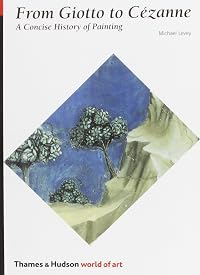
From Giotto to Cézanne: A Concise History of Painting
by Michael Levey
On This Page
Description
'Outstanding...accurate, free from prejudice, always neat, often stimulating. No better introduction to western painting has ever been produced.Tags
Recommendations
















Member Reviews
A beautifully illustrated and refreshingly unpretentious introduction to art history, Michael Levey's classic 1962 book displays a depth of thought and technique that makes you annoyed at the charlatans who populate the creative world today. It is reliably astute in charting the arc of Western painting from Giotto to Cézanne, introducing and discussing along the way an honour roll of potent artists, including da Vinci, Michelangelo, Bosch, Botticelli, Rubens, Rembrandt, Vermeer, Caravaggio, Turner, Monet, Gauguin and van Gogh, as well as some lesser lights whose work is instructive in Levey's narrative. There are some notable omissions in the paintings selected (the part on da Vinci doesn't discuss the Mona Lisa, van Gogh's doesn't show more discuss Starry Night, or The Astronomer for Vermeer, etc.) but the book is, as its subtitle says, a concise history rather than an encyclopaedia.
With Levey's guidance, the reader begins to see the development of Western artistic expression over hundreds of years, and can appreciate the use and importance of certain techniques, such as the always-revolutionary use of light, even in seemingly-benign landscapes and still lifes. You begin to understand the wealth and intricacy of the art form – and again, despair at the current state of the medium. You develop an ability to differentiate between masters and regular painters, and it makes you want to reclaim that much-abused word 'masterpiece' for the things that really deserve it. In our post-modern, relativistic (and anti-Western/anti-Christian) times, appreciation of this sort of thing helps you acquire something approaching taste, or at least an awareness of objective standards. As an interested novice who has always wanted to explore this kind of art but has been wary of the pseuds, I could scarcely have conceived of anything more suitable than Levey's book. show less
With Levey's guidance, the reader begins to see the development of Western artistic expression over hundreds of years, and can appreciate the use and importance of certain techniques, such as the always-revolutionary use of light, even in seemingly-benign landscapes and still lifes. You begin to understand the wealth and intricacy of the art form – and again, despair at the current state of the medium. You develop an ability to differentiate between masters and regular painters, and it makes you want to reclaim that much-abused word 'masterpiece' for the things that really deserve it. In our post-modern, relativistic (and anti-Western/anti-Christian) times, appreciation of this sort of thing helps you acquire something approaching taste, or at least an awareness of objective standards. As an interested novice who has always wanted to explore this kind of art but has been wary of the pseuds, I could scarcely have conceived of anything more suitable than Levey's book. show less
If I could, I would go and study art history. I dip into it now and then and come away with a few ideas, enough to be able to walk around a gallery and see things I might not understand without some background knowledge.
I have a fascination with that Renaissance period. There is something deeply moving about watching on canvas, a moment of transformation of human capabilities. Within a short span of historical time, the medieval world of order was torn asunder by a change in political methods -read Machiavelli and Burkhardt - at the same time, artists seemed to be released by new ideas, both scientific and profane.
Among the new ways: perspective was one; naturalism another.
The author mentions that frescoes were the domain of the show more Italians, apparently the warmer, drier weather was necessary for the technique of painting directly on wet plaster (hence fresco for fresh). Such a technique left a lasting effect because the pigment bonded with the plaster, it was stable, long lived and the colours remained vivid - as we can all see today in the works of Giotto, Raphael, Michelangelo etc. But then the northerners, the Dutch had been working the techniques of oil painting which greatly influenced the Italians later - we see this in Titian and Caravaggio.
I love the subtle changes where the influence of a style or a method can be seen over time. this book is dense on paintings all crammed on the page, and the text is brief, but informative on each painter, their influence, their schools, their methods and interests. One such observation is the way a method or stylistic achievement will go from necessary to pastiche of itself. Perspective, valuable for its naturalistic elements when used well, was often uses with architectural forms that later became weird and dominated the subject. It's fun to scan Carlo Crivelli's Annunciation of 1486 and its absurd effects of perspective and architectural forms all over the image. Once classical ideas had been introduced, Boticelli had in the Birth of Venus for the first time ever, moved away from any religious motif and gone completely pagan in the late 1480s. Though he still worked on religious themes throughout his career.
I could go right through the history up to Cezanne, but the most interesting was the early and late Renaissance for me. So I'll just say that this is a handy little reference. Well written, lots of picture examples, clear in its understanding of the period. It was first published in the 1960s. I think that was a great era of books on art for the lay person. Education to a broad audience seemed a strong motivation. Where did that go? show less
I have a fascination with that Renaissance period. There is something deeply moving about watching on canvas, a moment of transformation of human capabilities. Within a short span of historical time, the medieval world of order was torn asunder by a change in political methods -read Machiavelli and Burkhardt - at the same time, artists seemed to be released by new ideas, both scientific and profane.
Among the new ways: perspective was one; naturalism another.
The author mentions that frescoes were the domain of the show more Italians, apparently the warmer, drier weather was necessary for the technique of painting directly on wet plaster (hence fresco for fresh). Such a technique left a lasting effect because the pigment bonded with the plaster, it was stable, long lived and the colours remained vivid - as we can all see today in the works of Giotto, Raphael, Michelangelo etc. But then the northerners, the Dutch had been working the techniques of oil painting which greatly influenced the Italians later - we see this in Titian and Caravaggio.
I love the subtle changes where the influence of a style or a method can be seen over time. this book is dense on paintings all crammed on the page, and the text is brief, but informative on each painter, their influence, their schools, their methods and interests. One such observation is the way a method or stylistic achievement will go from necessary to pastiche of itself. Perspective, valuable for its naturalistic elements when used well, was often uses with architectural forms that later became weird and dominated the subject. It's fun to scan Carlo Crivelli's Annunciation of 1486 and its absurd effects of perspective and architectural forms all over the image. Once classical ideas had been introduced, Boticelli had in the Birth of Venus for the first time ever, moved away from any religious motif and gone completely pagan in the late 1480s. Though he still worked on religious themes throughout his career.
I could go right through the history up to Cezanne, but the most interesting was the early and late Renaissance for me. So I'll just say that this is a handy little reference. Well written, lots of picture examples, clear in its understanding of the period. It was first published in the 1960s. I think that was a great era of books on art for the lay person. Education to a broad audience seemed a strong motivation. Where did that go? show less
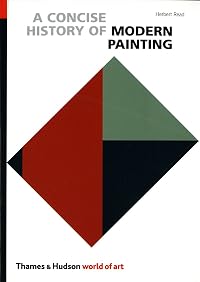
Wonderful, beautifully illustrated, fun to read introduction to painting. Couple it with A Concise History of Modern Art (another in Thames and Hudson's World of Art series) and you've got everything you need to begin your exploration into the world of visual art. If you're looking for an overview, this is the one.
549 plates in full color
Ratings
Members
- Recently Added By
Author Information

55+ Works 2,044 Members
Michael Levey was Director of the National Gallery, London, from 1973 to 1986.
Series
Belongs to Publisher Series
World of Art (Thames and Hudson) (Giotto to Cezanne)
Common Knowledge
- Canonical title
- From Giotto to Cézanne: A Concise History of Painting
- Original title
- A concise History of Painting : from Giotto to Cézanne
- People/Characters
- Giotto di Bondone; St. Francis of Assisi; Dante Alighieri, 1265-1321; Cimabue; Lorenzo de' Medici; Poliziano (show all 22); Nicola Pisano; Giovanni Pisano; Reginaldo Scrovegni; Jesus Christ; Virgin Mary; Taddeo Gaddi; Masaccio; Duccio Di Buoninsegna; Simone Martini; Saint Martin of Assisi; Pietro Lorenzetti; Ambrogio Lorenzetti; Dirk Bouts; Gentile da Fabriano; Antonio Pisanello; Donatello
- Important places
- Assisi, Umbria, Italy; Basilica of Saint Francis of Assisi, Assisi, Umbria, Italy; Rome, Italy; Florence, Tuscany, Italy; Naples, Campania, Italy; Tiepolo (show all 18); Padua, Veneto, Italy; Hell; Tuscany, Italy; Naples, Campania, Italy; Santa Croce; Siena, Tuscany, Italy; Palazzo Pubblico; Avignon, Vaucluse, Provence-Alpes-Côte d'Azur, France; Flanders, Belgium; Lombardy, Italy; Milan, Lombardy, Italy; Verona, Veneto, Italy
- Important events
- 1267-1337; 1228; 1240-1302; 1306; Middle Ages; 1366 (show all 16); 1376; 1347; 1255/60-1318/9; 1284-1344; 1342; 1280-1348; 1319-47; 1370-1427; 1395-1455/6; 1423
Classifications
Statistics
- Members
- 422
- Popularity
- 72,996
- Reviews
- 4
- Rating
- (3.95)
- Languages
- 10 — Danish, Dutch, English, Finnish, French, German, Hungarian, Polish, Spanish, Swedish
- Media
- Paper
- ISBNs
- 10
- ASINs
- 15