Life Moves Pretty Fast: The Lessons We Learned from Eighties Movies (and Why We Don't Learn Them from Movies Anymore) by Hadley Freeman
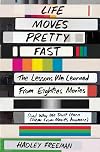
The title is a famous quote from the opening of Ferris Bueller's Day Out -
“Life moves pretty fast. If you don't stop and look around once in a while, you could miss it.”
I've been watching a lot of 80s movies lately while reading this love letter to the 80s cinema. Although I don't always agree with her take on certain films, I really enjoyed her passionate mix of personal stories about how these movies changed her life and outlook. Hadley Freemans picks would certainly not be mine for the most part, but it has made me appreciate some forgotten films more.
Some of the movies she explore more deeply: Dirty Dancing, A Princess Bride, Pretty in Pink, Ghostbusters, Ferris Bueller's Day Off, Back to the Future, Baby Boom, Batman, Trading Places, Coming to America.
“Life moves pretty fast. If you don't stop and look around once in a while, you could miss it.”
I've been watching a lot of 80s movies lately while reading this love letter to the 80s cinema. Although I don't always agree with her take on certain films, I really enjoyed her passionate mix of personal stories about how these movies changed her life and outlook. Hadley Freemans picks would certainly not be mine for the most part, but it has made me appreciate some forgotten films more.
Some of the movies she explore more deeply: Dirty Dancing, A Princess Bride, Pretty in Pink, Ghostbusters, Ferris Bueller's Day Off, Back to the Future, Baby Boom, Batman, Trading Places, Coming to America.

Excellent introduction to Bach - his life and music. There are several pieces of music I now want to hear. There are about 15 books in The Christian Encounters Series - I have read three now, besides Bach, also on Jane Austen and J. R. R. Tolkien.
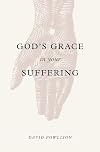
A very personal and I would also say insightful book on suffering from a Christian perspective. A lot of underlinings in this one. Here just two quotes - a short and a long one.
There is inevitably an aloneness in suffering because no one can fully enter another’s experience. Each person knows “the affliction of his own heart” (1 Kings 8:38; cf. Prov. 14:10).
I cannot express how often God’s creation proved sustaining, refreshing, and sanctifying. In all seasons and weathers I went outside and walked. I noticed the flight of a goldfinch, snow on the stones in the brook, a field of white dogwoods in bloom, a thunderstorm rising in the west, maple leaves like fire in the fall. I was repeatedly drawn out onto a bigger stage than my troubles. I would pray my need and my gratitude out loud while walking. Theologians who limit the means of grace to overtly redemptive religious practices miss something about the God who speaks without words in the theater of his creation.
There is inevitably an aloneness in suffering because no one can fully enter another’s experience. Each person knows “the affliction of his own heart” (1 Kings 8:38; cf. Prov. 14:10).
I cannot express how often God’s creation proved sustaining, refreshing, and sanctifying. In all seasons and weathers I went outside and walked. I noticed the flight of a goldfinch, snow on the stones in the brook, a field of white dogwoods in bloom, a thunderstorm rising in the west, maple leaves like fire in the fall. I was repeatedly drawn out onto a bigger stage than my troubles. I would pray my need and my gratitude out loud while walking. Theologians who limit the means of grace to overtly redemptive religious practices miss something about the God who speaks without words in the theater of his creation.
The Ruthless Elimination of Hurry: How to Stay Emotionally Healthy and Spiritually Alive in the Chaos of the Modern World by John Mark Comer
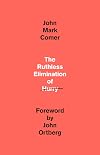
I like Comers style of writing and his humor, his honest and personal stories about his own shortcomings when it comes to living an unhurried life. Having to reboot his approach to his life totally and keep doing it.
None of this comes very easy - solitude, silence, sabbath, simplicity, slowing.
Here’s something he says to himself.
Multiple times a day, I slip back into hurry. The gravitational pull is overwhelming at times.
Lately, when that happens, I have this little mantra I repeat:
Slow down.
Breathe.
Come back to the moment.
Receive the good as gift.
Accept the hard as a pathway to peace.
Abide.
It’s my rosary, my invocation, my mental and emotional reset…On especially stressful days I find myself whispering it under my breath all through the day. But each time I recite my little liturgy, I come back to the moment.
None of this comes very easy - solitude, silence, sabbath, simplicity, slowing.
Here’s something he says to himself.
Multiple times a day, I slip back into hurry. The gravitational pull is overwhelming at times.
Lately, when that happens, I have this little mantra I repeat:
Slow down.
Breathe.
Come back to the moment.
Receive the good as gift.
Accept the hard as a pathway to peace.
Abide.
It’s my rosary, my invocation, my mental and emotional reset…On especially stressful days I find myself whispering it under my breath all through the day. But each time I recite my little liturgy, I come back to the moment.
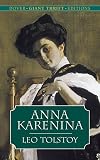
What a great novel - rereading it just confirms what a literary masterpiece it is. Tolstoy’s ability to unmask the movements of the mind reveals him as a true master, especially in Anna and Levin, whose inner life is carefully unfolded. City life set up against country life, philosophical questions and search after God. Marriage as convention, lust and love - it’s all there in Stiva and Dolly, Anna and Vronsky, Levin and Kitty.
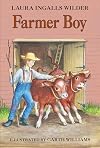
I got pretty hungry reading about all those food preparations. There's something wholesome about this old farm life where they had to make everything themselves - reminds me of Michael Pollan's food rule: "Eat all the junk food you want, as long as you cook it yourself." No processed food on this farm. Even when the dad is presented with a quicker way to harvest, he refuses. Why spend money on it when they can do it with a little more manual labour.

Creature of Habit is a revealing book about how science manipulates us with all kinds of addictive superstimuli - be it in unhealthy processed foods or endless scrolling on social media, just to name two of the subjects he’s addressing - it makes it very difficult to break the bad habits. The book is sprinkled with a lot of interesting stories, humor and science data.

Another book of small essays on everyday life from Swedish priest Tomas Sjödin - full of his wonderful humor and wisdom.

A very short chronological overview of the most significant Western philosophers - it is framed by an introduction and a conclusion on Christianity’s position in relation to philosophy. I must like it, as this is the third time I’m reading it.

This was a really fun and delightful comfort reread - Hanff has a wonderful sense of humour - and I was not surprised she liked Pride and Prejudice and recommended Jane Austen to her friends (even though she seldom read novels).
I could rot over here before you'd send me anything to read….what do you do with yourself all day, sit in the back of the store and read? Why don't you try selling a book to somebody?
I could rot over here before you'd send me anything to read….what do you do with yourself all day, sit in the back of the store and read? Why don't you try selling a book to somebody?

A book on the history of ideas - from the old greeks to "modern" day, ok, it was written in 1961, so not so modern days. A general introduction that was easy to follow.

A short introduction to the first pages in the Bible - creation and fall - I really liked his thoughts on man made in the image of God.

This book holds a sentimental value for me, as it was one of my father’s books, which he read a few years before he passed away. There are many underlinings in it – and passages where my father wrote: Read this aloud at the senior gathering in the church.
“Courage to Grow Old” has the subtitle “The Preciousness of Old Age” and contains a lot of life wisdom about growing older, becoming more fragile, yet still maintaining a zest for life and joy in everyday moments. The author has a gift for seeing the greatness in small things – breathing in nature and the changing seasons, beautiful music, an engaging book, and a good cup of coffee. It’s about cherishing the small miracles of daily life shared with those around us.
Quote:
What makes old age precious is living with the resonance of a long life filled with experiences and memories, and being fully aware that time is valuable.
“Courage to Grow Old” has the subtitle “The Preciousness of Old Age” and contains a lot of life wisdom about growing older, becoming more fragile, yet still maintaining a zest for life and joy in everyday moments. The author has a gift for seeing the greatness in small things – breathing in nature and the changing seasons, beautiful music, an engaging book, and a good cup of coffee. It’s about cherishing the small miracles of daily life shared with those around us.
Quote:
What makes old age precious is living with the resonance of a long life filled with experiences and memories, and being fully aware that time is valuable.

In recent years, the Swedish priest Tomas Sjödin has become one of my favorite authors. His books are filled with sound, hopeful, and healing wisdom.
This book is a bit different. Sjödin is fascinated by his namesake - the disciple Thomas - and sets out on several journeys in his footsteps, or at least where the legends say Thomas traveled. At the same time, it becomes a story about finding one’s place in life in community with others. A very life-affirming read.
This book is a bit different. Sjödin is fascinated by his namesake - the disciple Thomas - and sets out on several journeys in his footsteps, or at least where the legends say Thomas traveled. At the same time, it becomes a story about finding one’s place in life in community with others. A very life-affirming read.

It's incredible to think that this writing was actually close to being included in the New Testament canon. I didn't find much grace and forgiveness in it - and not quite in the spirit of the Bible, but several Church Fathers spoke highly of it. It's a long allegorical tale full of symbolism, which is explained in detail.

Reading Danish author Riebnitzsky have been a succes so far in our book-club. Not so much this time. It takes place around the birth of Jesus and tells the story of both biblical characters and made up characters - some of the storylines were quite good, others not so much. So a mixed bag.
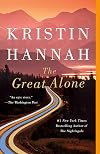
It reminded me of When The Crawdad Sings in its great sense of place - loved the beginning description of the great outdoors and people in Alaska. But it was a very depressing story to get through with a lot of melodrama that took the wonder out of the book.

It was fascinating to read Nausea at the same time as Revelations of Divine Love. I can't imagine books with more different worldviews or outlooks on life. One is heavenly-directed and inspired by love, while the other is self-absorbed and obsessed with life's emptiness.
That is not to say that I didn't like reading Nausea - I think Sartre is very honest about life without God, without any higher meaning in life. This is the conclusion and it's not pretty. It's like reading Sartres philosophy as a story. I also read most of the Sparknotes for Nausea where you learn more about the philosophy behind the story.
That is not to say that I didn't like reading Nausea - I think Sartre is very honest about life without God, without any higher meaning in life. This is the conclusion and it's not pretty. It's like reading Sartres philosophy as a story. I also read most of the Sparknotes for Nausea where you learn more about the philosophy behind the story.

I love when new translations are published in Danish of old classics. This edition "Kærlighedens Åbenbaringer" is a treasure. It has three essays to begin with, both the short and long versions of her revelations (I read the longer one) and a lot of notes to the text.
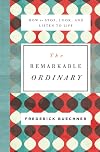
My first book by Buechner, who I've been wanting to read for some time now. I like the way he weaves his personal life story into this theme or discovering the remarkable in the ordinary. Here's the book's description:
Frederick Buechner reveals how to stop, look, and listen to your life. He reflects on how both art and faith teach us how to pay attention to the remarkableness right in front of us, to watch for the greatness in the ordinary, and to use our imaginations to see the greatness in others and love them well.
Frederick Buechner reveals how to stop, look, and listen to your life. He reflects on how both art and faith teach us how to pay attention to the remarkableness right in front of us, to watch for the greatness in the ordinary, and to use our imaginations to see the greatness in others and love them well.
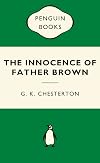
This collection of short stories are a very mixed bag. Some brilliant, but others I didn't like that much.
Kierkegaard's Writings, XXI: For Self-Examination / Judge For Yourself!: For Self-Examination / Judge for Yourself! v. 21 by Søren Kierkegaard
A short, but condensed work by Kierkegaard. I often find him very hard to read, but this Christian classic is not that difficult to understand. It consists of three sermons - the main theme is how we examine ourselves when we come to the Bible as God's Word.

This concludes the last two books in Fosse's Septology. VI and VII.
It ends in a dreamy state with Asles increasing memories and you feel death is knocking at the door - and there's not really any conclusion to it all - I'm glad I finished it, although I think the endless repetitive train of thoughts was too much for me.
It ends in a dreamy state with Asles increasing memories and you feel death is knocking at the door - and there's not really any conclusion to it all - I'm glad I finished it, although I think the endless repetitive train of thoughts was too much for me.

I enjoyed this play a lot - sort of a fairy tale both with wit, drama, and romance.
The Apology by Plato

I do believe that there are gods, and in a far higher sense than that in which any of my accusers believe in them.
Socrates, Apology
Not knowing what has been said before, and exactly what Socrates is being accused of, it takes a little while to get into his apology. But it is a fascinating defense. He certainly was a brave soul.
Socrates, Apology
Not knowing what has been said before, and exactly what Socrates is being accused of, it takes a little while to get into his apology. But it is a fascinating defense. He certainly was a brave soul.

A good examination of how the different books of the Bible found their way into it. Especially interesting was the Church Fathers and their different lists of New Testament books - what should be included and excluded.
This was awarded The National Book Award in 1961. I've heard good things about it, but I found the main character very annoying, and very little happens. Although it picks up near the end, it is too little, too late.
had a wonderful time with this book, although it took me a long time to get through, as I first listened to an album and then read the short essay in this book. Many of the album reviews were personal notes, and their own experiences with the album were fun to read.
There were several of my favorites in this selection, and also several that were new pleasant discoveries that are now added to my favorites. Aretha Franklin's "Lady Soul" to mention one. Then there were a few I couldn't finish listening to - rap and heavy rock are not my styles, like Led Zeppelin or NWA's "Straight Outta Compton."
None of their top ten would make my own top 10 - they have four Beatles albums on their top 10, and I'm not a great Beatles fan. Also on their list are Nirvana's Nevermind, Beach Boy's Pet Sounds, Marvin Gaye's What's Going On, Jimi Hendrix Are You Experienced?, Stevie Wonder's Songs in the Key of Life, and Bob Dylan's Blonde on Blonde. (I would include Bob Dylan in a top 10, but in stead Blood on the Tracks.
There were several of my favorites in this selection, and also several that were new pleasant discoveries that are now added to my favorites. Aretha Franklin's "Lady Soul" to mention one. Then there were a few I couldn't finish listening to - rap and heavy rock are not my styles, like Led Zeppelin or NWA's "Straight Outta Compton."
None of their top ten would make my own top 10 - they have four Beatles albums on their top 10, and I'm not a great Beatles fan. Also on their list are Nirvana's Nevermind, Beach Boy's Pet Sounds, Marvin Gaye's What's Going On, Jimi Hendrix Are You Experienced?, Stevie Wonder's Songs in the Key of Life, and Bob Dylan's Blonde on Blonde. (I would include Bob Dylan in a top 10, but in stead Blood on the Tracks.
I remember this as being much better. I gave it 4,5 stars years ago - but I found it really irritating this time - the point of the futility of war was made very early in the novel, and the rest was just repetition and endless time-traveling to the point of nausea. Hmmm....
The Code of the Woosters: (Jeeves & Wooster) by P.G. Wodehouse (1-May-2008) Paperback by P. G. Wodehouse

Delightful time with Jeeves and Wooster, and one of the best - if not the best - in the series so far.