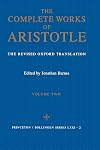
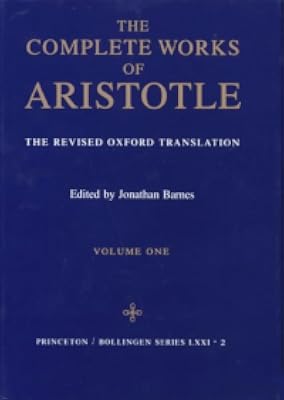
The Complete Works of Aristotle, Volume Two (Revised Oxford Translation)
by Aristotle
On This Page
Description
The Oxford Translation of Aristotle was originally published in 12 volumes between 1912 and 1954. It is universally recognized as the standard English version of Aristotle. This revised edition contains the substance of the original Translation, slightly emended in light of recent scholarship; three of the original versions have been replaced by new translations; and a new and enlarged selection of Fragments has been added. The aim of the translation remains the same: to make the surviving show more works of Aristotle readily accessible to English speaking readers. show lessTags
Recommendations






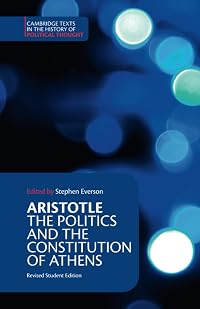
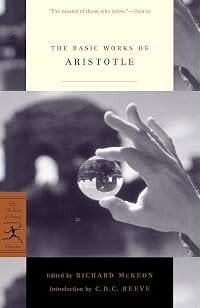
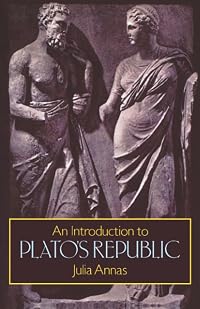
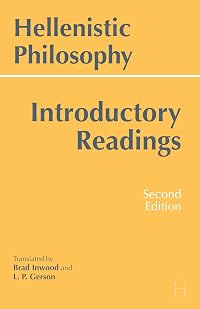












Member Recommendations
Voracious_Reader Good companion piece to Aristotle's original works. Love Adler's mind (and Aristotle's).
Member Reviews
“Have you ever heard of Plato, Aristotle, Socrates? Morons.”
With due respect to Vizzini’s dizzying intellect, I must demur: Aristotle might be more intimidating even than the Cliffs of Insanity, but a moron he was not. For myself, after powering through 1200 pages of the first volume of his complete works, I think it’s arguable that no single figure is more responsible for our world today than Aristotle.
I mean this specifically with respect to the physical sciences, since the first of this two-volume set comprises his work on logic, the heavens, the animal kingdom, and so forth. That’s not to say his theories still prevail: I don’t know anyone who thinks insects generate spontaneously from putrefying garbage, and only online show more cranks preach that Earth is the stationary center of the universe.
Further, Aristotle is not that different from his contemporaries and predecessors in terms of theorizing about nature from abstract starting principles. In truth, some of the theories he dismissed were closer to what we would recognize as reality. For their own esoteric reasons, Pythagoreans taught that Earth circles a sacred fire at the heart of the universe. Atomists envisioned a world built from indivisible, infinitesimal units. Aristotle rejected these in favor of theories that today sound quaint and antiquated.
What distinguished Aristotle was less the content of his thought and more his starting point: that nature does nothing superfluous or in vain. He hammers this so often that I would call it his first and greatest commandment. While others debated mental models of the universe, Aristotle began with careful observation of a natural order that works in reliably predictable ways. From this he drew the principle that everything nature does tends toward the best possible ends in the best possible ways, and he sought by abundant observation and rigorous logic to describe universal physical laws on that basis.
Aristotle also urged a self-correcting science that tests theory against fact, rather than carving up fact to fit theory. For example, in an excursus on the habits of bees, he wrote, “Credit must be given rather to observation than to theories, and to theories only if what they affirm agree with the observed facts.” He argued that theories which claim to be comprehensive must account for all phenomena, criticizing Democritus for “speaking generally without examining what happens in all cases” and asserting that “any one who makes any general statement must speak of all the particular cases.”
These principles, including the assumption common to Greek thinkers that existence lies within the grasp of the properly-trained human intellect, is easy to overlook because it’s so baked into the way we think today. One example, I think, illustrates how far ahead of his time he ran. Within Aristotle’s lifetime, the temple at Ephesus burned. One would expect a Greek of his time to wrestle with the meaning of such a desecration. Aristotle, by contrast, found it useful merely as an example of how wind, smoke, and fire interact with each other. This is so modern that it’s easy to miss how strange it is for a man steeped in a culture of gods to ignore the gods so utterly in his investigation of physical law.
I’m not an expert on the history of Aristotle’s transmission through the hands of Greek monks, Arabic scholars, the medieval Roman Church, and Renaissance Europeans. But having read his works on logic and the laws of nature, I see that his method of thinking about nature laid the foundations for the modern world. The blossoming of science and the scientific method left his natural theories far in the dust, but the way billions of us conceptualize the world — orderly, rational, mechanistic, deterministic, predictable, and knowable — is thoroughly Aristotelian. If he was a moron, he is unparalleled as one of the most influential morons in history. show less
With due respect to Vizzini’s dizzying intellect, I must demur: Aristotle might be more intimidating even than the Cliffs of Insanity, but a moron he was not. For myself, after powering through 1200 pages of the first volume of his complete works, I think it’s arguable that no single figure is more responsible for our world today than Aristotle.
I mean this specifically with respect to the physical sciences, since the first of this two-volume set comprises his work on logic, the heavens, the animal kingdom, and so forth. That’s not to say his theories still prevail: I don’t know anyone who thinks insects generate spontaneously from putrefying garbage, and only online show more cranks preach that Earth is the stationary center of the universe.
Further, Aristotle is not that different from his contemporaries and predecessors in terms of theorizing about nature from abstract starting principles. In truth, some of the theories he dismissed were closer to what we would recognize as reality. For their own esoteric reasons, Pythagoreans taught that Earth circles a sacred fire at the heart of the universe. Atomists envisioned a world built from indivisible, infinitesimal units. Aristotle rejected these in favor of theories that today sound quaint and antiquated.
What distinguished Aristotle was less the content of his thought and more his starting point: that nature does nothing superfluous or in vain. He hammers this so often that I would call it his first and greatest commandment. While others debated mental models of the universe, Aristotle began with careful observation of a natural order that works in reliably predictable ways. From this he drew the principle that everything nature does tends toward the best possible ends in the best possible ways, and he sought by abundant observation and rigorous logic to describe universal physical laws on that basis.
Aristotle also urged a self-correcting science that tests theory against fact, rather than carving up fact to fit theory. For example, in an excursus on the habits of bees, he wrote, “Credit must be given rather to observation than to theories, and to theories only if what they affirm agree with the observed facts.” He argued that theories which claim to be comprehensive must account for all phenomena, criticizing Democritus for “speaking generally without examining what happens in all cases” and asserting that “any one who makes any general statement must speak of all the particular cases.”
These principles, including the assumption common to Greek thinkers that existence lies within the grasp of the properly-trained human intellect, is easy to overlook because it’s so baked into the way we think today. One example, I think, illustrates how far ahead of his time he ran. Within Aristotle’s lifetime, the temple at Ephesus burned. One would expect a Greek of his time to wrestle with the meaning of such a desecration. Aristotle, by contrast, found it useful merely as an example of how wind, smoke, and fire interact with each other. This is so modern that it’s easy to miss how strange it is for a man steeped in a culture of gods to ignore the gods so utterly in his investigation of physical law.
I’m not an expert on the history of Aristotle’s transmission through the hands of Greek monks, Arabic scholars, the medieval Roman Church, and Renaissance Europeans. But having read his works on logic and the laws of nature, I see that his method of thinking about nature laid the foundations for the modern world. The blossoming of science and the scientific method left his natural theories far in the dust, but the way billions of us conceptualize the world — orderly, rational, mechanistic, deterministic, predictable, and knowable — is thoroughly Aristotelian. If he was a moron, he is unparalleled as one of the most influential morons in history. show less
Aristotle, if transported to our time, would find our world an alien enigma. To ease his discomfort, I would take him to the Olympic Games. He should know that one thing hasn’t changed: we still crown champions not for being fine people, but for competing and winning.
I know he’d like this, because this was how he illustrated his point that virtue is goodness in action: “And as in the Olympic Games it is not the most beautiful and the strongest that are crowned but those who compete…so those who act rightly win the noble and good things in life.”
This second and final volume of Aristotle’s complete works is largely devoted to his writings on goodness in action, whether in the transactions of daily life or the rough-and-tumble show more of politics. His treatises on rhetoric and poetics, fascinating though they are in their own rights, still orbit this central question insofar as they involve the act of influencing others through communication toward virtue.
I acknowledge, of course, that Aristotle’s ideas of what virtue looks like are often different from mine. For instance, I don’t consider a woman a stunted, underdeveloped, inferior version of a man. I’m not comfortable labeling entire ethnicities as fitted by nature for slavery and, thus, for conquest.
Some of Aristotle, viewed from a distance of 2300 years, seems harsh and regressive. What we may fail to notice is that this is because Aristotle sought to bring ethics and all its children under the government of scientific reason. As a man of ancient Greece, he could only reason from the assumptions and experiences of a time and place far removed from our own.
This is more revolutionary than it may seem. Though his Metaphysics is esoteric and hard to follow, it marks an epoch in world history. By dismantling both Pythagorean mysticism and Platonic supranaturalism, Aristotle freed thought from prior constraint by Theories of Everything and their elite enforcers.
This is well illustrated by his remarkably tolerant review of the governments of various Mediterranean city-states in his Politics. Though a fairly chauvinistic Greek, his principle of seeking the good through observation and reason compelled him to seek the good even beyond his own prejudices.
It’s this very freedom, this fearlessness to reevaluate conclusions on the basis of evidence, that laid the foundations for our modern world. Though Aristotle generally disfavored democracy as prone to collapse into mob rule, he democratized ethics, morality, and politics by subjecting these to no greater authority than human reason.
This is why I think he would enjoy the modern Olympics. Once he recovered from his shock at the participation of females, he might recognize we got here partly through his own method of drawing fresh conclusions from fresh evidence. Aristotle set a trajectory that is still arcing. He would no doubt be gratified to know that despite setbacks and missteps, we haven’t given up his quest for the good. show less
I know he’d like this, because this was how he illustrated his point that virtue is goodness in action: “And as in the Olympic Games it is not the most beautiful and the strongest that are crowned but those who compete…so those who act rightly win the noble and good things in life.”
This second and final volume of Aristotle’s complete works is largely devoted to his writings on goodness in action, whether in the transactions of daily life or the rough-and-tumble show more of politics. His treatises on rhetoric and poetics, fascinating though they are in their own rights, still orbit this central question insofar as they involve the act of influencing others through communication toward virtue.
I acknowledge, of course, that Aristotle’s ideas of what virtue looks like are often different from mine. For instance, I don’t consider a woman a stunted, underdeveloped, inferior version of a man. I’m not comfortable labeling entire ethnicities as fitted by nature for slavery and, thus, for conquest.
Some of Aristotle, viewed from a distance of 2300 years, seems harsh and regressive. What we may fail to notice is that this is because Aristotle sought to bring ethics and all its children under the government of scientific reason. As a man of ancient Greece, he could only reason from the assumptions and experiences of a time and place far removed from our own.
This is more revolutionary than it may seem. Though his Metaphysics is esoteric and hard to follow, it marks an epoch in world history. By dismantling both Pythagorean mysticism and Platonic supranaturalism, Aristotle freed thought from prior constraint by Theories of Everything and their elite enforcers.
This is well illustrated by his remarkably tolerant review of the governments of various Mediterranean city-states in his Politics. Though a fairly chauvinistic Greek, his principle of seeking the good through observation and reason compelled him to seek the good even beyond his own prejudices.
It’s this very freedom, this fearlessness to reevaluate conclusions on the basis of evidence, that laid the foundations for our modern world. Though Aristotle generally disfavored democracy as prone to collapse into mob rule, he democratized ethics, morality, and politics by subjecting these to no greater authority than human reason.
This is why I think he would enjoy the modern Olympics. Once he recovered from his shock at the participation of females, he might recognize we got here partly through his own method of drawing fresh conclusions from fresh evidence. Aristotle set a trajectory that is still arcing. He would no doubt be gratified to know that despite setbacks and missteps, we haven’t given up his quest for the good. show less
Ratings
Members
- Recently Added By
Lists

The ESOTERICA Library by Dr. Justin Sledge (Classical Philosophy)
4 works; 1 member

el
1,139 works; 1 member
Author Information

2,089+ Works 57,678 Members
Some Editions
Series
Belongs to Publisher Series
Bollingen Series (71.02.2)
Work Relationships
Common Knowledge
- Canonical title
- The Complete Works of Aristotle, Volume Two (Revised Oxford Translation) (Revised Oxford Translation)
- Original publication date
- 1984
- Canonical DDC/MDS
- 185
Classifications
Statistics
- Members
- 694
- Popularity
- 41,286
- Reviews
- 2
- Rating
- (4.34)
- Languages
- English
- Media
- Paper, Ebook
- ISBNs
- 2
- ASINs
- 2