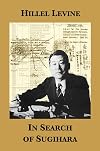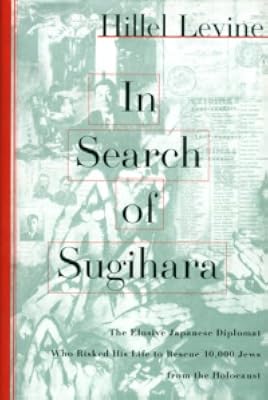
In Search of Sugihara: The Elusive Japanese Diplomat Who Risked his Life to Rescue 10,000 Jews From the Holocaust
by Hillel Levine
On This Page
Description
This is the story of Chiune Sugihara, a diplomat and spy who saved as many as 10,000 Jews from deportation to concentration camps and almost certain death. Because of his extreme modesty, Sugihara's tremendous act of moral courage is only now beginning to become widely known. Unlike Raoul Wallenberg, the Swedish diplomat whose government sent him to Hungary with the express purpose of saving Jews, and Oskar Schindler, the German industrialist who at least initially had a. Vested economic show more interest in protecting the lives of "his Jews," Sugihara had no apparent reason to perform his acts of rescue. Indeed, he acted in direct violation of official Japanese policy, which directed all government and military personnel to cooperate with the murderous policies of their Nazi allies. Examining Sugihara's education and background - a background shared with the colonial administrators and military men who committed "the rape of Nanjing"--Author. Hillel Levine finds nothing that explains his extraordinary behavior. Levine's search has taken him from the old Japanese consul building in Kaunas (now Kovno), Lithuania, to the Australian outback; across Japan from the rice fields of Sugihara's native town to the boardrooms of conglomerates where his younger schoolmates still hold power. But the more Levine sought answers to Sugihara's puzzling behavior, the more he encountered questions. Remarkably, Chiune Sugihara. Was not the only Japanese official to save Jews. Yet none was ever punished for insubordination. Was there a secret Japanese plan to save Jews from Nazi genocide? Much Holocaust scholarship focuses on the perpetrators of evil, trying to illuminate what drove ordinary men and women to commit horrifying and murderous acts. But perhaps as difficult to understand is the phenomenon of rescue: what inspired courageous individuals to swim against the tide of cruelty and. Indifference. This sensitive and nuanced biography concludes that there is no link between a person's background and his moral inclinations. Mercy remains a divine mystery despite our human craving to reduce it to behavioristic formulas. show lessTags
Recommendations


































Member Recommendations
meggyweg Sugihara helped Jews escape from Kovno/Kaunas before the Nazis invaded it and set up the ghetto.
Member Reviews
This book attempts to document Chiume Sugihara's life, put his actions in historical context and try to determine why he did what he did. It succeeds at all of those -- and certainly any effort to make known this obscure Righteous Gentile is praiseworthy.
I do, however, think it begins too slowly and ends too quickly. The book starts out with Sugihara's birth, and it goes into great detail -- too much detail, I think -- describing the struggles of Japan to pull itself into the modern world during this time period. Sugihara doesn't actually reach Kovno and start issuing visas until around page 200 or so. And then at the end, he shuts up his consulate and leaves, and the rest of the more than forty years of his life take up just a few show more pages.
A flawed book, but worth your time I think. show less
I do, however, think it begins too slowly and ends too quickly. The book starts out with Sugihara's birth, and it goes into great detail -- too much detail, I think -- describing the struggles of Japan to pull itself into the modern world during this time period. Sugihara doesn't actually reach Kovno and start issuing visas until around page 200 or so. And then at the end, he shuts up his consulate and leaves, and the rest of the more than forty years of his life take up just a few show more pages.
A flawed book, but worth your time I think. show less
Members
- Recently Added By
Author Information
4+ Works 198 Members
All Editions
Common Knowledge
- People/Characters
- Chiune Sugihara
- Important events
- Holocaust; World War II (1939 | 1945)
- Quotations
- Even as he was about to board the train for Berlin, even from the train window, even as his train began to move -- as so many Sugihara survivors will tell you, but few actually observed -- Sugihara continued to issue his life... (show all)-saving scraps of paper. Thousands of Jews with Sugihara's visa were packed on trains bound not for forced labor camps and gas chambers but for freedom. The tracks spirited them away from the ghettos now being built, away from the "ordinary people" who succeeded in perpetrating unfathomable brutality, away from the murderers-in-training, of the Einsatzgruppen, the "special" units who ten months later would begin killing one and one-half million Jews, away from the death camps now moving from blueprints to fresh construction, away from the prototypes of the gas chambers and crematoria that were starting to be tested. Away from almost certain death.
As the conscience of civilization was being probed and found so wanting in what soon would be the destruction of six million Jews, one Japanese man refused to "stand on blood." We learn his story, in all its artful complexity and simple humanity, and realize its eternally wrenching power.
Sugihara shows us history as it could have been.
Classifications
- Genres
- History, Nonfiction, Biography & Memoir, General Nonfiction, Religion & Spirituality
- DDC/MDS
- 362.87 — Society, government, & culture Social problems and social services Social Welfare Problems of and services to other groups
- LCC
- D804.66 .S84 .L48 — History of Europe, Asia, Africa and Oceania History (General) World War II (1939-1945)
- BISAC
Statistics
- Members
- 91
- Popularity
- 354,026
- Reviews
- 1
- Rating
- (4.25)
- Languages
- English, Hebrew, Polish
- Media
- Paper, Ebook
- ISBNs
- 4
- ASINs
- 1