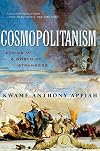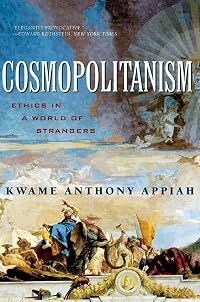
Cosmopolitanism: Ethics in a World of Strangers
by Kwame Anthony Appiah
On This Page
Description
Draws on a wide range of disciplines, including history, literature, and philosophy, to examine the imaginary boundaries people have drawn around themselves and other cultures and to challenge people to redraw those boundaries and appreciate the connections between people of different cultures, religions, and nations. "In an age of Al Qaeda--of terror and insurgent fundamentalists--we have grown accustomed to thinking of the world as divided among warring creeds and cultures, separated from show more one other by chasms of incomprehension. In Cosmopolitanism, Kwame Anthony Appiah, one of the world's leading philosophers, challenges us to redraw these imaginary boundaries, reminding us of the powerful ties that connect people across religions, cultures, and nations... and of the deep conflicts within them. Finding his philosophical inspiration in the Greek Cynics of the fourth century BC, who fist articulated the cosmopolitan ideal--that all human beings were fellow citizens of the world--Appiah reminds us that cosmopolitanism underwrote some of the greatest moral achievements of the Enlightenment, including the 1789 declaration of the 'Rights of Man' and Kant's proposal for a 'league of nations.' In showing us how modern philosophy has led us astray, Appiah also draws on his own experiences, growing up as the child of an English mother and a father from Ghana in a family spread across four continents and as many creeds. Whether he's recalling characters from a second-century Roman comedy or a great nineteenth-century novel or reliving feasts at the end of Ramadan with his Moslem cousins in the kingdom of Ashanti, Appiah makes vivid the vision his arguments defend. These stories also illuminate the tough questions that face us: How is it possible to consider the world a moral community when there's so much disagreement about the nature of morality? How can you take responsibility for every other life on the planet and still live your own life? Appiah explores such challenges to a global ethics as he develops an account of cosmopolitanism that surrounds them. The foreignness of foreigners, the strangeness of strangers: these things are real enough, but Appiah suggests that intellectuals and leaders, on the left and the right, have wildly exaggerated their significance. He scrutinizes the treacly celebration of 'diversity,' the hushed invocations of the 'other,' and brow-furrowing talk about 'difference.' In developing a cosmopolitanism for our times, he defends a vision of art and literature as a common human possession, distinguishes the global claims of cosmopolitanism from those of its fundamentalist enemies, and explores what we do, and do not, owe to strangers. This deeply humane account will make it harder for us to think of the world as divided between the West and the Rest, between locals and moderns, between Us and Them." -- Provided by publisher show lessTags
Recommendations


































Member Reviews
There's something really clever going on in Appiah's take on ethics in a global world. He goes out of his way to point out that while the main thrust of his positive argument is "you care about X because your neighbour does" is easy to articulate, it's damn hard to get there in most ethical systems.
I don't think this will appeal or even make sense to anyone interested in defining their identity with nations and states. In many ways, Appiah's moral compass only makes sense in a post-colonial context. If you think some accident of your birth entitles you to a special or nobler moral value then he has nothing to offer you. The very point of Appiah's approach to ethics is to first realize that most of the historical precedents that are show more pointed to for defining moral identities are themeselves mutable. Judgements aren't static. They change over time and they change dramatically when in contact with the wider world.
Why bother reading this? In a political era where nationalism and populism is surprisingly effective, Appiah points out that the purity of moral identities is fiction. This isn't ivory tower philosophy. It's applied ethics that gets the experience of the world from a non-majority point of view--something that's really hard to find articulated so well in any work on ethics. show less
I don't think this will appeal or even make sense to anyone interested in defining their identity with nations and states. In many ways, Appiah's moral compass only makes sense in a post-colonial context. If you think some accident of your birth entitles you to a special or nobler moral value then he has nothing to offer you. The very point of Appiah's approach to ethics is to first realize that most of the historical precedents that are show more pointed to for defining moral identities are themeselves mutable. Judgements aren't static. They change over time and they change dramatically when in contact with the wider world.
Why bother reading this? In a political era where nationalism and populism is surprisingly effective, Appiah points out that the purity of moral identities is fiction. This isn't ivory tower philosophy. It's applied ethics that gets the experience of the world from a non-majority point of view--something that's really hard to find articulated so well in any work on ethics. show less
Appiah argues for the necessity of talking with others; not necessarily agreeing with them or changing our minds, but trying to understand them. That alone is an important lesson for our fractious republic, where both sides think they have a monopoly on truth and talk past each other. The first part of book includes a lot about Appiah's early life in Ghana, as the child of British-educated Ghanaian barrister and an English mother. Much on the importance of individual and societal narratives and how our stories define and explain us. Later he takes on the issue of "cultural patrimony" and who owns artifacts of the past. Appiah shows a good deal of common sense in this and will annoy a lot of zealots. Finally he addresses the issue of show more what we owe to others, again with much common sense, and neatly skewers the simplistic sophistries of Peter Singer and his ilk. This is a book rooted in an old-fashioned humanism, which immediately brought to mind Terence's homo sum, humani nil a me alienum puto, a quotation that Appiah indeed discusses part way through the book. I doubt that professional philosophers will like the book much; too much common sense and not enough opaque jargon. show less
I thought for sure a book on political ethics was going to be either infuriating or paternalistic, but Appiah managed to thread the needle to give a good view of the intersection of morality, ethics, culture, history, and philosophy. The main thrust of Appiah's arguments are to give time, space, and perspective to the history and viewpoints of others before passing judgments or laws. This isn't a book you can read straight through. I sat with it for about 10 days, and I think that was a pretty good pace. Overall, a very well-written book.
Great author and philosophical problems pontificated on but I came out of this not really learning as much about cosmopolitanism as I wished I had. I think the philosophy and ethics is certainly front-and-center whereas real implications of specifically cosmopolitan ethics and ethical conundrums were downplayed.
Appiah traces the history of cosmopolitan ethics to try to stake a course between cultural relativism and value fundamentalism. He does not present clear-cut answers, but believes mutual understanding will ensue if both (or all) sides participate in conversation - both in its original meaning of living together and of the current meaning of discussing - and get used to each other. Then we may actually learn from our differences. And presumably also extend our moral circle. Perhaps this is naive, but perhaps not. I particularly liked the part where he reminds us that people with different beliefs often appeal to evidence the same way, e.g. by employing explanations that they cannot account for in detail, invoking authorities, and show more bringing up new facts that needs explaining. He is perfectly clear that modern science most often provides better explanations, thanks to its institutional structure that has been built and has persisted for a long time. show less
The most frustrating thing about this book is that Prof. Appiah doesn't really seem to advocating what I would consider true Cosmopolitanism. He supports nation-states, individuals acting in preference to their local concerns over those at a distance, and even a form of I guess what you'd call enlightened self-interest. What's "Cosmopolitan" about any of this? Since the "neo-" prefix gets appended onto just about everything these days, I guess we could call what he's advocating "Neocosmopolitanism"? To coin a, uh, neologism. In any event, one thought I had reading the book is that he's filling a can with Sprite and calling it Coca-Cola.
But I happen to like Sprite in preference to Coca-Cola, and I also happen to think his modifications show more to the over the top ideas of true Cosmopolitanism rein in some of the goofier extremes he cites, and that render the philosophy unlivable by humans. And that's the case even if these extremes follow logically from the premises of the philosophy, though he seems unwilling to concede this point.
His outlook on the world also candidly struck me as rather naïve, or at least tilting towards an unfortunate political correctness. As in, for a gay man, he certainly seemed reluctant to criticize Islam, though he mentioned attitudes toward gay marriage in the West. Well, if homosexuals can't get married in the West at least they're not at risk of being stoned to death.
An interesting work, but I would submit not a complete one. show less
But I happen to like Sprite in preference to Coca-Cola, and I also happen to think his modifications show more to the over the top ideas of true Cosmopolitanism rein in some of the goofier extremes he cites, and that render the philosophy unlivable by humans. And that's the case even if these extremes follow logically from the premises of the philosophy, though he seems unwilling to concede this point.
His outlook on the world also candidly struck me as rather naïve, or at least tilting towards an unfortunate political correctness. As in, for a gay man, he certainly seemed reluctant to criticize Islam, though he mentioned attitudes toward gay marriage in the West. Well, if homosexuals can't get married in the West at least they're not at risk of being stoned to death.
An interesting work, but I would submit not a complete one. show less
The worth of a great book is that it changes your mind. I've learned so much and have been swayed on many issues by Appiah. In issues I already agreed with, he reasoned and put them down in a way that I couldn't have expressed better myself. A slim volume, but a good read. I'll probably re-read it at some point.
Members
- Recently Added By
Lists

Books Read in 2016
4,666 works; 197 members
Author Information

56+ Works 4,061 Members
Kwame Anthony Appiah was born in 1954 in London and raised in Ghana. After graduating with a degree in philosophy from Cambridge University, he taught at Yale, Duke, and Cornell universities. He is currently a professor of Philosophy and African American Studies at Harvard University. Appiah has written on such topics as language in Assertion and show more Conditional and For Truth in Semantics, and racial philosophy and identities in Color Conscious and In My Father's House. In addition to his scholarly publications, Appiah is the author of the popular Sir Patrick Scott Series of mysteries. In this series, which includes Avenging Angel and Another Death in Venice, Barrister Patrick Scott uses his intellectual skills to solve murders in a most British fashion. (Bowker Author Biography) show less
Awards and Honors
Awards
Series
Belongs to Publisher Series
Common Knowledge
- Canonical title
- Cosmopolitanism: Ethics in a World of Strangers
- Original publication date
- 2006 (1st edition) (1st edition)
- Dedication
- For my mother, citizen of one world and many
- First words
- Our ancestors have been human for a very long time.
- Disambiguation notice
- Full title (2006): Cosmopolitanism : ethics in a world of strangers
Classifications
Statistics
- Members
- 870
- Popularity
- 31,417
- Reviews
- 19
- Rating
- (3.69)
- Languages
- 8 — Catalan, Dutch, English, German, Hebrew, Italian, Portuguese, Spanish
- Media
- Paper, Audiobook, Ebook
- ISBNs
- 16
- ASINs
- 4