On This Page
Description
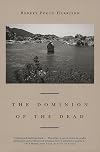
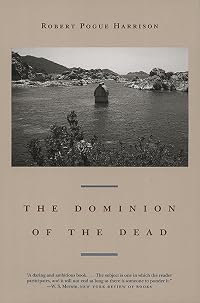
How do the living maintain relations to the dead? Why do we bury people when they die? And what is at stake when we do? In The Dominion of the Dead, Robert Pogue Harrison considers the supreme importance of these questions to Western civilization, exploring the many places where the dead cohabit the world of the living-the graves, images, literature, architecture, and monuments that house the dead in their afterlife among us. This elegantly conceived work devotes particular attention to the show more practice of burial. Harrison contends that we bury our dead to humanize the lands where we build our present and imagine our future. As long as the dead are interred in graves and tombs, they never truly depart from this world, but remain, if only symbolically, among the living. Spanning a broad range of examples, from the graves of our first human ancestors to the empty tomb of the Gospels to the Vietnam Veterans Memorial, Harrison also considers the authority of predecessors in both modern and premodern societies. Through inspired readings of major writers and thinkers such as Vico, Virgil, Dante, Pater, Nietzsche, Heidegger, and Rilke, he argues that the buried dead form an essential foundation where future generations can retrieve their past, while burial grounds provide an important bedrock where past generations can preserve their legacy for the unborn. The Dominion of the Dead is a profound meditation on how the thought of death shapes the communion of the living. A work of enormous scope, intellect, and imagination, this book will speak to all who have suffered grief and loss. show lessTags
Recommendations


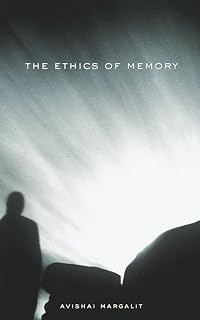

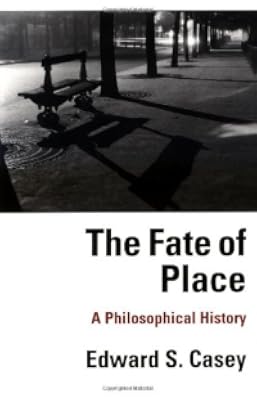

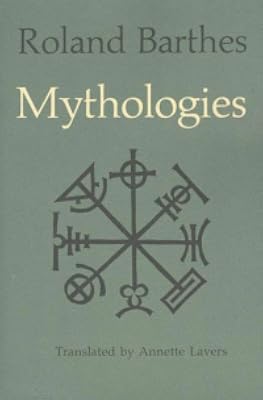
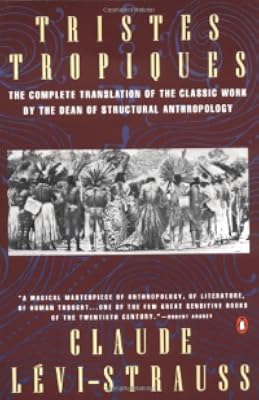







Member Recommendations
Member Reviews
Harrison, a professor of Italian literature, takes us on a wandering, meditative journey through an idiosyncratic selection of his preferred cultural habitats – Thoreau’s cabin at Walden, Vico’s philology, Aeschylus’ Xerxes in The Persians, the Italian poets Leopardi and Magrelli, the Vietnam memorial in Washington, lesser known works by Rilke and Conrad – along with some of the usual suspects: Homer, Joyce, Dante, Virgil and Shakespeare. Included too is Heidegger, whom he clearly admires, but with whom he picks a few small bones.
Harrison’s scope encompasses the nature of place, earth, home and grave, and their relation to burial; mourning and grieving and how these are vocalized; philology as an excavation of the authority show more of the dead; Heideggerrean existential guilt as a form of debt to the dead; Christian theology and attitudes toward grief; the way in which our species is an object of thought and how cultural representations of this incorporate or express our mortality; and the role of the corpse and its relation to the afterlife. The aim of all this wandering – if there is one – appears to be to trace all the ways in which the living and dead depend upon one another.
Harrison is extremely well read, and he drops in for brief visits with a very wide range of literary, historic, anthropological and philosophical sources and ideas. This scholarship is impressive. His writing tends to the ‘poetic’ and aphoristic – which seems equally impressive to start with, but gradually loses its impact, despite the flair for the elegant well-turned phrase.
Some of my discomfort with this ruminative rhetoric may not be simply the relentlessly clever and elegant language, but the assertiveness or conclusiveness of his statements. I suppose we can read these as provocation for our own thought, and helpfully so at times. Harrison says of his book that it is a net with ‘empty spaces for the reader to enter and wander about in.’
Overall this is an impressively scholarly book, but in its wandering and aimless quality, and the seductive beauty of its language at times, requires real effort to stick with, think carefully about, and to avoid falling through his net into emptiness. show less
Harrison’s scope encompasses the nature of place, earth, home and grave, and their relation to burial; mourning and grieving and how these are vocalized; philology as an excavation of the authority show more of the dead; Heideggerrean existential guilt as a form of debt to the dead; Christian theology and attitudes toward grief; the way in which our species is an object of thought and how cultural representations of this incorporate or express our mortality; and the role of the corpse and its relation to the afterlife. The aim of all this wandering – if there is one – appears to be to trace all the ways in which the living and dead depend upon one another.
Harrison is extremely well read, and he drops in for brief visits with a very wide range of literary, historic, anthropological and philosophical sources and ideas. This scholarship is impressive. His writing tends to the ‘poetic’ and aphoristic – which seems equally impressive to start with, but gradually loses its impact, despite the flair for the elegant well-turned phrase.
Some of my discomfort with this ruminative rhetoric may not be simply the relentlessly clever and elegant language, but the assertiveness or conclusiveness of his statements. I suppose we can read these as provocation for our own thought, and helpfully so at times. Harrison says of his book that it is a net with ‘empty spaces for the reader to enter and wander about in.’
Overall this is an impressively scholarly book, but in its wandering and aimless quality, and the seductive beauty of its language at times, requires real effort to stick with, think carefully about, and to avoid falling through his net into emptiness. show less
Although this book had very good reviews when published, I'm finding it infuriating: the writing is pompous, self congratulatory, and wilfully obscure. If you use the word academic as an insult, then that's the right term. Behind the impenetrable thickets of language there are perhaps some interesting ideas trying to fight their way out. We are surrounded by the dead, he argues, they are with us at every turn. Odds on my getting to the end are not good.
Not what I was told it was (i.e., a symbolical analysis of funeral rites).
In any case, the first few pages were very powerful and fascinating. But going on, it started to look like boring repetition of mostly poorly-justified statements.
In any case, the first few pages were very powerful and fascinating. But going on, it started to look like boring repetition of mostly poorly-justified statements.
Ratings
Members
- Recently Added By
Lists

Deathreads
78 works; 2 members

Books Cited in Digging Up the Dead by Michael Kammen
183 works; 1 member
Author Information
8 Works 617 Members
Robert Pogue Harrison is the Rosina Pierotti Professor of Italian literature and chair of graduate studies in Italian at Stanford University. He is the author of Forests: The Shadow of Civilization, The Dominion of the Dead, and Gardens: An Essay on the Human Condition, all published by the University of Chicago Press.
Awards and Honors
Awards
Series

Common Knowledge
- Original language
- English
Classifications
- Genres
- Nonfiction, General Nonfiction, Philosophy, History
- DDC/MDS
- 306.9 — Society, government, & culture Social sciences, sociology & anthropology Social Behavior - Dating, Marriage, Divorce Institutions pertaining to death
- LCC
- BF789 .D4 .H375 — Philosophy, Psychology and Religion Psychology Psychology
- BISAC
Statistics
- Members
- 139
- Popularity
- 236,278
- Reviews
- 3
- Rating
- (3.65)
- Languages
- English, French, German, Italian
- Media
- Paper, Ebook
- ISBNs
- 7