

On This Page
Description
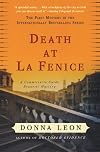
Early one morning Commissario Guido Brunetti of the Venice Police confronts a grisly sight when the body of a young man is fished out of a fetid canal. All the clues point to a violent mugging, but for Brunetti the motive of robbery seems altogether too convenient. When something is discovered in the victim's apartment that suggests the existence of a high-level conspiracy, Brunetti becomes convinced that somebody is taking great pains to provide a ready-made solution to the crime. Rich with show more atmosphere and marvelous plotting, Death in a Strange Country is a superb novel in Donna Leon's chilling Venetian mystery series. show lessTags
Recommendations






































Member Recommendations

muumi Howard Engel and Donna Leon have each written a book in the extremely specialized sub-genre of murder mysteries involving illegal toxic waste disposal (are there more than two books in the genre?). Engel's is written in 1990, only three years before Donna Leon's: the same era. Toxic waste was an unfamiliar concept. The protagonists each need to buy a book or two and explain the problem to us readers. Engel is Canadian as is his protagonist, and there's a lot less subtlety than with Leon's Brunetti. The books couldn't be more different in setting and characters (Niagara Peninsula of Ontario vs. Venice and Vicenza, Italy) but it's quite interesting, historically and culturally, to see the dawning of awareness about some of the issues surrounding industrial waste disposal in Canada and Italy.
Member Reviews
Death in a strange country is the second Brunetti novel - a body found floating in the canal is identified as that of an American serviceman from the giant base at Vicenza, leading to an investigation that brings to light not only the inevitable political corruption but also some of the more uncomfortable aspects of the long-standing US military presence in Italy.
Like all long-term expats, Leon has fun criticising both the country she comes from and the one she's living in. It's good to see that her Venice is not simply the tourist-gem we like to think it is, and it's also nice that it's never a foregone conclusion that Brunetti will triumph over the systematic evils he finds in his investigations. On the other hand, the things Leon show more chooses to represent "the real Italy" sometimes almost seem to be drawn from the other side of the same box of Italian clichés as tourist-Venice - tax-evasion, the maffia, chiuso per restauri, pollution, corrupt businessmen and politicians, etc. Maybe it's all a bit too easy...? show less
Like all long-term expats, Leon has fun criticising both the country she comes from and the one she's living in. It's good to see that her Venice is not simply the tourist-gem we like to think it is, and it's also nice that it's never a foregone conclusion that Brunetti will triumph over the systematic evils he finds in his investigations. On the other hand, the things Leon show more chooses to represent "the real Italy" sometimes almost seem to be drawn from the other side of the same box of Italian clichés as tourist-Venice - tax-evasion, the maffia, chiuso per restauri, pollution, corrupt businessmen and politicians, etc. Maybe it's all a bit too easy...? show less
We return to Venice in this second of the series featuring Commissario Guido Brunetti as he is confronted with the death of a young American and a possible suicide of the doctor who identified the body. Since Brunetti's superior, Patta, wants the murder of the American resolved quickly, Guido goes to the American Army base in Vicenza to gather information on the victim and to try to determine why he was killed. When later he is handed on the case involving a mugging of a VIP and theft of expensive art, little does Guido know that the cases are connected and will result in an unusual ending.
I really enjoy these mysteries because Donna Leon serves up the clues in a slow and subtle way so that that the reader is going at exactly the same show more pace as the character. She delicately weaves the story introduces each element that is needed to resolve the mystery at the same time giving it the necessary importance and details to push the reader forward. Her interconnection of the characters and the story is quite masterful.
I have to admit that this story was so well-written that at times I truly believed that it could be happening and that really seemed so real that I wonder if Ms. Leon knows something that we all don't. Should we all be so trusting of a foreign government that doesn't behave the way we want? Should any country have carte blanche to behave in a manner that is not to the betterment of all mankind? This book definitely posed so very interesting questions about our or any society and made me stop and wonder. At the same time as I am wondering, I was wishing that I could visit all the places that she described with such vivid preciseness - the beauty of the city with the contrasts of its problems, oh well, maybe someday. show less
I really enjoy these mysteries because Donna Leon serves up the clues in a slow and subtle way so that that the reader is going at exactly the same show more pace as the character. She delicately weaves the story introduces each element that is needed to resolve the mystery at the same time giving it the necessary importance and details to push the reader forward. Her interconnection of the characters and the story is quite masterful.
I have to admit that this story was so well-written that at times I truly believed that it could be happening and that really seemed so real that I wonder if Ms. Leon knows something that we all don't. Should we all be so trusting of a foreign government that doesn't behave the way we want? Should any country have carte blanche to behave in a manner that is not to the betterment of all mankind? This book definitely posed so very interesting questions about our or any society and made me stop and wonder. At the same time as I am wondering, I was wishing that I could visit all the places that she described with such vivid preciseness - the beauty of the city with the contrasts of its problems, oh well, maybe someday. show less
A body found floating in a Venetian canal turns out to be an American military doctor. It looks like a mugging gone wrong but Commissario Brunetti is not convinced.
It's rather darker than the previous book, with a despairing ending, nothing having really changed despite four deaths.
It's rather darker than the previous book, with a despairing ending, nothing having really changed despite four deaths.
Death in a Strange Country by Donna Leon is a Commissario Guido Brunetti Mystery, Book #2.
There is very good plotting and excellent characters. Guido’s walks are very atmospheric.
Again, the city of Venice is one of the main characters in the series.
I find the corruption, the dishonesty and the greed very sad and frustrating. Some parts of this book were hard to read. But a very good addition to this long-running series. ****
There is very good plotting and excellent characters. Guido’s walks are very atmospheric.
Again, the city of Venice is one of the main characters in the series.
I find the corruption, the dishonesty and the greed very sad and frustrating. Some parts of this book were hard to read. But a very good addition to this long-running series. ****
Sometimes what you want from a book is to spend time with old friends. I love Guido Brunetti, I love his wife Paola and their children and like to catch up with them over their delicious family meals in their Venetian apartment. And I enjoy the plots of all the Commissario Brunetti books too. This is however, quite a dark tale (murders always are, of course), with its suggestion that corruption in Italy as elsewhere, is endemic and underwrites everyday life. Here is a death in canal. Is it simply a robbery gone wrong, or something more sinister? Brunetti has his work cut out to establish that this death, like the two that follow, is indeed the result of corruption at the highest level. There is no happy ending in a situation like show more this.... or indeed any real conclusion to such a story show less
In the early morning hours, Commissario Guido Brunetti gets a call. A body has washed up at the edge of a canal. It turns out to be an American from the nearby military base. What was he doing in Venice?
Initially it is thought to be a mugging, but Brunetti feels there is something more, even if his superior, Vice-Questore Patta, feels it is the quickest way to handle it.
Brunetti visits the victim’s apartment and finds something that doesn’t go with the image projected by co-workers and others who know the victim. It points more to some upper level dirty dealing.
Brunetti finds he has to step carefully and avoid stepping on toes of those higher up the food chain. Some of these people can and do make irritating, nosey people show more disappear.
Little by little, Brunetti gets all the pieces and makes sense of the puzzle. It is not just local Venetians, but also high powered internationals that are involved.
Leon’s description of Venice, the rhythm of life there and the people creates a great backdrop for her characters and plot. Brunetti’s concern about solving the crime and focus pull you along in his path to a solution. show less
Initially it is thought to be a mugging, but Brunetti feels there is something more, even if his superior, Vice-Questore Patta, feels it is the quickest way to handle it.
Brunetti visits the victim’s apartment and finds something that doesn’t go with the image projected by co-workers and others who know the victim. It points more to some upper level dirty dealing.
Brunetti finds he has to step carefully and avoid stepping on toes of those higher up the food chain. Some of these people can and do make irritating, nosey people show more disappear.
Little by little, Brunetti gets all the pieces and makes sense of the puzzle. It is not just local Venetians, but also high powered internationals that are involved.
Leon’s description of Venice, the rhythm of life there and the people creates a great backdrop for her characters and plot. Brunetti’s concern about solving the crime and focus pull you along in his path to a solution. show less
I continue to be an enormous fan of the Commisario Brunetti series. For those of you who may have missed my earlier reviews, Donna Leon teaches English for the University of Maryland Extension near Venice and has lived in Italy for many years. She portrays the flavor of Italian life vividly, and it's clear that while she must love living there, petty and not-so-petty corruption is rampant. She makes delightfully wicked little comments. For example, the Carabineri major, interviewed by Brunetti on an American army post - not base, that's for the Air Force - waxes on about the characteristics of Americans. They tend to be arrogant, of course, but Americans are really too insecure to be truly arrogant, "unlike the Germans." show more Classic.
Brunetti is walking home through "battalions of ravaging tourists who centered their attacks on the area around San Marcos. Each year it grew harder to have patience with them, to put up with their stop-and-go walking, with their insistence on walking three abreast through even the narrowest calles. There were times when he wanted to scream at them, even push them aside, but he contented himself by taking out all of his aggressions through the single expedient of refusing to stop, or in any way alter his course, in order to allow them a photo opportunity. Because of this, he was sure that his body, back and elbow appeared in hundreds of photos and videos. He sometimes contemplated the disappointed Germans looking at their summer videos during the violence of the North Sea storm as they watched a purposeful, dark-suited Italian walk in front of Tante Gerda or an Onkel Franz, blurring, if only for a moment the lederhosen-clad tourists" with what was probably the only real Italian they would see during their stay.
An American soldier, Sgt. Michael Foster, an American public health inspector at the American military hospital in Vicenza, has been found floating in one of the Venetian canals. In an act of true heroism, two policemen jump in the water - the water being so dirty, hence the heroism - and drag him out. Brunetti's superior would like nothing better than to have the case buried, because the idea of an American being killed in Venice would ruin the tourist trade. Brunetti purposefully manipulates his boss into thinking the murder might have been committed elsewhere - must think of tourism, of course - so he can be authorized to travel to the man's post and investigate. An army captain, Dr. Peters, a woman doctor, who had come to Venice to identify the body in the morgue, had vomited from what Brunetti thought was from fear, when she saw how the man had been killed, by a knife plunging directly through the ribs into the heart. He suspects something is rather odd about this case, especially when he finds some cocaine that was not well hidden in the dead soldier's apartment, apparently after it had been thoroughly searched by the military authorities. The case becomes more complicated as both he and the Carabinieri major are politely warned off the case after they discover a connection between the dead soldier, a sick boy, contracts for the disposal of toxic waste, Brunetti's father-in-law, and the ostensible suicide by heroin overdose of Dr. Peters, not to mention the theft of some famous paintings from a prominent businessman.
As with many of her other books, you are left at the end deeply saddened by the corruption, the illicit use of power and its effect on Brunetti, who, despite all, struggles on trying to stay an honest cop. He is a wonderful character. show less
Brunetti is walking home through "battalions of ravaging tourists who centered their attacks on the area around San Marcos. Each year it grew harder to have patience with them, to put up with their stop-and-go walking, with their insistence on walking three abreast through even the narrowest calles. There were times when he wanted to scream at them, even push them aside, but he contented himself by taking out all of his aggressions through the single expedient of refusing to stop, or in any way alter his course, in order to allow them a photo opportunity. Because of this, he was sure that his body, back and elbow appeared in hundreds of photos and videos. He sometimes contemplated the disappointed Germans looking at their summer videos during the violence of the North Sea storm as they watched a purposeful, dark-suited Italian walk in front of Tante Gerda or an Onkel Franz, blurring, if only for a moment the lederhosen-clad tourists" with what was probably the only real Italian they would see during their stay.
An American soldier, Sgt. Michael Foster, an American public health inspector at the American military hospital in Vicenza, has been found floating in one of the Venetian canals. In an act of true heroism, two policemen jump in the water - the water being so dirty, hence the heroism - and drag him out. Brunetti's superior would like nothing better than to have the case buried, because the idea of an American being killed in Venice would ruin the tourist trade. Brunetti purposefully manipulates his boss into thinking the murder might have been committed elsewhere - must think of tourism, of course - so he can be authorized to travel to the man's post and investigate. An army captain, Dr. Peters, a woman doctor, who had come to Venice to identify the body in the morgue, had vomited from what Brunetti thought was from fear, when she saw how the man had been killed, by a knife plunging directly through the ribs into the heart. He suspects something is rather odd about this case, especially when he finds some cocaine that was not well hidden in the dead soldier's apartment, apparently after it had been thoroughly searched by the military authorities. The case becomes more complicated as both he and the Carabinieri major are politely warned off the case after they discover a connection between the dead soldier, a sick boy, contracts for the disposal of toxic waste, Brunetti's father-in-law, and the ostensible suicide by heroin overdose of Dr. Peters, not to mention the theft of some famous paintings from a prominent businessman.
As with many of her other books, you are left at the end deeply saddened by the corruption, the illicit use of power and its effect on Brunetti, who, despite all, struggles on trying to stay an honest cop. He is a wonderful character. show less
Members
- Recently Added By
Lists

Donna Leon
23 works; 5 members

Library Books/Loans
37 works; 1 member

Books Read in 2018
4,360 works; 110 members

books read in 2019
50 works; 1 member
Author Information

64+ Works 46,129 Members
Donna Leon was born on September 29, 1942 in Montclair, New Jersey. She taught English literature in England, Switzerland, Iran, China, Italy and Saudi Arabia. She is the author of a Commissario Guido Brunetti Mystery series. Friends in High Places, a novel from the series, won the Crime Writers Association Macallan Silver Dagger for Fiction in show more 2000. German Television has produced 16 Commissario Brunetti mysteries for broadcast. She was a crime reviewer for the Sunday Times. She has written the libretto for a comic opera and has set up her own opera company, Il Complesso Barocco. Her titles Jewels of Pardise, The Golden Egg, By Its Cover, Falling in Love and The Waters of Eternal Youth made The New York Times Bestseller List. (Bowker Author Biography) show less
Some Editions
Awards and Honors
Awards
Notable Lists
Series

Belongs to Publisher Series
detebe (22936)
Work Relationships
Common Knowledge
- Canonical title
- Death in a Strange Country
- Original title
- Death in a Strange Country
- Original publication date
- 1993
- People/Characters
- Commissario Guido Brunetti; Paola Falier Brunetti; Vice-Questore Guiseppe Patta; Signor Viscardi; Sergeant Vianello; Maggiore Ambrogiani
- Important places
- Venice, Veneto, Italy
- Epigraph
- Volgi intorno lo sguardo, o sire, e
vedi qual strage orrenda nel tuo
nobil regno, fa il crudo mostro. Ah
mira allagate di sangue quelle
pubbliche vie. Ad ogni passo vedrai
chi geme, e l'alma gonfia d'atro
... (show all)velen dal corpo esala.
Gaze around you, oh sire, and see
that terrible destruction the cruel
monster has wrought in your noble
kingdom. Look at the streets
swamped in blood. At every step
you see someone groaning, the
spirit leaving a corpse swollen with
horrible poison.
--Mozart, Idomeneo - Dedication
- For Peggy Flynn
- First words
- The body floated facedown in the murky water of the canal.
- Last words
- (Click to show. Warning: May contain spoilers.)"Guido, why are you crying?"
- Original language*
- Englisch
*Some information comes from Common Knowledge in other languages. Click "Edit" for more information.
Classifications
Statistics
- Members
- 2,307
- Popularity
- 8,849
- Reviews
- 77
- Rating
- (3.69)
- Languages
- 23 — Catalan, Danish, Dutch, English, Estonian, Finnish, French, German, Greek, Hungarian, Japanese, Norwegian (Bokmål), Norwegian, Polish, Romanian, Russian, Croatian, Slovenian, Spanish, Swedish, Turkish, Portuguese (Brazil), Chinese, traditional
- Media
- Paper, Audiobook, Ebook
- ISBNs
- 76
- ASINs
- 21