
On This Page
Description
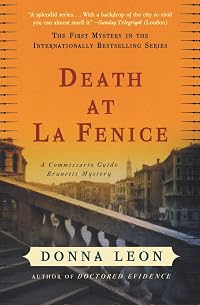
A conductor succumbs to cyanide at the famed Venice opera house, in the first mystery in the New York Times–bestselling, award-winning series.During intermission at the famed La Fenice opera house in Venice, Italy, a notoriously difficult and widely disliked German conductor is poisoned—and suspects abound. Guido Brunetti, a native Venetian, sets out to unravel the mystery behind the high-profile murder. To do so, he calls on his knowledge of Venice, its culture, and its dirty show more politics. Along the way, he finds the crime may have roots going back decades—and that revenge, corruption, and even Italian cuisine may play a role.
"One of the most exquisite and subtle detective series ever." —The Washington Post
"A brilliant writer . . . an immensely likable police detective who takes every murder to heart." —The New York Times Book Review. show less
Tags
Recommendations

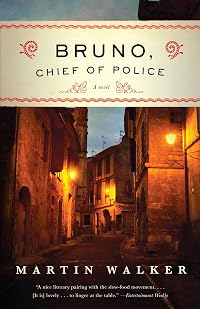
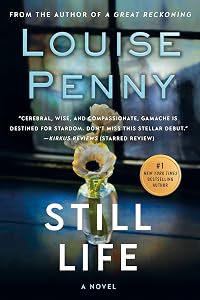
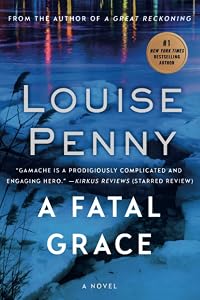
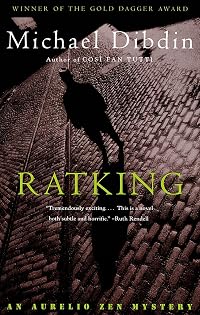
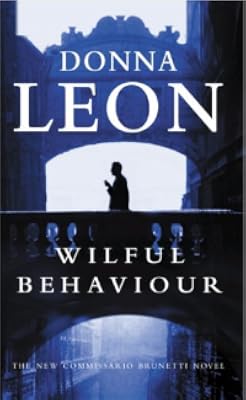
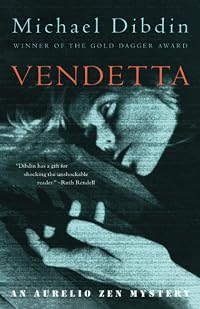

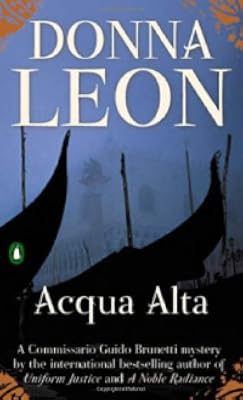
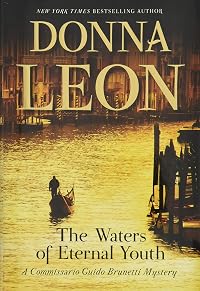



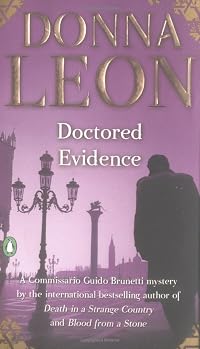

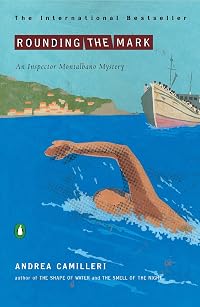




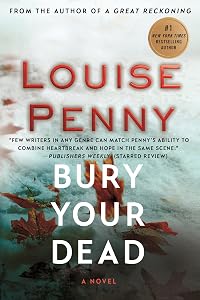
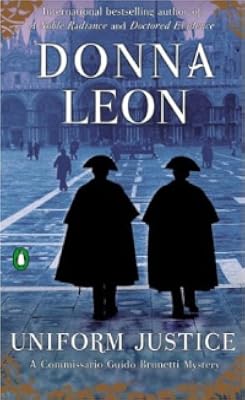
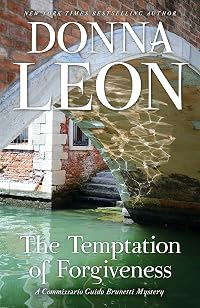


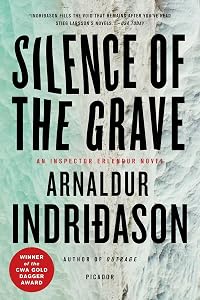
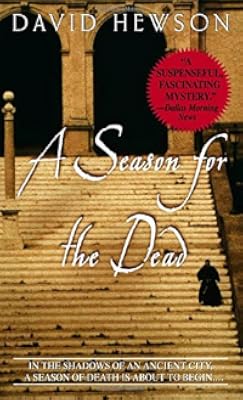


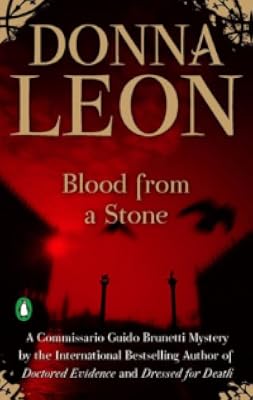
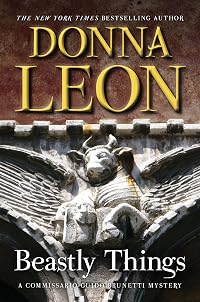
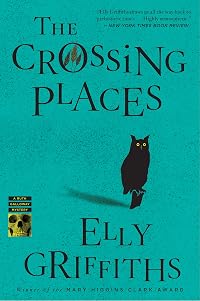



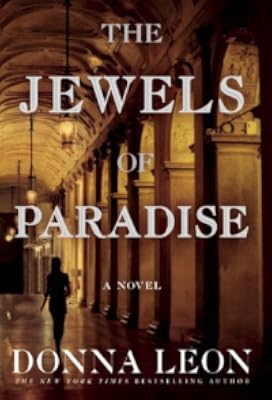
Member Recommendations

bookmomo Leon is more atmospherical, more into Italy. In Hewson one finds more action and flashiness.
Member Reviews
Commissario Guido Brunetti makes his debut in this wonderful mystery set in Venice. World-renowned Maestro Helmut Wellauer is taken suddenly ill after the second act of La Traviata – or so management would have the audience believe. But it’s clear to the doctor who volunteers her assistance that the Maestro is beyond help. In fact, he’s quite dead when she arrives at his dressing room. It quickly becomes clear to Brunetti that there are several possible suspects, and that the victim, while a musical genius, had a very dark history.
I was quickly caught up in the plot, and was kept guessing to the end. I also enjoyed the depth of character, and especially the relationship between Brunetti and his lovely wife Paola. This has been on show more my TBR for a long time and I don’t know what I was waiting for. So glad I finally got to it; I’ll definitely keep reading this series. show less
I was quickly caught up in the plot, and was kept guessing to the end. I also enjoyed the depth of character, and especially the relationship between Brunetti and his lovely wife Paola. This has been on show more my TBR for a long time and I don’t know what I was waiting for. So glad I finally got to it; I’ll definitely keep reading this series. show less
Commissario Brunetti, a chief detective in Venice, is a splendid character. He feels so very human working through each day trying to solve who murdered a world-famous conductor in the middle of the opera. I suspect I relate to him as we work through work problems in similar ways. I appreciated how the author described his interactions at home, his boss, the witnesses all in relation to his workaday issues. Excellent descriptions of Venice as well. I felt like I knew it so well and it helped that I’d spent three days there so I could easily imagine some of the descriptions. But also regretted not seeing some of Venice the author described: on a clear day, you can make out the Dolomites? Wow! To me the mystery was the least interesting show more part of the book—I really loved Guido! So I hope this is the beginning of a lovely relationship with this series! show less
In the best tradition of murder mysteries, the first Brunetti novel opens with the sudden death of the maestro between the second and third acts of La Traviata. And of course it turns out that just about everyone in his immediate surroundings could have had a personal reason to detest the conductor - an authoritarian German with touches of Karajan, Furtwängler and Richard Strauss in his back-story - even though most of them say a love of his music would have held them back from actually killing him.
The solution to the mystery turns out to be relatively simple, and mostly involves Brunetti holding back on asking the most obvious questions until we get to page 200; the reason to read this book is not the crime-story itself, but rather show more Leon's affectionate, mildly satirical view of Venice and the people who live there. She seems to be very good at catching what it is about the Italian professional classes that makes them peculiarly Italian, without quite turning her characters into stereotypes. (It's also nice to see how much LGBT interest there is in this book - not something that would be completely obvious for a mainstream crime novel published 25 years ago.)
By the sound of it, the mood gets a little blacker and more political in the later books, which is probably a good thing - you would fairly soon get fed up with the light, frivolous atmosphere of this one if it carried on without discovering any further depths in the characters. I don't know if the plots get any more complex, though. show less
The solution to the mystery turns out to be relatively simple, and mostly involves Brunetti holding back on asking the most obvious questions until we get to page 200; the reason to read this book is not the crime-story itself, but rather show more Leon's affectionate, mildly satirical view of Venice and the people who live there. She seems to be very good at catching what it is about the Italian professional classes that makes them peculiarly Italian, without quite turning her characters into stereotypes. (It's also nice to see how much LGBT interest there is in this book - not something that would be completely obvious for a mainstream crime novel published 25 years ago.)
By the sound of it, the mood gets a little blacker and more political in the later books, which is probably a good thing - you would fairly soon get fed up with the light, frivolous atmosphere of this one if it carried on without discovering any further depths in the characters. I don't know if the plots get any more complex, though. show less
When a renowned conductor dies of cyanide poisoning during the second intermission of La Traviata, the case falls to Commissario Guido Brunetti. In order to find out who killed the conductor and why, Brunetti must dig into his past. Could the motive have something to do with his rumored Nazi party membership during the war? Or maybe his known antipathy to homosexuals? Or something else altogether? In Venice, sometimes who you know is as important as what you know. Brunetti uses connections of family and friends to gather the information he needs to solve the case.
This book differs from many police procedurals since Brunetti spends more time interviewing witnesses and suspects than he does looking at forensic evidence and reading lab show more reports. In some ways it reads like an Agatha Christie novel dropped into an Italian setting. I enjoyed the musical angle to the plot, and I love the Venetian setting. I look forward to continuing with this series. show less
This book differs from many police procedurals since Brunetti spends more time interviewing witnesses and suspects than he does looking at forensic evidence and reading lab show more reports. In some ways it reads like an Agatha Christie novel dropped into an Italian setting. I enjoyed the musical angle to the plot, and I love the Venetian setting. I look forward to continuing with this series. show less
between 3 and 3.5 stars. this is really well written, the main character launching the series is enjoyable to spend time with, the location is lovely, and the mystery is good. but somehow i wasn't all that interested in the mystery aspect of it, and i wanted more from the setting (it might not be fair, but i was told that leon's books have venice as a secondary character and that didn't feel as true as i'd been led to believe; at least in this one.) but she did an exemplary job with it. impeccable writing and characters i look forward to spending more time with.
while i wasn't all that into the mystery, i loved that there wasn't actually a murder in the end. it always makes me happy when something like that happens. even though, in this show more case, it seemed a bit far-fetched with the antibiotics causing deafness. still, i liked the way that worked out.
i thought the queer aspect was totally surprising for 1992, but i was glad to see it and thought she handled it well, especially for the time and for a tertiary side story. and of course i loved the character brett, even if i didn't love her lover. i was also surprised by the off-the-page sexual violence that was part of the story, and i wish that elizabeth wellauer had behaved differently for her daughter, but then maybe what she did was enough, even if it might not have seemed so in the moment to the girl. along those lines, i really liked that she seemed to have a point here, that she was making this book about something bigger, and of course i'm partial to it being about trauma and sexual violence. she did it well. especially that scene where the old woman tells of the rape of her young sister.
i'm not sure why i didn't like this more because i really can't think of anything to genuinely complain about, and i did like it, but i didn't love it for some reason. that said, i would definitely read on in this series as i really liked the main character and his wife, and the setting and writing. show less
i thought the queer aspect was totally surprising for 1992, but i was glad to see it and thought she handled it well, especially for the time and for a tertiary side story. and of course i loved the character brett, even if i didn't love her lover. i was also surprised by the off-the-page sexual violence that was part of the story, and i wish that elizabeth wellauer had behaved differently for her daughter, but then maybe what she did was enough, even if it might not have seemed so in the moment to the girl. along those lines, i really liked that she seemed to have a point here, that she was making this book about something bigger, and of course i'm partial to it being about trauma and sexual violence. she did it well. especially that scene where the old woman tells of the rape of her young sister.
i'm not sure why i didn't like this more because i really can't think of anything to genuinely complain about, and i did like it, but i didn't love it for some reason. that said, i would definitely read on in this series as i really liked the main character and his wife, and the setting and writing. show less
This, the first book in the Commissario Brunetti series, is the first book I've read by the author. It was a decent enough mystery, ie the clues and round-up made good sense, but it didn't feel as if the crime and its solving was the main focus of the book. Rather, it felt more like a slice-of-life tale that happens to be based around a mystery. We follow Brunetti around a comprehensively described Venice (I can't speak for accuracy) while he interviews various witnesses and gathers evidence. The pace was so leisurely that I didn't feel he was particularly concerned about solving it, and the tension level remained low throughout. As in a lot of police procedurals, Brunetti had a superior pressuring him and wanting to take the credit, show more but that didn't seem to bother him much either.
At times, the prose felt clunky and repetitive. The author frequently pops into other character's heads to to let the reader know what they're thinking, which felt unnecessary. Of course, we never get told that a potential suspect is lying, other than Brunetti sometimes thinking they are. He always turns out to be correct in his suppositions. When combined with the head-hopping, that gives me the impression of considerable overlap between omniscient author and the actual character. We don't get the pleasure of seeing Brunetti figuring things out.
For my tastes, there was too much belabouring of "Of course xx acted this way because they were/were not Italian," as if nationality handwaved away any kind of behaviour. I didn't notice Brunetti being worried or frustrated or taken aback, which made him feel very distant as a character. I quite enjoyed his domestic scenes, though I wondered why eg he was surprised at his maths prodigy daughter saying something maths-related and then having to remind himself she was good at maths, as if he'd forgotten. It didn't feel consistent.
I'd say this book's worth trying if you like your mysteries with a gentle pace and with an almost domestic feel. show less
At times, the prose felt clunky and repetitive. The author frequently pops into other character's heads to to let the reader know what they're thinking, which felt unnecessary. Of course, we never get told that a potential suspect is lying, other than Brunetti sometimes thinking they are. He always turns out to be correct in his suppositions. When combined with the head-hopping, that gives me the impression of considerable overlap between omniscient author and the actual character. We don't get the pleasure of seeing Brunetti figuring things out.
For my tastes, there was too much belabouring of "Of course xx acted this way because they were/were not Italian," as if nationality handwaved away any kind of behaviour. I didn't notice Brunetti being worried or frustrated or taken aback, which made him feel very distant as a character. I quite enjoyed his domestic scenes, though I wondered why eg he was surprised at his maths prodigy daughter saying something maths-related and then having to remind himself she was good at maths, as if he'd forgotten. It didn't feel consistent.
I'd say this book's worth trying if you like your mysteries with a gentle pace and with an almost domestic feel. show less
Members
- Recently Added By
Lists

Favorite Series
238 works; 94 members

Best Noir Fiction
160 works; 14 members

Donna Leon
23 works; 5 members

Books Read in 2022
5,166 works; 114 members

Book Worlds We'd Like To Visit
322 works; 158 members

BBC World Book Club
265 works; 5 members

Books Read in 2024
4,623 works; 126 members

Italian adventures
21 works; 1 member

Top Five Books of 2022
736 works; 272 members

Books Read in 2021
5,361 works; 114 members

Europe
205 works; 6 members

Books Read in 2020
4,379 works; 124 members

Books Read in 2018
4,360 works; 110 members

Books Read in 2017
4,249 works; 130 members

BBC Radio 4 Bookclub
340 works; 13 members

Opera in fiction
15 works; 6 members

Travel Reads
26 works; 1 member
Author Information

64+ Works 46,129 Members
Donna Leon was born on September 29, 1942 in Montclair, New Jersey. She taught English literature in England, Switzerland, Iran, China, Italy and Saudi Arabia. She is the author of a Commissario Guido Brunetti Mystery series. Friends in High Places, a novel from the series, won the Crime Writers Association Macallan Silver Dagger for Fiction in show more 2000. German Television has produced 16 Commissario Brunetti mysteries for broadcast. She was a crime reviewer for the Sunday Times. She has written the libretto for a comic opera and has set up her own opera company, Il Complesso Barocco. Her titles Jewels of Pardise, The Golden Egg, By Its Cover, Falling in Love and The Waters of Eternal Youth made The New York Times Bestseller List. (Bowker Author Biography) show less
Some Editions
Awards and Honors
Series

Belongs to Publisher Series
Points (514)
Harper Perennial Olive Editions (2019 Olive)
Work Relationships
Is contained in
The First Donna Leon Collection: Death at La Fenice; Death in a Strange Country; The Anonymous Venetian (Dressed for Death) by Donna Leon
Has the adaptation
Has as a student's study guide
Common Knowledge
- Canonical title
- Death at La Fenice
- Original title
- Death at La Fenice
- Alternate titles*
- Méregpohár az operában
- Original publication date
- 1992-07-01
- People/Characters
- Commissario Guido Brunetti; Helmut Wellauer; Brett Lynch; Flavia Petrelli; Clemenza Santina; Demetriano Padovani (show all 8); Elizabeth Wellauer; Giuseppe Patta
- Important places
- Venice, Veneto, Italy; La Fenice Opera House
- Related movies
- Donna Leon Venezianisches Finale (2003)
- Epigraph
- Ah, signor, son rea di morte
E la morte io sol vi chiedo;
Il mio fallo tardi vedo;
Con quel ferro un sen ferite
Che non merita pietà.
Ah, sir, I'm guilty to death
And all that I ask is death;<... (show all)br>Too late I see my sin;
With your sword pierce this breast
Which merits no pity.
--Così Fan Tutte - Dedication
- For my mother
- First words
- The third gong, announcing that the opera was about to continue, sounded discreetly through the lobbies and bars of Teatro La Fenice.
- Quotations
- Why was it that, when children loved you, you knew everything, and when they were angry with you, you knew nothing?
he found a small, dark woman, leaning against the wall, smoking. From behind them came deep waves of music. ‘What's that?' Brunetti asked. ‘La Traviata,' the woman replied simply. ‘I know,' he said. ‘Does that mean th... (show all)ey went on with the performance?' ‘Even if the whole world falls,' she said, giving it that heavy weight and emphasis usually reserved for quotations. ‘Is that something from Traviata?' he asked. ‘No; Turandot,' she responded, voice calm.
"Helmut's stand, as a sort of guardian angel of Western morality or biblical standards, was pretty well known, but you can't survive very long in this world if you refuse to work with homosexuals. Helmut just made his own sor... (show all)t of moral truce with us.'
He trembled at the prospect of the Herculean task of getting the permits that would authenticate both that the apartment existed and that he had a right to live there. The mere fact that the walls were there and he lived with... (show all)in them would hardly be thought relevant. The bribes would be ruinous.
Though he had repeatedly asked her not to do this, she insisted on choosing a suspect at the beginning of any investigation he worked on, and she was generally wrong, for she always opted for the most obvious choice. Once, ex... (show all)asperated beyond bearing, he'd asked her why she insisted on doing it, and she'd explained that since she had written her dissertation on Henry James, she considered herself entitled to the release of finding the obvious in real life, since she'd never found it in his novels.
Cavaliere Giuseppe Patta had been sent to Venice three years before in an attempt to introduce new blood into the criminal justice system. In this case, the blood had been Sicilian and had proved to be incompatible with that ... (show all)of Venice.
He muttered the ritual ‘Permesso' without which an Italian could never enter another person's house.
His nose was flat, as though it had once been broken, and his eyes were sad, as though his heart had been. He looked like a stevedore who wrote poetry.
For reasons he had never understood, she read a different newspaper each morning, spanning the political spectrum from right to left, and languages from French to English. Years ago, when he had first met her and understood h... (show all)er even less, he had asked about this. Her response, he came to realize only years later, made perfect sense: ‘I want to see how many different ways the same lies can be told.'
So much of what we hear, we don't hear with our ears.' Seeing Brunetti's confusion, he explained. ‘We do a good deal of lipreading, we fill in missing words from the context of the others we do hear. - Last words
- (Click to show. Warning: May contain spoilers.)Nothing else was in the envelope.
- Publisher's editor*
- Oorspronkelijke uitgever Diogenes Verlag AG, Zürich
- Blurbers
- Hillerman, Tony; Isaacs, Susan; Brown, Rita Mae
- Original language
- English
- Canonical DDC/MDS
- 813.54
- Canonical LCC
- PS3562 .E534 .D4
- Disambiguation notice*
- De Amerikaanse Donna Leon (New Jersey, 1942) werkte als reisleidster in Rome en als copywriter in Londen. Ze doceerde literatuurwetenschap aan universiteiten in Iran, China en Saoedi-Arabië. Na vele jaren in Italië te hebbe... (show all)n gewoond, heeft ze zich nu in Zwitserland gevestigd, van waaruit ze nog regelmatig Venetië bezoekt. Haar boeken werden wereldberoemd door het charismatische personage van commissario Brunetti.
‘Donna Leon doet wat Georges Simenon niet meer kan: haar commissaris heet niet Maigret maar Brunetti, en het romantische decor is niet Parijs en omgeving, maar Venetië.’ – VN Detective & Thrillergids
*Some information comes from Common Knowledge in other languages. Click "Edit" for more information.
Classifications
Statistics
- Members
- 3,882
- Popularity
- 4,065
- Reviews
- 147
- Rating
- (3.65)
- Languages
- 25 — Basque, Catalan, Danish, Dutch, English, Estonian, Finnish, French, German, Hungarian, Korean, Lithuanian, Norwegian (Bokmål), Norwegian, Polish, Russian, Serbian, Croatian, Slovenian, Spanish, Swedish, Turkish, Portuguese (Portugal), Portuguese (Brazil), Chinese, traditional
- Media
- Paper, Audiobook, Ebook
- ISBNs
- 110
- UPCs
- 1
- ASINs
- 38