On This Page
Description
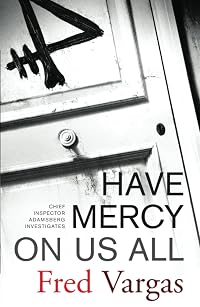
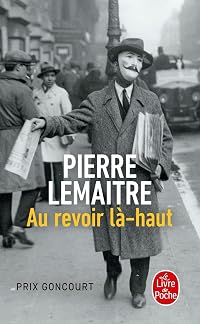
"In a small Parisian square, the ancient tradition of the town crier continues into modern times. The self-appointed crier, Joss Le Guern, reads out the daily news, snippets of gossip, and lately, ominous messages placed in his handmade wooden message box by an annonymous source that warn of an imminent onset of the bubonic plague."Tags
Recommendations
















Member Recommendations
Member Reviews
How to can you not like a detective who supervises 26 other homicide flics and needs to use mnemonics such as acne, prognathous, solicitude, Marcel to associate names with faces, and who indulges in self-examination along the lines of "You think you're a million miles away from the likes of Favre, and when occasion arises, there you are puddling about in the same pigsty." I won't provide any hints as to the nature of Favre because you should read the book. It's that good.
Chief Inspector Adamsberg and his assistant Danglard are a study in contrast. Adamsberg uses intuition while Danglard never trusts it and relies on facts and evidence. The two make a marvelous pair.
A modern town crier who collects little notes anonymously and then show more reads them from his soapbox in return for small change has been getting what appear to be nonsensical sentences. A woman comes to the police station to complain that someone has painted black backwards 4's with a fat foot and two little notches at the end 24 of the doors on her street. These are the beginnings of a nightmare for the inspector as the possibility of someone deliberately sprwading the plague begins to haunt him.
This is a very crafty police procedural that intertwines fear, revenge, tragedy, panic and faith in a complex story. Fred Vargas, a woman, writes in French and their are moments when one wonders a little about the translation (I have enormous respect for translators.) My French is so rusty I hesitate to quibble. show less
Chief Inspector Adamsberg and his assistant Danglard are a study in contrast. Adamsberg uses intuition while Danglard never trusts it and relies on facts and evidence. The two make a marvelous pair.
A modern town crier who collects little notes anonymously and then show more reads them from his soapbox in return for small change has been getting what appear to be nonsensical sentences. A woman comes to the police station to complain that someone has painted black backwards 4's with a fat foot and two little notches at the end 24 of the doors on her street. These are the beginnings of a nightmare for the inspector as the possibility of someone deliberately sprwading the plague begins to haunt him.
This is a very crafty police procedural that intertwines fear, revenge, tragedy, panic and faith in a complex story. Fred Vargas, a woman, writes in French and their are moments when one wonders a little about the translation (I have enormous respect for translators.) My French is so rusty I hesitate to quibble. show less
Wow. Vargas has created one of the strangest Chief-Inspectors in Adamsberg; laid-back but intense, thoughtful but doesn't care what people think of him, seemingly inattentive but always contemplating his cases, intuitively intelligent but considered illogical especially by Langard, his right-hand officer. He is definitely annoyingly compelling.
Vargas' mysteries are based on the most odd-ball plots I've ever read, capturing and tantalizing my attention and interest. I found Have Mercy on Us All to be one of her best mysteries. Faster paced, and full of more action, and more red-herrings than the others I've read.
An outstanding read.
Vargas' mysteries are based on the most odd-ball plots I've ever read, capturing and tantalizing my attention and interest. I found Have Mercy on Us All to be one of her best mysteries. Faster paced, and full of more action, and more red-herrings than the others I've read.
An outstanding read.
This is the third Adamsberg story, but the Three Evangelists manage to sneak in too, playing a small role as historical advisors. Rather to everyone's surprise, Adamsberg has been appointed head of a specialist murder brigade, and there's a running joke about his inability to remember the names of any of his new subordinates. As in L'homme aux cercles bleus, he gets involved in investigating a series of murders that are prefigured by the appearance of enigmatic symbols, and as in several of the other books, it turns out that the murderer is playing on one of the semi-rational fears that are lodged in our collective cultural memory: in this case the Plague.
The novel has its focus in a very specific spot in Paris, the Rue de la show more Gaîté/Boulevard Edgar-Quinet crossroads, in the shadow of the Tour Montparnasse, where a beached Breton fisherman, Joss Le Guern, has carved out a new career for himself by reinventing the profession of town-crier: for a 5 franc fee, he roars out small ads to the assembled locals three times a day. Vargas uses this quirky scenario as a clever way of leading us in to accept the idea of a village murder mystery set in the heart of a busy city, with all the main characters being the eccentrics who live or run businesses around this crossroads: an unfrocked schoolmaster who runs a Balzacian private hotel (complete with personalised serviette rings!) and makes lace on the side; the proprietor of a surf-shop whose sister is concerned that he'll catch his death of cold going around in a singlet all the time; a Norman barman descended directly from Thor; an ex-prostitute turned chanteuse, etc. It's all a bit M. Hulot, but it's so charming that Vargas manages to get us to suspend our disbelief for long enough to make it work.
Adamsberg gets involved when Joss becomes worried about some strange apocalyptic messages he's being asked to read out, and at the same time someone seems to be going around painting strange symbols on the doors of apartment buildings. With some help from Marc Vandoosler, he manages to work out the link between the two, but it doesn't get him very far. Then the first body is found, and things start getting very itchy...
Once again, this is a novel that's particularly enjoyable for the way it never goes quite where you're expecting it to: the characters are original, funny and believable, the dialogue very sharp. The mystery itself is absurdly complicated: it relies on a variant of a plot device that old-fashioned mystery writers occasionally used for a single murder (but generally avoided, because it is very hard to make it believable). Applying it to a serial-killer story shows considerable chutzpah - Vargas just about manages to get away with it, and she even adds a special twist of her own. show less
The novel has its focus in a very specific spot in Paris, the Rue de la show more Gaîté/Boulevard Edgar-Quinet crossroads, in the shadow of the Tour Montparnasse, where a beached Breton fisherman, Joss Le Guern, has carved out a new career for himself by reinventing the profession of town-crier: for a 5 franc fee, he roars out small ads to the assembled locals three times a day. Vargas uses this quirky scenario as a clever way of leading us in to accept the idea of a village murder mystery set in the heart of a busy city, with all the main characters being the eccentrics who live or run businesses around this crossroads: an unfrocked schoolmaster who runs a Balzacian private hotel (complete with personalised serviette rings!) and makes lace on the side; the proprietor of a surf-shop whose sister is concerned that he'll catch his death of cold going around in a singlet all the time; a Norman barman descended directly from Thor; an ex-prostitute turned chanteuse, etc. It's all a bit M. Hulot, but it's so charming that Vargas manages to get us to suspend our disbelief for long enough to make it work.
Adamsberg gets involved when Joss becomes worried about some strange apocalyptic messages he's being asked to read out, and at the same time someone seems to be going around painting strange symbols on the doors of apartment buildings. With some help from Marc Vandoosler, he manages to work out the link between the two, but it doesn't get him very far. Then the first body is found, and things start getting very itchy...
Once again, this is a novel that's particularly enjoyable for the way it never goes quite where you're expecting it to: the characters are original, funny and believable, the dialogue very sharp. The mystery itself is absurdly complicated: it relies on a variant of a plot device that old-fashioned mystery writers occasionally used for a single murder (but generally avoided, because it is very hard to make it believable). Applying it to a serial-killer story shows considerable chutzpah - Vargas just about manages to get away with it, and she even adds a special twist of her own. show less
Chief Inspector Jean-Baptiste Adamsberg has got what he really wanted, a murder squad to lead in Paris. The only problem now is that he has to learn 28 new names of the members of his team so it's a good job Danglard, his trusty no.2, has come along with him to help him out. While they're getting their new offices kitted out a woman comes in to report a strange case of graffiti, someone has been painting backwards 4's on the doors in her apartment block. Thinking nothing of it, Adamsberg fobs her off with some vague reassurances but is then more intrigued when the woman returns reporting other instances around different districts in Paris. Danglard has a fuzzy recollection of the symbol and Camille, Adamsberg's lover, also remembers show more seeing it in a history book of a friend. While all this has been going on, there's a town crier who's been getting some very strange messages, which seem to be snippets of old history books left for him to read. One of his friends manages to trace where the texts are coming from and what they portend they realise they should inform the police and as the friend in question has had dealings with Adamsberg before that's who they arrange to see and advise him that someone may be planning to release the black death at any moment. When he hears the tale, Adamsberg decides to track down the meaning of the backwards 4's and contacts Camille's historian friend, who turns out to be one of The Three Evangelists so if you've read that book it's a nice little cameo, and that also relates to the plague being used as a talisman to ward it off. Is someone seriously about to unleash the Black Death or is it just fear mongering or perhaps there's something else behind it all. Whichever, it's not long before the first victim is found and the pronouncements left for the crier are getting worse.
Adamsberg is not a typical detective, often following gut instinct even when there's no logic behind his feelings. He's somewhat absent-minded, especially with names and dates but he often sees more than even he realises at the time with pictures of events returning to him with a vital clue as to what he may be looking for. The author manages to use her knowledge as an historian to really help set the scene and ramp up the tension with each step. The story does meander along for a while at the beginning but Vargas' characters are so bright and varied I didn't mind one bit. Last time I visited this series I found the translation to be a bit clunky but even though it was done by the same person I had no problems this time around. An original voice in a genre that is increasingly difficult to find something that bit different, recommended for those looking for a more off-beat police procedural. show less
Adamsberg is not a typical detective, often following gut instinct even when there's no logic behind his feelings. He's somewhat absent-minded, especially with names and dates but he often sees more than even he realises at the time with pictures of events returning to him with a vital clue as to what he may be looking for. The author manages to use her knowledge as an historian to really help set the scene and ramp up the tension with each step. The story does meander along for a while at the beginning but Vargas' characters are so bright and varied I didn't mind one bit. Last time I visited this series I found the translation to be a bit clunky but even though it was done by the same person I had no problems this time around. An original voice in a genre that is increasingly difficult to find something that bit different, recommended for those looking for a more off-beat police procedural. show less
Fliehe weit - aber nimm dieses unwiderstehliche Buch mit! Die Pest in Paris! Das Gerücht hält die Stadt in Atem, seit auf immer mehr Wohnungstüren über Nacht eine seitenverkehrte 4 erscheint und morgens ein Toter auf der Straße liegt - schwarz. Kommissar Adamsberg sitzt in einer kleinen Brasserie in Montparnasse. Im Kopf hat er eine rätselhafte lateinische Formel, die auf jenen Türen stand - und vor sich, am Metroausgang, einen bretonischen Seemann, der anonyme Annoncen verliest. Auch lateinische darunter. Aber wo ist der Zusammenhang zwischen den immer zahlreicheren Toten in der Stadt und den sympathischen kleinen Leuten, die dem Bretonen so gebannt zuhören? Plötzlich hat Adamsberg, der Mann mit der unkontrollierten Phantasie, show more eine Vision. Ein meisterhafter Roman voll düsterer Spannung, leiser Poesie und Vargas' unnachahmlich schrägen Dialogen. show less
Adamsberg batte Evangelisti 5 a 3.
Beh, il risultato è puramente indicativo della vittoria, non c'è nessun significato preciso dietro i numeri.
Però resta il fatto che il commissario Adamsberg uscirebbe nettamente vincitore in un'ipotetica sfida con le altre creature di Fred Vargas. Perché?
Io direi fortuna: al commissario Adamsberg è capitato per caso di trovarsi in una storia più intrigante di quelle toccate in sorte ai simpatici storici/detective, una storia coinvolgente, ben costruita e ricca di suspence.
Tutto qui?
Beh, si.. si tratta di un giallo estivo d'altronde.. profondamente onesto, ma anche profondamente semplice, che non si presta a seconde letture o a interpretazioni intellettuali, solo una storia misteriosa che ti spinge show more ad arrivare fino alla fine e dei personaggi che non vedi l'ora di rincontrare in un altro libro. show less
Beh, il risultato è puramente indicativo della vittoria, non c'è nessun significato preciso dietro i numeri.
Però resta il fatto che il commissario Adamsberg uscirebbe nettamente vincitore in un'ipotetica sfida con le altre creature di Fred Vargas. Perché?
Io direi fortuna: al commissario Adamsberg è capitato per caso di trovarsi in una storia più intrigante di quelle toccate in sorte ai simpatici storici/detective, una storia coinvolgente, ben costruita e ricca di suspence.
Tutto qui?
Beh, si.. si tratta di un giallo estivo d'altronde.. profondamente onesto, ma anche profondamente semplice, che non si presta a seconde letture o a interpretazioni intellettuali, solo una storia misteriosa che ti spinge show more ad arrivare fino alla fine e dei personaggi che non vedi l'ora di rincontrare in un altro libro. show less
My first Fred Vargas book that features Inspector Adamsberg and a thoroughly enjoyable read. This not a police procedural but rather a police unprocedural as Adamsberg relies on his instincts to solve crimes. Paris is the backdrop for much of the book although it all seems a little provincial as Adamsberg does not seem to be a big city cop. The book stands out because of its outrageous crime scenario which at times almost takes the book into the realms of fantasy, but Vargas brings it all down to earth with a logical explanation of events. No graphic violence, plenty of characterisation, and a mystery that unfolds gradually as the story progresses, but it takes a commentary near the end to explain it all. I loved the idea of a modern show more day town crier and thought it would go well in my small town, but I would be worried if their were warnings of the plague and people started painting backward looking 4's on their front doors. Plenty of French culture to enjoy and Adamsberg being French is a consumate seducer of women and always stops for lunch. Great fun, tempted to read some more. show less
Members
- Recently Added By
Lists

Books Read in 2016
4,666 works; 197 members

Books Read in 2018
4,360 works; 110 members

Books We'd Want on a Desert Island
203 works; 131 members

Books Read in 2009
464 works; 11 members
Author Information

All Editions
Some Editions
Awards and Honors
Awards
Series

Belongs to Publisher Series
Work Relationships
Is contained in
Has the adaptation
Common Knowledge
- Canonical title
- Have Mercy on Us All
- Original title
- Pars vite et reviens tard
- Original publication date
- 2001-10; 2003 (English: Bellos) (English: Bellos); 2001
- People/Characters
- Jean-Baptiste Adamsberg (Commissaire); Adrien Danglard; Camille Forestier
- Important places
- Paris, Île-de-France, France; Marseille, Bouches-du-Rhône, Provence-Alpes-Côte d'Azur, France
- Related movies
- Pars vite et reviens tard (2007 | IMDb)
- Epigraph
- When manie woormes breede of putrefaction of the earth: toade stooes and rotten herbes abound: The Fruites and beastes of the earth are unsavoury: The wine becomes muddie: manie birds and beastes flye from that place.
- First words
- Joss's settled view was that folks walk faster in Paris than they do in Le Guilvenec, the fishing village where he'd grown up.
- Last words
- (Click to show. Warning: May contain spoilers.)Then he slowly went over and dropped his wish into the blue box that belonged to Joss Le Guern.
- Blurbers
- Mc Bain, Ed
- Original language
- French
- Disambiguation notice
- Original French title = Pars vite et reviens tard
Classifications
Statistics
- Members
- 1,771
- Popularity
- 12,424
- Reviews
- 58
- Rating
- (3.92)
- Languages
- 21 — Czech, Danish, Dutch, English, Finnish, French, German, Hebrew, Icelandic, Italian, Norwegian (Bokmål), Norwegian, Russian, Croatian, Slovak, Slovenian, Spanish, Swedish, Ukrainian, Portuguese (Portugal), Portuguese (Brazil)
- Media
- Paper, Audiobook, Ebook
- ISBNs
- 65
- ASINs
- 19