The Absentee
by Maria Edgeworth
On This Page
Description
On the eve of his coming of age, a young Lord begins to see the truth of his parents' lives: his mother cannot buy her way into society no matter how hard he tries, and his father is being ruined by her continued attempts. The young Lord then travels to his home in Ireland, encountering adventure on the way, and discovers that the native residents are being exploited in his father's absence..
Tags
Recommendations
















Member Reviews
I really liked this book. You could see the ending coming a mile off, but that didn't really spoil it. I enjoyed the characters: they were written very humorously, almost as caricatures, yet were very well developed and very 'real'.
Edgeworth's prose style is open and accessible, and contrasts with the more flowery writing of the contemporary Gothic genre. While the events of the novel are very much of their time (the book was first published in 1812), the characters could be from any period, and there are many modern parallels.
The author's passion for Ireland, political convictions and concern for the Irish people all come through strongly. Although it is a very political novel, it is not a political story; for those who are entirely show more uninterested in early nineteenth century Anglo-Irish absenteeism (which, I should think, is quite a few people), the book is entertaining for its own sake. show less
Edgeworth's prose style is open and accessible, and contrasts with the more flowery writing of the contemporary Gothic genre. While the events of the novel are very much of their time (the book was first published in 1812), the characters could be from any period, and there are many modern parallels.
The author's passion for Ireland, political convictions and concern for the Irish people all come through strongly. Although it is a very political novel, it is not a political story; for those who are entirely show more uninterested in early nineteenth century Anglo-Irish absenteeism (which, I should think, is quite a few people), the book is entertaining for its own sake. show less
This was really quite enjoyable. Helped, I think, by the recent tutoured read by Liz of Edgeworth's Belinda and the quite detailed introduction. I'm not sure of those two got me in the right mindset to read this, or put it all into context, but it helped.
It's a story of an heir to an estate in Ireland who is comming of age in London where his parents reside, as absentee landlords to their estate. He has a fondness for his home and so goes on a tour of the country and finds that one part of the esatate has a good overseer and the other does not. One part of the estate has tenants who are hard working, and a credit to themselves and their landlord, the other has bribery, underhand dealings, falling down houses and an oppressed tenantry. show more He then takes matters into his own hands and makes his social ladder climbing mother see that actually she fits back in Ireland a lot better than in London, and that they should return. It is slightly complicated by his search for a wife. He has a fondness for the woman brought up as his cousin, who in fact is the (believed) illigitimate child of his uncle's first wife, and so not a blood relative at all.
There is a lot going on slightly off stage, for want of a better description. This is set not long after the Union of Ireland with the rest of Britian into the UK, and so there is a fair amount of them & us going on, on both sides of the irish sea. This os not always evident, but in the choice of Grace Nugent as the cousin's name, Edgeworth was tapping into a thread of folk history related to the surname and the name Grace Nugent itself that gives her position within the family and her relationship (or possible relationship) with the heir a different spin. It's all very interesting and quite easy to read. A great social portrait of society at the time, with the poorer tenants featuring as well as the upper classes. show less
It's a story of an heir to an estate in Ireland who is comming of age in London where his parents reside, as absentee landlords to their estate. He has a fondness for his home and so goes on a tour of the country and finds that one part of the esatate has a good overseer and the other does not. One part of the estate has tenants who are hard working, and a credit to themselves and their landlord, the other has bribery, underhand dealings, falling down houses and an oppressed tenantry. show more He then takes matters into his own hands and makes his social ladder climbing mother see that actually she fits back in Ireland a lot better than in London, and that they should return. It is slightly complicated by his search for a wife. He has a fondness for the woman brought up as his cousin, who in fact is the (believed) illigitimate child of his uncle's first wife, and so not a blood relative at all.
There is a lot going on slightly off stage, for want of a better description. This is set not long after the Union of Ireland with the rest of Britian into the UK, and so there is a fair amount of them & us going on, on both sides of the irish sea. This os not always evident, but in the choice of Grace Nugent as the cousin's name, Edgeworth was tapping into a thread of folk history related to the surname and the name Grace Nugent itself that gives her position within the family and her relationship (or possible relationship) with the heir a different spin. It's all very interesting and quite easy to read. A great social portrait of society at the time, with the poorer tenants featuring as well as the upper classes. show less
The problem of absentee landlords who permitted their agents to cheat and gouge tenants in order to support a lavish lifestyle in the capital is the subject of this novel. The young lord Colambre becomes alarmed about the state of his father's finances and determines to discover the truth. He is in love with his cousin, but fears she is illegitimate. Contemporary readers will probably find it strange that he should regard this as a insuperable barrier to their marriage.
Read during Spring 2005
I enjoyed this much more than I expected to. There is the standard storyline of noble hero and demure heroine (of great virtue) but it is handled well and the various other characters are true characters, not stereotypes. I particularly liked Miss Broadhurst, who knows she is not a great catch except for her money but still wants to marry someone who loves her. Grace Nugent seems rather too unassuming to be true, as well as the saintly Mr. Burke. Edgeworth's contention that Ireland is best ruled by in-residence Ango-Irish nobility is problemantical for these times but I suppose was very popular at that time. A very enjoyable read.
I enjoyed this much more than I expected to. There is the standard storyline of noble hero and demure heroine (of great virtue) but it is handled well and the various other characters are true characters, not stereotypes. I particularly liked Miss Broadhurst, who knows she is not a great catch except for her money but still wants to marry someone who loves her. Grace Nugent seems rather too unassuming to be true, as well as the saintly Mr. Burke. Edgeworth's contention that Ireland is best ruled by in-residence Ango-Irish nobility is problemantical for these times but I suppose was very popular at that time. A very enjoyable read.
Full Review: http://wp.me/pns82-145
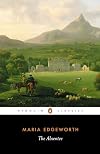
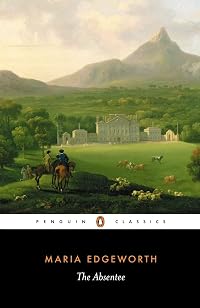
Maria Edgeworth was a popular author in the early 19th century that has almost been forgotten today. I never heard of her before I saw this Penguin edition at the used book store. Intrigued by a story focusing on the Anglo/Irish aspect of Regency life and bought it. Plus, I liked the cover.
Edgeworth did not like novels, she thought they were frivolous, and instead called her stories “moral tales.” While she does deal more directly with the lower class than Austen did, The Abesntee shares many characteristics of Austen’s best novels: honorable children with weak, fault filled parents, a personal journey of growth through learning for the main character, a romance, characters with extreme show more prejudices. Edgeworth main theme of The Absentee, that Anglo-Irish landowners should be resident stewards of their estates and not leave the managing to agents while the owners live in London, is admirable but she never delves into the Anglo/Irish question or the religious differences that permeated Ireland. So, while there is a “moral” to the novel, it is a very one-sided ideal and as such, weakens the point. Especially when seen 200 years on.
Edgeworth was a skilled writer that created some of the most uncomfortable scenes and situations I’ve read in a long time. She skewered not only the vacuous attempts of an Anglo-Irish gentlewoman to be admitted into London society, a society that would never accept her no matter what she did, but she also lambasted the haughty, condescending, cruel and pettiness of those same society ladies. Only a few characters are safe from Edgeworth’s wrath and those characters border on being a little too perfect. There were a few too many coincidences to be believable but, unlike real life, plots hinge on coincidental acquaintances. Part romance and part adventure, The Absentee would be an enjoyable read for any fan of Regency literature. show less
Maria Edgeworth was a popular author in the early 19th century that has almost been forgotten today. I never heard of her before I saw this Penguin edition at the used book store. Intrigued by a story focusing on the Anglo/Irish aspect of Regency life and bought it. Plus, I liked the cover.
Edgeworth did not like novels, she thought they were frivolous, and instead called her stories “moral tales.” While she does deal more directly with the lower class than Austen did, The Abesntee shares many characteristics of Austen’s best novels: honorable children with weak, fault filled parents, a personal journey of growth through learning for the main character, a romance, characters with extreme show more prejudices. Edgeworth main theme of The Absentee, that Anglo-Irish landowners should be resident stewards of their estates and not leave the managing to agents while the owners live in London, is admirable but she never delves into the Anglo/Irish question or the religious differences that permeated Ireland. So, while there is a “moral” to the novel, it is a very one-sided ideal and as such, weakens the point. Especially when seen 200 years on.
Edgeworth was a skilled writer that created some of the most uncomfortable scenes and situations I’ve read in a long time. She skewered not only the vacuous attempts of an Anglo-Irish gentlewoman to be admitted into London society, a society that would never accept her no matter what she did, but she also lambasted the haughty, condescending, cruel and pettiness of those same society ladies. Only a few characters are safe from Edgeworth’s wrath and those characters border on being a little too perfect. There were a few too many coincidences to be believable but, unlike real life, plots hinge on coincidental acquaintances. Part romance and part adventure, The Absentee would be an enjoyable read for any fan of Regency literature. show less
The Absentee is basically a political book using fiction to decry the decimation of the Irish by absentee landlords. Along the way it also jabs at the pretenses of English high society and softening it all with a love story and a happier than realistic ending.
The Absentee, published in 1812, is not a book I could make myself finish. The characters are either too perfect or too pathetic, and the subject matter is simply depressing. It is all about the problem of "absentee" landlords from Ireland in the early 1900s, trying to push their way up the social ladder in London society. They don't have the money for it, most of them, and they mismanage their estates because they are never there to do things properly. And all for the privilege of participating in a society where the established members of the ton despise them and only interact with them to eat their dinners and enjoy a sense of superiority over the Irish upstarts. Not exactly an engaging topic.
Nor are the characters compelling. Lady show more Clonbrony is snubbed again and again by her English peers, but pathetically keeps trying to win (buy) her way into the inner circle. Sounds too much like high school social cliques and drama to make me enjoy this character. She has, of course, a perfect and clearsighted son in Lord Colambre, who suffers in watching his mother waste money and his father plunge ever deeper into debt as he neglects the family estates in Ireland. There is also a cousin/ward, Grace Nugent, who is the perfect match for Lord Colambre but who, of course, has never dreamed of such a thing. Colambre must marry well and despite her many perfections, Grace has a questionable background which renders her, in Colambre's uptight sense of things, quite ineligible.
Unfortunately this is the first Maria Edgeworth title I've attempted, and I'm not hurrying back for more. There is some wit and humor to her writing, I suppose, but it's blunted by the boring stock characters and predictable, rather threadbare plotline. show less
Nor are the characters compelling. Lady show more Clonbrony is snubbed again and again by her English peers, but pathetically keeps trying to win (buy) her way into the inner circle. Sounds too much like high school social cliques and drama to make me enjoy this character. She has, of course, a perfect and clearsighted son in Lord Colambre, who suffers in watching his mother waste money and his father plunge ever deeper into debt as he neglects the family estates in Ireland. There is also a cousin/ward, Grace Nugent, who is the perfect match for Lord Colambre but who, of course, has never dreamed of such a thing. Colambre must marry well and despite her many perfections, Grace has a questionable background which renders her, in Colambre's uptight sense of things, quite ineligible.
Unfortunately this is the first Maria Edgeworth title I've attempted, and I'm not hurrying back for more. There is some wit and humor to her writing, I suppose, but it's blunted by the boring stock characters and predictable, rather threadbare plotline. show less
Members
- Recently Added By
Lists

1001 Books You Must Read Before You Die
1,448 works; 1,134 members

1898 C.K. Shorter List of Best 100 Novels
100 works; 34 members
Trinity College Booklist (1951): Class Ten, English Literature
358 works; 5 members
Author Information

149+ Works 3,775 Members
Maria Edgeworth was born in Blackbourton, Oxfordshire, England on January 1, 1767. She was educated at a school in Derby, England and then attended a school in London. In 1782, she went to live with her father at Edgeworthstown and acted as his chief assistant and secretary in the management of his estates. She helped educate her brothers and show more sisters, and the stories she invented for them were later published under the title The Parents Assistant. Her novels and stories fall into three categories: sketches of Irish life, commentary on contemporary English society, and instruction in children's moral training. Her first work, Letters for Literary Ladies, a plea for the reform of woman's education, was published in 1795. She would later collaborate with her father Richard Lovell Edgeworth on Practical Education and Essays on Professional Education. Her first novel, Castle Rackrent, was published in 1800. Her other works include Belinda, Moral Tales, The Absentee, and Helen. During the Irish famine (1845-1847), she did what she could to alleviate the suffering of the Irish peasants including having a large quantity of flour and rice sent over from Boston to give out among the starving. She died in 1849 at the age of 82. (Bowker Author Biography) show less
Some Editions
Awards and Honors
Series
Belongs to Publisher Series
Work Relationships
Common Knowledge
- Canonical title*
- El absentista
- Original title
- The Absentee
- Original publication date
- 1812
- Important places
- London, England, UK
- First words
- "Are you to be at Lady Clonbrony's gala next week?" said Lady Langdale to Mrs Dareville, whilst they were waiting for their carriages in the crush-room of the opera-house.
- Last words
- (Click to show. Warning: May contain spoilers.)"Your loving brother, Larry Brady."
*Some information comes from Common Knowledge in other languages. Click "Edit" for more information.
Classifications
Statistics
- Members
- 400
- Popularity
- 77,977
- Reviews
- 8
- Rating
- (3.43)
- Languages
- English, Spanish
- Media
- Paper, Audiobook, Ebook
- ISBNs
- 62
- ASINs
- 9