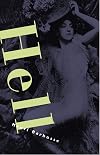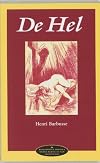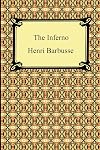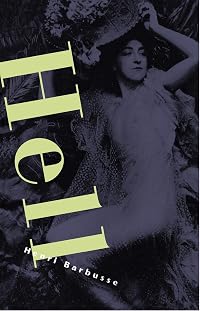
Hell
by Henri Barbusse
On This Page
Description
"You, my love, will be poor, so as to be more like all other women. In order for us to live together I shall work all day and so be your servant. You will work affectionately for us both in this room - and in my absence there will be nothing beside you but the pure, simple presence of your sewing machine. You will practice patience which is as long as life - and maternity, which is as heavy as the world."The Inferno, otherwise translated as Hell, is the controversial novel by Henri show more Barbusse. A lone young man spies through a hole in the wall of his hotel room. Through it he witnesses all possible events of life, such as marriage, death, lesbianism, adultery and incest. The story was condemned on its English release as gross voyeurism, but can also be read as the education of one isolated individual in the tragedy of life.
. show less
Tags
Recommendations































Member Reviews
Hell by Henri Barbusse was originally published in 1908. I found it a rather unusual book as the unnamed narrator, a young man staying in a Paris boarding house, spies on his fellow house guests through a peephole in his wall and after he has studied the private moments and secret activities he then makes assessments on their behaviour and their motivation.
I found being locked inside this voyeur’s head was a very claustrophobic experience. It appears this young man drifts through life without making a huge impression yet his morbid curiosity encourages him to watch others and then philosophize about human behaviour. But does he have the right to make these judgments or is he simply projecting his views on others.
I have seen reviews show more that give this book a very high rating but frankly, it creeped me out. The young man is annoying and arrogant and all his fancy musings cannot change the fact that he is a peeping tom taking advantage of the hole in his wall to leer at others. Obviously Hell is not a book that I enjoyed or even could see a lot of merit in. show less
I found being locked inside this voyeur’s head was a very claustrophobic experience. It appears this young man drifts through life without making a huge impression yet his morbid curiosity encourages him to watch others and then philosophize about human behaviour. But does he have the right to make these judgments or is he simply projecting his views on others.
I have seen reviews show more that give this book a very high rating but frankly, it creeped me out. The young man is annoying and arrogant and all his fancy musings cannot change the fact that he is a peeping tom taking advantage of the hole in his wall to leer at others. Obviously Hell is not a book that I enjoyed or even could see a lot of merit in. show less
This book is a work of solipsistic philosophy. Solipsism is basically the idea that the only thing of which a person can be certain is the existence of his own mind. The reality of anything outside of himself is up for debate. The final paragraph of the novel is a good summation of this philosophy, or at least a good summation of the implications of this philosophy:
The "hell" that the title refers to is apparently the hell of "man's longing to live," which Barbusse claims is the only Hell there is. As is apparent from the above excerpt, this is much less a novel than a vehicle for Barbusse to expound his philosophy and his attempt to create something that is True and Beautiful. And one of the most annoying things about this book is how the author is so gosh darn pleased with himself. He constantly asserts his special status as the only person with True Knowledge of life and beauty and poetry, etc.
In an almost unbelievable and (unintentionally?) hilarious bit at the end, the protag eavesdrops on a conversation with a famous writer in which the writer announces his intention to write a book about a man who makes a hole in the wall of his hotel room so he can spy on his neighbors. The protag reacts with disgust and contempt, mocking the writer's efforts at presenting the truth of human life. I found this scene sort of bizarre, as it seems totally sincere, and it would seem out of character with the rest of the book for the author to be poking fun at himself. Anyway, I don't know what to make of it; if I were this book, I wouldn't want to call attention to how ridiculously overblown I am.
There are good and beautiful moments in this book, but a lot of it is way overblown. The conversations between his neighbors are often florid and maudlin, mind-numbingly so. Characters will go on for pages and pages about tumors, bugs, and the decomposition of corpses, but not in an interestingly morbid way. Rather, it's all very dry and scientific (and a lot of the science is wrong, anyhow). Barbusse's sex scenes are pretty painful -- I can happily go the rest of my life without hearing a woman's bits referred to as a red and/or bleeding wound. There's a doctor who is apparently an infantile commie; he pops in to espouse the evils of property and patriotism. And there's a priest who is obviously in the book to fulfill an almost villainous role, that of the Big Bad Organized Religion. He doesn't talk like any priest I've ever heard; Barbusse's supposed devotion to truth obviously flags a bit in that scene.
What I found most interesting is how often the protag refers to the powerlessness or uselessness of God in the face of human life, even as he is setting himself up as an immensely impotent little deity -- an observer who influences nothing and no one and ruins himself so doing. In this case, I think the book does contain some perhaps inadvertent truth because the way I see it, whenever men set themselves up as gods, things really do go to Hell. show less
I believe that confronting the human heart and the human mind, which are composed of imperishable longings, there is only the mirage of what they long for. I believe that around us there is only one word on all sides, one immense word which reveals our solitude and extinguishes our radiance: Nothing! I believe that that word does not point to our insignificance or ourshow more
unhappiness, but on the contrary to our fulfilment and our divinity, since everything is in ourselves.
The "hell" that the title refers to is apparently the hell of "man's longing to live," which Barbusse claims is the only Hell there is. As is apparent from the above excerpt, this is much less a novel than a vehicle for Barbusse to expound his philosophy and his attempt to create something that is True and Beautiful. And one of the most annoying things about this book is how the author is so gosh darn pleased with himself. He constantly asserts his special status as the only person with True Knowledge of life and beauty and poetry, etc.
In an almost unbelievable and (unintentionally?) hilarious bit at the end, the protag eavesdrops on a conversation with a famous writer in which the writer announces his intention to write a book about a man who makes a hole in the wall of his hotel room so he can spy on his neighbors. The protag reacts with disgust and contempt, mocking the writer's efforts at presenting the truth of human life. I found this scene sort of bizarre, as it seems totally sincere, and it would seem out of character with the rest of the book for the author to be poking fun at himself. Anyway, I don't know what to make of it; if I were this book, I wouldn't want to call attention to how ridiculously overblown I am.
There are good and beautiful moments in this book, but a lot of it is way overblown. The conversations between his neighbors are often florid and maudlin, mind-numbingly so. Characters will go on for pages and pages about tumors, bugs, and the decomposition of corpses, but not in an interestingly morbid way. Rather, it's all very dry and scientific (and a lot of the science is wrong, anyhow). Barbusse's sex scenes are pretty painful -- I can happily go the rest of my life without hearing a woman's bits referred to as a red and/or bleeding wound. There's a doctor who is apparently an infantile commie; he pops in to espouse the evils of property and patriotism. And there's a priest who is obviously in the book to fulfill an almost villainous role, that of the Big Bad Organized Religion. He doesn't talk like any priest I've ever heard; Barbusse's supposed devotion to truth obviously flags a bit in that scene.
What I found most interesting is how often the protag refers to the powerlessness or uselessness of God in the face of human life, even as he is setting himself up as an immensely impotent little deity -- an observer who influences nothing and no one and ruins himself so doing. In this case, I think the book does contain some perhaps inadvertent truth because the way I see it, whenever men set themselves up as gods, things really do go to Hell. show less
El infierno fue leer este libro. Está repleto de situaciones ridículamente angustiosas, con expresiones de dolor injustificadas que ya Dostoievsky había hecho en su momento pero bien. Incluso el diálogo entre el sacerdote y el moribundo ya lo había hecho Sade trescientos años antes pero bien. Todos los personajes son la misma voz del autor que claramente no hizo en la vida real el mismo ejercicio de observar a otras personas. Es solo su morbo actuando de acá para allá y tratando de decirnos a la cara "miren qué profundo que soy".
The Inferno (alternate title - Hell) by Henri Barbusse makes for one strange reading experience. We have our first-person narrator, a thirty-year-old gent who takes up residence in a Paris rooming house only to discover a crack in the wall where he can remain undetected as he observes the happenings in the next room.
Then there’s the dialogue and action of the various occupants of that next room who come and go, all filtered through the alembic of the voyeuristic narrator. And what intriguing characters they are, acting out the drama of their lives under the voyeur’s watchful eye. Among others, two preadolescent fledgling lovers; a sentimental romantic and her tall mustachioed, stiff, jaundiced heartthrob; a pregnant young woman show more tending to a dying old poet who is her lover.
What exactly is it about being a voyeur? We all have had the legitimate experience of being watchers of films and plays and readers of books full to the brim with comedy and drama of character's lives but what of observing real people in real situations?
Yet to be a viewer unbeknownst to those being viewed living their "real" lives is something else again, quite different from books or movies. The enchantment of this short novel provides us an opportunity to join the young voyeur as he peeps through a crack into the next room.
Does reading a story told by voyeur make us voyeurs? Certainly not, but then again, there is something about partaking in the voyeur’s peeping. By way of example, here is a snatch of dialogue from the next room:
“I love you so much,” he said simply.
“Ah,” she answered, “you will not die!”
“Think of all you have done for me!” she exclaimed, clasping her hands and bending her magnificent body toward him, as if prostrating herself before him.
Then the voyeur/narrator observes: You could tell that they were speaking open-heartedly. What a good thing it is to be frank and speak without reticence, without the shame and guilt of not knowing what one is saying and for each to go straight to the other. It is almost a miracle.
Thus, we as readers are given two separate dramas: the participants in the next room in their various combinations and also the life of the young voyeur - his emotional response, his philosophical reflections on his own life and on the lives of those he observes.
And perhaps that’s not such a bad thing after all, the author providing us with an alternate rhythm of observing the next room and the mind of the voyeur, squeezing the novel as art form with such a unique twist. Ah, the French! Toward the end of his stay at the rooming house, we read:
"I wanted to know the secret of life. I had seen men, groups, deeds, faces. In the twilight I had seen the tremulous eyes of beings as deep as wells. I had seen the mouth that said in a burst of glory, "I am more sensitive than others." I had seen the struggle to love and make one's self understood, the refusal of two persons in conversation to give themselves to each other, the coming together of two lovers, the lovers with an infectious smile, who are lovers in name only, who bury themselves in kisses, who press wound to wound to cure themselves, between whom there is really no attachment, and who, in spite of their ecstasy deriving light from shadow, are strangers as much as the sun and mood are strangers."
French author Henri Barbusse, 1873-1935
“I believe that around us there is only one word on all sides, one immense word which reveals our solitude and extinguishes our radiance: Nothing! I believe that that word does not point to our insignificance or our unhappiness, but on the contrary to our fulfillment and our divinity, since everything is in ourselves.”
― Henri Barbusse, The Inferno show less
The Inferno (alternate title - Hell) by Henri Barbusse makes for one strange reading experience. First off we have our first-person narrator, a thirty-year-old who takes up residence in a Paris rooming house only to discover a crack in the wall where he can remain undetected as he observes the happenings in the next room. Then there’s the dialogue and action of the occupants of that next room filtered through the alembic of the voyeuristic narrator – and what intriguing character they are, acting out the drama of their lives under the voyeur’s watchful eye: among others, two preadolescent fledgling lovers, a sentimental romantic and her tall mustachioed heartthrob, the husband, stiff and jaundiced in the extreme, a pregnant young show more woman tending a dying old poet who is her lover.
What exactly is it about being a voyeur? We all have had the legitimate experience of being watchers of films and plays and readers of books full to the brim with comedy and drama of character's lives. Yet to be a viewer unbeknownst to those being viewed living their 'real' lives is something else again. The enchantment of this short novel provides us an opportunity to join the young voyeur as he peeps through a crack into the next room. Does reading a story told by voyeur make us voyeurs? Certainly not, but then again, there is something about partaking in the voyeur’s peeping. By way of example, here is a snatch of dialogue from the next room:
“I love you so much,” he said simply.
“Ah,” she answered, “you will not die!”
“Think of all you have done for me!” she exclaimed, clasping her hands and bending her magnificent body toward him, as if prostrating herself before him.
Then the voyeur/narrator observes: You could tell that they were speaking open-heartedly. What a good thing it is to be frank and speak without reticence, without the shame and guilt of not knowing what one is saying and for each to go straight to the other. It is almost a miracle.
Thus, we as readers are given two separate dramas: the participants in the next room in their various combinations and also the life of the young voyeur, his emotional response, his philosophical reflections on his own life and on the lives of those he observes. And perhaps that’s not such a bad thing after all, the author providing us with an alternate rhythm of observing the next room and the mind of the voyeur, squeezing the novel as art form with such a unique twist. Ah, the French! Toward the end of his stay at the rooming house, we read:
"I wanted to know the secret of life. I had seen men, groups, deeds, faces. In the twilight I had seen the tremulous eyes of beings as deep as wells. I had seen the mouth that said in a burst of glory, "I am more sensitive than others." I had seen the struggle to love and make one's self understood, the refusal of two persons in conversation to give themselves to each other, the coming together of two lovers, the lovers with an infectious smile, who are lovers in name only, who bury themselves in kisses, who press wound to wound to cure themselves, between whom there is really no attachment, and who, in spite of their ecstasy deriving light from shadow, are strangers as much as the sun and mood are strangers." show less
Not a very long novel and not a completely entertaining one either. Barbusse has constructed a hotel room where the unnamed protagonist discovers a hole which allows him to see into the next room undetected. Through this, he manages to view a wide range of events, overhear every single word of every conversation and thereby satisfy his every voyeuristic whim. It’s not entirely edifying.
I read somewhere that the idea is that the hole enables a view of the full range of life. There are illicit lovers, obscure conversations about life, betrayals and even a death. Every conversation is laden with pathos and melodrama. Trouble is, life, especially that in hotel rooms, is usually banal and humdrum. This seems to have been lost on show more Barbusse.
Putting aside the contrived plot device of a small hole conveying omniprescience, there’s still little here that’s going to engage many modern readers. Nor did I feel that there was anything scintillating that Barbusse had to say about the human condition that wasn’t idealistic somehow. That would come later when WW1 gave him plenty of material to work with.
In the interim, Barbusse was just sharpening his quill as a writer and revolutionary. By all accounts, he would go on to better things. show less
I read somewhere that the idea is that the hole enables a view of the full range of life. There are illicit lovers, obscure conversations about life, betrayals and even a death. Every conversation is laden with pathos and melodrama. Trouble is, life, especially that in hotel rooms, is usually banal and humdrum. This seems to have been lost on show more Barbusse.
Putting aside the contrived plot device of a small hole conveying omniprescience, there’s still little here that’s going to engage many modern readers. Nor did I feel that there was anything scintillating that Barbusse had to say about the human condition that wasn’t idealistic somehow. That would come later when WW1 gave him plenty of material to work with.
In the interim, Barbusse was just sharpening his quill as a writer and revolutionary. By all accounts, he would go on to better things. show less
A man finds a hole in the wall separating his room in a boarding house from his neighbor's. He begins to obsessively spy on various inhabitants as they occupy the room, and ponders the differences between the way we act in private (our real selves?), and the way we act in public or with others. This is an introspective and intellectual book. It did not captivate my mind in a visceral way, and sometimes moved slowly and required will power on my part to finish reading. I read Barbusse's Under Fire, a novel about life in the trenches in WW I not long ago. It touched me in a deep way, and was beautifully written. Although this is more philosophical (or perhaps because this IS philosophical) I did not like it nearly as much as Under Fire.
Members
- Recently Added By
Lists

1,001 BYMRBYD Concensus
723 works; 27 members

My TBR
371 works; 3 members

Canon de la narrativa universal del s. XX (cicutadry)
499 works; 3 members
Author Information

51+ Works 1,619 Members
Some Editions
Awards and Honors
Series
Belongs to Publisher Series
Common Knowledge
- Canonical title
- Hell
- Original title
- L'enfer
- Original publication date
- 1908 (Frans) (Frans); 1919 (Nederlands) (Nederlands)
- Important places
- Paris, France; France
- First words
- The proprietress, Madame Lemercier, leaves me alone in my room, after reminding me in a few words of all the material and moral advantages of the Pension Lemercier.
- Last words
- (Click to show. Warning: May contain spoilers.)Nothing! I believe that that word does not point to our insignificance or our unhappiness, but on the contrary to our fulfilment and our divinity, since everything is in ourselves.
- Original language*
- Frans
*Some information comes from Common Knowledge in other languages. Click "Edit" for more information.
Classifications
Statistics
- Members
- 519
- Popularity
- 57,575
- Reviews
- 13
- Rating
- (3.32)
- Languages
- 9 — Czech, Dutch, English, Estonian, French, German, Italian, Portuguese, Spanish
- Media
- Paper, Ebook
- ISBNs
- 61
- ASINs
- 16