The Problems of Jurisprudence
by Richard A. Posner
On This Page
Description
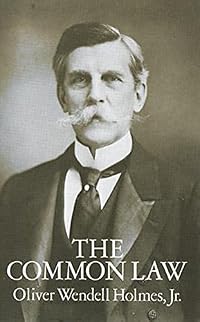
In this book, one of our country's most distinguished scholar-judges shares with us his vision of the law. For the past two thousand years, the philosophy of law has been dominated by two rival doctrines. One contends that law is more than politics and yields, in the hands of skillful judges, correct answers to even the most difficult legal questions; the other contends that law is politics through and through and that judges wield essentially arbitrary powers. Rejecting these doctrines as show more too metaphysical in the first instance and too nihilistic in the second, Richard Posner argues for a pragmatic jurisprudence, one that eschews formalism in favor of the factual and the empirical. Laws, he argues, are not abstract, sacred entities, but socially determined goads for shaping behavior to conform with society's values. Examining how judges go about making difficult decisions, Posner argues that they cannot rely on either logic or science, but must fall back on a grab bag of informal methods of reasoning that owe less than one might think to legal training and experience. Indeed, he reminds us, the greatest figures in American law have transcended the traditional conceptions of the lawyer's craft. Robert Jackson did not attend law school and Benjamin Cardozo left before getting a degree. Holmes was neither the most successful of lawyers nor the most lawyerly of judges. Citing these examples, Posner makes a plea for a law that frees itself from excessive insularity and takes all knowledge, practical and theoretical, as grist for its mill. The pragmatism that Posner espouses implies looking at problems concretely, experimentally, without illusions, with an emphasis on keeping diverse paths of inquiry open, and, above all, with the insistence that social thought and action be evaluated as instruments to desired human goals rather than as ends in themselves. In making his arguments, he discusses notable figures in jurisprudence from Antigone to Ronald Dworkin as well as recent movements ranging from law and economics to civic republicanism, and feminism to libertarianism. All are subjected to Posner's stringent analysis in a fresh and candid examination of some of the deepest problems presented by the enterprise of law. show lessTags
Recommendations












Member Reviews
Como envidio a estos americanos cuando escriben en sencillo sobre temas complicados y con metáforas simples, contra nuestros autores que impostan la voz y la letra para parecer profundos. Tal vez demasiado local con referencia al common law, de todas maneras nos hace pensar muchas cosas sobre la actividad judicial y el porque de algunas instituciones jurídicas, como también que legislar no es soplar, hacer botella y mágicamente cambiar el mundo, para ello hay que saber
Apr 26, 2020Spanish
Ratings
Members
- Recently Added By
Author Information

45+ Works 2,799 Members
Richard A. Posner is Circuit Judge, the United States Court of Appeals for the Seventh Circuit, and a senior lecturer at the University of Chicago Law School
Common Knowledge
- Original publication date
- 1990-08-20
Classifications
Statistics
- Members
- 137
- Popularity
- 237,886
- Reviews
- 2
- Rating
- (4.00)
- Languages
- English, Portuguese
- Media
- Paper
- ISBNs
- 5