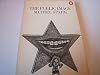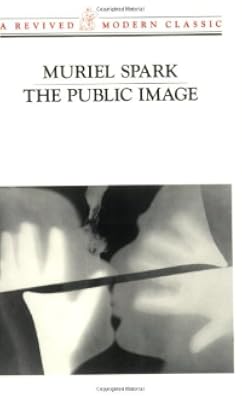
The Public Image
by Muriel Spark
On This Page
Description
Spark chooses Rome, "the motherland of sensation," for the setting of her story about movie star Annabel Christopher (known to her adoring fans as "The English Lady-Tiger"), who has made the fatal mistake of believing in her public image. This error and her embittered husband, and unsuccessful actor, catch up with her. Her final act is only the first shocking climax--further surprises await. Neatly savaging our celebrity culture, Spark rejoices in one of her favorite subjects--the clash show more between sham and genuine identity--and provides Annabel with an unexpected triumph. show lessTags
Recommendations





















Member Reviews
Although she doesn't seem to have any outstanding acting talent, Annabel has been successfully marketed by a famous Italian film-director and his clever press secretary as "the English lady-tiger" (a demure exterior supposedly concealing unseen reserves of frightening sexual energy), and she is well on her way to mainstream stardom as a result. Her husband, Christopher, a failed actor and scriptwriter, is made to appear in the background of all the PR photos as the devoted helpmeet - a role imposed on him by press secretary Francesca as poetic justice for his wandering hands.
Eventually, just as Annabel is moving herself and her baby son into a lovely new Roman apartment, Christopher goes off the rails, hitting Annabel where he knows it show more will hurt most, right in the middle of her public image. She goes into expert damage-limitation mode, and seems to have everything under control, but it isn't as simple as that...
This is a very short novel even by Spark's standards (Alice Munro has written "short stories" longer than this), and it's another one where the reader has to do a lot of the spadework of filling in the bits of the narrative Spark didn't bother with, but there's a lot to think about - not just the tyranny of PR and the superficiality of the film industry, but also the way society still has ridiculous and contradictory expectations of women in public life as professionals, spouses, parents and sex-objects, and the damage that trying to live up to those impossible expectations can do. And in passing it's also a little love-song to Rome, and a compact manual on Italian perceptions of Englishness (and English perceptions of Italianness). show less
Eventually, just as Annabel is moving herself and her baby son into a lovely new Roman apartment, Christopher goes off the rails, hitting Annabel where he knows it show more will hurt most, right in the middle of her public image. She goes into expert damage-limitation mode, and seems to have everything under control, but it isn't as simple as that...
This is a very short novel even by Spark's standards (Alice Munro has written "short stories" longer than this), and it's another one where the reader has to do a lot of the spadework of filling in the bits of the narrative Spark didn't bother with, but there's a lot to think about - not just the tyranny of PR and the superficiality of the film industry, but also the way society still has ridiculous and contradictory expectations of women in public life as professionals, spouses, parents and sex-objects, and the damage that trying to live up to those impossible expectations can do. And in passing it's also a little love-song to Rome, and a compact manual on Italian perceptions of Englishness (and English perceptions of Italianness). show less
Among Spark's novellas, 'The Public Image' reminded me of the concise sharpness of [b:Not to Disturb|514627|Not to Disturb|Muriel Spark|https://i.gr-assets.com/images/S/compressed.photo.goodreads.com/books/1175444468l/514627._SY75_.jpg|502591] and [b:The Driver's Seat|668282|The Driver's Seat|Muriel Spark|https://i.gr-assets.com/images/S/compressed.photo.goodreads.com/books/1348828782l/668282._SY75_.jpg|2776383]. All three are very short in length, cover a very limited period of time, and concern shocking behaviour in relation to death. Although [b:Not to Disturb|514627|Not to Disturb|Muriel Spark|https://i.gr-assets.com/images/S/compressed.photo.goodreads.com/books/1175444468l/514627._SY75_.jpg|502591] is definitely my favourite as the show more dialogue is so witty, each struck me powerfully. 'The Public Image' follows Annabel, a British actress staying in Italy. She has constructed a popular public image based on her relationship with her husband, but the private reality is very different. Spark depicts her reactions to a deeply nightmarish sequence of events that threatens to destroy this image. The tension is extremely high especially when the doctor's child keeps piping up - I found myself hating that child, despite the fact she was technically telling the truth! Frederick's behaviour was utterly monstrous, with Billy's little better. Sending a whole raucous party to descend on his wife when she was alone with the baby is an appalling crime, as far as I'm concerned. That sequence really evokes an anxiety nightmare; once the news of Frederick's death arrives things become gradually less horrible. Most likely because that point Annabel starts to regain some control over events, in an effort to protect her image.
The usual lofty and omniscient narrative voice tells us of Annabel's flaws, yet I nonetheless found her sympathetic. Although her public image is absurd and misleading, it gives her agency and helps her career. The other female characters likewise invited sympathy and displayed mutual solidarity. To call this a feminist book invites a lot of questions about what makes any book feminist, but it undoubtedly grapples very adeptly with the constraints, stereotypes, and roles women live within. While Annabel is popularly considered a sex goddess, her image cannot be tarnished with any immorality or infidelity. She is a devoted mother, while her husband seems barely aware of their child. The men in her life all talk down to her and consider her stupid, then become hideously defensive if she merely comments that their creative work is similar to something else. I think this says more about gender politics than celebrity culture, although the latter is undoubtedly also skewered.Thus I was pleased by the final twist, because Annabel sacrificed her public image so that a man wouldn't hold sway over her. Releasing Frederick's suicide notes undoubtedly means his scheme to ruin her image will succeed at least in part, but at least Billy won't be able to blackmail her. The final scene, in which she calmly leaves on a plane with her baby, is like taking a slow deep breath after gasping shallowly for some time. Annabel is free of controlling men, for a time at least.
I found 'The Public Image' less amusingly witty than most Spark fiction, but brilliantly insightful in its bleakness. The introduction to the Polygon edition also makes interesting comments on motherhood in the narrative. show less
The usual lofty and omniscient narrative voice tells us of Annabel's flaws, yet I nonetheless found her sympathetic. Although her public image is absurd and misleading, it gives her agency and helps her career. The other female characters likewise invited sympathy and displayed mutual solidarity. To call this a feminist book invites a lot of questions about what makes any book feminist, but it undoubtedly grapples very adeptly with the constraints, stereotypes, and roles women live within. While Annabel is popularly considered a sex goddess, her image cannot be tarnished with any immorality or infidelity. She is a devoted mother, while her husband seems barely aware of their child. The men in her life all talk down to her and consider her stupid, then become hideously defensive if she merely comments that their creative work is similar to something else. I think this says more about gender politics than celebrity culture, although the latter is undoubtedly also skewered.
I found 'The Public Image' less amusingly witty than most Spark fiction, but brilliantly insightful in its bleakness. The introduction to the Polygon edition also makes interesting comments on motherhood in the narrative. show less
A heady romp in Rome, as film actress Annabel Christopher lets the rush of her public image go to her head when faced with a betrayal that only Spark can write convincingly. As is always the case with Spark, despite the short length of The Public Image, there’s a lot packed in here, and the narcissistic portrait of Annabel is as sympathetic and believable—despite some characteristic shenanigans, expected of Spark—as only the author of the flip side of life, the dark shadow of people, can execute.
This contains plot spoilers.
I was very much enjoying this one up until the last few pages, thinking it was a very smart take down of people who demand authenticity and realness in public. The actress whose public image the novel deals with is more or less completely fake, but also a decent human being and mother. Her husband, who is real and doesn't sell out or anything like that, is a talentless hack and awful, awful human being, so bad - plot spoiler - that he kills himself in such a way that his wife will be blamed for his suicide when the cause is obviously his own failure to produce anything worth watching, as she becomes a star. Cue much discussion about the way people adjust their own presentation of themselves for public show more consumption.
Unfortunately, or at least unfortunately from my perspective, the book concludes with the actress doing the 'right' thing (in this case, admitting to the world what her husband did and revealing the fake suicide notes she'd been collecting in order to, so she said at the time, keep them secret), then running off into the sunset with her beloved baby child. The book is set up in such a way that this can easily look like: the 'fake' woman becoming 'real' and thus earning her stripes as our hero. But the earlier chapters upset the very idea that those terms should carry any moral weight.
It's possible that the point of the conclusion is actually just that the men in the novel had been using the actress for money in one way or another, and revealing the suicide notes and fleeing Rome is her way of avoiding that abuse and manipulation; but she can only achieve this *via* manipulation of her own 'public image.' Then you could say the conclusion was more in line with the rest of the novel, rather than a weirdly unintellectual cop-out. You wouldn't have to read the actress as a hero, either.
In fact, I think I've convinced myself of that in the last three minutes, and upgraded the novel to four stars as a result. It has all the usual Spark excellences--concision, intellectual brilliance, a cold narrative distance--as well as the odd feeling I get whenever I read her novels, that I'm over half way through before they start. That comes with the concision, I guess. Not as good as Brodie, Slender Means, or The Only Problem, but not much worse, either. Also, it won the Booker in 1968. show less
I was very much enjoying this one up until the last few pages, thinking it was a very smart take down of people who demand authenticity and realness in public. The actress whose public image the novel deals with is more or less completely fake, but also a decent human being and mother. Her husband, who is real and doesn't sell out or anything like that, is a talentless hack and awful, awful human being, so bad - plot spoiler - that he kills himself in such a way that his wife will be blamed for his suicide when the cause is obviously his own failure to produce anything worth watching, as she becomes a star. Cue much discussion about the way people adjust their own presentation of themselves for public show more consumption.
Unfortunately, or at least unfortunately from my perspective, the book concludes with the actress doing the 'right' thing (in this case, admitting to the world what her husband did and revealing the fake suicide notes she'd been collecting in order to, so she said at the time, keep them secret), then running off into the sunset with her beloved baby child. The book is set up in such a way that this can easily look like: the 'fake' woman becoming 'real' and thus earning her stripes as our hero. But the earlier chapters upset the very idea that those terms should carry any moral weight.
It's possible that the point of the conclusion is actually just that the men in the novel had been using the actress for money in one way or another, and revealing the suicide notes and fleeing Rome is her way of avoiding that abuse and manipulation; but she can only achieve this *via* manipulation of her own 'public image.' Then you could say the conclusion was more in line with the rest of the novel, rather than a weirdly unintellectual cop-out. You wouldn't have to read the actress as a hero, either.
In fact, I think I've convinced myself of that in the last three minutes, and upgraded the novel to four stars as a result. It has all the usual Spark excellences--concision, intellectual brilliance, a cold narrative distance--as well as the odd feeling I get whenever I read her novels, that I'm over half way through before they start. That comes with the concision, I guess. Not as good as Brodie, Slender Means, or The Only Problem, but not much worse, either. Also, it won the Booker in 1968. show less
An overabundance of banalities here about those who live in the spotlight. Not that Muriel Spark didn't paint them well, but what was the point? For me, this was akin to reading something from one of the offerings you pick up in most waiting rooms across the country: while waiting for the doctor/dentist/mechanic to call you, you use up some time flipping through the pages of an old magazine pretending there's a purpose to your time. The story draws you in while there because, momentarily, it helps soothe the anxiety of what's coming next. You've forgotten what you've read, half way through the parking lot, on the way out.
Wonderfully satirical some say. Hmm. Perhaps. Incisive. Huh. Well, maybe at one time this was cutting edge. But, if show more it doesn't withstand the test of time, it's hardly a remarkable incision.
Perhaps I'm a bit of a Grumpy Gus today about Muriel Spark. This is very early Spark, admittedly. Still, it was shortlisted for the Booker Prize in 1969, beat out by Something To Answer For by P. H. Newby. Who is P H Newby? My point exactly. These prizes mean hardly anything anymore in terms of picking out the best literature; literature that lasts. In my very humble opinion *said Uriah* the Booker is a bust for picking out timeless, universal pieces currently; and it obviously wasn't any better in 1969, if these were top choices at the time.
Yep, definitely a Grumpy Gus today.
Sorry to say this is one to be avoided if you're looking for satisfaction. Not bad if you're looking for run-of-the-mill journalism. Well written, as always, with Muriel Spark. show less
Wonderfully satirical some say. Hmm. Perhaps. Incisive. Huh. Well, maybe at one time this was cutting edge. But, if show more it doesn't withstand the test of time, it's hardly a remarkable incision.
Perhaps I'm a bit of a Grumpy Gus today about Muriel Spark. This is very early Spark, admittedly. Still, it was shortlisted for the Booker Prize in 1969, beat out by Something To Answer For by P. H. Newby. Who is P H Newby? My point exactly. These prizes mean hardly anything anymore in terms of picking out the best literature; literature that lasts. In my very humble opinion *said Uriah* the Booker is a bust for picking out timeless, universal pieces currently; and it obviously wasn't any better in 1969, if these were top choices at the time.
Yep, definitely a Grumpy Gus today.
Sorry to say this is one to be avoided if you're looking for satisfaction. Not bad if you're looking for run-of-the-mill journalism. Well written, as always, with Muriel Spark. show less
In fact he could have played the part well had he not been inhibited by the idea of revolt from his marriage. He was now so settled in a daily determination to end the marriage, call off the public image, declare it null and void, that he did not see the point of doing anything about it just yet, especially as it would be construed as a gesture of disappointment at not getting the part. He settled into a routine of deciding to break with Annabel, and to wait until they had left these gossipy circles.
By the end of chapter 2, I was bored with this tale of an unhappy marriage between a film star whose career was on the rise, and her resentful husband, and nearly didn't continue. But I flicked through a few pages near the end, discovered show more that the plot did take a turn for the more interesting, and decided to carry on.
At this point in the film story, Frederick's script had been to various alteration-hands; and the final version approved by the American Corporation which was putting the bulk of the money into it at first moved Frederick to request that his name be removed from the billing. But later, when publicity for the film became rife, he got his name put back again.
Frederick resents Annabel's career and the necessity for them to keep up a good public image until she is more established, and rather than asking for a divorce, takes drastic measures to ruin her image and career. Frederick was prepared tokill someone else (the girl who was drugged and left in a coma in the bathroom) as well as himself in order to get revenge on his wife , so it made me laugh when Annabel mentioned that the stories in the paper were all focussed on her, rather than on her husband's suicide .
I hadn't heard of this book before, but I enjoyed it a lot after the slow start. show less
By the end of chapter 2, I was bored with this tale of an unhappy marriage between a film star whose career was on the rise, and her resentful husband, and nearly didn't continue. But I flicked through a few pages near the end, discovered show more that the plot did take a turn for the more interesting, and decided to carry on.
At this point in the film story, Frederick's script had been to various alteration-hands; and the final version approved by the American Corporation which was putting the bulk of the money into it at first moved Frederick to request that his name be removed from the billing. But later, when publicity for the film became rife, he got his name put back again.
Frederick resents Annabel's career and the necessity for them to keep up a good public image until she is more established, and rather than asking for a divorce, takes drastic measures to ruin her image and career. Frederick was prepared to
I hadn't heard of this book before, but I enjoyed it a lot after the slow start. show less
I read Spark’s The Girls of Slender Means back in 2010, and judging by the review I wrote on my blog at the time, I didn’t like it very much. I can now add The Public Image to the list of novels by Muriel Spark I don’t like very much.
It was nominated for the first ever Booker Award in 1969, which is why I read it. The story is relatively straightforward: Annabel Christopher stars in a film by an Italian director and becomes an international star – or perhaps European, given she never makes it to Hollywood. Annabel moves to Rome, with her semi-successful screenwriter husband. She has a baby. Shortly afterwards, her husband commits suicide and in his suicide notes (he wrote several) he accuses Annabel of promiscuity and throwing show more orgiastic parties. None of which is true. Annabel tries to control the narrative around her husband’s death before the Italian press destroys her career.
And, er, that’s it.
I have watched many 1960s Italian films, not just gialli or poliziotteschi, but also movies by Antonioni, Fellini, Pasolini, de Sica, Rossellini and so on. I’m a fan of the first three directors. So Spark’s depiction of Annabel’s career in Italian cinema never really convinced me. Neither did her husband’s suicide – there was nothing in the narrative to suggest he might take his life. There were clues he resented his wife’s success – but it’s a leap from there to suicide.
Then there’s the writing. Spark was nominated twice for the Booker Prize, and was much lauded critically – she was made an OBE in 1967 and a dame in 1993, for services to literature, and ranked number eight in the fifty greatest British writers since 1945 by the Times in 2008. But The Public Image reads more like reportage than fiction, and over-uses one of my pet hates in writing – the construction “was to be”. There are several auxiliary verbs which can be used in English, there are even grammatical moods available. So many different ways to add nuance and meaning instead of “was to be”. It’s no different to using “get” as a catch-all verb.
So, a lack of authenticity and too much passive voice using weak constructions, especially “was to be”. Not impressed. Annabel may have been reasonably well characterised, but the rest of the cast were ciphers. The Public Image is not a book I can recommend. show less
It was nominated for the first ever Booker Award in 1969, which is why I read it. The story is relatively straightforward: Annabel Christopher stars in a film by an Italian director and becomes an international star – or perhaps European, given she never makes it to Hollywood. Annabel moves to Rome, with her semi-successful screenwriter husband. She has a baby. Shortly afterwards, her husband commits suicide and in his suicide notes (he wrote several) he accuses Annabel of promiscuity and throwing show more orgiastic parties. None of which is true. Annabel tries to control the narrative around her husband’s death before the Italian press destroys her career.
And, er, that’s it.
I have watched many 1960s Italian films, not just gialli or poliziotteschi, but also movies by Antonioni, Fellini, Pasolini, de Sica, Rossellini and so on. I’m a fan of the first three directors. So Spark’s depiction of Annabel’s career in Italian cinema never really convinced me. Neither did her husband’s suicide – there was nothing in the narrative to suggest he might take his life. There were clues he resented his wife’s success – but it’s a leap from there to suicide.
Then there’s the writing. Spark was nominated twice for the Booker Prize, and was much lauded critically – she was made an OBE in 1967 and a dame in 1993, for services to literature, and ranked number eight in the fifty greatest British writers since 1945 by the Times in 2008. But The Public Image reads more like reportage than fiction, and over-uses one of my pet hates in writing – the construction “was to be”. There are several auxiliary verbs which can be used in English, there are even grammatical moods available. So many different ways to add nuance and meaning instead of “was to be”. It’s no different to using “get” as a catch-all verb.
So, a lack of authenticity and too much passive voice using weak constructions, especially “was to be”. Not impressed. Annabel may have been reasonably well characterised, but the rest of the cast were ciphers. The Public Image is not a book I can recommend. show less
Members
- Recently Added By
Lists

Booker Prize
491 works; 62 members

Man Booker Prize Longlist 1969
6 works; 1 member

Booker Prize Shortlist: Titles Not Yet Read
161 works; 4 members

Books Set in Rome
98 works; 2 members

Best Sellers / Popular 1968
237 works; 5 members
Author Information

101+ Works 22,781 Members
Muriel Spark has been called "our most chillingly comic writer since Evelyn Waugh" by the London Spectator, and the New Yorker praised her novel Memento Mori ri (1959) as "flawless." Her fiction is marked by its remarkable diversity, wit, and craftsmanship. "She happens to be, by some rare concatenation of grace and talent, an artist, a show more serious---and most accomplished---writer, a moralist engaged with the human predicament, wildly entertaining, and a joy to read" (SRSR). She became widely known in the United States when the New Yorker devoted almost an entire issue to The Prime of Miss Jean Brodie (1961). Set in Edinburgh in the 1930s, this is the story of a schoolteacher, her unorthodox approach to life, and its effect on her select group of adolescent girls. Though their idol turns out to have feet of clay, she leaves an indelible mark on their lives. The Girls of Slender Means (1963), also warmly praised, is a sardonic look at the vivacity of youth and the anxieties of young womanhood. Reviewing The Mandelbaum Gate (1965) for the New Republic, Honor Tracy wrote: "There is an abundance here of invention, humor, poetry, wit, perception, that all but takes the breath away. . . . The story, in fact, is pure adventure, with the suspense as artfully maintained as anywhere by Graham Greene, but this is only one ingredient. There are memorable descriptions of the Holy Land, fascinating insights into the jumble of intrigue and piety surrounding the Holy Places, and penetrating studies of Arabs. . . . In each of [Spark's] novels heretofore one of her qualities has tended to predominate over the others. Here for the first time they are all impressively marshaled side by side, resulting in her best work so far." The daughter of an Englishwoman and a Scottish-Jewish father, Spark was born and educated in Edinburgh. After her marriage in 1938, she lived for some years in Central Africa, a period rarely reflected in her work. During World War II, she returned to Britain, where she worked in the Political Intelligence Department of the Foreign Office after the breakup of her marriage. She has been a magazine editor and written poetry and literary criticism. Spark has lived in London's Camberwell section, the setting of The Ballad of Peckham Rye (1960), but now makes her home in New York. Her novels reflect her conversion to Roman Catholicism. (Bowker Author Biography) Writer Muriel Spark was born in Edinburgh on February 1, 1918. In 1934-1935 she took a course in commercial correspondence and précis writing at Heriot-Watt College. After her marriage in 1937, she lived for some years in Central Africa. During World War II, she returned to Britain, where she worked in the Political Intelligence Department of the Foreign Office after the breakup of her marriage. After the war, she began her literary career. She became General Secretary of the Poetry Society, worked as an editor and wrote studies of Mary Shelley, John Masefield and the Brontë sisters. Her first book of poetry, The Fanfarlo and Other Verse, was published in 1952 and her first novel, The Comforters, was published in 1957. She wrote over twenty books including The Prime of Miss Jean Brodie and The Finishing School. She won numerous awards and honors including the 1965 James Tait Black Memorial Prize for The Mandelbaum Gate, the 1992 U. S. Ingersoll Foundation T. S. Eliot Award, the 1997 David Cohen British Literature Prize for Lifetime Achievement, and in 1993 she became Dame Commander of the Order of the British Empire in recognition of her services to literature. The Scottish Arts Council created the Muriel Spark International Fellowship in 2004. She died on April 13, 2006. (Bowker Author Biography) show less
Some Editions
Awards and Honors
Awards
Series
Belongs to Publisher Series
Work Relationships
Is contained in
Common Knowledge
- Original publication date
- 1968
- First words
- It was the middle of Friday morning.
- Last words
- (Click to show. Warning: May contain spoilers.)Nobody recognized her as she stood, having moved the baby to rest on her hip, conscious also of the baby in a sense weightlessly and perpetually within her, as an empty shell contains, by its very structure, the echo and harking image of former and former seas.
Classifications
Statistics
- Members
- 353
- Popularity
- 89,688
- Reviews
- 12
- Rating
- (3.63)
- Languages
- 5 — English, German, Portuguese, Spanish, Swedish
- Media
- Paper, Ebook
- ISBNs
- 15
- ASINs
- 8