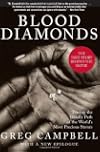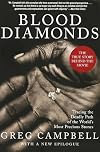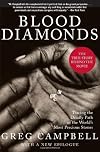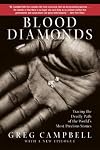
Blood Diamonds: Tracing the Deadly Path of the World's Most Precious Stones
by Greg Campbell
On This Page
Description
The smuggling of diamonds from Sierra Leone has become one of the most savage rebel campaigns in modern history. This gripping true story traces the deadly trail of these diamonds and the repercussions felt far beyond the poor and war-ridden country of Sierra Leone.Tags
Recommendations







Member Reviews
American Journalist Greg Campbell goes to Sierra Leone, Africa, to cover the hidden, violent story of how we get our diamonds. He meets a cast of shady characters, witnesses hundreds of atrocities, and is placed in danger several times. He points the finger at the political regimes in Africa, the world's indifference to same, the DeBeers Diamond Company, and US as consumers who want this most precious stone. What the world (wants to) see as a regional problem, Campbell makes the convincing case that it is, in fact, a global issue. (Who knew that the 9-11 attacks were funded, in part, by diamonds? Further, that diamonds remain the easiest way to transfer weath across borders. Riveting reading.
A bit on the hard-drinking, crazy journalist side for my taste, though the evidence of this style is more subdued than is often the case. As an explanatory text on blood diamonds (a.k.a. conflict diamonds), it does a very good job of following the money, exposing both corrupt and ineffective systems, and describing the trafficking/enslavement and mutilation or execution of disenfranchised and disempowered people. In this regard, it helps answer some questions about why some African countries have failed to thrive in the post-colonial period, instead becoming embroiled in civil strife.
Many gory parts--not for the faint of heart.
Many gory parts--not for the faint of heart.
Although Campbell's work is in some ways directly tied to the history that was unfolding around the turn of the century, it's by no means so dated as to no longer have relevance. Campbell's examination of the diamond industry--from its beginnings to the more recent history--is a fascinating and in-depth look into the growth of a luxury industry and commercialism, offering real insight into the tangled ways in which politics, warfare, business, natural resources, and criminality can become so enmeshed as to be virtually indistinguishable to a third party.
Whether you read this for the history or out of a desire to begin understanding the socio-economic and natural resources at play behind diamonds and warfare, the book is utterly show more readable--in fact, the primary difficulty is remembering that some of the horrors involved are fact rather than fiction.
Recommended for all those who are even slightly interested. show less
Whether you read this for the history or out of a desire to begin understanding the socio-economic and natural resources at play behind diamonds and warfare, the book is utterly show more readable--in fact, the primary difficulty is remembering that some of the horrors involved are fact rather than fiction.
Recommended for all those who are even slightly interested. show less
A horrific true story of how world-wide desire for diamonds contributed to an extremely bloody civil war in Sierra Leone. It also reveals the market monopoly De Beers has on the diamond market and the desires manufactured to make a relatively common and mostly useless stone the most liquid commodity on the planet.
Very informative but truly upsetting. This will change how people everywhere look at their engagement rings.
Very informative but truly upsetting. This will change how people everywhere look at their engagement rings.
In Blood Diamonds, Greg Campbell traces the path of diamonds as they make their way out of geological soup and are mined in Sierra Leone, smuggled or traded out of that country (often into neighboring Liberia or even Burkina Faso), and make their way to both brides via retail stores including De Beers, and to terrorists who use them to pay for their nefarious deeds. What's amazing is that each step of this convoluted path of high stakes, any paper trail (and fairly minimal at that) is equivalent to some trust and handshakes. Along the way, Campbell encounters bedraggled mine workers, shady diamond smugglers and middlemen, slick De Beers corporate PR people intent on distancing the company from 'Conflict Diamonds', and mutilated refugees show more who have paid for RUF's (a violent rebel group that used child soldiers and committed atrocities and war crimes and later became part of the political process for a time) in Sierra Leone that diamond wars with parts of their bodies.
I highly recommend this book, though perhaps not for all audiences, as it does not shy away from the violence and atrocities committed during the diamond wars in Sierra Leone. Actually, this was the second time I had tried to start the book - getting through the first bit which described atrocities committed by RUF rebels was difficult the first time around. Once past that initial part, it was a fascinating, if at times gruesome and appalling, examination of the diamond industry, from the mining, smuggling, trade, wars, artificial pricing, history, and even a look at the De Beers corporation. Very well researched and written.
One of the most important and interesting points made in Blood Diamonds is that the diamond wars and the connections with known terrorists is a case in point that is really should be impossible to ignore Africa any longer. Allowing terrorists to transfer wealth into quite mobile and smuggle-able diamonds doesn't make the world a safe place. It drives home the point that there is no such thing as 'regional conflict' anymore, that globalization is not just an economic term, and that ignoring Africa is harmful to international interests and even American interests of security etc. I don't know how, if at all, things have changed since the book was researched and published, or even if the arguments and claims were overstated to sell more books, but even still, it seems worthwhile to pay attention to how diamonds fit in with these other major events.
Given the high stakes, cloak and dagger secrecy, and raw greed and power on display, it felt more like a movie script than an account of a industry based on a geological carbon compound. Indeed, there was a movie made in 2006 with Leonardo DiCaprio and Jennifer Connelly (http://www.imdb.com/title/tt0450259/), and I am looking forward to seeing it. Also, I was reminded of the movie Lord of War, with Nicholas Cage - http://www.imdb.com/title/tt0399295/ - which was about gunrunning and the small arms trade, with the focal point being the character Yuriy Orlov, based on the real-life Viktor Bout, aka Merchant of Death who was also mentioned in Blood Diamonds. Douglas Farah, who wrote Merchant of Death about Viktor Bout, was also mentioned in this book, as related to the role diamonds played in supporting terrorist organizations including Hizbollah.
In summary, I recommend reading this book to have a greater understanding of where commonplace items, like engagement rings, come from and their journey to a bride's hand. But it is also an important book to recognize the role that diamonds play in both regional and global struggles and conflicts. show less
I highly recommend this book, though perhaps not for all audiences, as it does not shy away from the violence and atrocities committed during the diamond wars in Sierra Leone. Actually, this was the second time I had tried to start the book - getting through the first bit which described atrocities committed by RUF rebels was difficult the first time around. Once past that initial part, it was a fascinating, if at times gruesome and appalling, examination of the diamond industry, from the mining, smuggling, trade, wars, artificial pricing, history, and even a look at the De Beers corporation. Very well researched and written.
One of the most important and interesting points made in Blood Diamonds is that the diamond wars and the connections with known terrorists is a case in point that is really should be impossible to ignore Africa any longer. Allowing terrorists to transfer wealth into quite mobile and smuggle-able diamonds doesn't make the world a safe place. It drives home the point that there is no such thing as 'regional conflict' anymore, that globalization is not just an economic term, and that ignoring Africa is harmful to international interests and even American interests of security etc. I don't know how, if at all, things have changed since the book was researched and published, or even if the arguments and claims were overstated to sell more books, but even still, it seems worthwhile to pay attention to how diamonds fit in with these other major events.
Given the high stakes, cloak and dagger secrecy, and raw greed and power on display, it felt more like a movie script than an account of a industry based on a geological carbon compound. Indeed, there was a movie made in 2006 with Leonardo DiCaprio and Jennifer Connelly (http://www.imdb.com/title/tt0450259/), and I am looking forward to seeing it. Also, I was reminded of the movie Lord of War, with Nicholas Cage - http://www.imdb.com/title/tt0399295/ - which was about gunrunning and the small arms trade, with the focal point being the character Yuriy Orlov, based on the real-life Viktor Bout, aka Merchant of Death who was also mentioned in Blood Diamonds. Douglas Farah, who wrote Merchant of Death about Viktor Bout, was also mentioned in this book, as related to the role diamonds played in supporting terrorist organizations including Hizbollah.
In summary, I recommend reading this book to have a greater understanding of where commonplace items, like engagement rings, come from and their journey to a bride's hand. But it is also an important book to recognize the role that diamonds play in both regional and global struggles and conflicts. show less
Quite a journalistic piece.
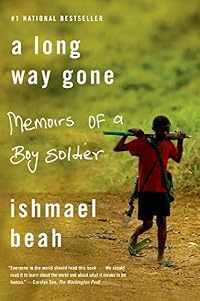
This is the horrifying story of the war in Sierra Leone in the early 1990s on up to about 2004, after the war ended. The primary combatants were members of the RUF - The Revolutionary United Front, an organization that does not really deserve the name. Initially it was able to recruit soldiers by a lofty goal, saying it was fighting for the citizens, for better conditions for all. In fact, it became a murderous horde, dedicated to seizing diamonds and trading them for guns, as well as for the personal wealth of a few. The group recruited boys as soldiers (one recruited by the government's army was Ishmael Beah, who wrote the remarkable A Long Way Gone - my review of that book is at show more target="_top">http://www.bookcrossing.com/journal/5096160/), and the boys learned to kill anything at any time for any reason.
Some of the atrocities were the amputating of arms and the brutal removal of babies from pregnant mothers. Whole villages were simply executed. Many were enslaved and required to work in the diamond mines, while others became "mules", carrying loads of diamonds to the border with Liberia, where the stones were traded for guns.
The government was in crisis, having just been overturned by a coup, and adequate military response was not made. More on the war here: http://en.wikipedia.org/wiki/Revolutionary_United_Front
The United Nations finally stepped in but ineptly. Its efforts finally resulted in an end to the war, and in inadequate responses to the RUF, which was allowed to become a political party.
Campbell also tells the story of DeBeers, the largest diamond company in the world, so large that it essentially has a monopoly and has managed to maintain high prices for the stones since its beginning. Thousands of stones are locked away, unavailable for sale, because if they got to the open market the price would plummet. DeBeers benefitted from the Sierra Leone war by being able to purchase stones at rock-bottom prices from dubious sources.
Many different methods have been suggested to assure that a particular diamond is not a "conflict diamond", but ultimately it is still impossible to be certain. Some countries in Africa, most notably Botswana, have democratic governments and good practices in place for the management of the diamond mining industry. Most diamonds are not "blood diamonds". Yet I would never buy one.
I found the book interesting to listen to, although I didn't particularly like the narrator. It illuminated a war I did not previously understand, and also revealed great bravery and courage among the poor citizens of this ravaged country. I felt that it gave an impression of the UN involvement that was one-sided, that it did not delve into the successful efforts of UNICEF to deprogram the young soldiers, but that would probably have been too much for one book. show less
This is the horrifying story of the war in Sierra Leone in the early 1990s on up to about 2004, after the war ended. The primary combatants were members of the RUF - The Revolutionary United Front, an organization that does not really deserve the name. Initially it was able to recruit soldiers by a lofty goal, saying it was fighting for the citizens, for better conditions for all. In fact, it became a murderous horde, dedicated to seizing diamonds and trading them for guns, as well as for the personal wealth of a few. The group recruited boys as soldiers (one recruited by the government's army was Ishmael Beah, who wrote the remarkable A Long Way Gone - my review of that book is at show more target="_top">http://www.bookcrossing.com/journal/5096160/), and the boys learned to kill anything at any time for any reason.
Some of the atrocities were the amputating of arms and the brutal removal of babies from pregnant mothers. Whole villages were simply executed. Many were enslaved and required to work in the diamond mines, while others became "mules", carrying loads of diamonds to the border with Liberia, where the stones were traded for guns.
The government was in crisis, having just been overturned by a coup, and adequate military response was not made. More on the war here: http://en.wikipedia.org/wiki/Revolutionary_United_Front
The United Nations finally stepped in but ineptly. Its efforts finally resulted in an end to the war, and in inadequate responses to the RUF, which was allowed to become a political party.
Campbell also tells the story of DeBeers, the largest diamond company in the world, so large that it essentially has a monopoly and has managed to maintain high prices for the stones since its beginning. Thousands of stones are locked away, unavailable for sale, because if they got to the open market the price would plummet. DeBeers benefitted from the Sierra Leone war by being able to purchase stones at rock-bottom prices from dubious sources.
Many different methods have been suggested to assure that a particular diamond is not a "conflict diamond", but ultimately it is still impossible to be certain. Some countries in Africa, most notably Botswana, have democratic governments and good practices in place for the management of the diamond mining industry. Most diamonds are not "blood diamonds". Yet I would never buy one.
I found the book interesting to listen to, although I didn't particularly like the narrator. It illuminated a war I did not previously understand, and also revealed great bravery and courage among the poor citizens of this ravaged country. I felt that it gave an impression of the UN involvement that was one-sided, that it did not delve into the successful efforts of UNICEF to deprogram the young soldiers, but that would probably have been too much for one book. show less
The subtitle to this one is "tracing the deadly path of the world's most precious stones." The author is a journalist and much of what he reports is first hand based on interviews from everyone involved in this illicit part of the diamond industry from miners to the middlemen to smugglers to spokesmen for the De Beers diamond cartel. The "blood diamonds" of the title are also known as "conflict diamonds" because they are diamonds mined in Africa by forced labor and then sold to fund insurgencies. Diamonds that are then smuggled to the West where they make up five percent of the market and wind up on many a finger as engagement rings.
The book primarily focuses upon how blood diamonds destroyed Sierra Leone, a "tiny corner of West show more Africa." Bordering on Liberia, where many of the diamonds wind up before being smuggled West, like Liberia, Sierra Leone was founded by freed North American slaves. Many of the middlemen are Lebanese, the "largest cutting and polishing centers in the world are in Bombay and Surat India," 80 percent of the blood diamonds wind up in America and the diamonds not only financed misery in Africa, but played a major role in money laundering for Al Queda. So this story has a wide international scope beyond that of a small nation of five million.
The book claimed blood diamonds were responsible for the "death of some 3.7 million people in various African war zones and displaced another 6 million." Campbell opens the book by telling the story of Ismael Dalramy, who had both hands chopped off by members of the Revolutionary United Front (RUF) who were fighting for control of the Sierra Leone diamond mines; their "signature war crime was amputation." It was a brutal but arresting way to begin the book. A lot of this story is convoluted and complex, and the statistics of the misery involved so staggering I think it was important to anchor it in this kind of individual experience.
There are a lot of intertwined stories in this book. For instance, the story of Executive Outcomes, a private army hired at one point by the President Strasser of Sierra Leone that seemed to be making progress in stopping the slaughter--but Strasser cancelled their contract under international pressure against "mercenaries" and instead the fight was taken up by the Nigerian-led ECOMOG troops. "It appeared the developed countries were willing to put Sierra Leone's rescue in the hands of a less effective security force--one that was prone to flagrant corruption, bribery, savagery, and a disdain for human rights--just because it was quasi-governmental." The result was a "human rights disaster" that led to more slaughter. The book also tells the story of Cecil Rhodes and the company he founded--the powerful De Beers corporation which at the time of publication controlled 65 percent of the diamond market.
At the time of the book's publication, the civil war had been declared over, and Sierra Leone had successfully completed elections. It was good to later look into what happened to Sierra Leone and find out it seems to have developed into a functioning democracy. But what you take away from the book about blood diamonds is more problematical. It seems there's no way of getting at the problem from the supply side. The diamond industry has considered several ways, but the bottom line is that there's no way to know the source of a diamond--and our experience with the War on Drugs shows just how impossible it is to control smuggling and illegal trade. At the same time, calling for a boycott of diamonds--trying to tackle it from the demand side--would hurt Africa more than it would help. According to Campbell, the legitimate diamond industry has been a boon to the economic growth of Namibia, South Africa and Botswana--and could be for the recovering Sierra Leone. In fact, Campbell hoped De Beers will take part--he claimed that it had a good record educating and training workers--something that's badly needed. For Campbell, the only solution to the quandary of "conflict diamonds" is to end the conflicts themselves--and with it the raison d'etre of blood diamonds.
I thought it an interesting book, and I did learn quite a bit about Western Africa and the diamond industry, although the book misses being a standout. Something about the structure didn't flow well, and I didn't feel I ended the book with much insight into what drives the conflicts in Africa that drives the conflict diamonds. And I've seen the stories of Executive Orders and De Beers done more compellingly elsewhere. show less
The book primarily focuses upon how blood diamonds destroyed Sierra Leone, a "tiny corner of West show more Africa." Bordering on Liberia, where many of the diamonds wind up before being smuggled West, like Liberia, Sierra Leone was founded by freed North American slaves. Many of the middlemen are Lebanese, the "largest cutting and polishing centers in the world are in Bombay and Surat India," 80 percent of the blood diamonds wind up in America and the diamonds not only financed misery in Africa, but played a major role in money laundering for Al Queda. So this story has a wide international scope beyond that of a small nation of five million.
The book claimed blood diamonds were responsible for the "death of some 3.7 million people in various African war zones and displaced another 6 million." Campbell opens the book by telling the story of Ismael Dalramy, who had both hands chopped off by members of the Revolutionary United Front (RUF) who were fighting for control of the Sierra Leone diamond mines; their "signature war crime was amputation." It was a brutal but arresting way to begin the book. A lot of this story is convoluted and complex, and the statistics of the misery involved so staggering I think it was important to anchor it in this kind of individual experience.
There are a lot of intertwined stories in this book. For instance, the story of Executive Outcomes, a private army hired at one point by the President Strasser of Sierra Leone that seemed to be making progress in stopping the slaughter--but Strasser cancelled their contract under international pressure against "mercenaries" and instead the fight was taken up by the Nigerian-led ECOMOG troops. "It appeared the developed countries were willing to put Sierra Leone's rescue in the hands of a less effective security force--one that was prone to flagrant corruption, bribery, savagery, and a disdain for human rights--just because it was quasi-governmental." The result was a "human rights disaster" that led to more slaughter. The book also tells the story of Cecil Rhodes and the company he founded--the powerful De Beers corporation which at the time of publication controlled 65 percent of the diamond market.
At the time of the book's publication, the civil war had been declared over, and Sierra Leone had successfully completed elections. It was good to later look into what happened to Sierra Leone and find out it seems to have developed into a functioning democracy. But what you take away from the book about blood diamonds is more problematical. It seems there's no way of getting at the problem from the supply side. The diamond industry has considered several ways, but the bottom line is that there's no way to know the source of a diamond--and our experience with the War on Drugs shows just how impossible it is to control smuggling and illegal trade. At the same time, calling for a boycott of diamonds--trying to tackle it from the demand side--would hurt Africa more than it would help. According to Campbell, the legitimate diamond industry has been a boon to the economic growth of Namibia, South Africa and Botswana--and could be for the recovering Sierra Leone. In fact, Campbell hoped De Beers will take part--he claimed that it had a good record educating and training workers--something that's badly needed. For Campbell, the only solution to the quandary of "conflict diamonds" is to end the conflicts themselves--and with it the raison d'etre of blood diamonds.
I thought it an interesting book, and I did learn quite a bit about Western Africa and the diamond industry, although the book misses being a standout. Something about the structure didn't flow well, and I didn't feel I ended the book with much insight into what drives the conflicts in Africa that drives the conflict diamonds. And I've seen the stories of Executive Orders and De Beers done more compellingly elsewhere. show less
Members
- Recently Added By
Author Information

5 Works 680 Members
Greg Campbell is an award-winning freelance journalist. His work has appeared in the Christian Science Monitor, the San Francisco Chronicle. He lives in Longmont, Colorado
Awards and Honors
Awards
Distinctions
Common Knowledge
- Canonical title
- Blood Diamonds: Tracing the Deadly Path of the World's Most Precious Stones
- Important places*
- Liberia
*Some information comes from Common Knowledge in other languages. Click "Edit" for more information.
Classifications
Statistics
- Members
- 288
- Popularity
- 110,516
- Reviews
- 18
- Rating
- (3.86)
- Languages
- English, German, Italian, Spanish
- Media
- Paper, Audiobook, Ebook
- ISBNs
- 21
- ASINs
- 7