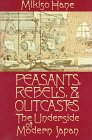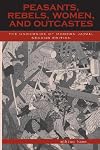
Peasants, Rebels, and Outcastes: The Underside of Modern Japan
by Mikiso Hane
On This Page
Description
This compelling social history uses diaries, memoirs, fiction, trial testimony, personal recollections, and eyewitness accounts to weave a fascinating tale of what ordinary Japanese endured throughout their country's era of economic growth. Through vivid, often wrenching accounts of peasants, miners, textile workers, rebels, and prostitutes, Mikiso Hane forces us to see Japan's "modern century" (from the beginnings of contact with the West to World War II) through fresh eyes. In doing so, he show more mounts a formidable challenge to the success story of Japan's "economic miracle." Starting with the Meiji restoration of 1868, Hane vividly illustrates how modernization actually widened the gulf, economically and socially, between rich and poor, between the mo-bo and mo-ga ("modern boy" and "modern girl") of the cities and their rural counterparts. He interlaces his scholarly narrative with sharply etched individual stories that allow us see Japan from the bottom up. We feel the back-breaking labor of a typical farm family; the anguish of poverty-stricken parents forced to send their daughters to Japan's new mills, factories, and brothels; the hopelessness in rural areas scourged by famine; the proud defiance of women battling against patriarchy; and the desperation of being on strike in a company town, in revolt in the countryside, or conscripted into the army. This updated edition is enhanced by a substantive new introduction by Samuel H. Yamashita. By allowing the underprivileged to speak for themselves, Hane and Yamashita present us with a unique people's history of an often-hidden world. show lessTags
Recommendations



































Member Reviews
Detailed account of the hard life of rural people, especially rural women, miners, factory workers and the outcastes in Meijji era and later Japan. The push for industrialization and militarization improved life for many in the cities, but calls for cash taxes and recruitment of factory workers did not lead to better lives for peasants. Women workers in textile factories and coal miners were treated almost as slaves, unable to leave jobs or protest working condition.s Rural women worked harder when their men left for factory work and in times of famine many young women were sold into prostitution. Although the law had theoretically eliminated the category of outcaste prejudice continues to modern times.
Compassionate book, with lengthy primary excerpts, acquaints us with the loose ends of Japanese society.
Ratings
Members
- Recently Added By
Author Information

Common Knowledge
- Original publication date
- 1982
- Important places
- Japan
Classifications
Statistics
- Members
- 169
- Popularity
- 192,065
- Reviews
- 2
- Rating
- (4.05)
- Languages
- English
- Media
- Paper, Ebook
- ISBNs
- 8
- ASINs
- 2