
Mark Ravina
Author of The Last Samurai: The Life and Battles of Saigō Takamori
About the Author
Mark Ravina is the Mitsubishi Heavy Industries Chair in Japanese Studies at the University of Texas at Austin. He is the author of The Last Samurai and Land and Lordship in Early Modern Japan.
Works by Mark Ravina
Tagged
Common Knowledge
Members
Reviews

What has most stuck with me as an image of Saigo Takamori is the incongruity of his death, as a rebel against the state that he helped to create. The Saigo Takamori that the author depicts (often using Saigo's own words) is an individual of great moral probity and ethical culture, besides being a man of action, who was almost always willing to sacrifice position for honor and integrity. This makes Saigo a great examplar of the contradictions of Modern Japan, where the question always returns show more to whether too much was sacrificed in the scramble for power and wealth. Besides this Ravina also provides a concise account of the process by which the Tokugawa Shogunate fell. show less
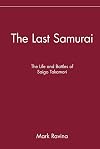
"Where was Saigō Takamori’s head?" is the question that opens Mark Ravina's introduction to his biography of the samurai who rose from humble beginnings to national leadership. The life of Saigō Takamori is intimately connected with 19th century Japanese history leading up to the Meiji Restoration, and Ravina does a good job of describing the political strife between the different domains/daimyo, between the domains and the shogunate, the imperial loyalists versus the Tokugawa loyalists, show more and the role of the Emperor in the midst of all this. This is a scholarly biography, but Ravina is also a great writer. The book held me intrigued from the first page to the last. Ravina has translated Saigō’s letters and poetry and also done a great amount of research to write this book, and it has paid off.
Saigō's life story is truly fascinating; I liked reading about his early years in Kagoshima, and the descriptions of the traditional samurai education he received, with an academic curriculum centred on the Confucian classics with an emphasis on Zhu Xi thought, but also giving Saigō opportunity to study the teachings of Wang Yangming, which influenced him deeply. Ravina holds that Saigō sought the middle ground between these two teachings since his teachers were all synchretists. I’m not going to go further into Saigō’s own ethical philosophy or his life story here; short bio's are easily found by a quick web search.
Only the last chapter is a bit uneven, and here we get back to the whereabouts of Saigō's head. Ravina presents a quote from an American sea captain, who writes in a letter of having seen Saigō's head being placed by his body – which is of course interesting, but Ravina appears to take this to be the absolute goddams truth (since it was coming from an American??), not even considering that the captain may have (pardon my bluntness) lied to embellish his own story, nor does he give any weight to the fact that the captain didn’t actually know Saigō – so how would he have been able to recognize his head? But this is the only instance where I found a certain naiveté instead of scholarship. There were some other parts where I didn’t necessarily agree with his conclusions, but in those cases Ravina at least gives arguments for his view. In no way does it diminish the rest of the book, and for the most part I really enjoyed the read.
One thing I really missed in this book was an 'index of important persons'. There are so many names to keep track of, and I often had to leaf back to try to remember who was who. There’s a general index, which helped some, but not nearly enough. Ravina clearly knows his material well, and he writes as if he expects the reader to have as good an overview as he has himself. It keeps the pace up however, though I think the editor should have been able to take note of something like that. I would also have appreciated some better maps. Still, I do not hesitate to recommend this book. It’s a fairly compact biography with its 250-odd pages, but it still has depth and plenty of detail - and at times it reads almost like a thriller.
This work is licensed under a Creative Commons Attribution-NonCommercial-ShareAlike 3.0 Unported License. show less
Saigō's life story is truly fascinating; I liked reading about his early years in Kagoshima, and the descriptions of the traditional samurai education he received, with an academic curriculum centred on the Confucian classics with an emphasis on Zhu Xi thought, but also giving Saigō opportunity to study the teachings of Wang Yangming, which influenced him deeply. Ravina holds that Saigō sought the middle ground between these two teachings since his teachers were all synchretists. I’m not going to go further into Saigō’s own ethical philosophy or his life story here; short bio's are easily found by a quick web search.
Only the last chapter is a bit uneven, and here we get back to the whereabouts of Saigō's head. Ravina presents a quote from an American sea captain, who writes in a letter of having seen Saigō's head being placed by his body – which is of course interesting, but Ravina appears to take this to be the absolute goddams truth (since it was coming from an American??), not even considering that the captain may have (pardon my bluntness) lied to embellish his own story, nor does he give any weight to the fact that the captain didn’t actually know Saigō – so how would he have been able to recognize his head? But this is the only instance where I found a certain naiveté instead of scholarship. There were some other parts where I didn’t necessarily agree with his conclusions, but in those cases Ravina at least gives arguments for his view. In no way does it diminish the rest of the book, and for the most part I really enjoyed the read.
One thing I really missed in this book was an 'index of important persons'. There are so many names to keep track of, and I often had to leaf back to try to remember who was who. There’s a general index, which helped some, but not nearly enough. Ravina clearly knows his material well, and he writes as if he expects the reader to have as good an overview as he has himself. It keeps the pace up however, though I think the editor should have been able to take note of something like that. I would also have appreciated some better maps. Still, I do not hesitate to recommend this book. It’s a fairly compact biography with its 250-odd pages, but it still has depth and plenty of detail - and at times it reads almost like a thriller.
This work is licensed under a Creative Commons Attribution-NonCommercial-ShareAlike 3.0 Unported License. show less
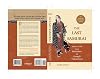
Fascinating look at the history of Japan during the last half of the 19th century. Primarily about the enormous social and cultural changes, political intrigues, civil wars and rebellions that occurred as Japan struggled to become a modern nation capable of competing and co-existing with the Western world. I found particularly interesting Saigo's (the last samurai of the title) frequent political reversals (from shogunate samurai to Imperial loyalist to samurai rebel). Ravina's explanation show more of these changes in Saigo's loyalties are based on Saigo's life-long loyalty to the samurai code of honesty, morality and loyalty.
This is my first foray into Japanese history, so I don't know if other author's have different takes on this period and on Saigo, himself. I will have to look into other histories.
Although this book can be quite difficult for the Western reader because of the many Japanese names and the writer's assumption of some basic knowledge of Japanese feudalism on the part of the reader, I found it fascinating and well-written enough to finish the book in two days. show less
This is my first foray into Japanese history, so I don't know if other author's have different takes on this period and on Saigo, himself. I will have to look into other histories.
Although this book can be quite difficult for the Western reader because of the many Japanese names and the writer's assumption of some basic knowledge of Japanese feudalism on the part of the reader, I found it fascinating and well-written enough to finish the book in two days. show less
I really wanted to like this book. It’s a biography of Saigo Takamori, a Japanese historical hero who might be compared to Abraham Lincoln in American history, a down-home politician who embodied national values and perhaps died for them. Saigo was a politician of the Samurai class towards the end of the 1800s, a time when Japan was experiencing rapid change. The bulk of the change was regarding its struggle to move from a feudal state of disparate kingdoms only loosely united by an show more emperor to a true, cohesive national state. Envoys from Western Europe and the superior technology they offered exacerbated this change. In Saigo’s lifetime steamships replaced sailing ships and the first railroad lines were constructed. (Before that, everyone walked everywhere.) In the reading the book, I can see how this period of rapid industrialization was directly responsible for Japan’s involvement in WWII and everything that happened after.
I did learn a fair bit about the guy, which was good, and I’d like to know more, so in that sense the author, who was a professor of Japanese History at Columbia, did his job. But it was oh so dry. A fine book with lots of scholarly information, but it’s more of what a biographer would read for background material — it did not act as a biography itself. Not knowing much about Japanese history I got frustrated with all the names, places, and dates with nothing about them that made them come to life and engagement. The book had no glossary either — you had to look up the glossary on the book’s website. I would have liked a chapter on the samurai and the ruling system of the time as an introduction so things would have made sense.
So, I can’t recommend this unless you have a solid ground in Asian history. show less
I did learn a fair bit about the guy, which was good, and I’d like to know more, so in that sense the author, who was a professor of Japanese History at Columbia, did his job. But it was oh so dry. A fine book with lots of scholarly information, but it’s more of what a biographer would read for background material — it did not act as a biography itself. Not knowing much about Japanese history I got frustrated with all the names, places, and dates with nothing about them that made them come to life and engagement. The book had no glossary either — you had to look up the glossary on the book’s website. I would have liked a chapter on the samurai and the ruling system of the time as an introduction so things would have made sense.
So, I can’t recommend this unless you have a solid ground in Asian history. show less
You May Also Like


Statistics
- Works
- 18
- Members
- 390
- Popularity
- #62,075
- Rating
- 3.7
- Reviews
- 8
- ISBNs
- 15
- Favorited
- 1