
Ruth Fulton Benedict (1887–1948)
Author of The Chrysanthemum and the Sword: Patterns of Japanese Culture
About the Author
Born in New York City, American anthropologist Ruth Benedict was educated at Vassar College and at Columbia University (Ph.D 1923) where she as a student of Franz Boas. Benedict taught English literature before turning to the social sciences. For several years Benedict taught at Columbia, where she show more was made a professor in 1948. Most of Benedict's fieldwork was with American Indians, and the two books that brought her fame-Patterns of Culture (1934) and The Chrysanthemum and the Sword (1946)-are largely about cultures that she knew only secondhand. The Chrysanthemum and the Sword is a brilliant reconstruction of Japanese culture on the basis of wartime interviews with Japanese people who had been living in the United States for several decades, but it has been criticized for describing nearly dead patterns of Japanese social behavior. Benedict helped expand the scope of anthropology to include the importance of the role of culture. (Bowker Author Biography) show less
Image credit: By World Telegram staff photographer - Library of Congress. New York World-Telegram & Sun Collection. http://hdl.loc.gov/loc.pnp/cph.3c14649, Public Domain, https://commons.wikimedia.org/w/index.php?curid=1276865
Works by Ruth Fulton Benedict
Associated Works
The Moral Life: An Introductory Reader in Ethics and Literature (1999) — Contributor — 202 copies, 2 reviews
Tagged
Common Knowledge
- Legal name
- Benedict, Ruth Fulton
- Other names
- Singleton, Anne
- Birthdate
- 1887-06-05
- Date of death
- 1948-09-17
- Gender
- female
- Education
- Vassar College (BA|1909)
Columbia University (Ph.D|1923) - Occupations
- anthropologist
professor - Organizations
- Columbia University
American Anthropological Association
American Folklore Society - Awards and honors
- Fellow, American Academy of Arts and Sciences (1947)
- Cause of death
- heart attack
- Nationality
- USA
- Birthplace
- New York, New York, USA
- Places of residence
- New York, New York, USA
- Place of death
- New York, New York, USA
- Burial location
- Mount Hope Cemetery, Norwich, New York, USA
- Associated Place (for map)
- New York, New York, USA
Members
Reviews
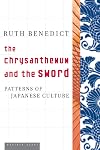
It's supremely dodgy as anthropology--researched from across the Pacific, the main informant a disgruntled nisei, and ultimately even when it has real insights mistaking a profoundly dislocated, damaged point in Japanese social history for business as usual--but so much of this has been so influential on my life: a myth of Japan that became a myth of another way to be, a way of stepping away from the things my own culture and upbringing took as so obvious as to be invisible. Looking into a show more mirror to see your soul; self-respect being not holding to a set of personal morals, but behaving appropriately, cleaving to the circumstances--the ultimate in/flexibility--and never letting the strain show; "thank you" as "It cannot be borne, the burden you place on me by putting me in your debt." This all remained latent as long as life was selfish and easy, but as I've tried to be a dad in difficult circumstances and work with my son's mum so carefully and cause no harm, it's come up again and again. I mean this book may only say an indeterminate amount about Japan, but it's the closest thing I've found to a manual for being stronger than you are. show less
El Crisantemo Y La Espada / the Chrysanthemum and the Sword: Patrones De La Cultura Japonesa/ Patterns of Japanese Culture (Ciencias Sociales / Social Science) (Spanish Edition) by Ruth Benedict
Es un libro interesante, aunque me costó ponerle puntaje.
Lo mejor es sin duda alguna la descripción de las diversas obligaciones que tiene el japonés: para con el emperador, su familia, su «buen nombre», etc. También se destaca de manera especial el capítulo sobre la educación de los niños.
Lo peor es, bueno, cierto bias, algo de esperar en un ensayo realizado a) sin poner un pie en Japón; y b) comisionado por el gobierno de los Estados Unidos.
Hubo muchas partes que me resultaron show more algo densas y descoloridas; el capítulo sobre el Zen me resultó particularmente aburrido, y en general terminé este libro porque me lo puse como meta. No termina de ser una lectura entretenida, pero contiene información muy valiosa que, si bien puede intuirse, uno no alcanza a procesar con los pocos datos recogidos tras ver anime o leer a Murakami. show less
Lo mejor es sin duda alguna la descripción de las diversas obligaciones que tiene el japonés: para con el emperador, su familia, su «buen nombre», etc. También se destaca de manera especial el capítulo sobre la educación de los niños.
Lo peor es, bueno, cierto bias, algo de esperar en un ensayo realizado a) sin poner un pie en Japón; y b) comisionado por el gobierno de los Estados Unidos.
Hubo muchas partes que me resultaron show more algo densas y descoloridas; el capítulo sobre el Zen me resultó particularmente aburrido, y en general terminé este libro porque me lo puse como meta. No termina de ser una lectura entretenida, pero contiene información muy valiosa que, si bien puede intuirse, uno no alcanza a procesar con los pocos datos recogidos tras ver anime o leer a Murakami. show less
An excellent really engrossing exploration of the perplexing, contradictory Japanese mind and culture. This is really WW II, post- and the near term after the occupation. It makes me more interested to know more, if I ever could --- The complete comprehension of such an intriguing and different world can only be truly understood over a lifetime I am sure, but this book is a fascinating vista into this unique and incomprehensible culture.
Really good examination of Japanese values and character right after World War 2 ended. Makes it clear why they did not become vindictive.
I have read elsewhere that it has errors in terminology, etc., but it is still one of the best on Japan. It is a classic.
I have read elsewhere that it has errors in terminology, etc., but it is still one of the best on Japan. It is a classic.
Lists
Big History (1)
Awards


You May Also Like


Associated Authors
Statistics
- Works
- 12
- Also by
- 3
- Members
- 2,823
- Popularity
- #9,088
- Rating
- 3.7
- Reviews
- 22
- ISBNs
- 111
- Languages
- 18