
Edwin O. Reischauer (1910–1990)
Author of Japan: The Story of a Nation
About the Author
Edwin O. Reischauer was born in Japan in 1910, the son of Protestant educational-missionary parents, founders of Japan's first school for the deaf. After being educated in Japanese and American schools, he received his B.A. from Oberlin College in 1931 and his M.A. from Harvard in 1932. Four years show more later he received a Ph.D. in Far Eastern Languages from Harvard. In 1938 he joined the faculty at Harvard, where he rose to the position of professor and acted for an extensive period as director of the Harvard-Yenching Institute. His academic career was interrupted by World War II, during which he served as an intelligence officer in the U.S. Army, and he held civilian posts first in the War Department and later in the Department of State. In 1961 he again took leave from Harvard to accept a position for which he had been hand-picked by President John F. Kennedy---ambassador to Japan. The Japanese accepted him as one of their own; one editorial writer welcomed him by writing that he was well informed about Japan, "having no equal among foreigners on that point." Another remarked how satisfying it would be to "write an editorial and know that the American Ambassador will actually be able to read it." Reischauer was a prolific writer and an energetic speaker who saw his role as introducing Japan to America. In his writings and in his activities in other media such as film, he was committed to reaching as broad an audience as possible. At Harvard he led in training the first generation of true American scholars of Japan. As U.S. ambassador to Japan, however, his role became reversed as he sought to educate Japanese about America and Americans. In the wake of the war in the Pacific, Reischauer hoped to show Americans and Japanese that the two countries could and should be close allies and friends. His assessment of Japan's history emphasized the nonrevolutionary character of its modern history and its outward-looking development. In his view Japanese war and aggression were aberrations in a long emerging liberal tradition. His positivist interpretation has been a leading influence in defining America's postwar vision of Japan. (Bowker Author Biography) show less
Image credit: Edwin O. Reischauer in 1961
Series
Works by Edwin O. Reischauer
East Asia, The Great Tradition: A History of East Asian Civilization (1960) — Author — 93 copies, 2 reviews
Associated Works
The New Illustrated Encyclopedia of World History (1940) — Contributor, some editions — 710 copies, 5 reviews
Ennin's Diary: The Record of a Pilgrimage to China in Search of the Law (1955) — Translator, some editions — 16 copies
Tagged
Common Knowledge
- Canonical name
- Reischauer, Edwin O.
- Legal name
- Reischauer, Edwin Oldfather
- Birthdate
- 1910-10-15
- Date of death
- 1990-09-01
- Gender
- male
- Education
- Oberlin College (BA)
Harvard University (PhD)
American School in Japan - Occupations
- intelligence officer
ambassador
educator
historian
Japanologist - Organizations
- United States Army
Harvard University - Awards and honors
- Edwin O. Reischauer Institute of Japanese Studies renamed in his honor (1985)
Japan Foundation Award (1975) - Relationships
- Reischauer, Haru Matsukata (wife)
- Nationality
- USA
- Birthplace
- Tokyo, Japan
- Places of residence
- Tokyo, Japan
Cambridge, Massachusetts, USA
La Jolla, California, USA - Place of death
- La Jolla, California, USA
- Associated Place (for map)
- USA
Members
Reviews

This is the accompanying volume to a translation of the Diary of Ennin, a Japanese Buddhist monk who lived in China during one of the most tumultuous and fascinating periods of Chinese history--the 840s when Buddhism was at its apogee, only to succumb to the suppression launched by the arch-Taoist (and probably insane) Emperor Wuzong ('Martial Emperor') in 845 CE.
Reischauer's handling of the material is nearly flawless--a short introduction explaining the significance of the work and a show more summary of the work's contents, then a recounting of the diary with each chapter focusing on an aspect of Ennin's diary--departure from Japan, arrival in China, his travels from the coast to the ancient capital of Ch'ang-an, the beginning of the suppression starting with Wuzong's ascension to the throne, his defrocking and departure back to Japan. The missing element was a more thorough explanation of the teachings and practise of the Buddhism Ennin encountered as our knowledge of the esoteric practices of this time and location are woefully lean. On this subject Reischauer bids us turn to other sources (unnamed).
Because most of the official Chinese dynastic histories gloss over this period, Ennin's diary is critical to anyone wanting to understand Tang China during this decade. It's a mesmerizing and horrific tale of how a land so bound to Buddhism, where one couldn't travel from one town to another without encountering parties of monks or nuns or pilgrims on the road, where monasteries dotted almost every hill, and monks were welcome visitors (at most, but not all establishments)...at an emperor's decree defrocked hundreds of thousands of monks and nuns, tore down established monasteries, confiscated lands and wealth, melted down Buddhist statues, burned its sutras and paintings, and terrorized its citizens into denying their faith.
Absolutely anyone interested in Chinese history and the history of Buddhism must read this book and I am ashamed I hadn't deemed Ennin's diary (and this accompanying volume) important enough to read when I was a student. It had literally sat on my shelves for decades, unread, until now. Mea culpa! show less
Reischauer's handling of the material is nearly flawless--a short introduction explaining the significance of the work and a show more summary of the work's contents, then a recounting of the diary with each chapter focusing on an aspect of Ennin's diary--departure from Japan, arrival in China, his travels from the coast to the ancient capital of Ch'ang-an, the beginning of the suppression starting with Wuzong's ascension to the throne, his defrocking and departure back to Japan. The missing element was a more thorough explanation of the teachings and practise of the Buddhism Ennin encountered as our knowledge of the esoteric practices of this time and location are woefully lean. On this subject Reischauer bids us turn to other sources (unnamed).
Because most of the official Chinese dynastic histories gloss over this period, Ennin's diary is critical to anyone wanting to understand Tang China during this decade. It's a mesmerizing and horrific tale of how a land so bound to Buddhism, where one couldn't travel from one town to another without encountering parties of monks or nuns or pilgrims on the road, where monasteries dotted almost every hill, and monks were welcome visitors (at most, but not all establishments)...at an emperor's decree defrocked hundreds of thousands of monks and nuns, tore down established monasteries, confiscated lands and wealth, melted down Buddhist statues, burned its sutras and paintings, and terrorized its citizens into denying their faith.
Absolutely anyone interested in Chinese history and the history of Buddhism must read this book and I am ashamed I hadn't deemed Ennin's diary (and this accompanying volume) important enough to read when I was a student. It had literally sat on my shelves for decades, unread, until now. Mea culpa! show less

Analyzes the special qualities of a people who down through the years have fluctuated between self-deprecation and almost cosmic arrogance, and who now seemed poised to achieve dominance over the global economy.
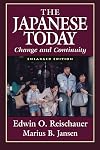
This overview of Japan from early history to the 1990s shows us a people effective at adoption of ideas from China etc. and independent development. They independently developed feudalism:
Inception through WWII covers like the first 110 pages and then the next few hundred pages while covering, basically, only a half century feel like a compact, rushed exploration of the contradictions and idiosyncrasies of a complex and interesting culture:
* Rigid roles but tolerant of drunks
* Excessively polite but pushing and shoving on crowded commuter trains
* Linguistic complexity due to the rare agglutination mode.
A lot of the modern history part tells of the rise and decline of the Liberal Democratic Party. show less
By the twelfth century Japan was on the threshold of an even greater departure from East Asian norms. This was the development of a feudal system, which over the next seven centuries was to go through phases that had many striking parallels to the feudal experience of Western Europe between the ninth andshow more
fifteenth centuries. These similarities to Europe cannot be laid to mutual influences, since there was no contact between the two. The parallels are more likely to have been the result of similarities in the social and cultural ingredients that be-came mixed together in these two areas-namely, tribal societies and relatively advanced political and economic systems. In the West, tribal German groups fell heir to the wreckage of the administration and land system of the Roman Empire. In Japan, the tribal islanders adopted the political institutions and land system of the Chinese Empire. In both cases, these two elements worked on each other over a long period in relative isolation, and out of the amalgam emerged a complex political system based on bonds of personal loyalty in a military aristocracy and the fusion of public authority and personal property rights to land.
As the authority and power of the central government declined in Japan, various groups of local leaders in the provinces banded together for mutual protection. These groups were made up of the officers of the old provincial administrations and the local managers or owners of estates. At first such groups consisted of relatives or neighbors, centered frequently around some charismatic figure who inspired loyalty. Because of the strong Japanese sense of hereditary authority, nothing was more prestigious than imperial descent. Thus, many of the groups came to be led by cadet branches of the imperial family that had received the family names Taira or Minamoto and had moved out to the provinces to make their fortunes as the representatives of central authority...
Inception through WWII covers like the first 110 pages and then the next few hundred pages while covering, basically, only a half century feel like a compact, rushed exploration of the contradictions and idiosyncrasies of a complex and interesting culture:
* Rigid roles but tolerant of drunks
* Excessively polite but pushing and shoving on crowded commuter trains
* Linguistic complexity due to the rare agglutination mode.
A lot of the modern history part tells of the rise and decline of the Liberal Democratic Party. show less

An excellent panoramic history of East Asian civilization up to the eve of its transformation to modern society. A broad selection of different topics are discussed thoroughly and clearly. Good comprehensive histories of China and Japan in English are still surprisingly hard to find. This one is getting a bit old but it's still the best one I've read.
Awards


You May Also Like


Associated Authors
Statistics
- Works
- 30
- Also by
- 4
- Members
- 1,495
- Popularity
- #17,183
- Rating
- 4.2
- Reviews
- 16
- ISBNs
- 73
- Languages
- 6
- Favorited
- 1
