
Karl F. Friday
Author of Legacies of the Sword: The Kashima-Shinryu and Samurai Martial Culture
About the Author
Karl F. Friday is Professor in the Graduate School of Humanities and Social Sciences at Saitama University and Professor Emeritus at the University of Georgia, USA.
Works by Karl F. Friday
The First Samurai: The Life and Legend of the Warrior Rebel, Taira Masakado (2007) 36 copies, 2 reviews
Tagged
Common Knowledge
- Birthdate
- 1957-02-04
- Gender
- male
- Nationality
- USA
- Associated Place (for map)
- USA
Members
Reviews
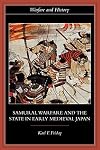
Truly exquisite book on early medieval warfare in Japan. Book is written beautifully and it is accessible to any reader - be it student of history and military or just hobbyist. Level of details is great. Interaction within the society, the way state lost the control of military apparatus and the rise of warrior class that will become answerable to no-one are all beautifully portrayed.
Some actions and consequences- like state losing control over armed forces - share great semblance to what show more happen in Rome prior to its fall and show what happens when monopoly on violence is given to private bodies of people [and this is subject very important for our times].
Samurai predecessors are shown for what they are, military professionals that lived their life by the sword (bow/spear). While they do have a warrior code (that will be romanticized in later centuries) it is clearly shown they were never foolish. All that warrior ethos and honor talk and social standing is OK as long as warrior is alive and to stay alive he is to use everything available in dire situation - and this means doing things that might be opposite to all the honor talk.
For all history buffs out there and Japanese military history enthusiasts in particular I highly recommend this book. show less
Some actions and consequences- like state losing control over armed forces - share great semblance to what show more happen in Rome prior to its fall and show what happens when monopoly on violence is given to private bodies of people [and this is subject very important for our times].
Samurai predecessors are shown for what they are, military professionals that lived their life by the sword (bow/spear). While they do have a warrior code (that will be romanticized in later centuries) it is clearly shown they were never foolish. All that warrior ethos and honor talk and social standing is OK as long as warrior is alive and to stay alive he is to use everything available in dire situation - and this means doing things that might be opposite to all the honor talk.
For all history buffs out there and Japanese military history enthusiasts in particular I highly recommend this book. show less
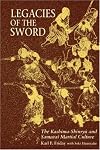
To be honest after reading the back-cover of this book for the first time I was little bit put-off. I was not aware that samurai were considered bureaucrats only and were looked at outside the martial part of their history. This would be equivalent of looking into modern elite forces through the eyes of general administration office - weird.
I always considered them equivalent to retainers and vassals first to Emperors (in early days) and then later Shogun. I am aware that they played show more administrative roles but so did their contemporaries and equivalents in the Europe (knights, barons etc). But with all of that taken into account they remained warrior caste. They fielded the armies, provided their own troops to the front line duty, fought with their troops and were responsible for their fiefdoms in every way (social and economical).
So after reading [and being baffled by] the cover description I thought this was more philosophical treaty on the subject of samurai. Therefore I skipped it (my reason for this is the following - although there are differences between Europe and Japan in regard to the medieval military affairs (Japanese geographical isolation being one of the major elements) existence of professional armed man is constant that is present everywhere, in any period of time and in any society; I am put off by works that try presenting certain societies (like Japanese) as extraordinary when it comes to professional warriors and warlords - in this regard no society is extraordinary because human nature is always the same, where there is wealth and poor people there will always be professional armed man) and pursued other works by [a:Karl F. Friday|110195|Karl F. Friday|https://s.gr-assets.com/assets/nophoto/user/u_50x66-632230dc9882b4352d753eedf9396530.png] that covered military history of Japan. If you haven't read them I truly recommend them, in my opinion one of the best books on the subject.
And then I finally got this book. And what a book.
Author gives information on the way samurai's were schooled, what was the origin and role of various combat schools (bugei) on keeping the martial prowess of Japan military elite through the ages. Samurai martial arts are presented through one of the senior schools still active today - Kashima-Shinryu.
Book does not go into occult or arcane (as sometimes book about Asian martial arts have tendency to do), it is very well grounded and presents all aspects of the combat school from past to modern times - from learning the techniques, to encouraging the students to experiment and build on the techniques (and thus create their own styles, or "branches" of their original combat school) to preparation for real-life in the warrior caste where possibility of loss of life is constant.
I especially liked parts describing how various schools tested their skills against one another (and thus comes the difference between this type of schools and more sportive martial arts) but through protocols established to avoid embarrassment of any school/teachings involved.
Also interesting are traditional Japanese approaches to learning - there is a lot of here that simply begs for further research and finding ways of applying the knowledge to improve ones approach to learning.
Excellent book that sheds light on the part of samurai caste life that people are not that familiar with, path of constant learning and skill improvement.
Highly recommended. show less
I always considered them equivalent to retainers and vassals first to Emperors (in early days) and then later Shogun. I am aware that they played show more administrative roles but so did their contemporaries and equivalents in the Europe (knights, barons etc). But with all of that taken into account they remained warrior caste. They fielded the armies, provided their own troops to the front line duty, fought with their troops and were responsible for their fiefdoms in every way (social and economical).
So after reading [and being baffled by] the cover description I thought this was more philosophical treaty on the subject of samurai. Therefore I skipped it (my reason for this is the following - although there are differences between Europe and Japan in regard to the medieval military affairs (Japanese geographical isolation being one of the major elements) existence of professional armed man is constant that is present everywhere, in any period of time and in any society; I am put off by works that try presenting certain societies (like Japanese) as extraordinary when it comes to professional warriors and warlords - in this regard no society is extraordinary because human nature is always the same, where there is wealth and poor people there will always be professional armed man) and pursued other works by [a:Karl F. Friday|110195|Karl F. Friday|https://s.gr-assets.com/assets/nophoto/user/u_50x66-632230dc9882b4352d753eedf9396530.png] that covered military history of Japan. If you haven't read them I truly recommend them, in my opinion one of the best books on the subject.
And then I finally got this book. And what a book.
Author gives information on the way samurai's were schooled, what was the origin and role of various combat schools (bugei) on keeping the martial prowess of Japan military elite through the ages. Samurai martial arts are presented through one of the senior schools still active today - Kashima-Shinryu.
Book does not go into occult or arcane (as sometimes book about Asian martial arts have tendency to do), it is very well grounded and presents all aspects of the combat school from past to modern times - from learning the techniques, to encouraging the students to experiment and build on the techniques (and thus create their own styles, or "branches" of their original combat school) to preparation for real-life in the warrior caste where possibility of loss of life is constant.
I especially liked parts describing how various schools tested their skills against one another (and thus comes the difference between this type of schools and more sportive martial arts) but through protocols established to avoid embarrassment of any school/teachings involved.
Also interesting are traditional Japanese approaches to learning - there is a lot of here that simply begs for further research and finding ways of applying the knowledge to improve ones approach to learning.
Excellent book that sheds light on the part of samurai caste life that people are not that familiar with, path of constant learning and skill improvement.
Highly recommended. show less

Taira Masakado was tenth century provincial noble, who, while pursuing private feuds with other members of the local warrior aristocracy, ended up in rebellion against the Imperial authorities - apparently more or less by accident. Later accounts claim that he proclaimed himself the New Emperor and hoped to conquer all Japan, but contemporary accounts know nothing of this. He may simply have hoped that by resisting long enough he'd convince the court it was more cost-effective to pardon him show more and let him keep his local status than to crush him: something other provincial rebels had got away with.
In any event, after some initial successes he was defeated and killed by his local rivals who had been formally charged by the Imperial court to restore order. After his death, he became a legendary character, credited with supernatural powers and worshipped to this day as a minor Shinto deity, despite an attempt by the Imperial government to quash his cult in the 19th century - nearly a millennium after his death!
Friday's book is a happy medium between academic rigour and popular accessibility, with most discussion of alternative interpretations hidden away in the endnotes. While basically following the chronological evolution of Masakado's rebellion, Friday makes many detours covering many respects of tenth century Japanese warfare and politics.
I liked it a lot. show less
In any event, after some initial successes he was defeated and killed by his local rivals who had been formally charged by the Imperial court to restore order. After his death, he became a legendary character, credited with supernatural powers and worshipped to this day as a minor Shinto deity, despite an attempt by the Imperial government to quash his cult in the 19th century - nearly a millennium after his death!
Friday's book is a happy medium between academic rigour and popular accessibility, with most discussion of alternative interpretations hidden away in the endnotes. While basically following the chronological evolution of Masakado's rebellion, Friday makes many detours covering many respects of tenth century Japanese warfare and politics.
I liked it a lot. show less
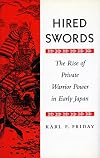
Excellent book on subtle but far-reaching changes in Japan government from 8th Century 'til around 11th Century. In a similar way to the fall of the Roman Empire (later East and West Empires) where the introduction of mercenaries slowly brought the entire Roman world to the end and gave birth to numerous fiefdoms and warlords and finally to feudal system, privatization of military and police powers in Japan started with the goal of reducing overall cost of military and police infrastructure show more management but finally brought the end to the Japanese central government of the day.
The author manages to show how these changes started small but slowly crept in and finally completely changed the political and governmental organization of the Japan leading finally to medieval, feudal age where Samurai were true wielders of the power.
In a way, this can be treated as a cautionary tale for our own times.
Highly recommended. show less
The author manages to show how these changes started small but slowly crept in and finally completely changed the political and governmental organization of the Japan leading finally to medieval, feudal age where Samurai were true wielders of the power.
In a way, this can be treated as a cautionary tale for our own times.
Highly recommended. show less
Lists
You May Also Like


Statistics
- Works
- 6
- Members
- 256
- Popularity
- #89,546
- Rating
- 4.2
- Reviews
- 8
- ISBNs
- 25
- Favorited
- 1