On This Page
Description
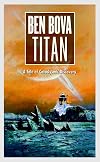
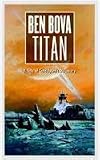
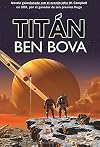
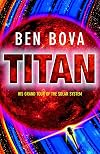
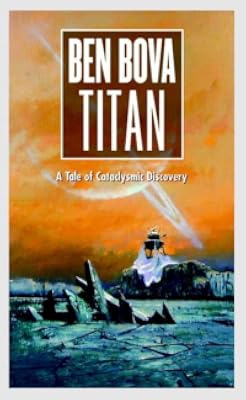
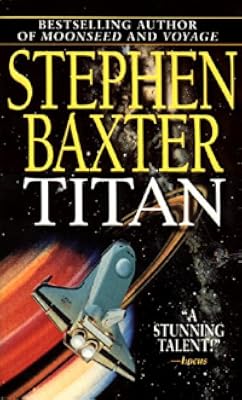
Presents a tale of epic adventure on mankind's next frontier. The gigantic colony ship Goddard carries a volatile population of more than 10,000 dissidents, rebels, extremists and visionaries seeking a new life among the stars. Among Goddard's missions is the study of Saturn's enigmatic moon Titan, which offers the tantalizing possibility that life may exist amid its windswept islands and chill black seas. But when long-buried tensions emerge among the colonists, their leaders must fight for show more the survival of the fledgling colony. show lessTags
Recommendations






Member Reviews
Ben Bova's "Grand Tour" of the solar system is full of life. Two things especially distinguish the life his characters discover on other worlds from life on our own world.
One is that, unlike traditional science fiction, the inhabitants of Bova's planets and moons are rarely at all like us. That is the case with Titan. I enjoyed that the discoveries on Titan and Saturn's rings in this book challenge our understandings of the complexities of life and our understanding of what life actually is. Single-celled or microbial life is almost certainly more common than life like us -- after all, it's more common on Earth as well. But I suspect we haven't yet appreciated how complex the behavior and even the social organization of such life can show more be. The depictions of the variety of life in Titan build on Bova's credentials as a writer of "hard" science fiction.
The other distinction between life on our world and Bova's other worlds is how much humanity manages constantly to get in its own way. Most of the action in Titan takes place aboard the Goddard colony ship (from Bova's earlier book, Saturn), populated by refugees from an Earth dominated by the "New Morality." On Goddard, though, conflicts between the scientific mission and the effort to establish a thriving colony and between personal and collective ambitions recreate themselves. This is what we do.
It may be that I've read too many of Bova's Grand Tour books too quickly, but this one struck me as a bit flat, compared to some of the others. Jupiter and Venus, in particular, gave me a greater sense of suspense and involvement. The characters in those books seemed more complex, more built of battling passions and motivations. Here, the characters seem to fit more easily into their places in the story -- sure, they make decisions, they confound one another, but they seem more to slide together like pieces in a puzzle than to produce a picture that only becomes what it is when it emerges from the mix. show less
One is that, unlike traditional science fiction, the inhabitants of Bova's planets and moons are rarely at all like us. That is the case with Titan. I enjoyed that the discoveries on Titan and Saturn's rings in this book challenge our understandings of the complexities of life and our understanding of what life actually is. Single-celled or microbial life is almost certainly more common than life like us -- after all, it's more common on Earth as well. But I suspect we haven't yet appreciated how complex the behavior and even the social organization of such life can show more be. The depictions of the variety of life in Titan build on Bova's credentials as a writer of "hard" science fiction.
The other distinction between life on our world and Bova's other worlds is how much humanity manages constantly to get in its own way. Most of the action in Titan takes place aboard the Goddard colony ship (from Bova's earlier book, Saturn), populated by refugees from an Earth dominated by the "New Morality." On Goddard, though, conflicts between the scientific mission and the effort to establish a thriving colony and between personal and collective ambitions recreate themselves. This is what we do.
It may be that I've read too many of Bova's Grand Tour books too quickly, but this one struck me as a bit flat, compared to some of the others. Jupiter and Venus, in particular, gave me a greater sense of suspense and involvement. The characters in those books seemed more complex, more built of battling passions and motivations. Here, the characters seem to fit more easily into their places in the story -- sure, they make decisions, they confound one another, but they seem more to slide together like pieces in a puzzle than to produce a picture that only becomes what it is when it emerges from the mix. show less
Titan is another excellent science fiction novel in Ben Bova’s Grand Tour series. Goddard, a permanent space habitat containing 10,000 people from Earth, is in orbit around Saturn in the years 2095-2096. The unethical Chief Administrator of Goddard is planning to extract the water from the rings of Saturn to sell it to other earth space colonies, which would make the population of the habitat very wealthy. However, the scientists in the habitat are concerned that the mining operations will harm the living organisms that may live in the rings. In addition, a robotic science probe/lab on Titan, Saturn’s largest moon, has gone rogue and severed communication with the scientists in the habitat. There is also a political struggle within show more the habitat to replace the Chief Administrator and end the Zero Population Growth policy to make it possible for women to have children. I found this to be a very engaging novel that meets all the expectations of a definitive work of science fiction. The science is totally plausible, there is plenty of it, and it is presented within a very interesting and entertaining storyline. However, the reader does not need extensive scientific knowledge to enjoy the book. In addition, Bova provides and very interesting group of many appealing and some unsavory characters who support, love, argue, clash, conspire, and/or are deceptive with each other while attempting to enhance their own lives while influencing the sociopolitical environment of the habitat. Bova also provides compelling, life-or-death, outer-space action in the rings of Saturn and on the surface of Titan that certainly made this reader anxious. Of course, Titan is also very well written by one of the great science fiction writers of our time. It was first published in 2006 and it won the John W. Campbell Memorial Award for best novel of the year in 2007. I highly recommend it to anyone who likes science fiction or want to sample some. show less
On one hand, it's better than [b:Saturn|64703|Saturn (The Grand Tour, #13)|Ben Bova|https://i.gr-assets.com/images/S/compressed.photo.goodreads.com/books/1316130751l/64703._SY75_.jpg|2566821]. At least this time around, we spend the entire book around Saturn and Titan, with a bit more exploration into the rings of the former and on the surface of the latter. There are essentially three plotlines: a robotic probe sent to Titan is refusing to phone home, someone has to go back to rings to verify that they're alive, and it's election season again--this time with Zero Population Growth as the main issue.
The first--going into the rings to collect samples to prove that they actually found life-- doesn't make the least bit of sense. There are show more arguments back and forth about who is going to go and how dangerous it is. But... why? Couldn't they just use a probe? It honestly fills like filler, although there are some hints of something much bigger going on here, since the life in the rings now seems to bealien nanomachines (which: why? couldn't they just be different?) After the artifact in the asteroid belt plotline doesn't seem to have gone anywhere, there are at least hints on more of a story to tell.
The storyline about the probe on Titan is actually pretty cool. It's a fairly standard 'unexpected conflict in programming story that comes up all the time in science fiction, but it's done fairly well. It's interesting to see a the robot as a point of view--given that it's not actually sapient (although that's an arguable point, Titan doesn't really get into that).
The third plotline annoyed me the most though. The characters remain remarkably stupid. Everyone else is gone, but somehow Malcolm Eberly remained not only on Goddard, but in charge. It's a potentially interesting story to explore how bad people can take and hold power through manipulation and charisma and if that's the sort of thing you like to read, you'll likely enjoy Titan more than I did. He's just so very unlikable, I found myself wanting to skip large chunks of the book. And the entire election plotline really revolves around a sexist 'women only want babies / only women want babies' mess. Oy.
It's nice to see Pancho Lane again at least!
Saturn and Titan together are certainly among my least favorites of the Grand Tour, but if you liked Saturn, you'll probably like Titan as well.
Onward! show less
The first--going into the rings to collect samples to prove that they actually found life-- doesn't make the least bit of sense. There are show more arguments back and forth about who is going to go and how dangerous it is. But... why? Couldn't they just use a probe? It honestly fills like filler, although there are some hints of something much bigger going on here, since the life in the rings now seems to be
The storyline about the probe on Titan is actually pretty cool. It's a fairly standard 'unexpected conflict in programming story that comes up all the time in science fiction, but it's done fairly well. It's interesting to see a the robot as a point of view--given that it's not actually sapient (although that's an arguable point, Titan doesn't really get into that).
The third plotline annoyed me the most though. The characters remain remarkably stupid. Everyone else is gone, but somehow Malcolm Eberly remained not only on Goddard, but in charge. It's a potentially interesting story to explore how bad people can take and hold power through manipulation and charisma and if that's the sort of thing you like to read, you'll likely enjoy Titan more than I did. He's just so very unlikable, I found myself wanting to skip large chunks of the book. And the entire election plotline really revolves around a sexist 'women only want babies / only women want babies' mess. Oy.
It's nice to see Pancho Lane again at least!
Saturn and Titan together are certainly among my least favorites of the Grand Tour, but if you liked Saturn, you'll probably like Titan as well.
Onward! show less
I love Ben Bova books. Yes, they assume a lot, and with any good science fiction book you have to suspend your beliefs and/or realities to really enjoy them, but I have no problem with that whatsoever. Titan made me feel like I was really there either in orbit around Saturn or on the famous moon of the ringed planet. The book really asks: what if? What if life was found on Titan, or in the rings of Saturn? What if we were able to set up a colony of 10000 people or so in a large habitat in orbit around Saturn? It was a lot of fun to think about.
Okay, I understand that Mr Bova is supposed to be one of the preeminent science fiction writers out on the market today. This story held a lot of possibilities, as I could see that there was thought and research behind what he wrote.
This is where I start to object beyond the basics. The research ALL made it into the book. I don’t mean just a little dabble here and there with a bit of jargon to tell us what is going on. I mean pieces of the book covered the extensive research as translated through a computer probe on the surface of Saturn’s moon. Also, the book had too many main characters. I felt like I needed a notepad to write down what character was talking and when and the chapter that I listened to at the time. Main problem show more with that, I listened to it while driving to work, so I couldn’t exactly take notes. Along the same line of thought, nowhere on the book does it list that it is part of a series or a sequel to a previous book. If I had noticed that it required understanding the prior book to get through this one easier, I might have found the other book first. The final objection I have is that the resolution seemed to just end. The book built a high wall of suspense then just dropped the reader off a cliff, hoping they swam when they reached the end of the climax. The build up lasted for the book, and the end was one chapter, with an epilogue to cover plot holes that didn’t get wrapped up in that final chapter, explain away the final results.
The story seemed good. To make it better, I’d trim away about ten plot lines and narrow it to fewer characters for the reader to follow. Complete the story as a novella and save some of the headache, perhaps even merge it into the previous book. show less
This is where I start to object beyond the basics. The research ALL made it into the book. I don’t mean just a little dabble here and there with a bit of jargon to tell us what is going on. I mean pieces of the book covered the extensive research as translated through a computer probe on the surface of Saturn’s moon. Also, the book had too many main characters. I felt like I needed a notepad to write down what character was talking and when and the chapter that I listened to at the time. Main problem show more with that, I listened to it while driving to work, so I couldn’t exactly take notes. Along the same line of thought, nowhere on the book does it list that it is part of a series or a sequel to a previous book. If I had noticed that it required understanding the prior book to get through this one easier, I might have found the other book first. The final objection I have is that the resolution seemed to just end. The book built a high wall of suspense then just dropped the reader off a cliff, hoping they swam when they reached the end of the climax. The build up lasted for the book, and the end was one chapter, with an epilogue to cover plot holes that didn’t get wrapped up in that final chapter, explain away the final results.
The story seemed good. To make it better, I’d trim away about ten plot lines and narrow it to fewer characters for the reader to follow. Complete the story as a novella and save some of the headache, perhaps even merge it into the previous book. show less
I have really enjoyed the Grand Tour series of books from Ben Bova. Though the characters are a little limited and repetitive with little growth across the series the changing interplanetary settings are really interesting.
Excellent follow-up to Saturn. Although not as exciting and dramatic as the former, it was still a solid 5/5 for me! It was nice to see old characters return and their stories expanded upon.
Members
- Recently Added By
Author Information

468+ Works 34,346 Members
Ben Bova, Ben Bova was born in Philadelphia, Pennsylvania. He began writing fiction in the late 1940's and continued to pursue his careers in journalism, aerospace, education and publishing. Bova received a bachelor's degree in journalism from Temple University, 1954, a master of arts degree in communications from the State University of New York, show more 1987, and a doctorate in education from California Coast University, 1996. Dr. Bova worked as a newspaper reporter for several years and then joined Project Vanguard, the first American satellite program, as a technical editor. He was manager of marketing for Avco Everett Research Laboratory and worked with scientists in the fields of high-power lasers, artificial hearts and advanced electrical power generators. Dr. Bova has taught science fiction at Harvard University and at the Hayden Planetarium in New York City, where he also directed film courses. He has written scripts for teaching films with the Physical Sciences Study Committee in association with Nobel Laureates from many universities. Dr. Bova has served on the advisory board of Post College and the Editorial Boards of the World Future Society. He is President Emeritus of the National Space Society and a Fellow of the British Interplanetary Society. He is also a charter member of the Planetary Society and a member of the American Association for the Advancement of Science, the Nature Conservancy, the New York Academy of Sciences and the National Space Club. He is a former President and a charter member of Science Fiction and Fantasy Writers of America. He was honored by Temple University as a Distinguished Alumnus in 1981 and in 1982 was made an Alumni Fellow. In 1994, his short story "Inspiration" was nominated for the Nebula Award. "The Beauty of Light" was voted one of the best science books of the year in 1988 by the American Librarians' Association and they hailed "Moonrise" as best science fiction novel in 1996. Other titles include "Moonwar," "Mars," and "Brothers," which all combine romance and adventure with the scientific aspect of exploring the future of technology and its effect on individuals and society. "Immortality" and "Assured Survival" deal with technology being used to solve economic, social and political problems. "Immortality" goes further in examining biomedical breakthroughs that could extend a person's life by hundreds of years while being able to always remain physically young. His works include The Aftermath, Mars Life, and Leviathans of Jupiter. Ben Bova was a prolific science fiction author. He wrote over a hundred books and short stories. He also was an editor who worked on some of science fiction's best-known publications. He died on November 29, 2020 at the age of 88. (Bowker Author Biography) show less
Some Editions
Awards and Honors
Series


Belongs to Publisher Series
Common Knowledge
- Canonical title
- Titan
- Original publication date
- 2006
- People/Characters
- Eduoard Urbain; Malcolm Eberly; Holly Lane; Manuel Gaeta
- Important places
- Colony Ship Goddard; Titan; Saturn Orbit
- Publisher's editor
- Nielsen Hayden, Patrick
Classifications
Statistics
- Members
- 449
- Popularity
- 68,453
- Reviews
- 15
- Rating
- (3.33)
- Languages
- English, Spanish
- Media
- Paper, Audiobook, Ebook
- ISBNs
- 10
- ASINs
- 3