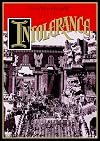
Intolerance [1916 film]
by D. W. Griffith (Director), Hettie Grey Baker (Writer), Tod Browning (Writer), Anita Loos (Writer), Mary H. O'Connor (Writer)
On This Page
Description
In this cinematic milestone, director D.W. Griffith utilized enormous sets and thousands of extras in order to stage his cinematic exploration of intolerance and it's terrible effects throughout history from ancient Babylon and biblical Judea to medieval Paris and modern America.Tags
Recommendations




Member Reviews
Babylon is attacked by Persia, Jesus is crucified, the Huguenots are massacred, and the modern-day working class are oppressed.
It could have been a lot worse. It's clearly a very important movie. I didn't get anything out of it, though, other than historical appreciation.
Concept: D
Story: C
Characters: C
Dialog: C
Pacing: B
Cinematography: B
Special effects/design: A
Acting: C
Music: n/a (watched with the sound off)
Enjoyment: C
GPA: 2.3/4
It could have been a lot worse. It's clearly a very important movie. I didn't get anything out of it, though, other than historical appreciation.
Concept: D
Story: C
Characters: C
Dialog: C
Pacing: B
Cinematography: B
Special effects/design: A
Acting: C
Music: n/a (watched with the sound off)
Enjoyment: C
GPA: 2.3/4
The most influential of all silent films after The Birth of a Nation, Intolerance launched ideas about associative editing that have been essential to the cinema ever since, from Soviet montage classics to recent experimental films. And in the use of crosscutting and action to generate suspense, the film's climax hasn't been surpassed. Intolerance may not be perfect, but with such gargantuan spectacle and timeless mastery of form on show, it is nigh on impossible not to be swept up by this century-spanning extravanganza and its medium-shaping impact.
Jan 7, 2026English (UK)
Un racconto che abbraccia circa 2500 anni di storia, dalla Babilonia e la sua caduta nel 539 a.C., alla Giudea con la crocifissione di Gesù, passando per la strage degli ugonotti in Francia e lo sciopero del 1914 negli Stati Uniti. (fonte: Wikipedia)
May 9, 2020Italian
Ratings
Members
- Recently Added By
Published Reviews
ThingScore 100
D. W. Griffith’s epic celebration of the potentialities of the film medium—perhaps the greatest movie ever made and the greatest folly in movie history. It is charged with visionary excitement about the power of movies to combine music, dance, narrative, drama, painting, and photography—to do alone what all the other arts together had done. In this extravaganza one can see the source of show more most of the major traditions of the screen—the methods of Eisenstein and von Stroheim, the Germans and the Scandinavians, and, when it’s bad, De Mille. It combines extraordinary lyric passages, realism, and psychological details with nonsense, vulgarity, and painful sentimentality. show less
added by SnootyBaronet
Author Information


All Editions
Awards and Honors
Notable Lists
Work Relationships
Common Knowledge
- Canonical title
- Intolerance [1916 film]
- Original title
- Intolerance
- Alternate titles
- Intolerance: Love's Struggle Throughout the Ages; Intolerance: A Sun-Play of the Ages
- Original publication date
- 1916-09-05
- Important places
- Babylon; Jerusalem, Judea, Roman Empire; Paris, France; United States of America
- Important events
- Fall of Babylon (539 BCE); Crucifixion of Jesus of Nazareth; St Bartholemew's Day Massacre; Labor Issues
- Related movies
- Intolerance (1916 | IMDb)
Classifications
Statistics
- Members
- 67
- Popularity
- 464,619
- Reviews
- 3
- Rating
- (3.77)
- Languages
- 5 — English, Italian, Japanese, Spanish, No linguistic content
- ISBNs
- 10
- UPCs
- 5
- ASINs
- 15