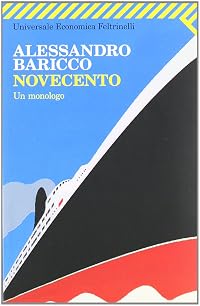
Novecento
by Alessandro Baricco
On This Page
Description
The story was made intoThe Legend of 1900, a 1998 film starring Tim Roth. Told through the eyes of Novecento's (the greatest pianist who ever played on the ocean) best friend, trumpeter Tim Tooney, Baricco's virile text echoes heroic fables and great myths, whilst winking at the beautiful and terrible minutiae that makes up life.Tags
Recommendations












Member Reviews
Baricco te lleva al final de sus libros con una suavidad y una comicidad tan fluídas que al momento del golpe emocional estás absolutamente expuesto. Este libro (escrito con la intención de ser obra de teatro), se lee con imágenes muy claras en la cabeza, tanto de la puesta en escena como de lo que narra. Con un personaje y una historia que recuerda un poco al Johhny de "El Perseguidor" de Cortázar, pero que toma elecciones diametralmente opuestas frente a la misma pasión.
Se convierte en otro de mis favoritos.
Se convierte en otro de mis favoritos.
Su quella maledettissima scaletta era molto bello, tutto...
e io ero grande con quel cappotto, facevo il mio figurone, e non avevo dubbi,
era garantito che sarei sceso, non c'era problema.
Col mio cappello blu.
Primo gradino, secondo gradino, terzo gradino.
Primo gradino, secondo gradino, terzo gradino.
Primo gradino, secondo.
Non è quel che vidi che mi fermò. È quel che non vidi.
Puoi capirlo, fratello? E' quel che non vidi...
lo cercai ma non c'era, in tutta quella sterminata città c'era tutto tranne...
C'era tutto. Ma non c'era una fine.
Quel che non vidi è dove finiva tutto quello. La fine del mondo.
Ora tu pensa: un pianoforte.
I tasti iniziano. I tasti finiscono.
Tu sai che sono 88, su questo nessuno può fregarti.
Non sono infiniti, show more loro.
Tu, sei infinito, e dentro quei tasti, infinita è la musica che puoi fare.
Loro sono 88. Tu sei infinito. Questo a me piace. Questo lo si può vivere.
Ma se io salgo su quella scaletta e davanti a me si srotola una tastiera di milioni di tasti,
Milioni e miliardi di tasti, che non finiscono mai e questa è la vera verità,
che non finiscono mai e quella tastiera è infinita.
Se quella tastiera è infinita, allora su quella tastiera non c'è musica che puoi suonare.
Ti sei seduto su un seggiolino sbagliato: quello è il pianoforte su cui suona Dio.
Cristo, ma le vedevi le strade?
Anche solo le strade, ce n'era a migliaia, come fate voi laggiù a sceglierne una.
A scegliere una donna. Una casa, una terra che sia la vostra,
un paesaggio da guardare, un modo di morire.
Tutto quel mondo addosso che nemmeno sai dove finisce.
E quanto ce n'è.
Non avete mai paura, voi, di finire in mille pezzi solo a pensarla, quell'enormità, solo a pensarla?
A viverla...
Ed ora, di fronte a questo... Se non "solo" per questo, non merita forse le 4 stelle? show less
e io ero grande con quel cappotto, facevo il mio figurone, e non avevo dubbi,
era garantito che sarei sceso, non c'era problema.
Col mio cappello blu.
Primo gradino, secondo gradino, terzo gradino.
Primo gradino, secondo gradino, terzo gradino.
Primo gradino, secondo.
Non è quel che vidi che mi fermò. È quel che non vidi.
Puoi capirlo, fratello? E' quel che non vidi...
lo cercai ma non c'era, in tutta quella sterminata città c'era tutto tranne...
C'era tutto. Ma non c'era una fine.
Quel che non vidi è dove finiva tutto quello. La fine del mondo.
Ora tu pensa: un pianoforte.
I tasti iniziano. I tasti finiscono.
Tu sai che sono 88, su questo nessuno può fregarti.
Non sono infiniti, show more loro.
Tu, sei infinito, e dentro quei tasti, infinita è la musica che puoi fare.
Loro sono 88. Tu sei infinito. Questo a me piace. Questo lo si può vivere.
Ma se io salgo su quella scaletta e davanti a me si srotola una tastiera di milioni di tasti,
Milioni e miliardi di tasti, che non finiscono mai e questa è la vera verità,
che non finiscono mai e quella tastiera è infinita.
Se quella tastiera è infinita, allora su quella tastiera non c'è musica che puoi suonare.
Ti sei seduto su un seggiolino sbagliato: quello è il pianoforte su cui suona Dio.
Cristo, ma le vedevi le strade?
Anche solo le strade, ce n'era a migliaia, come fate voi laggiù a sceglierne una.
A scegliere una donna. Una casa, una terra che sia la vostra,
un paesaggio da guardare, un modo di morire.
Tutto quel mondo addosso che nemmeno sai dove finisce.
E quanto ce n'è.
Non avete mai paura, voi, di finire in mille pezzi solo a pensarla, quell'enormità, solo a pensarla?
A viverla...
Ed ora, di fronte a questo... Se non "solo" per questo, non merita forse le 4 stelle? show less
Novecento : pianiste by Alessandro Baricco
Un monologue
This is a French translation of an Italian novella by Alessandro Baricco originally published in 1994. Barrico is a well known writer and film director in his native Italy and many of his books have been translated into French. Currently his monologue of Novecento is being performed on stage by a famous french actor André Dussollier with the backing of several jazz musicians.
The story is told by a trumpet player Tim Tooney who gets a job on board The Virginian a large ship that criss crosses the Atlantic. The year is 1927 and he has a strange story to tell of the pianist in the ship's band who becomes his best friend. Novecento (the pianist) was born in the year 1900 and he was show more born on the Virginian and left behind by one of the third class steerage passengers. He was found by a sailor in an empty fruit box with the following stamped on the outside Danny Boodman T.D Lemon Novecento which became his name. The sailor brought up Novecento and when he died Novecento remained on board with no papers to say he existed. The Captain decided he must get Novecento registered the next time the boat docked in Southampton for a refit, but they could not find Novecento, only when the ship was back on the high seas did Novecento reappear and he was found in the ballroom playing the piano. He learnt to play the songs he heard from the immigrants on their way to America and he became a legend being able to improvise and play in the band.
Jelly Roll Morton self styled KIng of Jazz booked a passage so he could challenge Novecento to a cutting competition. Novecento made a fool of him without realising what it was all about. Another part of the legend was that Novecento had never set foot on dry land, he continued to live his life on board the ship, a prodigy of sorts who did not exist through lack of registration. Apart from his music all that he knew came from the people who travelled on the boat, the first class passengers down to those in steerage, his life in some respects was lived through others.
Baricco spins the legend of Novecento to a brief 80 odd pages, but it is full of music with a main theme of the limitations of ones existence. Novecento says why should he leave the boat, he has everything he needs, more of anything would just lead to confusion. Baricco writes in lively style interplaying with the music that serves as a background to this rather sad little tale. 3.5 stars show less
Un monologue
This is a French translation of an Italian novella by Alessandro Baricco originally published in 1994. Barrico is a well known writer and film director in his native Italy and many of his books have been translated into French. Currently his monologue of Novecento is being performed on stage by a famous french actor André Dussollier with the backing of several jazz musicians.
The story is told by a trumpet player Tim Tooney who gets a job on board The Virginian a large ship that criss crosses the Atlantic. The year is 1927 and he has a strange story to tell of the pianist in the ship's band who becomes his best friend. Novecento (the pianist) was born in the year 1900 and he was show more born on the Virginian and left behind by one of the third class steerage passengers. He was found by a sailor in an empty fruit box with the following stamped on the outside Danny Boodman T.D Lemon Novecento which became his name. The sailor brought up Novecento and when he died Novecento remained on board with no papers to say he existed. The Captain decided he must get Novecento registered the next time the boat docked in Southampton for a refit, but they could not find Novecento, only when the ship was back on the high seas did Novecento reappear and he was found in the ballroom playing the piano. He learnt to play the songs he heard from the immigrants on their way to America and he became a legend being able to improvise and play in the band.
Jelly Roll Morton self styled KIng of Jazz booked a passage so he could challenge Novecento to a cutting competition. Novecento made a fool of him without realising what it was all about. Another part of the legend was that Novecento had never set foot on dry land, he continued to live his life on board the ship, a prodigy of sorts who did not exist through lack of registration. Apart from his music all that he knew came from the people who travelled on the boat, the first class passengers down to those in steerage, his life in some respects was lived through others.
Baricco spins the legend of Novecento to a brief 80 odd pages, but it is full of music with a main theme of the limitations of ones existence. Novecento says why should he leave the boat, he has everything he needs, more of anything would just lead to confusion. Baricco writes in lively style interplaying with the music that serves as a background to this rather sad little tale. 3.5 stars show less
Quite a delightful little book. Behind a free flowing humour some nuggets of meaning are hiding.
En los años de entreguerras, un transatlántico, el Virginian, recorría las rutas entre Europa y América, con su carga de millonarios, de turistas, de emigrantes. En el Virginian tocaba cada noche un pianista extraordinario, llamado Novecento, con una técnica maravillosa, capaz de arrancar notas mágicas, inauditas. Se hablaba de su inusitado duelo pianístico nada menos que con Jelly Roll Morton, el inventor del jazz. Se decía que el melancólico pianista había nacido en el barco, del que jamás habría descendido. Se decía que nadie sabía la razón.
Un monólogo teatral, recientemente llevado al cine por Giuseppe Tornatore con el título La leyenda del pianista en el océano, del que Alessandro Baricco ha afirmado: «Más que show more un texto teatral, lo considero una novela corta o un relato largo, surgido tras la estela de Océano mar, como si en esta novela no hubiera podido contar todas las historias que quería.» show less
Un monólogo teatral, recientemente llevado al cine por Giuseppe Tornatore con el título La leyenda del pianista en el océano, del que Alessandro Baricco ha afirmado: «Más que show more un texto teatral, lo considero una novela corta o un relato largo, surgido tras la estela de Océano mar, como si en esta novela no hubiera podido contar todas las historias que quería.» show less
Probabilmente il miglior Baricco, dato che, per una volta, le parole raccontano una storia e non solamente loro stesse.
Una storia bellissima, da cui è strato tratto un film bellissimo, infinitamente superiore al libro.
Nel film c'è solo la storia, e non il tentativo delle parole di soffocarla.
Una storia bellissima, da cui è strato tratto un film bellissimo, infinitamente superiore al libro.
Nel film c'è solo la storia, e non il tentativo delle parole di soffocarla.
Su quella maledettissima scaletta era molto bello, tutto...
e io ero grande con quel cappotto, facevo il mio figurone, e non avevo dubbi,
era garantito che sarei sceso, non c'era problema.
Col mio cappello blu.
Primo gradino, secondo gradino, terzo gradino.
Primo gradino, secondo gradino, terzo gradino.
Primo gradino, secondo.
Non è quel che vidi che mi fermò. È quel che non vidi.
Puoi capirlo, fratello? E' quel che non vidi...
lo cercai ma non c'era, in tutta quella sterminata città c'era tutto tranne...
C'era tutto. Ma non c'era una fine.
Quel che non vidi è dove finiva tutto quello. La fine del mondo.
Ora tu pensa: un pianoforte.
I tasti iniziano. I tasti finiscono.
Tu sai che sono 88, su questo nessuno può fregarti.
Non sono infiniti, show more loro.
Tu, sei infinito, e dentro quei tasti, infinita è la musica che puoi fare.
Loro sono 88. Tu sei infinito. Questo a me piace. Questo lo si può vivere.
Ma se io salgo su quella scaletta e davanti a me si srotola una tastiera di milioni di tasti,
Milioni e miliardi di tasti, che non finiscono mai e questa è la vera verità,
che non finiscono mai e quella tastiera è infinita.
Se quella tastiera è infinita, allora su quella tastiera non c'è musica che puoi suonare.
Ti sei seduto su un seggiolino sbagliato: quello è il pianoforte su cui suona Dio.
Cristo, ma le vedevi le strade?
Anche solo le strade, ce n'era a migliaia, come fate voi laggiù a sceglierne una.
A scegliere una donna. Una casa, una terra che sia la vostra,
un paesaggio da guardare, un modo di morire.
Tutto quel mondo addosso che nemmeno sai dove finisce.
E quanto ce n'è.
Non avete mai paura, voi, di finire in mille pezzi solo a pensarla, quell'enormità, solo a pensarla?
A viverla...
Ed ora, di fronte a questo... Se non "solo" per questo, non merita forse le 4 stelle? show less
e io ero grande con quel cappotto, facevo il mio figurone, e non avevo dubbi,
era garantito che sarei sceso, non c'era problema.
Col mio cappello blu.
Primo gradino, secondo gradino, terzo gradino.
Primo gradino, secondo gradino, terzo gradino.
Primo gradino, secondo.
Non è quel che vidi che mi fermò. È quel che non vidi.
Puoi capirlo, fratello? E' quel che non vidi...
lo cercai ma non c'era, in tutta quella sterminata città c'era tutto tranne...
C'era tutto. Ma non c'era una fine.
Quel che non vidi è dove finiva tutto quello. La fine del mondo.
Ora tu pensa: un pianoforte.
I tasti iniziano. I tasti finiscono.
Tu sai che sono 88, su questo nessuno può fregarti.
Non sono infiniti, show more loro.
Tu, sei infinito, e dentro quei tasti, infinita è la musica che puoi fare.
Loro sono 88. Tu sei infinito. Questo a me piace. Questo lo si può vivere.
Ma se io salgo su quella scaletta e davanti a me si srotola una tastiera di milioni di tasti,
Milioni e miliardi di tasti, che non finiscono mai e questa è la vera verità,
che non finiscono mai e quella tastiera è infinita.
Se quella tastiera è infinita, allora su quella tastiera non c'è musica che puoi suonare.
Ti sei seduto su un seggiolino sbagliato: quello è il pianoforte su cui suona Dio.
Cristo, ma le vedevi le strade?
Anche solo le strade, ce n'era a migliaia, come fate voi laggiù a sceglierne una.
A scegliere una donna. Una casa, una terra che sia la vostra,
un paesaggio da guardare, un modo di morire.
Tutto quel mondo addosso che nemmeno sai dove finisce.
E quanto ce n'è.
Non avete mai paura, voi, di finire in mille pezzi solo a pensarla, quell'enormità, solo a pensarla?
A viverla...
Ed ora, di fronte a questo... Se non "solo" per questo, non merita forse le 4 stelle? show less
Members
- Recently Added By
Lists

Italian Literature
558 works; 42 members

Books Read in 2014
2,343 works; 89 members
Books translated from Romance Languages into English
102 works; 7 members
Author Information

356 Works 14,660 Members
Some Editions
Awards and Honors
Series
Belongs to Publisher Series
Work Relationships
Is contained in
Has the adaptation
Common Knowledge
- Canonical title
- Novecento
- Original title
- Novecento
- Alternate titles
- Novecento: The Pianist on the Ocean
- Original publication date
- 1994
- People/Characters*
- Novecento
- Related movies
- La leggenda del pianista sull'oceano (1998 | IMDb)
- Dedication*
- Für Barbara
- First words*
- Es passierte immer wieder, dass auf einmal einer den Kopf hob... und es sah.
- Quotations*
- Stell dir vor: ein Klavier. Die Tasten fangen an. Die Tasten hören auf. Du weisst, dass es achtundachtzig sind, da kann dir keiner was vormachen. Sie sind nicht unendlich. Du bist unendlich, und in diesen Taste... (show all)n ist die Musik unendlich, die du machen kannst. Sie sind achtundachtzig. Du bist unendlich. Das gefällt mir. Damit kann man leben.
Er konnte zuhören. Und er konnte lesen. Nicht nur Bücher, das ist ja keine Kunst: Er konnte Menschen lesen. - Last words*
- (Click to show. Warning: May contain spoilers.)Was du da unterm Arsch hast, ist Dynamit, Bruder. Steh auf und hau ab. Es ist vorbei. Diesmal ist es wirklich vorbei.
(Geht ab.) - Original language*
- Italienisch
*Some information comes from Common Knowledge in other languages. Click "Edit" for more information.
Classifications
Statistics
- Members
- 1,599
- Popularity
- 14,240
- Reviews
- 47
- Rating
- (3.90)
- Languages
- 18 — Catalan, Danish, Dutch, English, Estonian, French, German, Hungarian, Italian, Japanese, Lithuanian, Polish, Portuguese, Romanian, Russian, Spanish, Swedish, Turkish
- Media
- Paper, Audiobook, Ebook
- ISBNs
- 72
- ASINs
- 13