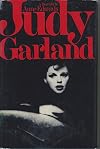
Judy Garland: A Biography
by Anne Edwards
On This Page
Description
Edwards's biography presents a complete picture of the late actress—and not just the boozing, drug-addicted caricature of a woman central to lesser biographies. We learn, for example, that Garland saw it as her duty to provide for her family financially, a generosity that her mother Ethel exploited with disastrous results. Above all Judy Garland sought to please, whether it was an audience or a studio head, and therein lies her powerful and heartbreaking story..
Tags
Recommendations






















Member Reviews
Before reading this biography I read a smattering of reviews and was surprised at a consistent theme that the author was too forgiving of Garland. I don't see that. She calls Judy a naïve addict, gullible and usine self-abuse and attempted suicide as attention-getting schemes. This is hardly flattering. Garland is responsible for her actions as an adult, but what responsible does a child vaudevillian have for early habits of go- and no-go pills? Judy was obviously surrounded by sycophants and handlers that profited from her exertions enabled by chemical dependency. The second visitation of ex-husband Luft as an instigator of transforming her career into indentured servitude with a contract containg hair-trigger harsh penalties is show more particularly galling. show less
Reading about the life of Judy Garland makes one hope that there really is a hell, so people like Louis B. Mayer can rot there for eternity. If there were any justice in the world, her mother would be there, keeping him company, and many others, including her husbands, would pop in for visits. Despite (or, perhaps because of) her enormous talent, Judy Garland’s life was a living hell, thanks to the many people who should have cared for her, but saw her as nothing but a cash cow. Anne Edwards’ Judy Garland: A biography, serves up all of the betrayals, large and small, for our reading pleasure.
Unfortunately, it’s not much of a pleasure. Whether it’s the sheer agony of Garland’s life, or the presentation of the events, peppered show more with the author’s impromptu exclamations and digressions, this is not a fun, smooth read. The book, which was first published in 1974, feels like it’s missing something: there are few interviews with those who knew Garland, and those that show up, are with peripheral characters, giving secondhand information. The publisher also needs to update some of the references. One section refers to writer Norman Mailer in the present tense. Another discusses Sid Luft’s career, referring to it as being ongoing (he died in 2005). These mistakes are small, but distracting.
Overall, I didn’t feel as if I’d learned much about Judy at all – the book felt more like a series of vignettes, loosely strung together by an author who is much better than that! show less
Unfortunately, it’s not much of a pleasure. Whether it’s the sheer agony of Garland’s life, or the presentation of the events, peppered show more with the author’s impromptu exclamations and digressions, this is not a fun, smooth read. The book, which was first published in 1974, feels like it’s missing something: there are few interviews with those who knew Garland, and those that show up, are with peripheral characters, giving secondhand information. The publisher also needs to update some of the references. One section refers to writer Norman Mailer in the present tense. Another discusses Sid Luft’s career, referring to it as being ongoing (he died in 2005). These mistakes are small, but distracting.
Overall, I didn’t feel as if I’d learned much about Judy at all – the book felt more like a series of vignettes, loosely strung together by an author who is much better than that! show less
 This review was written for LibraryThing Early Reviewers.
Judy Garland (1922-1969) could barely remember a time when she was not performing. Fully forty of her forty-seven years were spent in front of an audience of sorts, be it in vaudeville with her sisters, in the movies, on television, on the concert stage or in recordings. The quintessential 'trouper' -- the show must go on! -- she often struggled with debilitating fear, illness, and/or drug dependence, yet mostly managing to pull off performance after performance. And her audiences passionately loved her from her adolescent Dorothy on her way to Oz to her last concerts and recordings for which she won a posthumous Grammy award.
I learned much from this reprint of Anne Edwards' 30 year old biography. Louis B. Mayer seems a complete ogre. show more The extent that child actors, Garland and Mickey Rooney foremost along them, were exploited was shocking. The cavalier extent to which Mayer, Garland's mother and her third husband, Sidney Luft, apparently controlled, neglected and embezzled from her is unconscionable. I had understood previously that early attempts to have Judy lose weight had started a cycle of drug dependency. What we learn here is just the extent to which this abuse went. Assuredly, neglect of her health combined with her consumption of the extreme amounts of medication led to her early demise.
How has this book held up over the past 30 years? Edwards is at her best in conveying the electricity of Garland's live performances and the palpable and remarkable connection she was able to make with her audiences. One can truly imagine why she was so beloved and so mourned. This book spurred me to find online videos of her live performances. Despite their poor quality, the magic comes shining through.
In places the book shows its age. People are referenced as being alive who clearly have since passed away. It would have been nice if there had been some updated preface or afterward by the author reflecting on the last thirty years and how she felt perceptions and understandings of Garland had changed. The book contains no footnotes, end notes or attributions, which is troubling for those who want to explore the source of some of the factual allegations of the book. For me, I was most troubled by the heavy handed armchair psychoanalysis in which Edwards engaged. She was determined to portray Garland as a complete victim with little or no complicity in her own problems or issues. I understand Liza Minnelli did not agree with this assessment of her mother. While I understand Edwards was a neighbor and acquaintance in Garland's very last months in London, one questions her qualifications or basis for many of her psychological allegations.
Despite this, I did enjoy the book. I was much too young to recall anything about Ms. Garland while she was living. Hers is a legend that continues unabated and I was curious to learn more. If you enjoy chatty, gossipy Hollywood biographies, you will enjoy this one as well. show less
I learned much from this reprint of Anne Edwards' 30 year old biography. Louis B. Mayer seems a complete ogre. show more The extent that child actors, Garland and Mickey Rooney foremost along them, were exploited was shocking. The cavalier extent to which Mayer, Garland's mother and her third husband, Sidney Luft, apparently controlled, neglected and embezzled from her is unconscionable. I had understood previously that early attempts to have Judy lose weight had started a cycle of drug dependency. What we learn here is just the extent to which this abuse went. Assuredly, neglect of her health combined with her consumption of the extreme amounts of medication led to her early demise.
How has this book held up over the past 30 years? Edwards is at her best in conveying the electricity of Garland's live performances and the palpable and remarkable connection she was able to make with her audiences. One can truly imagine why she was so beloved and so mourned. This book spurred me to find online videos of her live performances. Despite their poor quality, the magic comes shining through.
In places the book shows its age. People are referenced as being alive who clearly have since passed away. It would have been nice if there had been some updated preface or afterward by the author reflecting on the last thirty years and how she felt perceptions and understandings of Garland had changed. The book contains no footnotes, end notes or attributions, which is troubling for those who want to explore the source of some of the factual allegations of the book. For me, I was most troubled by the heavy handed armchair psychoanalysis in which Edwards engaged. She was determined to portray Garland as a complete victim with little or no complicity in her own problems or issues. I understand Liza Minnelli did not agree with this assessment of her mother. While I understand Edwards was a neighbor and acquaintance in Garland's very last months in London, one questions her qualifications or basis for many of her psychological allegations.
Despite this, I did enjoy the book. I was much too young to recall anything about Ms. Garland while she was living. Hers is a legend that continues unabated and I was curious to learn more. If you enjoy chatty, gossipy Hollywood biographies, you will enjoy this one as well. show less
This review was written for LibraryThing Early Reviewers.This is very readable but often curious biography of Judy Garland. I knew little about her when I picked up the book, and I finished feeling that her life was tragic due both to circumstances beyond her control and because she herself was a terribly difficult person.
My first concern with this book has to do with the author's complete dedication to the notion of Garland as a victim.
I have a fair amount of sympathy for Judy Garland because she became her mother's golden opportunity to get to Hollywood - a dreadful role for any child, especially a thoughtful and sensitive one like Judy.
But Garland is portrayed as a victim of virtually everyone, from Louis B. Mayer to all her five husbands, throughout the entire text. That Garland was a show more drug addict, a terrible parent, selfish, irresponsible etc. the author acknowledges - but the blame always lies with someone else. Is there no point at which Judy Garland herself can be held accountable for her actions?
My second concern has to do with the writing style.
Sometimes it was the author as armchair psychologist that I found most annoying, sometimes it was her overblown, pretentious language and sometimes it was her decision to skip over huge chunks of what appeared be important information ("During the time of the filming of the television series, Judy was seeing and appeared to be very much in love with Glenn Ford. He was very attentive, and Judy dropped small hints that they might marry" reads one paragraph. A few pages later Glenn Ford is mentioned again in passing - and that's the beginning and end of this entire episode.)
As to the dramatic language, here are just a few examples: Her love for her first husband, the author says, was "shriveling and dying in [Judy] as though it were the fetus of their aborted child"; "With the strength only the weak can possess, [Judy] managed to survive the rigors of three full-scale musicals and the birth of Liza during the first two years of her marriage to Minnelli" (what, exactly, is the "strength only the weak can possess"?); and after describing one of Judy's concerts, the author pontificates: "A wave of understanding swept across the nation's rejects - the men and women who had never been accepted as they were. Judy's incredible rebirth; the unleashing of her true spirit; her defiance of convention; and most of all, the true beauty of her soul that soared from her in song, the honest pain and anguish she exposed when singing, caused them to rise up and at any cost to reach her, to let her know she was not alone, that they would protect her, that they understood, that they accepted her for herself and perceived her need for both a dialogue and an outstretched hand."
There's plenty more here (particularly awful: "Once again [Judy] could not call her soul her own"), along with a lot of chastising ("it was incredibly insensitive" of Louis B. Mayer not to let Judy date Tyrone Power, Edwards writes). The author also insists on constantly analyzing why Judy Garland did this or that, what she was feeling, how she was imagining things.
Because Judy Garland's life was fascinating, this is an interesting book.
If only the author had given readers some credit and not told us what to think, not constantly hit us over the head with "poor, poor Judy," it could have been a very good one, too. show less
My first concern with this book has to do with the author's complete dedication to the notion of Garland as a victim.
I have a fair amount of sympathy for Judy Garland because she became her mother's golden opportunity to get to Hollywood - a dreadful role for any child, especially a thoughtful and sensitive one like Judy.
But Garland is portrayed as a victim of virtually everyone, from Louis B. Mayer to all her five husbands, throughout the entire text. That Garland was a show more drug addict, a terrible parent, selfish, irresponsible etc. the author acknowledges - but the blame always lies with someone else. Is there no point at which Judy Garland herself can be held accountable for her actions?
My second concern has to do with the writing style.
Sometimes it was the author as armchair psychologist that I found most annoying, sometimes it was her overblown, pretentious language and sometimes it was her decision to skip over huge chunks of what appeared be important information ("During the time of the filming of the television series, Judy was seeing and appeared to be very much in love with Glenn Ford. He was very attentive, and Judy dropped small hints that they might marry" reads one paragraph. A few pages later Glenn Ford is mentioned again in passing - and that's the beginning and end of this entire episode.)
As to the dramatic language, here are just a few examples: Her love for her first husband, the author says, was "shriveling and dying in [Judy] as though it were the fetus of their aborted child"; "With the strength only the weak can possess, [Judy] managed to survive the rigors of three full-scale musicals and the birth of Liza during the first two years of her marriage to Minnelli" (what, exactly, is the "strength only the weak can possess"?); and after describing one of Judy's concerts, the author pontificates: "A wave of understanding swept across the nation's rejects - the men and women who had never been accepted as they were. Judy's incredible rebirth; the unleashing of her true spirit; her defiance of convention; and most of all, the true beauty of her soul that soared from her in song, the honest pain and anguish she exposed when singing, caused them to rise up and at any cost to reach her, to let her know she was not alone, that they would protect her, that they understood, that they accepted her for herself and perceived her need for both a dialogue and an outstretched hand."
There's plenty more here (particularly awful: "Once again [Judy] could not call her soul her own"), along with a lot of chastising ("it was incredibly insensitive" of Louis B. Mayer not to let Judy date Tyrone Power, Edwards writes). The author also insists on constantly analyzing why Judy Garland did this or that, what she was feeling, how she was imagining things.
Because Judy Garland's life was fascinating, this is an interesting book.
If only the author had given readers some credit and not told us what to think, not constantly hit us over the head with "poor, poor Judy," it could have been a very good one, too. show less
This review was written for LibraryThing Early Reviewers.I was very happy to be awarded "Judy Garland" by Anne Edwards to review for the Early Reviewers program.. This is a paperback reissue of a biography originally published in 1974. The author, an acclaimed biographer, has written books on Hollywood stars (Shirley Temple, Vivien Leigh, Katharine Hepburn, Barbra Streisand) and royalty (Queen Elizabeth and Princess Margaret, Queen Mary, the Duchess of Windsor), has done her homework in researching Judy Garland's life.
I have heard Liza Minnelli say that her mother was not a sad person, despite the many setbacks she had in her life. That said, Judy Garland was a broken woman, a broken child, and the many problems she had in later life can be traced back to her childhood. Edwards takes us show more through her childhood years, where her mother, Ethel, pushed all 3 of her daughters to become 'stars'. When the older girls resisted, Mama set her sights on her youngest, and little Frances Gumm was transformed into "Judy Garland".
Judy's father died in 1935 - before she made her mark in the movies, and throughout her life, she was sorry that he never saw her make it to the big time. The missing father was a recurring theme in her life - and her 5 failed marriages were symbolic of her trying to find a man who would just love her. Insecure, needing to please, the innocent young girl found herself at the mercy of MGM Studios. It was the studio that started her dependency on pills at a tender age... uppers to get through the long days of shooting her films; downers to get her to sleep.
By the time she was 28, Judy Garland was a pill popping nervous wreck of a has-been. Her studio days at MGM behind her, she discovered a new career as a concert artist - and audiences wanted to love her, to console her, to adore her. Garland ate this up, and it kept her going.
Yes, she had her 'comebacks'.... most notably in the 1954 "A Star is Born", for w which Judy was nominated for a Best Actress Oscar, and lost to Grace Kelly. For the next 15 years, her life was a series of bad business decisions, a few movies in which she gave solid performances despite her neuroses and drug addiction, and the concerts, which exhausted her. She also had her own Sunday night TV variety show, which was not the success producers had hoped it would be.
Judy Garland was a brilliant natural talent, and Edwards takes the reader through the incredible ups and downs. The reader feels intense sympathy for Garland, and that is what the essence of her appeal was. We want to love Judy because we know that he moment she started singing "Over the Rainbow", she brought tears to her audiences. She returned the love of her fans by simply being "Judy Garland".
In addition to the well researched story of Garland's life, Ms. Edwards includes several appendices, including poems that Judy Garland had composed in her lifetime. There are also appendices listing her films, radio, TV, and concert appearances, and her discography as well.
Anne Edwards has written a comprehensive book about Judy Garland. It's one that her fans will love, and, hopefully, with this reissue, it will bring Garland's life story to a whole new audience of fans who only know her as Dorothy Gale from 'The Wizard of Oz'. show less
I have heard Liza Minnelli say that her mother was not a sad person, despite the many setbacks she had in her life. That said, Judy Garland was a broken woman, a broken child, and the many problems she had in later life can be traced back to her childhood. Edwards takes us show more through her childhood years, where her mother, Ethel, pushed all 3 of her daughters to become 'stars'. When the older girls resisted, Mama set her sights on her youngest, and little Frances Gumm was transformed into "Judy Garland".
Judy's father died in 1935 - before she made her mark in the movies, and throughout her life, she was sorry that he never saw her make it to the big time. The missing father was a recurring theme in her life - and her 5 failed marriages were symbolic of her trying to find a man who would just love her. Insecure, needing to please, the innocent young girl found herself at the mercy of MGM Studios. It was the studio that started her dependency on pills at a tender age... uppers to get through the long days of shooting her films; downers to get her to sleep.
By the time she was 28, Judy Garland was a pill popping nervous wreck of a has-been. Her studio days at MGM behind her, she discovered a new career as a concert artist - and audiences wanted to love her, to console her, to adore her. Garland ate this up, and it kept her going.
Yes, she had her 'comebacks'.... most notably in the 1954 "A Star is Born", for w which Judy was nominated for a Best Actress Oscar, and lost to Grace Kelly. For the next 15 years, her life was a series of bad business decisions, a few movies in which she gave solid performances despite her neuroses and drug addiction, and the concerts, which exhausted her. She also had her own Sunday night TV variety show, which was not the success producers had hoped it would be.
Judy Garland was a brilliant natural talent, and Edwards takes the reader through the incredible ups and downs. The reader feels intense sympathy for Garland, and that is what the essence of her appeal was. We want to love Judy because we know that he moment she started singing "Over the Rainbow", she brought tears to her audiences. She returned the love of her fans by simply being "Judy Garland".
In addition to the well researched story of Garland's life, Ms. Edwards includes several appendices, including poems that Judy Garland had composed in her lifetime. There are also appendices listing her films, radio, TV, and concert appearances, and her discography as well.
Anne Edwards has written a comprehensive book about Judy Garland. It's one that her fans will love, and, hopefully, with this reissue, it will bring Garland's life story to a whole new audience of fans who only know her as Dorothy Gale from 'The Wizard of Oz'. show less
This review was written for LibraryThing Early Reviewers.This is a reissue of a book that is more than 10 years old, and it has not been given a fresh edit, so that people who are now dead are spoken of as alive and well.
Also, the edition I was given to review has some production problems, so that several whole chapters are repeated and sometimes the narrative is broken up by pages inserted out of order. Luckily, the pages are numbered and it is easy to find where Edwards left off.
Those are the negatives, and neither reflects on the author. This is probably the most fully-realized and even-handed biography of Garland. It doesn't gloss over her faults and failings but reminds us that Garland was an enormously talented woman who was mistreated by the people closest to her, starting with her mother.
Also, the edition I was given to review has some production problems, so that several whole chapters are repeated and sometimes the narrative is broken up by pages inserted out of order. Luckily, the pages are numbered and it is easy to find where Edwards left off.
Those are the negatives, and neither reflects on the author. This is probably the most fully-realized and even-handed biography of Garland. It doesn't gloss over her faults and failings but reminds us that Garland was an enormously talented woman who was mistreated by the people closest to her, starting with her mother.
This review was written for LibraryThing Early Reviewers.I received this through the LibraryThing reviewers. As such, at first, I didn't realize that this isn't a new biography, but rather a reissue of a biography written in the mid-1970s - something that I didn't comprehend until about half way through. It would have been nice for someone to have explained this in a preface and further explain why a reissue was a good idea. As it was, I kept looking for some perspective, or something new in this book that, given the 40 plus years since her death, should justify a new biography, and I was befuddled for awhile in that I didn't find it.
Once I realized this was a reissue, I had to reorient myself to look at it as whether it was worthy of being read by someone who knew nothing about Garland and show more was just looking for a basic biography. This is mostly it. The book came out when the image of Garland as a drug-addled, irresponsible individual was still widely accepted and it's obvious this book was written to present Judy as a victim of her family (esp. her mother), the studio system, Mayer, and several husbands. Since the book was written, the view of Judy has become more nuanced and a lot of the victim concept has been accepted so the books comes through a little as preachy, when it doesn't really need to be.
However, for at least the first 2/3 of the book, it is a well-written biography that does convey a lot of who Judy was and why she was so significant. I did have a problem with the balance of the book. The author knew Judy personally during her last year of life, along with her fifth husband, and interviewed a lot of people who knew her at that time as well. As a result a disproportional amount of the book deals with the last year and months of her life - a time not nearly as interesting or important as the rest of her life.
I saw one of Garland's last performance in the U.S. and even though a child was impressed with her personality. As such, I have read a considerable amount about her. This book is pro-Judy and does emphasize her enormous talent and ability to connect with the audience. So I will give it 3 stars as a good introduction. But as the book hints at, she was a complex individual and anyone truly interested in why she mattered should read more to get a full picture.
One minor comment -although it doesn't say it's a pre-issue copy that was sent, it had two sections where chunks of pages were duplicated. I hope those will be corrected before it's sold. show less
Once I realized this was a reissue, I had to reorient myself to look at it as whether it was worthy of being read by someone who knew nothing about Garland and show more was just looking for a basic biography. This is mostly it. The book came out when the image of Garland as a drug-addled, irresponsible individual was still widely accepted and it's obvious this book was written to present Judy as a victim of her family (esp. her mother), the studio system, Mayer, and several husbands. Since the book was written, the view of Judy has become more nuanced and a lot of the victim concept has been accepted so the books comes through a little as preachy, when it doesn't really need to be.
However, for at least the first 2/3 of the book, it is a well-written biography that does convey a lot of who Judy was and why she was so significant. I did have a problem with the balance of the book. The author knew Judy personally during her last year of life, along with her fifth husband, and interviewed a lot of people who knew her at that time as well. As a result a disproportional amount of the book deals with the last year and months of her life - a time not nearly as interesting or important as the rest of her life.
I saw one of Garland's last performance in the U.S. and even though a child was impressed with her personality. As such, I have read a considerable amount about her. This book is pro-Judy and does emphasize her enormous talent and ability to connect with the audience. So I will give it 3 stars as a good introduction. But as the book hints at, she was a complex individual and anyone truly interested in why she mattered should read more to get a full picture.
One minor comment -although it doesn't say it's a pre-issue copy that was sent, it had two sections where chunks of pages were duplicated. I hope those will be corrected before it's sold. show less
This review was written for LibraryThing Early Reviewers.Members
- Recently Added By
Author Information

37+ Works 2,432 Members
Anne Edwards is the New York Times best-selling author of Vivien Leigh: A Biography and Matriarch: Queen Mary and the House of Windsor as well as several other biographies, novels, and children's books. She lives in Beverly Hills, California.
Common Knowledge
- People/Characters
- Judy Garland
- Dedication
- For Judy and for Steve In good conscience and with love
- First words
- If Judy Garland's mother had walked for eighteen minutes she would have completely coverage the east, west, north and south of Grand Rapids, Minnesota, where her husband had purchased a small movie house.
- Last words
- (Click to show. Warning: May contain spoilers.)The crypt selected was in the new wing, the one truly lovely section of the mausoleum building dominated by a huge glass window with trees beyond. It almost turns your heart when you come upon it, for it is like leaving a dead theater and entering a world of light and the living.
- Original language
- English
- Canonical DDC/MDS
- 784.0924; 791.43028
- Canonical LCC
- ML420.G253
Classifications
- Genres
- Biography & Memoir, Nonfiction, General Nonfiction
- DDC/MDS
- 791.43028 — Arts & recreation Recreation, sports, and performing arts Movies, TV, Video Motion pictures, radio, television, podcasting Motion pictures Standard subdivisions Acting and performance
- LCC
- ML420 .G253 — Music Literature on music Literature on music History and criticism Biography
- BISAC
Statistics
- Members
- 156
- Popularity
- 209,454
- Reviews
- 12
- Rating
- (3.61)
- Languages
- English, Spanish
- Media
- Paper, Ebook
- ISBNs
- 12
- ASINs
- 9