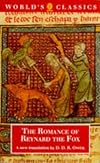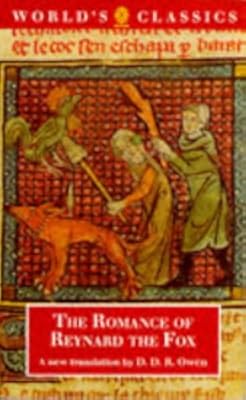
The Romance of Reynard the Fox
by Patricia Terry, Michel Cadot (Translator and editor)
On This Page
Description
Renard the Fox is the first modern translation into English of one of the most important and influential medieval books. Valued for its comic spirit, its high literary quality, and its clever satire of feudal society, the tale uses animals to represent the members of various classes. This lively and accessible translation will be welcomed for courses in medieval literature and history, gender studies, and humanities, and will be a treat for the general reader as well.Tags
Recommendations




















Member Reviews
So far, and this is hard for a medievalist to say, I'm finding the Reynard stories excruciating. Threw it on a syllabus for an independent study on Animals in the MA, and lord do I regret it. I suppose the task here is to account for why they're animals at all...
Cultural historians have no doubt loved the rich attention to 12-13th c. Northern French culture: we see, for example, the use of cudgels in judicial combat, and a joke about Bruin the Bear's bleeding face as a the habit of an unidentified monastic order (because, get it?, many new orders founded in the 12th c.! Hilarious!).
Oh, god, finished it. I'll never assign it again.
Cultural historians have no doubt loved the rich attention to 12-13th c. Northern French culture: we see, for example, the use of cudgels in judicial combat, and a joke about Bruin the Bear's bleeding face as a the habit of an unidentified monastic order (because, get it?, many new orders founded in the 12th c.! Hilarious!).
Oh, god, finished it. I'll never assign it again.
I read this as part of my BA in English in 2012 and liked it more than expected.
The characters are all animals with human characteristics. Sometimes this is confusing, such as when the fox is described as having a thumb, and on another occasion when he’s riding a horse, which evokes weird visuals.
Good fun on the whole, but not something I’d give a second reading.
The characters are all animals with human characteristics. Sometimes this is confusing, such as when the fox is described as having a thumb, and on another occasion when he’s riding a horse, which evokes weird visuals.
Good fun on the whole, but not something I’d give a second reading.
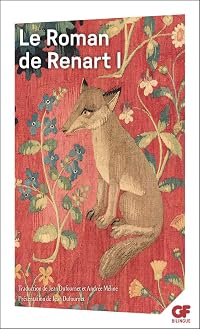
Une oeuvre du Moyen Age qui a le plus profondément marqué peut-être la culture européenne et en même temps l'œuvre la plus universelle : les récits qui la constituent se retrouvent pour certains dans le monde entier, particulièrement dans les traditions indienne, arabe et hébraïque. Le Roman de Renart s'est constitué par agglutination de courts poèmes ou 'branches' composés entre la fin du XIe et la fin du XIIIe siècle. On retrouve, de l'un à l'autre, Renart le trompeur et sa famille, son adversaire et sa victime, le loup Isengrin, son cousin et allié, le blaireau Grimbert, tous les animaux enfin qui forment la cour du roi Noble, le lion. Leurs aventures transposent dans le monde animal la peinture satirique de la show more société de leur temps, mais aussi celle de l'éternelle nature humaine. show less
Aug 13, 2010French
Ratings
Members
- Recently Added By
Lists

Favourite Medieval Books
49 works; 17 members

Favorite Animal Fiction
359 works; 156 members
Author Information
8+ Works 439 Members
Patricia Terry has been Professor of Literature at Barnard College and the University of California, San Diego
Some Editions
Series
Belongs to Publisher Series
Work Relationships
Contains
Is retold in
Has the adaptation
Is an abridged version of
Is abridged in
Common Knowledge
- Canonical title
- The Romance of Reynard the Fox
- Original title
- Le Roman de Renart
- Original publication date
- XIIIe siècle
- People/Characters*
- Renart; Ysengrin
- Disambiguation notice
- This edition contains branches 1, 2, 3, 4, and 5a
*Some information comes from Common Knowledge in other languages. Click "Edit" for more information.
Classifications
Statistics
- Members
- 328
- Popularity
- 96,723
- Reviews
- 3
- Rating
- (3.85)
- Languages
- 5 — English, French, French (Middle), Old French, Italian
- Media
- Paper, Ebook
- ISBNs
- 41
- ASINs
- 9