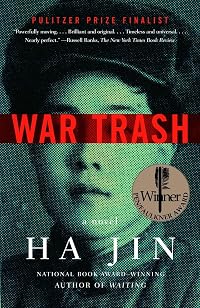
War Trash
by Ha Jin
On This Page
Description
Ha Jin's masterful new novel casts a searchlight into a forgotten corner of modern history, the experience of Chinese soldiers held in U.S. POW camps during the Korean War. In 1951 Yu Yuan, a scholarly and self-effacing clerical officer in Mao's "volunteer" army, is taken prisoner south of the 38th Parallel. Because he speaks English, he soon becomes an intermediary between his compatriots and their American captors.With Yuan as guide, we are ushered into the secret world behind the barbed show more wire, a world where kindness alternates with blinding cruelty and one has infinitely more to fear from one's fellow prisoners than from the guards. Vivid in its historical detail, profound in its imaginative empathy, War Trash is Ha Jin's most ambitious book to date.From the Trade Paperback edition.
. show less
Tags
Recommendations



Member Reviews
I am a big fan of Ha Jin's work, and this book does not disappoint.
The book covers a different side to life in the PRC, that of those soldiers who fought in the Korean War. Yuan is a young Nationalist cadet who is sent to Korea by the Communists to fight the South Koreans and their American allies. Woefully ill-equipped, many Chinese are taken prisoner, so most of the action takes place in the P.O.W. camps. The prisoners live on a precarious cliff as those higher up argue as to what is to be done with the P.O.W.'s on both sides. The atrocities of war are all too realistic, with young, inexperienced troops sent into battle lacking the necessary equipment. Victory at any cost.
The inner workings of camp life are well-described, show more especially the cultural and ideological clash between the Americans and the Chinese prisoners. This is clearest in the wake of the camp commandant, which his soldiers take as a personal attack on his beloved superior, but which Yuan remarks that if the tables were turned would be seen as an attack on China. The struggle between the individual and the collective is strong, Yuan is not an ideological man, but he knows that the only way to get back to his mother and fiancee is to fall in with the Communists. The prisoners, both the North Koreans and Chinese, are caught between the rival political factions. Many don't know want to go back, especially as their being captured will be seen as a total failure. This reminds me of my Grandfather telling us about prisoner negotiations at the end of WW2 - getting British boys back, but knowing that the fate of those being sent back to the East would be bleak.
As a reader, it was Yuan's openness that made me keep turning pages. He weighed up both sides, found both wanting, but didn't lose sight on his ultimate objective of getting home. show less
The book covers a different side to life in the PRC, that of those soldiers who fought in the Korean War. Yuan is a young Nationalist cadet who is sent to Korea by the Communists to fight the South Koreans and their American allies. Woefully ill-equipped, many Chinese are taken prisoner, so most of the action takes place in the P.O.W. camps. The prisoners live on a precarious cliff as those higher up argue as to what is to be done with the P.O.W.'s on both sides. The atrocities of war are all too realistic, with young, inexperienced troops sent into battle lacking the necessary equipment. Victory at any cost.
The inner workings of camp life are well-described, show more especially the cultural and ideological clash between the Americans and the Chinese prisoners. This is clearest in the wake of the camp commandant, which his soldiers take as a personal attack on his beloved superior, but which Yuan remarks that if the tables were turned would be seen as an attack on China. The struggle between the individual and the collective is strong, Yuan is not an ideological man, but he knows that the only way to get back to his mother and fiancee is to fall in with the Communists. The prisoners, both the North Koreans and Chinese, are caught between the rival political factions. Many don't know want to go back, especially as their being captured will be seen as a total failure. This reminds me of my Grandfather telling us about prisoner negotiations at the end of WW2 - getting British boys back, but knowing that the fate of those being sent back to the East would be bleak.
As a reader, it was Yuan's openness that made me keep turning pages. He weighed up both sides, found both wanting, but didn't lose sight on his ultimate objective of getting home. show less
This is the story of Yu Yuan's experience as a Chinese prisoner of war during the Korean War, as told by him as an old man. Yu Yuan had been a student at a military academy suspected by Mao's army of being sympathetic to the Nationalists. He, along with other students, were placed into certain "disposable" units. Yu Yuan's unit was ordered to Korea to assist the North Koreans as "volunteers", rather than regular army. Poorly equipped, supplied, and trained, most of these soldiers were fairly soon killed or captured. Yu Yuan was captured, and spent the remainder of the war in a POW camp.
The book provides an insider's view of the society, culture and daily life of a prison camp. A hierarchy develops, with those at the top relieved from show more most of the drudgery and better provided for, not as a result of anything the captors did, but as a result of the actions of those of lesser status in the camp. Yu Yuan, because he is fluent in English, straddles both elements of the prison society.
Through-out their time in the camp, the prisoners know they will have to choose between being repatriated to mainland China or opting for Taiwan when the war ends and they are released. Those who have already chosen Taiwan are presented as thugs, and pressure the others to make the same choice, sometimes violently and brutally. Yu Yuan can't decide: he is not a Communist, but wants to return to his family and fiancee, who he knows he will never see if he chooses Taiwan. On the other hand, he knows that if he chooses mainland China, he will be under suspicion for the rest of his life. He may even be charged criminally for treason, since it was drilled into him, and other soldiers, that they must never surrender, but die before being captured.
This book is well-written and informative. Ha Jin portrays the Chinese soldiers with what I believe is an accurate characterization of the values instilled in them by the government. At the same time, he has created real people, with real and individual internal conflicts. show less
The book provides an insider's view of the society, culture and daily life of a prison camp. A hierarchy develops, with those at the top relieved from show more most of the drudgery and better provided for, not as a result of anything the captors did, but as a result of the actions of those of lesser status in the camp. Yu Yuan, because he is fluent in English, straddles both elements of the prison society.
Through-out their time in the camp, the prisoners know they will have to choose between being repatriated to mainland China or opting for Taiwan when the war ends and they are released. Those who have already chosen Taiwan are presented as thugs, and pressure the others to make the same choice, sometimes violently and brutally. Yu Yuan can't decide: he is not a Communist, but wants to return to his family and fiancee, who he knows he will never see if he chooses Taiwan. On the other hand, he knows that if he chooses mainland China, he will be under suspicion for the rest of his life. He may even be charged criminally for treason, since it was drilled into him, and other soldiers, that they must never surrender, but die before being captured.
This book is well-written and informative. Ha Jin portrays the Chinese soldiers with what I believe is an accurate characterization of the values instilled in them by the government. At the same time, he has created real people, with real and individual internal conflicts. show less
“Who can bear the weight of a war?âÂ? asks Yu Yuan. âÂÂTo make witness is to make the truth known, but we must remember that most victims have no voice of their own, and that in bearing witness to their stories we must not appropriate them.âÂ?
Yu has borne such weight for fifty years. Conscripted by the then newly-founded Chinese Communist Party into fighting in Korea, captured and thrown into a POW camp, he became caught between allegiances, his fate determined by warring political ideologues who viewed his skills as an English translator as a tool for their own ends.
Ha JinâÂÂs novel, War Trash, is a most unsettling book; a fictional memoir so seamless and genuine it reads as non-fiction. Fusing violent show more history and glowing imagination, written in the first-person style of a man translating his Chinese thoughts into English phrases, War Trash is so finely hued, so real, it takes oneâÂÂs breath away.
Yu, now an elderly teacher writing his account âÂÂin a documentary manner so as to preserve historical accuracy,âÂ? is hardly a vibrant character. A natural sceptic, Yu is an unassuming man whose only wish during his internment was to return to China.
Life as a POW is not forgiving to those who would remain neutral, as the politics of prisoners serve to form a dangerous microcosm of battling belief systems. Pro-Nationalists treat Communist Party members as traitors to China, dealing out horrific brutalities to loyalists of MaoâÂÂs philosophy.
The Communists, however, judge their principles more important than the safety and security of their soldiers, their leaders fixated on propaganda and grabbing headlines. Yu witnesses scores of his comrades slaughtered in tragic prison uprisings designed to promote ideology, fuelling YuâÂÂs reflection that âÂÂwar was an enormous furnace fed by the bodies of soldiers.âÂ?
Jin, National Book Award winner for his novel The Waiting, has fashioned a delicate novel that functions on many levels. As moral allegory, War Trash serves as warning to those who blindly obey, realizing that the path to self-realization is best served by oneâÂÂs own judgements, and not the dogma of others.
Likewise, as political commentary, the parallels to the abuses of Abu Ghraib and Guantanamo Bay scarcely need mentioning. When Yu comments on the Koreansâ hostility toward the Chinese, âÂÂTo them we had come here only to protect ChinaâÂÂs interests â by so doing, we couldnâÂÂt help but ruin their homes, fields, and livelihoods,âÂ? a more apt description of the current Iraq war there couldnâÂÂt be.
War Trash is not meant as polemic; it is a story first, told by a man whose mere survival speaks volumes to his courage. Like Thomas KeneallyâÂÂs recent, unfairly ignored work The TyrantâÂÂs Novel, it is a tale of manâÂÂs awakening to the world state, and his fight to make peace within himself when all about is chaos.
Completing YuâÂÂs tale with a perfectly tuned atmosphere of sorrow, Jin writes an ending of haunting simplicity. âÂÂDo not take this to be an âÂÂour storyâÂ?,âÂ? Yu writes. âÂÂI have just written what I experienced.âÂ? What Yu experienced was terrifying. What Jin presents is phenomenal. show less
Yu has borne such weight for fifty years. Conscripted by the then newly-founded Chinese Communist Party into fighting in Korea, captured and thrown into a POW camp, he became caught between allegiances, his fate determined by warring political ideologues who viewed his skills as an English translator as a tool for their own ends.
Ha JinâÂÂs novel, War Trash, is a most unsettling book; a fictional memoir so seamless and genuine it reads as non-fiction. Fusing violent show more history and glowing imagination, written in the first-person style of a man translating his Chinese thoughts into English phrases, War Trash is so finely hued, so real, it takes oneâÂÂs breath away.
Yu, now an elderly teacher writing his account âÂÂin a documentary manner so as to preserve historical accuracy,âÂ? is hardly a vibrant character. A natural sceptic, Yu is an unassuming man whose only wish during his internment was to return to China.
Life as a POW is not forgiving to those who would remain neutral, as the politics of prisoners serve to form a dangerous microcosm of battling belief systems. Pro-Nationalists treat Communist Party members as traitors to China, dealing out horrific brutalities to loyalists of MaoâÂÂs philosophy.
The Communists, however, judge their principles more important than the safety and security of their soldiers, their leaders fixated on propaganda and grabbing headlines. Yu witnesses scores of his comrades slaughtered in tragic prison uprisings designed to promote ideology, fuelling YuâÂÂs reflection that âÂÂwar was an enormous furnace fed by the bodies of soldiers.âÂ?
Jin, National Book Award winner for his novel The Waiting, has fashioned a delicate novel that functions on many levels. As moral allegory, War Trash serves as warning to those who blindly obey, realizing that the path to self-realization is best served by oneâÂÂs own judgements, and not the dogma of others.
Likewise, as political commentary, the parallels to the abuses of Abu Ghraib and Guantanamo Bay scarcely need mentioning. When Yu comments on the Koreansâ hostility toward the Chinese, âÂÂTo them we had come here only to protect ChinaâÂÂs interests â by so doing, we couldnâÂÂt help but ruin their homes, fields, and livelihoods,âÂ? a more apt description of the current Iraq war there couldnâÂÂt be.
War Trash is not meant as polemic; it is a story first, told by a man whose mere survival speaks volumes to his courage. Like Thomas KeneallyâÂÂs recent, unfairly ignored work The TyrantâÂÂs Novel, it is a tale of manâÂÂs awakening to the world state, and his fight to make peace within himself when all about is chaos.
Completing YuâÂÂs tale with a perfectly tuned atmosphere of sorrow, Jin writes an ending of haunting simplicity. âÂÂDo not take this to be an âÂÂour storyâÂ?,âÂ? Yu writes. âÂÂI have just written what I experienced.âÂ? What Yu experienced was terrifying. What Jin presents is phenomenal. show less
from James--
Outside of M.A.S.H. and little bit from an American History class, I don't have a lot of knowledge of the Korean War, especially from the Chinese perspective. This story is not told as a history of the conflict, but is the first-person account of a POW. Along the way, you get a little bit of the social and political background, but mostly it's Yu's struggle to thread the needle between the communist and the nationalist and, ultimately, his desire to get home. By coincidence, this is the second war novel I've read recently. The other covered the Vietnam era. It's not my usual genre, but I do think I've learned a little by stretching out.
Ha Jin is a Chinese immigrant and his writing style seems authentic, especially with a show more Chinese protagonist. As a non-native speaker, his language flows in interesting ways. One of my favorite lines: "We shook hands while he smiled awkwardly, as if he had a sensitive molar." Not a tooth ache, but a sensitive molar. It reads like a non-translated translation and is full of those types of turns-of-phrases.
I would recommend War Trash to anyone interested in war fiction, Korean or Taiwan history, or first-person narratives. show less
Outside of M.A.S.H. and little bit from an American History class, I don't have a lot of knowledge of the Korean War, especially from the Chinese perspective. This story is not told as a history of the conflict, but is the first-person account of a POW. Along the way, you get a little bit of the social and political background, but mostly it's Yu's struggle to thread the needle between the communist and the nationalist and, ultimately, his desire to get home. By coincidence, this is the second war novel I've read recently. The other covered the Vietnam era. It's not my usual genre, but I do think I've learned a little by stretching out.
Ha Jin is a Chinese immigrant and his writing style seems authentic, especially with a show more Chinese protagonist. As a non-native speaker, his language flows in interesting ways. One of my favorite lines: "We shook hands while he smiled awkwardly, as if he had a sensitive molar." Not a tooth ache, but a sensitive molar. It reads like a non-translated translation and is full of those types of turns-of-phrases.
I would recommend War Trash to anyone interested in war fiction, Korean or Taiwan history, or first-person narratives. show less
Jin's naïf-pedantic style worked well for etching the details of a sad, slow-motion love triangle in the empty, slow-moving world of pre-reform China in Waiting. It works less well for rendering the privations and intrigues of life in a Chinese POW camp in Korea in the fifties, with all the clever improvisational "Great Escape" and boy scout stuff, and the internal denunciations and counterdenunciations and weird machinations about who is gonna get repatriated to China and who to Taiwan, and reaching out across cultural lines for different kinds of interactions with the American captors (not idealized in a shit-eating way, though somehow it perpetually seems like something like that is about to break out and I was worried). It's a show more great, promising setting but Jin seems to just take you through an utterly plausible, utterly artless series of events and dilemmas as they may have happened to any individual real POW, with no attempt to spin them into a story, and also he has this didactic thing and so in combination it seems like he is constantly trying to teach you a lesson but keeps changing his mind about what that lesson is. show less
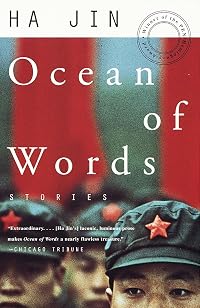
I read this just after reading Ha Jin's Ocean of Words, a book of stories about life in the Korean War. Moving from that -- many about life at the front -- to this full length novel about life as a prisoner of war during that conflict, was fairly seamless. The protagonist is a rarity -- an English speaking Chinese who was captured while fighting for the Communist Army trying to protect North Korea. The book covers the travails of the main character, Yu Yuan - aka Feng Yan - as he tries to survive, be insurgent, and decide his postwar fate.
The writing is solid and excellent. While comparisons to Joseph Heller and Hemingway would be too great, the 'war fiction-short sentence-flowing events which the soldier is powerless over' feel is show more ubiquitous. Especially poignant are the beginning and endings which add twists of relevancy and anguish to the already harsh story. Ha Jin is able to provide a believable, realistic account where neither the Communists or the Nationalists come out looking very good. show less
The writing is solid and excellent. While comparisons to Joseph Heller and Hemingway would be too great, the 'war fiction-short sentence-flowing events which the soldier is powerless over' feel is show more ubiquitous. Especially poignant are the beginning and endings which add twists of relevancy and anguish to the already harsh story. Ha Jin is able to provide a believable, realistic account where neither the Communists or the Nationalists come out looking very good. show less
Only when I finished the book did I realize (or remember) that this is fiction and not memoir. The story is very believable with its many details and is based on factual events. I like reading books that take me to another place and time, and this story certainly filled that bill -- a POW camp with Chinese prisoners during the Korean War.
There were a few middle chapters that dragged a little, but the story sped up toward the end when the main character had some big life decisions to make, and quickly. I definitely cared about the character and the outcome of his difficult life.
I see that the author has received many fiction awards, and I'd now like to read some of his short stories.
There were a few middle chapters that dragged a little, but the story sped up toward the end when the main character had some big life decisions to make, and quickly. I definitely cared about the character and the outcome of his difficult life.
I see that the author has received many fiction awards, and I'd now like to read some of his short stories.
Members
- Recently Added By
Lists

Fiction Set Primarily in a Prison
52 works; 24 members

Pulitzer Prize for Fiction - Finalists
88 works; 9 members

Pen/Faulkner Winners and Finalists
178 works; 9 members

THE WAR ROOM
813 works; 24 members
Author Information

34+ Works 10,452 Members
Ha Jin left his native China in 1985 and is now a professor of English at Emory University. He is author of, among other works, two short-story collections: Ocean of Words, which won the PEN/Hemingway Award, and Under the Red Flag, which won the Flannery O'Connor Award for short fiction. His novel Waiting won the National Book Award for fiction in show more 1999. He lives in Atlanta. (Bowker Author Biography) show less
Awards and Honors
Awards
Common Knowledge
- Canonical title
- War Trash
- Original title
- War Trash
- Original publication date
- 2005
- Important places*
- China
*Some information comes from Common Knowledge in other languages. Click "Edit" for more information.
Classifications
Statistics
- Members
- 1,270
- Popularity
- 19,310
- Reviews
- 32
- Rating
- (3.71)
- Languages
- 8 — Chinese, English, French, German, Italian, Portuguese, Spanish, Turkish
- Media
- Paper, Ebook
- ISBNs
- 17
- ASINs
- 2