On This Page
Description
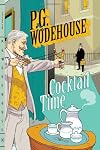
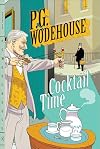
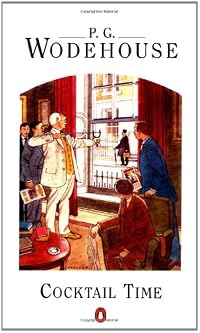
If Lord Ickenham had not succumbed to the temptation to dislodge the hat of Beefy Bastable, the irascible QC, with a well-aimed Brazil nut, the latter's famous legal mind might never have been stimulated to literature. But the incident provoked Beefy to write his exposé of the younger generation, a novel so shocking that it caused endless repercussions for its hapless author, and sparked off a whole series of outrageous misunderstandings that it would take the inventive talents of Lord show more Ickenham himself to resolve. show lessTags
Recommendations
















Member Reviews
Wodehouse, P. G. Cocktail Time. 1958, Uncle Fred No. 3. Norton, 2013.
P. G. Wodehouse deals with time in a strange way. We are hardly aware in this third Uncle Fred Ickenham appearance, first published in 1958, that there might have been a world war, postwar poverty in Britain, and an ongoing Cold War. Except for an occasional topical reference, characters talk as if they were still living in the Edwardian era. The comedy comes from our appreciation of an argot that no one—Edwardian or Cold Warrior--ever spoke, unless he or she happened to be characters in a Wodehouse story. For example, a woman who knocks a man unconscious with a blackjack is said to have “biffed him on the napper with a cosh.” The plot is the usual mayhem that show more results from Uncle Fred’s attempts to spread “sweetness and light” by meddling in other people’s romances. Uncle Fred may be a man of retirement age, but he has a sunny, “boyish outlook on life” that is simply irresistible. show less
P. G. Wodehouse deals with time in a strange way. We are hardly aware in this third Uncle Fred Ickenham appearance, first published in 1958, that there might have been a world war, postwar poverty in Britain, and an ongoing Cold War. Except for an occasional topical reference, characters talk as if they were still living in the Edwardian era. The comedy comes from our appreciation of an argot that no one—Edwardian or Cold Warrior--ever spoke, unless he or she happened to be characters in a Wodehouse story. For example, a woman who knocks a man unconscious with a blackjack is said to have “biffed him on the napper with a cosh.” The plot is the usual mayhem that show more results from Uncle Fred’s attempts to spread “sweetness and light” by meddling in other people’s romances. Uncle Fred may be a man of retirement age, but he has a sunny, “boyish outlook on life” that is simply irresistible. show less
This is a fine and very funny novel with a tight plot that never drags. Not every Wodehouse novel keeps the standard high all the way through, but this is one that does. The protagonist is Lord Ickenham (Uncle Fred), a modern aristocrat with some of the manners of an earlier generation but no snobbery. He is confident, clever, sometimes devious, and juvenile. This is typical:
'Hullo, Phoebe, my dear,' said Lord Ickenham. 'What's the matter? You seem upset.'
[Phoebe:] 'Well not upset exactly. But I don't know if I am standing on my head or my heels.'
[Ickenham:] 'Sift the evidence. At which end of you is the ceiling?'
The other principal is Sir Raymond Bastable, who is not a sympathetic character, but who brings much humour into the novel by show more being very much the arrogant barrister even in his private life. show less
'Hullo, Phoebe, my dear,' said Lord Ickenham. 'What's the matter? You seem upset.'
[Phoebe:] 'Well not upset exactly. But I don't know if I am standing on my head or my heels.'
[Ickenham:] 'Sift the evidence. At which end of you is the ceiling?'
The other principal is Sir Raymond Bastable, who is not a sympathetic character, but who brings much humour into the novel by show more being very much the arrogant barrister even in his private life. show less
This is another delightful offering from the pen, or at least typewriter of the comic genius that was P G Wodehouse.
First published in 1958, I don’t think that this would make it into the premier league of Wodehouse’s novels, such as [Right Ho, Jeeves], [Joy in the Morning] or [The Code of the Woosters], yet that still leaves considerable scope for it to entertain, which it does by the bucketful, or as Bertie Wooster might have said, ‘by the snootful’.
One of Wodehouse’s less well-known recurring characters is the Earl of Ickenham (also known as Uncle Fred), who is hewn from the same indomitable rock as the Honourable Galahad Threepwood, with a boundless capacity to strew mayhem wherever he might go. Now in advanced years, he show more is seldom allowed to venture into London unsupervised by his wife, the only person capable of reining in his mischievous tendencies. However, for as important an occasion as the annual Eton v Harrow match at Lord’s, normal regimes are relaxed. Up in the capital, with a spring in his step, Lord Ickenham starts the day in a sprightly way, demonstrating to the fellow members of the Drones Club, who have gathered for a pre-prandial nip, that he has not lost his boyhood skills, and with a catapult borrowed form the nephew of another member, fires a Brazil nut at the top hat of his stuffy old acquaintance Raymond Bastable.
This simple episode has significant and entirely unforeseen consequences, with Bastable, being goaded to demonstrate that he too had lived in Arcadia, writing the rollicking and sensational novel Cocktail Time, based on episode from his youth. However, although prepared to relate these episodes from his gilded youth, he remains sufficiently buttoned up (not least because he hopes to secure the Conservative candidacy for a safe parliamentary seat) to insist that they are published under a pseudonym. That is where the shenanigans begin.
While I feel that this does not quite match up to Wodehouse on mid-season form, it does display his characteristic effortless verbal dexterity, liberally spattered with scholarly allusions and quotations, and the blissful inanity of a sort of eternal Edwardian Corinthian spirit. This book bears no resemblance to any form or real life, and is all the better for it. show less
First published in 1958, I don’t think that this would make it into the premier league of Wodehouse’s novels, such as [Right Ho, Jeeves], [Joy in the Morning] or [The Code of the Woosters], yet that still leaves considerable scope for it to entertain, which it does by the bucketful, or as Bertie Wooster might have said, ‘by the snootful’.
One of Wodehouse’s less well-known recurring characters is the Earl of Ickenham (also known as Uncle Fred), who is hewn from the same indomitable rock as the Honourable Galahad Threepwood, with a boundless capacity to strew mayhem wherever he might go. Now in advanced years, he show more is seldom allowed to venture into London unsupervised by his wife, the only person capable of reining in his mischievous tendencies. However, for as important an occasion as the annual Eton v Harrow match at Lord’s, normal regimes are relaxed. Up in the capital, with a spring in his step, Lord Ickenham starts the day in a sprightly way, demonstrating to the fellow members of the Drones Club, who have gathered for a pre-prandial nip, that he has not lost his boyhood skills, and with a catapult borrowed form the nephew of another member, fires a Brazil nut at the top hat of his stuffy old acquaintance Raymond Bastable.
This simple episode has significant and entirely unforeseen consequences, with Bastable, being goaded to demonstrate that he too had lived in Arcadia, writing the rollicking and sensational novel Cocktail Time, based on episode from his youth. However, although prepared to relate these episodes from his gilded youth, he remains sufficiently buttoned up (not least because he hopes to secure the Conservative candidacy for a safe parliamentary seat) to insist that they are published under a pseudonym. That is where the shenanigans begin.
While I feel that this does not quite match up to Wodehouse on mid-season form, it does display his characteristic effortless verbal dexterity, liberally spattered with scholarly allusions and quotations, and the blissful inanity of a sort of eternal Edwardian Corinthian spirit. This book bears no resemblance to any form or real life, and is all the better for it. show less
4.5* for this audiobook edition narrated by Jonathan Cecil
This 3rd book in the Uncle Fred series was hilarious! His nephew Pongo Twisleton having been married in the previous book, Lady Ickenham (Uncle Fred's wife) has no choice but to deposit him with his godson Johnny while she is elsewhere (she doesn't trust him on his own, for good reason!). Typical Wodehousian convolutions occur but one aspect of this that stood out for me is the fun Wodehouse has with authors, publishers and critics in this. Sir Raymond 'Beefy' Bastable, a neighbor of Johnny's, is prompted to "write his exposé of the younger generation, a novel so shocking that it caused endless repercussions for its hapless author, sparked off a whole series of outrageous show more misunderstandings, and required the inventive talents of Lord Ickenham himself to resolve." as the blurb puts it. I can easily imagine Wodehouse venting some of his own frustrations with writing & publishing in some of the comments. show less
This 3rd book in the Uncle Fred series was hilarious! His nephew Pongo Twisleton having been married in the previous book, Lady Ickenham (Uncle Fred's wife) has no choice but to deposit him with his godson Johnny while she is elsewhere (she doesn't trust him on his own, for good reason!). Typical Wodehousian convolutions occur but one aspect of this that stood out for me is the fun Wodehouse has with authors, publishers and critics in this. Sir Raymond 'Beefy' Bastable, a neighbor of Johnny's, is prompted to "write his exposé of the younger generation, a novel so shocking that it caused endless repercussions for its hapless author, sparked off a whole series of outrageous show more misunderstandings, and required the inventive talents of Lord Ickenham himself to resolve." as the blurb puts it. I can easily imagine Wodehouse venting some of his own frustrations with writing & publishing in some of the comments. show less
This is another ridiculously fun Wodehouse book. It is one of the Uncle Fred series. Uncle Fred is an older man with a young and mischievous personality. Even so, his goal is always to spread sweetness and light (whether people want it or not). [Uncle Fred is essentially the same character as Galahad Threepwood from Wodehouse's Blandings series.] In this installment, Uncle Fred encourages his old friend, Sir Raymond Bastable to loosen up and write a book. Bastable uses a pen name because the resulting book is a little too scandalous for a prospective member of Parliament. Upon discovering the true identity of the author, several parties attempt to blackmail Bastable. Always up for a challenge, Uncle Fred attempts to thwart the show more blackmailers who include Bastable's perpetually hard-up nephew Cosmo Wisdom and the American crime couple, Gordon “Oily” Carlisle and his wife, Gertie who is ever-willing to "bust someone one" with anything from a vase to a blackjack. Cocktail Time also includes a host of fun side characters such as Bastable's rabbitesque sister Phoebe Wisdom, his butler, Albert Peasemarch (who secretly loves Phoebe), and the avid ornithologist and semi-retired literary agent, Old Howard Saxby. Saxby is one of my favorite Wodehouse side characters. He never listens to what anyone says and constantly throws out baffling non sequiturs. All-in-all, jolly good fun! show less
This is the first Wodehouse novel I ever read. I still have the original 1959 paperback copy (Price: 40 cents) that I found at our house. This was probably in the late 60s. The paperback fell apart at this last reading and the last 20-some pages were read held individually. I later glued them back together, but who knows how long that will last. As back-up, I have the audiobook read by the late great character actor, Jonathan Cecil.
This is an Uncle Fred adventure where he juggles four romances and one caper, the latter being all his fault entirely. To the horror of his nephew Pongo Twistleton, the fifth Earl of Ickenham demonstrates his prowess with a catapult and a brazil nut, de-tophatting the stuffy barrister, Sir Raymond Bastable. show more It is the day of the Eton and Harrow match, so top hat targets abound. Uncle Fred's excuse is that this will make his old friend Bastable into a better person. Later when he runs into Bastable at the match, his airy banter causes the barrister to write a bishop-condemnable pot-boiler of a novel and the plot cheerfully descends into the sort of chaos only the Earl of Ickenham can cause and yet unravel.
Great characters, if mostly from central casting: rabbity middle-aged woman, eccentric elderly man, gormless young man, hard-boiled American crooks - the usual Wodehouse stock. But it's the way he does it, the language.
As for the audiobook, Cecil does a great job. show less
This is an Uncle Fred adventure where he juggles four romances and one caper, the latter being all his fault entirely. To the horror of his nephew Pongo Twistleton, the fifth Earl of Ickenham demonstrates his prowess with a catapult and a brazil nut, de-tophatting the stuffy barrister, Sir Raymond Bastable. show more It is the day of the Eton and Harrow match, so top hat targets abound. Uncle Fred's excuse is that this will make his old friend Bastable into a better person. Later when he runs into Bastable at the match, his airy banter causes the barrister to write a bishop-condemnable pot-boiler of a novel and the plot cheerfully descends into the sort of chaos only the Earl of Ickenham can cause and yet unravel.
Great characters, if mostly from central casting: rabbity middle-aged woman, eccentric elderly man, gormless young man, hard-boiled American crooks - the usual Wodehouse stock. But it's the way he does it, the language.
As for the audiobook, Cecil does a great job. show less
"Cocktail Time," published in 1958 and relatively late in P.G. Wodehouse's career, may not rank among his best (make that funniest) novels. Even so, it tells a lively, satisfying story that true Wodehouse fans will enjoy.
The Earl of Ickenham, sometimes just called Uncle Fred, plays a supporting role in a number of Wodehouse novels, but in this one he gets the starring role. Essentially he plays the part Jeeves has in the Jeeves and Wooster tales, the genius who resolves all problems by the end of the story. But the earl is also the one who creates many of these problems in the first place when, to prove he can still handle a catapult as well as he could as a boy, knocks off the top hat worn by Sir Raymond Bastable, a grumpy barrister. show more Somehow this prompts Bastable to write a novel called "Cocktail Time" under an assumed name, not wanting to damage his career because the novel is something of a potboiler. He gets his nephew, Cosmo Wisdom, to take credit for writing the book, hoping the royalties from it will stop Cosmo from continually coming to him for money. Of course, the novel becomes a bestseller, with Hollywood offering big bucks for the movie rights.
Throw in a couple of con artists, a lovesick butler and a variety of other characters with seemingly unsolvable problems, and Uncle Fred has his hands full. His methods may seem unorthodox, such as suggesting the butler lock Bastable in his wine cellar, but somehow they all work.
The best part of any Wodehouse novel is not the story itself but the way Wodehouse tells it. Here are a couple of my favorite lines from the book:
"There was a brief pause while she seemed to contemplate the adjective, weighing it as Roget might have done if someone had suggested adding it into his Thesaurus."
"There's nothing like getting married. It's the only life, as Brigham Young and King Solomon would tell you, if they were still with us." show less
The Earl of Ickenham, sometimes just called Uncle Fred, plays a supporting role in a number of Wodehouse novels, but in this one he gets the starring role. Essentially he plays the part Jeeves has in the Jeeves and Wooster tales, the genius who resolves all problems by the end of the story. But the earl is also the one who creates many of these problems in the first place when, to prove he can still handle a catapult as well as he could as a boy, knocks off the top hat worn by Sir Raymond Bastable, a grumpy barrister. show more Somehow this prompts Bastable to write a novel called "Cocktail Time" under an assumed name, not wanting to damage his career because the novel is something of a potboiler. He gets his nephew, Cosmo Wisdom, to take credit for writing the book, hoping the royalties from it will stop Cosmo from continually coming to him for money. Of course, the novel becomes a bestseller, with Hollywood offering big bucks for the movie rights.
Throw in a couple of con artists, a lovesick butler and a variety of other characters with seemingly unsolvable problems, and Uncle Fred has his hands full. His methods may seem unorthodox, such as suggesting the butler lock Bastable in his wine cellar, but somehow they all work.
The best part of any Wodehouse novel is not the story itself but the way Wodehouse tells it. Here are a couple of my favorite lines from the book:
"There was a brief pause while she seemed to contemplate the adjective, weighing it as Roget might have done if someone had suggested adding it into his Thesaurus."
"There's nothing like getting married. It's the only life, as Brigham Young and King Solomon would tell you, if they were still with us." show less
Members
- Recently Added By
Published Reviews
ThingScore 75
Here's that brand of airy frivolity again for the trials and tribulations of a sober barrister, Sir Raymond Bastable, when, irked by a taunt of Lord Ickenham, he turns out a book which turns into a best seller... A practiced hand for debonair merry-go-rounding, Wodehouse keeps his playful gentry on the boil and bubble with no trouble at all. For that silly moment.
added by SnootyBaronet
Lists

Books Read in 2016
4,666 works; 197 members
Author Information

655+ Works 110,454 Members
P. G. Wodehouse was born in Guildford, United Kingdom on October 15, 1881. After completing school, he spent two years as a banker at the Hong Kong and Shanghai Bank in London and then took a job as a sports reporter and columnist for the Globe newspaper. His first novel, The Pothunters, was published in 1902. He wrote over 100 novels and short show more story collections during his lifetime including A Perfect Uncle, Love Among the Chickens, The Swoop, P. Smith in the City, Meet Mr. Milliner, Doctor Sally, Quick Service, The Old Reliable, Uneasy Money, A Damsel in Distress, Jill the Reckless, The Adventures of Sally, A Pelican at Blandings, The Girl in Blue, and Aunts Aren't Gentlemen. His most famous characters, Bertie Wooster and his manservant, Jeeves, appeared in books such as Much Obliged, Jeeves. He also wrote lyrics for musical comedies and worked as screenwriter in Hollywood in the 1930s. In 1939, he bought a villa in Le Touquet on the coast of France. He remained there when World War II started in 1939. The following year, the Germans appropriated the villa, confiscated property, and arrested him. He was detained in various German camps for almost one year before being released in 1941. He went to Berlin and spoke of his experience in five radio talks to be broadcast to America and England. The talks themselves were completely innocuous, but he was charged with treason in England. He was cleared, but settled permanently in the United States. He became a citizen in 1955. He was made a Knight Commander of the Order of the British Empire in 1975. He died from a heart attack after a long illness on February 14, 1975 at the age of 93. (Bowker Author Biography) show less
Some Editions
Series

Belongs to Publisher Series
Work Relationships
Is contained in
Common Knowledge
- Canonical title
- Cocktail Time
- Original title
- Cocktail Time
- Original publication date
- 1958
- People/Characters
- Sir Raymond Bastable; Frederick Threepwood (the Honourable); Cosmo Wisdom; Albert Peasemarch; Howard Saxby; Gordon Carlisle (show all 9); Phoebe Wisdom; Barbara Crowe; Frederick Altamont Cornwallis Twistleton (5th Earl of Ickenham)
- Important places
- Blandings Castle, Shropshire, England, UK; Shropshire, England, UK
- First words
- The train of events leading up to the publication of the novel Cocktail Time, a volume which, priced at twelve shillings and sixpence, was destined to create considerably more than twelve and a half bobsworth of alarm ... (show all)and despondency in one quarter and another, was set in motion in the smoking-room of the Drones Club in the early afternoon of a Friday in July.
- Quotations
- Every man, they say, has one novel in him, and he had the advantage over most commencing authors of being in a state of seething fury. There is nothing like fury for stimulating the pen. Ask Dante. Ask Juvenal.
It has been well said that an author who expects results from a first novel is in a position similar to that of a man who drops a rose petal down the Grand Canyon of Arizona and listens for the echo.
Just as all American publishers hope that if they are good and lead upright lives, their books will be banned in Boston, so do all English publishers pray that theirs will be denounced from the pulpit by a bishop. Full statis... (show all)tics are not to hand, but it is estimated by competent judges that a good bishop, denouncing from the pulpit with the right organ note in his voice, can add between ten and fifteen thousand to the sales.
‘Well, well, well,’ he said heartily, ‘so there you are! I must have dropped off for a moment, I think. One is reminded of the experience of the late Abou ben Adhem, who, as you may recall, awoke one night from a deep d... (show all)ream of peace to find an angel at his bedside, writing in a book of gold. Must have given him a nasty start, I have always thought.’
The interest of Oily and his bride in Abou ben Adhem appeared to be slight. - Last words
- (Click to show. Warning: May contain spoilers.)He went back to the drawing room to finish them.
- Original language
- English
Classifications
Statistics
- Members
- 916
- Popularity
- 29,068
- Reviews
- 23
- Rating
- (4.08)
- Languages
- 7 — Dutch, English, French, German, Hungarian, Italian, Swedish
- Media
- Paper, Audiobook, Ebook
- ISBNs
- 28
- ASINs
- 18