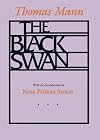
The Black Swan
by Thomas Mann 
On This Page
Description
Thomas Mann's bold and disturbing novella, written in 1952, is the feminine counterpart of his masterpiece Death in Venice. Written from the point of view of a woman in what we might now call mid-life crisis, The Black Swan evinces Mann's mastery of psychological analysis and his compelling interest in the intersection of the physical and the spiritual in human behavior. It is startlingly relevant to current discussions of the politics of the body, male inscriptions of the feminine, and show more discourse about and of women. The new introduction places this dramatic novella in the context of contemporary feminist and literary concerns, bringing it to the attention of a new generation of readers. show lessTags
Recommendations


















Member Reviews
"There they are!" she cried, and pointed to the pair of black swans . . . "Where is the bread for them?" Keaton pulled it out of his pocket, wrapped in newspaper, and handed it to her. It was warm from his body, and she took some of the bread and began to eat it.
"But it's stale and hard," he cried, with a gesture that came too late to stop her.
"I have good teeth," she answered.
considering that a masterpiece like Doctor Faustus was written very near the end of Mann's life, it's alarming that this book is from the same era. of course, there are bursts of the same stilted beauty and grotesque symbolism in his prose. but, even by his 70s, was Mann actually so ignorant of a complex female perspective? surely not, judging by his explorations show more in The Beloved Returns...
i suspect that this feels so hasty and immature specifically because of his good intentions; perhaps he was displeased with the developing legacy of Death In Venice as a completely male-centric tragedy, and he wished to balance the themes without being sure how. so, in his last-minute attempt, he rehashed the same outward plot points of that work without managing to recreate the psychological depth.
well, if you want to picture Mann as a perfect author, this should probably be avoided. but if you don't mind forgiving the ugly, rest assured that you will still be, at least, entertained. show less
"But it's stale and hard," he cried, with a gesture that came too late to stop her.
"I have good teeth," she answered.
considering that a masterpiece like Doctor Faustus was written very near the end of Mann's life, it's alarming that this book is from the same era. of course, there are bursts of the same stilted beauty and grotesque symbolism in his prose. but, even by his 70s, was Mann actually so ignorant of a complex female perspective? surely not, judging by his explorations show more in The Beloved Returns...
i suspect that this feels so hasty and immature specifically because of his good intentions; perhaps he was displeased with the developing legacy of Death In Venice as a completely male-centric tragedy, and he wished to balance the themes without being sure how. so, in his last-minute attempt, he rehashed the same outward plot points of that work without managing to recreate the psychological depth.
well, if you want to picture Mann as a perfect author, this should probably be avoided. but if you don't mind forgiving the ugly, rest assured that you will still be, at least, entertained. show less
In the early 1950s, near the end of his life, Thomas Mann wrote a novella about a widow, Frau Rosalie von Tummler, and her two children, Anna and Eduard. This story, The Black Swan, was based, like many of Mann's stories, on his observations and experiences of his own life. In a way the story mirrors Death in Venice written four decades earlier. That story told of the love of an older man, Gustav von Aschenbach, for a young boy. In the Black Swan we have an older woman, Rosalie, falling in love with young twenty-four year old American.
The story describes the American, Ken Keaton, as having 'nothing in particular to offer except his fine physique". In one of her lengthy discussions with her daughter Anna, Rosalie idealistically show more describes Ken as "an absolutely exceptional human being, with a life that touches one's heart." Her daughter tries to counter this idealism with her own voice of realism to no avail. Just as in the earlier novel Eros has overtaken Rosalie to such a degree that she believes her body is defying nature by becoming more youthful. The tragedy in this story is the reality that Eros is accompanied by disease and, ultimately, death. This is signaled not only by the title of the story, The Black Swan, but from the first page when the death of her husband a decade earlier is highlighted with the poignant detail that it was due to a senseless accident while he was experiencing "superabundant vitality".
Throughout the novella Mann uses nature to provide a contrast with the artificial nature of Rosalie's idealistic aspirations. His depiction of two women who both have strong views is effective although rare in his fiction. In this story they know each other well, yet continue to approach the events from opposite views that seemed to allow no compromise. However Rosalie does think about what Anna has said "about 'living in contradiction to herself,' she remembered and pondered over, and she strove in her soul to associate the idea of renunciation with the idea of happiness. Yes, could not renunciation itself be happiness, if it were not a miserable necessity but were practiced in freedom and in conscious equality? Rosalie reached the conclusion that it could be."(p 105) Even here Rosalie is still idealistic and not ready for the denouement that will involve changes to her body that she can neither ignore nor control.
This is an unusual story, but if considered as I suggested above, in light of Mann's portrayal of Aschenbach in Death in Venice, it is consistent with Mann's concern with life and death in light of classic themes of reason and passion. Even at the end of his brilliant career Thomas Mann was powerful and insightful in his exploration of the nature of humanity. show less
The story describes the American, Ken Keaton, as having 'nothing in particular to offer except his fine physique". In one of her lengthy discussions with her daughter Anna, Rosalie idealistically show more describes Ken as "an absolutely exceptional human being, with a life that touches one's heart." Her daughter tries to counter this idealism with her own voice of realism to no avail. Just as in the earlier novel Eros has overtaken Rosalie to such a degree that she believes her body is defying nature by becoming more youthful. The tragedy in this story is the reality that Eros is accompanied by disease and, ultimately, death. This is signaled not only by the title of the story, The Black Swan, but from the first page when the death of her husband a decade earlier is highlighted with the poignant detail that it was due to a senseless accident while he was experiencing "superabundant vitality".
Throughout the novella Mann uses nature to provide a contrast with the artificial nature of Rosalie's idealistic aspirations. His depiction of two women who both have strong views is effective although rare in his fiction. In this story they know each other well, yet continue to approach the events from opposite views that seemed to allow no compromise. However Rosalie does think about what Anna has said "about 'living in contradiction to herself,' she remembered and pondered over, and she strove in her soul to associate the idea of renunciation with the idea of happiness. Yes, could not renunciation itself be happiness, if it were not a miserable necessity but were practiced in freedom and in conscious equality? Rosalie reached the conclusion that it could be."(p 105) Even here Rosalie is still idealistic and not ready for the denouement that will involve changes to her body that she can neither ignore nor control.
This is an unusual story, but if considered as I suggested above, in light of Mann's portrayal of Aschenbach in Death in Venice, it is consistent with Mann's concern with life and death in light of classic themes of reason and passion. Even at the end of his brilliant career Thomas Mann was powerful and insightful in his exploration of the nature of humanity. show less
I'm glad I'd read other Thomas Mann works before I came to this one, or it might have been my last---in all honesty, I found the characters unsympathetic and the writing far over the top, nearly ridiculous at times. Even in the end, I couldn't see that the characters were portrayed any more thoughtfully than as stereotypes, and would never have finished had the work been so short. I wouldn't recommend it unless you want an example of ridiculous females, so stereotypical to their time and place that they are in the end unbelievable regardless. Not worth your time.
So short that it seems more of a long story, I read it in a couple of days which might be the best approach to it, given its structure. Although it's a very late work, it's set in the 1920s, which might be a reason for the fairy-tale quality of both the story and the telling. Perhaps therefore the reader is meant to take a moral from it, but if this is intended, it's less appealing, though there's certainly enough of a plot to carry one along -- if the ending isn't telegraphed, which in my case, it wasn't.
It's not, I believe, what most want from Mann, but because he gave us so much else, it's all right, and certainly well worth the quick read, plus some careful thought.
It's not, I believe, what most want from Mann, but because he gave us so much else, it's all right, and certainly well worth the quick read, plus some careful thought.
Para mi es un relato revelador de la vida y en cierto modo hace reflexionar sobre ciertos aspectos de la vida, es decir, me deja pensando sobre la vida, pero en su forma mas practica (no filosófica), por ese solo hecho, puede decir que es un libro que se aprecia.
Novella is the feminine counterpart of his masterpiece "Death in Venice." Exploring a theme Mann termed "the demonic deceitfulness of nature," it tells the story of a middle-aged widow who falls in love with her son's young tutur and believes her reproductive powers have been miraculously restored.
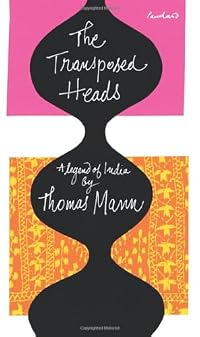
Like Tables of the Law was for Joseph and His Brothers, and Transposed Heads, The Black Swan is a carryover novel from Doctor Faustus, fleshing out a scene from that novel in which a woman in declining years finds herself pregnant. A death from birth story. Helen Lowe-Porter, Mann's usual translator, refused to work on it, thinking it not up to Mann's usual standards. Denver Lindley took over translating for this, which I believe is the last novel published during Mann's lifetime.
Members
- Recently Added By
Lists

Best literature ever!
39 works; 1 member
Author Information

Thomas Mann was born into a well-to-do upper class family in Lubeck, Germany. His mother was a talented musician and his father a successful merchant. From this background, Mann derived one of his dominant themes, the clash of views between the artist and the merchant. Mann's novel, Buddenbrooks (1901), traces the declining fortunes of a merchant show more family much like his own as it gradually loses interest in business but gains an increasing artistic awareness. Mann was only 26 years old when this novel made him one of Germany's leading writers. Mann went on to write The Magic Mountain (1924), in which he studies the isolated world of the tuberculosis sanitarium. The novel was based on his wife's confinement in such an institution. Doctor Faustus (1947), his masterpiece, describes the life of a composer who sells his soul to the devil as a price for musical genius. Mann is also well known for Death in Venice (1912) and Mario the Magician (1930), both of which portray the tensions and disturbances in the lives of artists. His last unfinished work is The Confessions of Felix Krull, Confidence Man (1954), a brilliantly ironic story about a nineteenth-century swindler. An avowed anti-Nazi, Mann left Germany and lived in the United States during World War II. He returned to Switzerland after the war and became a celebrated literary figure in both East and West Germany. In 1929 he was awarded the Nobel Prize for literature. (Bowker Author Biography) show less
Thomas Mann has a Legacy Library. Legacy libraries are the personal libraries of famous readers, entered by LibraryThing members from the Legacy Libraries group.
Some Editions
Series
Belongs to Publisher Series
Work Relationships
Common Knowledge
- Canonical title*
- De bedrogene
- Original title
- Die Betrogene: Erzählung
- Original publication date
- 1954 (original German) (original German); 1953
- Original language
- German
- Disambiguation notice
- This is the short story "The Black Swan / Die Betrogene" only. Please don't combine with story collections of the same name!
*Some information comes from Common Knowledge in other languages. Click "Edit" for more information.
Classifications
- Genres
- Fiction and Literature, General Fiction
- DDC/MDS
- 833.912 — Literature & rhetoric German & related literatures German fiction 1900- 1900-1990 1900-1945
- LCC
- PT2625 .A44 .B5313 — Language and Literature German, Dutch and Scandinavian literatures German literature Individual authors or works 1860/70-1960
- BISAC
Statistics
- Members
- 292
- Popularity
- 109,311
- Reviews
- 10
- Rating
- (3.69)
- Languages
- 14 — Catalan, Dutch, English, Finnish, German, Greek, Italian, Japanese, Norwegian (Bokmål), Norwegian, Portuguese (Brazil), Spanish, Swedish, Turkish
- Media
- Paper, Audiobook, Ebook
- ISBNs
- 17
- ASINs
- 10