Lieutenant Gustl
by Arthur Schnitzler
On This Page
Description
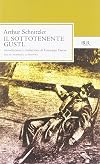
Originally translated as None But the Brave in 1926, Lieutenant Gustl is one of the great Austrian writer Arthur Schnitzler's most accomplished novels. Written entirely in the form of an interior monologue--the book highly influenced James Joyce in Ulysses--the novel recounts the moment-to-moment experiences of a swaggering Austrian military man. In a cloakroom argument after a comment, a baker, reacting to Gustl's rudeness, grabs the soldier's sword and orders him to have patience. show more Convinced he has been completely dishonored, Gustl ponders suicide and wanders through Vienna wishing for the baker's death. When he learns that the baker has, in fact, died that evening from a stroke, he immediately returns to his aggressive and hateful nature, and relishes a duel he had entered into days before. show lessTags
Recommendations












Member Reviews
Gustl is rather impatient and short-tempered after suffering through an evening concert. He exchanges impolite words during the post-concert crowd and receives an insult to his honor. An insult that can only be assuaged by death -- either kill the insulter or commit suicide.
The reader listens to Gustl thoughts through it all and through the sleepless night as he worries over the impending crisis and through it's conclusion in the early hours of the next day. It is a fascinating use of interior monologue, almost a precursor of stream of consciousness. Schnitzler touches upon large themes and questions as well as the inconsequential minutia that comprise consciousness in a charmingly realistic manner.
The reader listens to Gustl thoughts through it all and through the sleepless night as he worries over the impending crisis and through it's conclusion in the early hours of the next day. It is a fascinating use of interior monologue, almost a precursor of stream of consciousness. Schnitzler touches upon large themes and questions as well as the inconsequential minutia that comprise consciousness in a charmingly realistic manner.
Lieutenant Gustl (published in English as None but the Brave) is a novella by the Austrian novelist Arthur Schnitzler. With this novella, which appeared in 1900, he was one of the first authors to experiment with, and write a story conceived entirely in monologue interieur.
The novella has very little to offer in the sense of plot or action. The story consists entirely is the ruminations of Lieutenant Gustl. The difficulty in reading and appreciating the novella lie in the ability to put up with Gustl's stream of thoughts, and understanding his thoughts and conclusions in the setting and time frame of nineteenth century Austria.
The novella opens with Gustl being bored, sitting through a performance in a Viennese concert. While collecting show more his coat from the cloakroom he is offended by the local baker. Unable to settle this affront there and then, he comes away feeling utterly humiliated, and spends the night ruminating on what he should have done, and how to rid himself of this blemish, seeing no other way out than to commit suicide. He decides to postpone this gruesome act until after his morning coffee in his regular cafe, where he is informed that the baker died unexpectedly the previous night from a heart attack. Utterly relieved, Gustl abandons his suicide plans.
When it appeared, in 1900, the novella caused a scandal, as it purported to show the cowardice of an officer of the Austrian Imperial and Royal Guard. Gustl's decision to commit suicide must be seen within the context of the then current military code, which prescribed suicide in such a situation, where the officer was prevented from settling the matter there-and-then, not by a duel, which would suit offenders belonging to the same aristocratic class, but by immediate action.
Readers who can put up with Gustl's depressing ruminations, may find Lieutenant Gustl an exemplary early example of a novella entirely based on interior monologue. show less
The novella has very little to offer in the sense of plot or action. The story consists entirely is the ruminations of Lieutenant Gustl. The difficulty in reading and appreciating the novella lie in the ability to put up with Gustl's stream of thoughts, and understanding his thoughts and conclusions in the setting and time frame of nineteenth century Austria.
The novella opens with Gustl being bored, sitting through a performance in a Viennese concert. While collecting show more his coat from the cloakroom he is offended by the local baker. Unable to settle this affront there and then, he comes away feeling utterly humiliated, and spends the night ruminating on what he should have done, and how to rid himself of this blemish, seeing no other way out than to commit suicide. He decides to postpone this gruesome act until after his morning coffee in his regular cafe, where he is informed that the baker died unexpectedly the previous night from a heart attack. Utterly relieved, Gustl abandons his suicide plans.
When it appeared, in 1900, the novella caused a scandal, as it purported to show the cowardice of an officer of the Austrian Imperial and Royal Guard. Gustl's decision to commit suicide must be seen within the context of the then current military code, which prescribed suicide in such a situation, where the officer was prevented from settling the matter there-and-then, not by a duel, which would suit offenders belonging to the same aristocratic class, but by immediate action.
Readers who can put up with Gustl's depressing ruminations, may find Lieutenant Gustl an exemplary early example of a novella entirely based on interior monologue. show less
Lieutenant Gustl is Arthur Schnitzler’s short story about an Austrian soldier. Written in stream of consciousness, we experience with Gustl his eerie thought, so we know the truth of what he thinks and who he is, and what we find is a man overly concerned with the false front he presents to the world around him. His idea of honor is a twisted one, and I would dare say he spurns those who have true honor in favor of those who simply adhere to a sham of having it.
I enjoyed the ending of the story, because I feel pretty certain that I could predict what would likely come directly after. Of course, we only know what we are told in the story, but I couldn’t help having some ideas of my own.
I enjoyed the ending of the story, because I feel pretty certain that I could predict what would likely come directly after. Of course, we only know what we are told in the story, but I couldn’t help having some ideas of my own.
3.8 stars
AKA: None But the Brave
A very short story written in stream of consciousness. Apparently this is the first book in German to be written in such a way. I am tempted to give it 4 stars because I enjoyed the story and the style, and it was just the right length to be impactful. Yet it was missing some unnameable spark that would make it a 4 star book.
AKA: None But the Brave
A very short story written in stream of consciousness. Apparently this is the first book in German to be written in such a way. I am tempted to give it 4 stars because I enjoyed the story and the style, and it was just the right length to be impactful. Yet it was missing some unnameable spark that would make it a 4 star book.
(Come inizia:) " Quanto durerà ancora? Guardiamo l'orologio... probabilmente non sta bene in un concerto così serio. Ma chi se n'accorge? Se qualcuno mi vede, vuol dire che è distratto quanto me, e di lui non ho bisogno di aver soggezione... Appena le dieci meno un quarto?... Mi sembra di star seduto qui da tre ore..."
Feb 19, 2014Italian
Ratings
Members
- Recently Added By
Lists

1001 Books You Must Read Before You Die
1,448 works; 1,137 members

German Literature
518 works; 56 members

Stream of Consciousness
87 works; 8 members

Favourite Books
1,820 works; 316 members

1900s (Decade, not century)
73 works; 17 members

Short and Sweet
246 works; 24 members

Elegant Prose
80 works; 4 members

Books Read in 2013
1,630 works; 51 members
Author Information

Arthur Schnitzler, Viennese playwright, novelist, short story writer, and physician, was a sophisticated writer much in vogue in his time. He chose themes of an erotic, romantic, or social nature, expressed with clarity, irony, and subtle wit. Reigen, a series of ten dialogues linking people of various social classes through their physical desire show more for one another, has been filmed many times as La Ronde. As a Jew, Schnitzler was sensitive to the problems of anti-Semitism, which he explored in the play Professor Bernhardi (1913), seen in New York in a performance by the Vienna Burgtheater in 1968. Henry Hatfield calls Schnitzler "second only to Hofmannsthal among the Austrian writers of his generation and one of the most underrated of German authors... . He combined the naturalist's devotion to fact with the impressionist's interest in nuance; in other words, he told the truth" (Modern German Literature). In his most famous story, Lieutenant Gustl (1901), Schnitzler employs the stream-of-consciousness technique in an exposition of the follies and gradual disintegration of society in fin de siecle Vienna. Schnitzler has also been linked with Freud (see Vols. 3 and 5) and is credited with consciously introducing elements of modern psychology into his works. (Bowker Author Biography) show less
Some Editions
Awards and Honors
Series
Belongs to Publisher Series
Work Relationships
Is contained in
Has as a commentary on the text
Has as a student's study guide
Common Knowledge
- Canonical title
- Lieutenant Gustl
- Original title
- Leutnant Gustl
- Alternate titles
- None but the Brave
- Original publication date
- 1900
- People/Characters
- Teniente Gustl
- Related movies
- Leutnant Gustl (1962 | TV | IMDb)
- First words
- How long is this thing going to last?
¿Cuánto tiempo más durará ésto? - Last words
- (Click to show. Warning: May contain spoilers.)I'll knock you to smithereens!
(Click to show. Warning: May contain spoilers.)Estoy en plena forma... ¡y te voy a hacer trizas! - Original language
- German
Classifications
Statistics
- Members
- 379
- Popularity
- 82,978
- Reviews
- 5
- Rating
- (3.52)
- Languages
- 7 — English, Estonian, French, German, Italian, Portuguese, Spanish
- Media
- Paper, Audiobook, Ebook
- ISBNs
- 37
- ASINs
- 12