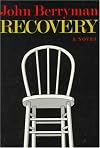
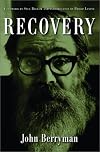
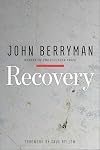
Recovery
by John Berryman
On This Page
Description
In the author's words, Recovery is a novel about "the disease called alcoholism, recognized by the American Medical Association only in 1964."Tags
Recommendations



































Member Reviews
Berryman did not survive his alcoholism. In 1972, while still writing this thinly-veiled autobiographical novel, he abandoned his attempts to recover from the addiction that had made his life a living hell and jumped from the Washington Avenue Bridge in Minneapolis, Minnesota. His father killled himself in 1926, when Berryman was twelve, an event which haunted Berryman and many of the images in his poetry. Berryman's suicide shadows my reading of the book (especially since both my brothers also committed suicide as a direct result of addiction -- April is the Cruelest Month - http://www.laurenbdavis.com/blog/?p=140).
Set in the 1960s, in RECOVERY, Dr. Alan Severance wakes up from a blackout one morning to discover he has once again been show more confined to the alcoholic treatment wing of a hospital. He is, this time, determined to liberate himself from his disease, to face it head on and with rigorous honesty. Following the steps of Alcoholics Anonymous, he struggles to take the first step - "To admit we are powerless over alcohol and that our lives had become unmanageable." He confesses his humiliations, defeats, and delusions in an attempt to cleanse himself and achieve the humility necessary to recovery. Although the novel is clearly unfinished, unpolished and unedited, Berryman's sharp wit, humanity and intelligence are evident throughout. There are pacing problems, and the recovery-model examined is dated. One can't help but wonder what revisions Berryman might have made if he had been able to defy despair.
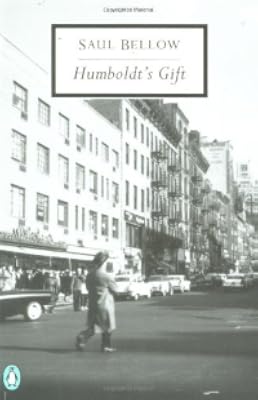
There is an interesting forward by Saul Bellow, in which he says, "Inspiration [for Berryman] contained a death threat. He would, as he wrote the things he had waited and prayed for, fall apart. Drink was a stabilizer. It somehow reduced the fatal intensity. Perhaps it replaced the pubic sanction which poets in the Twin Cities (or in Chicago, in Washington or New York) had to do without. This sanction was not wickedly withheld. It simply did not exist. No one minded if you bred poodles. No one objected if you wrote Dream Songs. Some men of genius were fortunate. They could somehow come to terms with their respective countries. Others had women, the bottle, the hospital. Even in France, far from the Twin Cities, a Verlaine had counted heavily on hospitals and prisons." Of course, the truth is that coming to terms with that shriek into the silence is something all writers, save for the anointed few, must contend with, and although I think Bellows, and perhaps even Berryman, romanticize it, that's what writers are prone to do, too, I'm afraid, and I count myself in that number.
If you are interested in my own voyage through the turbulent waters of alcoholism and writing, please read my essay, When There's No Sky Left - http://www.laurenbdavis.com/blog/?p=133. show less
Set in the 1960s, in RECOVERY, Dr. Alan Severance wakes up from a blackout one morning to discover he has once again been show more confined to the alcoholic treatment wing of a hospital. He is, this time, determined to liberate himself from his disease, to face it head on and with rigorous honesty. Following the steps of Alcoholics Anonymous, he struggles to take the first step - "To admit we are powerless over alcohol and that our lives had become unmanageable." He confesses his humiliations, defeats, and delusions in an attempt to cleanse himself and achieve the humility necessary to recovery. Although the novel is clearly unfinished, unpolished and unedited, Berryman's sharp wit, humanity and intelligence are evident throughout. There are pacing problems, and the recovery-model examined is dated. One can't help but wonder what revisions Berryman might have made if he had been able to defy despair.
There is an interesting forward by Saul Bellow, in which he says, "Inspiration [for Berryman] contained a death threat. He would, as he wrote the things he had waited and prayed for, fall apart. Drink was a stabilizer. It somehow reduced the fatal intensity. Perhaps it replaced the pubic sanction which poets in the Twin Cities (or in Chicago, in Washington or New York) had to do without. This sanction was not wickedly withheld. It simply did not exist. No one minded if you bred poodles. No one objected if you wrote Dream Songs. Some men of genius were fortunate. They could somehow come to terms with their respective countries. Others had women, the bottle, the hospital. Even in France, far from the Twin Cities, a Verlaine had counted heavily on hospitals and prisons." Of course, the truth is that coming to terms with that shriek into the silence is something all writers, save for the anointed few, must contend with, and although I think Bellows, and perhaps even Berryman, romanticize it, that's what writers are prone to do, too, I'm afraid, and I count myself in that number.
If you are interested in my own voyage through the turbulent waters of alcoholism and writing, please read my essay, When There's No Sky Left - http://www.laurenbdavis.com/blog/?p=133. show less
Those of you who know about poetry will know Berryman was a highly esteemed poet; since I don’t know anything about poetry I barely recognized his name. This unfinished “novel” was published a year after the author committed suicide. I use quotation marks because the book is really a thinly-disguised diary from Berryman’s (last?) stay at a clinic; there’s little in terms of structure or development to really mark it as a novel. It does have this funny joke: “Do you know about the two drunks who went to the film of The Lost Weekend. Came staggering out. ‘My God I’ll never take another drink,’ said the first. ‘My God I’ll never go to another movie’ [said the other].”
Ratings
Members
- Recently Added By
Author Information

36+ Works 2,771 Members
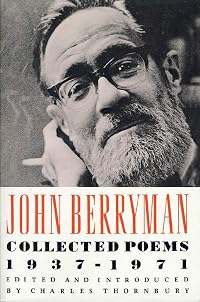
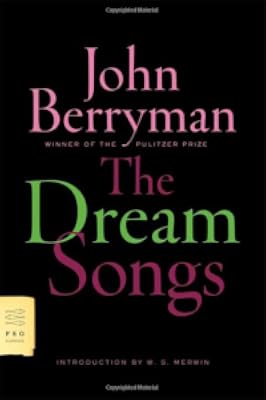
John Berryman's poetry has a depth and obscurity that discourages many readers while it entices critics. His major work, The Dream Songs (1969), forms a poetic notebook that captures the ephemera of mood and attitude of this most mercurial of poets. Born John Smith in McAlester, Oklahoma, in 1914 and educated at Columbia University and Clare show more College, Cambridge, he later taught at several universities. Berryman received the Shelley Memorial Award (1948), the Harriet Monroe Award (1957), the Loines Award for poetry of the National Institute of Arts and Letters (1964), and the fellowship of the Academy of American Poets (1966). In 1964 he won the Pulitzer Prize in poetry for 77 Dream Songs (1964). His short story "The Imaginary Jew" received the Kenyon-Doubleday Award and was listed in Best American Short Stories, (1946). He also wrote Stephen Crane (1950) and is the author of a novel, Recovery (1973). Often listed along with Sylvia Plath and Anne Sexton as a major confessional poet, he was as much concerned with literary artifice as he was with personal revelation. His works include The Freedom of the Poet, Henry's Fate & Other Poems, 1967-1972, Collected Poems 1937-1971, Berryman's Shakespeare, and Selected Poems. Berryman committed suicide in 1972. (Bowker Author Biography) show less
Common Knowledge
- Epigraph
- Oh! I haue [sic] suffered
With those that I saw suffer
Miranda, in Shakespeare's
second Redemptive work, I.ii.5
'My doctrine is not mine'
John 7:16 - Dedication
- To the Suffering Healers
- First words
- Every Light in the house seemed to be on.
Classifications
Statistics
- Members
- 117
- Popularity
- 279,370
- Reviews
- 2
- Rating
- (3.28)
- Languages
- English
- Media
- Paper, Ebook
- ISBNs
- 6
- ASINs
- 2