
Eileen Simpson (1918–2002)
Author of Poets in Their Youth
About the Author
Image credit: Eileen Simpson
Works by Eileen Simpson
Associated Works
Writing Women's Lives: An Anthology of Autobiographical Narratives by Twentieth-Century American Women Writers (1994) — Contributor — 128 copies, 3 reviews
Tagged
Common Knowledge
- Canonical name
- Simpson, Eileen
- Birthdate
- 1918
- Date of death
- 2002-10-21
- Gender
- female
- Education
- Hunter College, City University of New York
- Occupations
- psychologist
author - Relationships
- Berryman, John (first husband)
- Nationality
- USA
- Places of residence
- New York, New York, USA
Paris, France - Associated Place (for map)
- USA
Members
Reviews
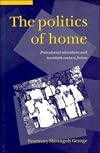
The author is a professor of "Literatures in English and Cultural Studies". I have begun dipping into the theses of this book, and have becomes engrossed. The subtitle of the Epilogue, "All homesickness is fiction" first caught my attention. Then, (prefaced with two quotes, one from Simone Weil and one from Rushdie) comes the brilliant first sentence :' If "roots" are a conservative myth, then all homesickness is fiction. '
I then turned to the Prologue and found the intended counterpoint of show more subtitle : "All fiction is homesickness".
I randomly started out at chapter three,-- having been forewarned that chapter two had a feminist slant,-- and searched out analyses of the few authors I was familiar with. (Btw, her writing is so compelling, and her extracts, from fiction, or from crtitical works, are so well-chosen and woven into a non-dry style of writing, that I am currently adding to my wish list of books and new authors to read.) Her characterization of "House of Mr. Biswas" was spot-on. This is extracted from the chapter with the premise that "For the global writer of literature in English, Conrad is a body of work that one has to work through *if* one is interested in positioning one's own work in relation to the 'Great English Tradition'." She prefaces her sympathetic crticism of the native home-builder's preference for "real" building materials and "real" houses, somewhat akin to Marlow's description (this is a quote from the text too) in Heart of Darkness that "normal" temperatures are those of England's climate, with the most pithy of backhanded compliments:
"First published in 1961, Naipaul's A House for Mister Biswas is a partly autobiographical novel that is written with a wisdom and generosity that his later work lacks."
Take that Sir Vidiya!! show less
I then turned to the Prologue and found the intended counterpoint of show more subtitle : "All fiction is homesickness".
I randomly started out at chapter three,-- having been forewarned that chapter two had a feminist slant,-- and searched out analyses of the few authors I was familiar with. (Btw, her writing is so compelling, and her extracts, from fiction, or from crtitical works, are so well-chosen and woven into a non-dry style of writing, that I am currently adding to my wish list of books and new authors to read.) Her characterization of "House of Mr. Biswas" was spot-on. This is extracted from the chapter with the premise that "For the global writer of literature in English, Conrad is a body of work that one has to work through *if* one is interested in positioning one's own work in relation to the 'Great English Tradition'." She prefaces her sympathetic crticism of the native home-builder's preference for "real" building materials and "real" houses, somewhat akin to Marlow's description (this is a quote from the text too) in Heart of Darkness that "normal" temperatures are those of England's climate, with the most pithy of backhanded compliments:
"First published in 1961, Naipaul's A House for Mister Biswas is a partly autobiographical novel that is written with a wisdom and generosity that his later work lacks."
Take that Sir Vidiya!! show less

A fascinating and genial memoir of Eileen Simpson's marriage to poet John Berryman and their sometimes tempestuous relationships with other prominent poets of the same generation, notably Robert Lowell, Randall Jarrell and Delmore Schwartz. Simpson seems to have genuinely admired and enjoyed the association with these writers, and gives what comes off as a remarkably even-handed portrayal of them. One starts to wonder how individuals as ego-driven, insecure, and incapable of dealing with the show more simplest tasks of daily life, to say nothing of alcohol and drug abuse, and mental instability, ever functioned well enough to write some of the dominant poetry of the period. The book is filled with amusing and illuminating anecdotes and insights. fueled partly by Simpson's own perspective s a mental health professional. show less

Fascinating memoir of Berryman, Lowell, and their circle: their madness, their gossip, and their harried wives.

I know nothing of American poets. I read it just as Eileen Simpson's memoir. the poets were all drunks and/or crazy.
Awards


You May Also Like


Associated Authors
Statistics
- Works
- 8
- Also by
- 1
- Members
- 310
- Popularity
- #76,068
- Rating
- 3.6
- Reviews
- 4
- ISBNs
- 29
- Languages
- 1