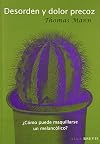
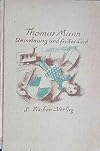
Disorder and Early Sorrow
by Thomas Mann 
On This Page
Description
Excerpt from Unordnung und Fr hes Leid About the Publisher Forgotten Books publishes hundreds of thousands of rare and classic books. Find more at www.forgottenbooks.com This book is a reproduction of an important historical work. Forgotten Books uses state-of-the-art technology to digitally reconstruct the work, preserving the original format whilst repairing imperfections present in the aged copy. In rare cases, an imperfection in the original, such as a blemish or missing page, may be show more replicated in our edition. We do, however, repair the vast majority of imperfections successfully; any imperfections that remain are intentionally left to preserve the state of such historical works. show lessTags
Recommendations






















Member Reviews
The central character of this story is a professor, a very Thomas Mann-like professor. Everything we learn is seen through the eyes of the professor. While he is happier when left alone he knows better than to let his feelings be known. He values his reputation as a gentler, more accepting family man. Let them do their thing, that’s the best way to get back to his prized solitude. To lash out would only make things worse, so it grin and bear it and let no one know he’d rather be by himself. Being passive is infinitely better than being perceived in any way as aggressive. So he puts on a loving face.
He looks over the young guests and notes their beautiful physical features, especially the young boys rather than the girls. But, show more unlike the writer in Death in Venice, he knows better than to let his interest get the better of him. He does not engage them. He has his own children to be more the center of his attention.
This feels like a throwaway story that never gets going. There is no plot here, no arc. Thankfully it ends. You can take a pass on this one without missing much. show less
He looks over the young guests and notes their beautiful physical features, especially the young boys rather than the girls. But, show more unlike the writer in Death in Venice, he knows better than to let his interest get the better of him. He does not engage them. He has his own children to be more the center of his attention.
This feels like a throwaway story that never gets going. There is no plot here, no arc. Thankfully it ends. You can take a pass on this one without missing much. show less
Most of Mann's short stories are too emotion-ridden for my taste, but I still enjoyed this tale of a German middle-class family trying to maintain its lifestyle during the hyper-inflation of the Weimar Republic.
Ratings
Members
- Recently Added By
Lists

Best Family Stories
241 works; 22 members

Best Love Stories
107 works; 14 members

Favourite Short Stories
153 works; 9 members
Author Information

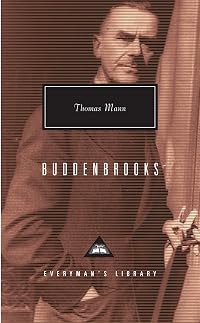
Thomas Mann was born into a well-to-do upper class family in Lubeck, Germany. His mother was a talented musician and his father a successful merchant. From this background, Mann derived one of his dominant themes, the clash of views between the artist and the merchant. Mann's novel, Buddenbrooks (1901), traces the declining fortunes of a merchant show more family much like his own as it gradually loses interest in business but gains an increasing artistic awareness. Mann was only 26 years old when this novel made him one of Germany's leading writers. Mann went on to write The Magic Mountain (1924), in which he studies the isolated world of the tuberculosis sanitarium. The novel was based on his wife's confinement in such an institution. Doctor Faustus (1947), his masterpiece, describes the life of a composer who sells his soul to the devil as a price for musical genius. Mann is also well known for Death in Venice (1912) and Mario the Magician (1930), both of which portray the tensions and disturbances in the lives of artists. His last unfinished work is The Confessions of Felix Krull, Confidence Man (1954), a brilliantly ironic story about a nineteenth-century swindler. An avowed anti-Nazi, Mann left Germany and lived in the United States during World War II. He returned to Switzerland after the war and became a celebrated literary figure in both East and West Germany. In 1929 he was awarded the Nobel Prize for literature. (Bowker Author Biography) show less
Thomas Mann has a Legacy Library. Legacy libraries are the personal libraries of famous readers, entered by LibraryThing members from the Legacy Libraries group.
Some Editions
Series
Belongs to Publisher Series
Work Relationships
Is contained in
Has as a student's study guide
Common Knowledge
- Canonical title
- Disorder and Early Sorrow
- Original title
- Unordnung und frühes Leid : Novelle
- Alternate titles*
- Kinderleed
- Original publication date
- 1926 (Duits) (Duits); 1928 (Nederlands) (Nederlands)
- People/Characters*
- Professor Cornelius
- Important places*
- Duitsland
- Important events*
- Wederopbouw (1945-1955)
- Original language*
- Duits
*Some information comes from Common Knowledge in other languages. Click "Edit" for more information.
Classifications
Statistics
- Members
- 42
- Popularity
- 701,290
- Reviews
- 2
- Rating
- (3.80)
- Languages
- 7 — Dutch, English, Finnish, French, German, Italian, Spanish
- Media
- Paper
- ISBNs
- 4
- ASINs
- 2