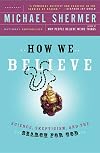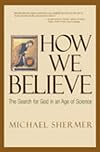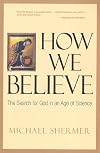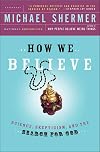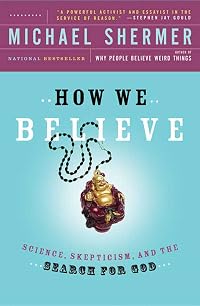
How We Believe: The Search for God in an Age of Science
by Michael Shermer
On This Page
Description
"Recent polls report that 96% of Americans believe in God. Why is this? Why, despite the rise of science, technology, and secular education, are people turning to religion in greater numbers than ever before? Why do people believe in God at all?" "These provocative questions lie at the heart of How We Believe, an illuminating new study of God, faith, and religion by best-selling author Michael Shermer. Offering fresh and often startling insights into age-old questions, Shermer's new book show more explores how and why humans put their faith in a higher power, even in the face of scientific skepticism. With characteristic logic and intellectual intensity, Book jacket."--Jacket. show lessTags
Recommendations


































Member Reviews
Michael Shermer is the founding publisher of Skeptic magazine, the director of the Skeptics Society, and host of the Skeptics Lecture Series. I don’t need to tell you what sort of direction this book is going to take. But even knowing what to expect, this was a fun book, well worth the read!
Shermer, noting that 96% of Americans believe in God and 73% believe that angels regular visit earth, asks one question: Why? Why do even 40% of scientists proclaim a belief in God? Why do more people believe in paranormal phenomena now than they did 100 years ago? Why do we believe at all, and why must we seek meaning in higher places? What is our fascination with ghosts and séances? Is belief in God genetically programmed? Some kind of “God show more module” in our brains?
Mankind is a pattern-seeking animal, whether this talent is used to see the Virgin Mary in patterns of light and shadow or to see meaning within the randomness of coincidental events. Mankind is also a storytelling animal. We love our stories, and our stories do more than describe our reality, they help create our realities. So, as we move from pattern-seeking to storytelling, we naturally journey on to mythmaking. Origin myths abound in various cultures. But the journey of humanity doesn’t end there. From mythmaking we jump ahead to morality, from morality to religion, from religion to God. Perhaps we are wired to believe; perhaps there’s a certain inevitability in the way the human experience has evolved.
Shermer presents a number of studies and interviews as he leads us on this journey. One of the most fascinating studies in Shermer’s book compared answers to two questions: “Why do you believe in God,” and “Why do you think other people believe in God?” The answers don’t jibe. Other people believe in God because they were raised that way, or because it brings them comfort to believe, or because people have a need to believe. But what do people answer as to why they believe? Well, because they’ve thought it through, of course; the universe is too orderly, or the experiences they’ve had could only come from God.
Shermer’s approach is scientific, yet controversial. The conclusions are his own; but I guarantee the book will make you think, and I guarantee you’ll enjoy the read. show less
Shermer, noting that 96% of Americans believe in God and 73% believe that angels regular visit earth, asks one question: Why? Why do even 40% of scientists proclaim a belief in God? Why do more people believe in paranormal phenomena now than they did 100 years ago? Why do we believe at all, and why must we seek meaning in higher places? What is our fascination with ghosts and séances? Is belief in God genetically programmed? Some kind of “God show more module” in our brains?
Mankind is a pattern-seeking animal, whether this talent is used to see the Virgin Mary in patterns of light and shadow or to see meaning within the randomness of coincidental events. Mankind is also a storytelling animal. We love our stories, and our stories do more than describe our reality, they help create our realities. So, as we move from pattern-seeking to storytelling, we naturally journey on to mythmaking. Origin myths abound in various cultures. But the journey of humanity doesn’t end there. From mythmaking we jump ahead to morality, from morality to religion, from religion to God. Perhaps we are wired to believe; perhaps there’s a certain inevitability in the way the human experience has evolved.
Shermer presents a number of studies and interviews as he leads us on this journey. One of the most fascinating studies in Shermer’s book compared answers to two questions: “Why do you believe in God,” and “Why do you think other people believe in God?” The answers don’t jibe. Other people believe in God because they were raised that way, or because it brings them comfort to believe, or because people have a need to believe. But what do people answer as to why they believe? Well, because they’ve thought it through, of course; the universe is too orderly, or the experiences they’ve had could only come from God.
Shermer’s approach is scientific, yet controversial. The conclusions are his own; but I guarantee the book will make you think, and I guarantee you’ll enjoy the read. show less
I found this fascinating, as I have Shermer's other books. The amount of research he does is amazing. The statistics, while dated, are disturbing and if the election and reelection of George Bush is any indicator, American irrationality is a disease that is growing. Beliefs are based on emotion and environment and at least one news network fans the flames of ignorance, capitalizing on those emotions.
In How We Believe, author and leading skeptic Michael Shermer comes at the question of why people of all cultures in all times tend to believe in a god by addressing the anthropology of how they got there in the first place. The writing is academic in tone but still very readable, informative and entertaining. I was particularly intrigued by chapter 8, "God and the Ghost Dance," which is an outside-looking-in explanation for what the Messiah myth would look like in other cultures.
If you're interested in philosophy, religion and skepticism, and have a passion for the study of religious belief in a historical context, then I recommend this book. How We Believe plus another one of his books, Why People Believe Weird Things, can be thought show more of as themed companions. show less
If you're interested in philosophy, religion and skepticism, and have a passion for the study of religious belief in a historical context, then I recommend this book. How We Believe plus another one of his books, Why People Believe Weird Things, can be thought show more of as themed companions. show less
This was very interesting. I read Gould's book about the "nonoverlapping magisteria" so that part of Shermer's thesis was familiar. (The idea is faith and science have nothing to do with one another - you cannot "prove" god exists because "proof" is in the domain of science - it is a reasonable, logical thing. You either believe or not (or are not sure, or haven't made up your mind, etc) You also cannot have faith in science - you either have a proof available or not)
Shermer also discussed shared myths across different religions, purposes religion might serve in terms of human needs, and why people say they believe and why they think other people believe.
Shermer also discussed shared myths across different religions, purposes religion might serve in terms of human needs, and why people say they believe and why they think other people believe.
Shermer, director of the Skeptics Society and author of the Skeptic column for Scientific American, doesn't like to be dubbed a "debunker." He takes the definition of "skeptic" —a rational, scientific approach to the universe—seriously, and his books are calm, reasoned explorations of how the world works and why so many claims about paranormal phenomena and pseudo-science can't survive even basic tests.
I read this after Why People Believe Weird Things and found it didn't add much new information.
A look into why man chooses to believe in God. Where did the belief begin, is there proof or reason or a place for God? Does he exist? An attempt to answer those and other questions through science, skepticism, and belief.
Members
- Recently Added By
Lists

Atheism, humanism, freethought, &c. — Best nonfiction books in favour of
167 works; 14 members

The Great Courses: Your Deceptive Mind
60 works; 1 member
Author Information

148+ Works 9,583 Members
Michael Shermer is the director of the Skeptics Society and the host of the Skeptics Lecture Series at the California Institute of Technology. He teaches science, technology, and evolutionary thought in the Cultural Studies Program at Occidental College.
Awards and Honors
Common Knowledge
- Canonical title
- How We Believe: The Search for God in an Age of Science
- Alternate titles
- How We Believe: Science, Skepticism, and the Search for God
- Original publication date
- 1999
- Epigraph
- For examining god, religion, and myth as Spinoza would have it: not to ridicule, not to bewail, not to scorn, but to understand.
Happy is the man who finds wisdom, and the man who gets understanding, for the gain from it is better than gain from silver and its profit better than gold. She is more precious than jewels, and nothing you desire can compar... (show all)e with her. Long life is in her right hand; in her left hand are riches and honor. Her ways are ways of pleasantness, and all her paths are peace. She is a tree of life to those who lay hold of her; those who hold her fast are called happy.
--Proverbs, 3: 13 - 18 - Dedication
- To Stephen Jay Gould
- First words
- (Preface): Not long after I set out to write this book, I received a fax from a subscriber to the magazine I publish, Skeptic, who had just finished the most recent issue (Vol, 5, No. 2) devoted to "The God Question."
In my senior year of high school I accepted Jesus as my savior and became a born-again Christian. - Last words
- (Click to show. Warning: May contain spoilers.)I was now free to try to live up to that exalted moniker -- Homo sapiens -- wise man.
- Blurbers
- Wilson, Edward O.; Ruse, Michael; Scott, Dr. Eugenie
Classifications
- Genres
- Religion & Spirituality, Nonfiction, General Nonfiction, Philosophy
- DDC/MDS
- 215 — Religion Philosophy & theory of religion Science and religion
- LCC
- BL240.3 .S545 — Philosophy, Psychology and Religion Religions. Mythology. Rationalism Religions. Mythology. Rationalism Natural theology Religion and science
- BISAC
Statistics
- Members
- 819
- Popularity
- 33,654
- Reviews
- 8
- Rating
- (4.02)
- Languages
- English
- Media
- Paper, Audiobook, Ebook
- ISBNs
- 7
- ASINs
- 6