
On This Page
Description
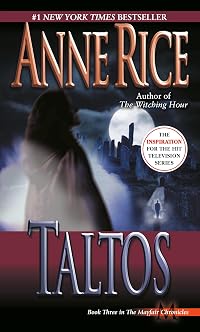
Fantasy. Fiction. Literature. HTML:"RICE IS A FORMIDABLE TALENT...[Taltos] is a curious amalgam of gothic, glamour fiction, alternate history and high soap opera."—The Washington Post Book World
"CAPTIVATING...TALTOS IS A WONDERFUL OFFERING...THE BEST SHE'S DONE....There is a new member of Anne Rice's macabre family of monsters, and he's probably the loneliest, most melancholy creature on earth....Rice keeps the mystic fires burning strong."
—The Milwaukee Journal
show more "SPELLBINDING...MYTHICAL...Anne Rice is a pure storyteller."
—Cosmopolitan
"RICE IS A STYLISH WRITER...What works best throughout the book is the magical collusion of the real and the mythical, the intermingling of the Taltos and witches with ordinary mortals in the present-day world."
—New York Newsday
"BEAUTIFULLY WRITTEN."
—Kirkus Reviews (starred)
"WHAT CAN I CONFESS? I'M ASHLAR. I'M A TALTOS.
It's centuries since I've seen one single other member of my own species. Oh, there have been others. I've heard of them, chased after them, and in some instances almost found them. Mark, I say almost. But not in centuries have I touched my own flesh and blood, as humans are so fond of saying. Never in all this time....[pg. 64]
When Ashlar learns that another Taltos has been seen, he is suddenly propelled into the haunting world of the Mayfair family, the New Orleans dynasty of witches forever besieged by ghosts, spirits, and their own dizzying powers. For Ashlar knows this powerful clan is intimately linked to the heritage of the Taltos.
In a swirling universe filled with death and life, corruption and innocence, this mesmerizing novel takes us on a wondrous journey back through the centuries to a civilization half-human, of wholly mysterious origin, at odds with mortality and immortality, justice and guilt. It is an enchanted, hypnotic world that could only come from the imagination of Anne Rice . . . show less
Tags
Recommendations

Member Reviews
A few years ago, I got back into reading Anne Rice, and found there was huge backlog of books to catch up on. Determined to go through them in order of publication, I picked up with the second stage of the Vampire Chronicles, and then moved on to the Mayfair Witches. These were a trilogy, set in the Louisiana and New Orleans of Lestat, and Louis, and the Talamasca, but with a set of characters completely separate from her universe of bloodsuckers. And as I stated in earlier reviews of THE WITCHING HOUR, and LASHER, I much preferred her tales of the undead to the hot and heavy story of the voluminous Mayfair family, and the “ghost” who had attached itself to them. The soft core eroticism, incest, and border line pedophilia were not show more really my cup of tea, and it is a testament to Rice’s talents as a storyteller and creator of compelling characters that I hung in there. It’s easy to be drawn in by Rice’s style, which is heavy on detail and mood, and she uses them to their zenith in the Mayfair books. If the pace slackened, which if often did, then the next chapter usually held the promise of something interesting, if only momentarily.
The main problem with TALTOS is that it is so unnecessary after the events of the previous two books which tied up the tale of Michael Curry and Rowan Mayfair, and their relationship with the entity known as Lasher, along with telling us everything we felt we needed to know about the Mayfair family. Yet Rice seems to have not wanted to leave this world behind, so she typed out one more epic elaborating on the mythos she had created. This time around, Rowan and Michael are not center stage, although they do figure in the story. Instead, we get the story of Ashlar, a personage alluded to in the previous books. He is a seven foot tall Taltos, a survivor of an ancient race passing among humans, and of course, at one point he sits down and tells Michael and Rowan his story, which extends back before the beginning of civilization. As I have stated in other reviews, this is where Rice really shines, as she clearly knows how to do research, and more important, she knows what to do with it. We get an interesting take on Britain from the pre Roman era to the coming of Christianity. We also get a look at the Talamasca from the inside, as the plotting of certain members figures in the story; a scene where justice is meted out to the treacherous Marklin and Tommy is right out of Poe, as is as good as Rice gets. Most of the Mayfair clan is absent, except for teenage Mona, a character some readers do not like, and her country cousin, Mary Jane, a welcome addition as I thought the interaction between those two really lit up their chapters.
Unfortunately, none of this comes together for anything close to a satisfying whole. There is no sense of a strong narrative or real plot tension building toward a climax, certain elements are introduced, and then dispensed with long before the final page. The question of whether the Taltos will survive as a species is the main plot point of the story, but it is hardly feels like a compelling one by the final chapters. And I found the climax of the book to be unsatisfying, as it felt as though it were leaving the door open for another sequel. As I understand it, Anne Rice resisted that temptation, and wrote MERRICK, a book that crosses over the Mayfair witches with her vampires. Already have a copy, and it’s on my Too Read pile. show less
The main problem with TALTOS is that it is so unnecessary after the events of the previous two books which tied up the tale of Michael Curry and Rowan Mayfair, and their relationship with the entity known as Lasher, along with telling us everything we felt we needed to know about the Mayfair family. Yet Rice seems to have not wanted to leave this world behind, so she typed out one more epic elaborating on the mythos she had created. This time around, Rowan and Michael are not center stage, although they do figure in the story. Instead, we get the story of Ashlar, a personage alluded to in the previous books. He is a seven foot tall Taltos, a survivor of an ancient race passing among humans, and of course, at one point he sits down and tells Michael and Rowan his story, which extends back before the beginning of civilization. As I have stated in other reviews, this is where Rice really shines, as she clearly knows how to do research, and more important, she knows what to do with it. We get an interesting take on Britain from the pre Roman era to the coming of Christianity. We also get a look at the Talamasca from the inside, as the plotting of certain members figures in the story; a scene where justice is meted out to the treacherous Marklin and Tommy is right out of Poe, as is as good as Rice gets. Most of the Mayfair clan is absent, except for teenage Mona, a character some readers do not like, and her country cousin, Mary Jane, a welcome addition as I thought the interaction between those two really lit up their chapters.
Unfortunately, none of this comes together for anything close to a satisfying whole. There is no sense of a strong narrative or real plot tension building toward a climax, certain elements are introduced, and then dispensed with long before the final page. The question of whether the Taltos will survive as a species is the main plot point of the story, but it is hardly feels like a compelling one by the final chapters. And I found the climax of the book to be unsatisfying, as it felt as though it were leaving the door open for another sequel. As I understand it, Anne Rice resisted that temptation, and wrote MERRICK, a book that crosses over the Mayfair witches with her vampires. Already have a copy, and it’s on my Too Read pile. show less
Almost a book-length exposition and bridge between Lasher and whatever comes next in the "Witch Chronicles." It read very well and I found it interesting because I had read the previous books, but it would not stand alone at all. Nothing really happens (to speak of) -- mostly history and explanations.
While Witching Hour remains the best in this trilogy, Taltos was thankfully better than Lasher. While some things felt a bit implausible to me (how could a Taltos grow so quickly after being born when it has no food/vitamins/etc to nourish its growing flesh - a scientific impossibility when you consider just how quickly they grow - within the hour after birth!), this was a very good book and answered questions about the Taltos and where they came from. Mona was an interesting character, she is a far better character in this novel than she was in the atrocity that is 'Blood Canticle'. The ending surprised me, but it was a fun one. Overall a solid and decent Anne Rice book, even if it could have been better than this.
Hmmm. It's impossible to write about the plot in a coherent manner because there are several intertwining threads:
As the title implies, this book is mainly about the Taltos--a race of beings we were introduced to in The Witching Hour. Ashlar is, or at least believes himself to be, the last of his kind. He's lonely, currently obsessed with dolls (collecting and manufacturing them), and when he discovers another Taltos has been seen, he drops everything to check it out.
And of course there are the Mayfairs, as this is the last book of the Mayfair Witch trilogy. Rowan seems to be following in her mother's footsteps at the beginning of the book, though she's not quite as completely catatonic--she walks, eats, dresses herself, etc., but show more doesn't speak, communicate, or acknowledge the presence of others.
The family seems to be turning to the 12-year-old designee of the legacy, Mona, who's pregnant with Michael's child.
Then there's the Talamasca. There's corruption within the Talamasca: Aaron Lightner is killed, and his friend and contemporary Stuart Gordon is behind it, motivated by his plan to resurrect the Taltos race. He has a female Taltos, and he plans to find a male so they can mate.
Contrary to the average opinions on Amazon, I enjoyed this more than I did The Witching Hour. The Taltos race was an interesting concept, and we got a lot more detail about them. (This was presumably also present in Lasher, but I haven't read it.) It also lacked a lot of the problems I had with The Witching Hour: it had a coherent plot--even if there were several threads, the story itself held together quite well; and while there were still a few tangential flashbacks, they weren't nearly as numerous or intrusive as those in The Witching Hour.
However. I was completely creeped out by Mona, and not in the way you're creeped out by vampires or spiders, but in a lose-my-lunch kind of way. The nonchalant way an "affair" between a 12-year-old and a man in his 40s was handled pushed my squick buttons hard. The affair was bad enough, but that it was presented as normal.... Added to that is the fact that she's treated as the head of the family, and everyone defers to her. She's 12. T W E L V E. Not 18, not 16, not even 14--12. She's a child. Nope, just could not swallow this. As with the other witches in The Witching Hour, we're told she's very powerful, which might account for some of the attitude, if we ever saw any evidence of that power, which we don't.
And then there was the stylistic choice that was seriously nails-on-the-chalkboard irritating. Mona becomes friends with her teenage cousin Mary Jane. I rather liked Mary Jane, but she talks like this:
I'll get it, you rest there against that tree, that's the tree I told you about, the cypress tree, oldest one in these parts, you see this was the pond out there, the little pond???? You know??? Where the family would go rowing??? Here, take the lantern, the handle doesn't get hot.
Grrrrr. Why use 3 and 4 question marks? One would do, really, to show the speech patterns. Just bugged the heck out of me. I'm not even going to mention the comma splices. Of course, if I'd loved the rest of the book, that would be a minor niggle.
Though I liked it better than the first of the trilogy, even if Mona had been 16 or 18, I wasn't more than mildly interested in the story. Mona at 12 just made me disgusted.
I have two more Anne Rice books in my TBR pile. They were, in fact, at the top, since they'd been random picks a while ago, but I'd postponed reading them until I read the earlier books (The Mummy and The Witching Hour). I picked up the next one to read--one of the vampire ones, I can't remember which--and found myself reading very skeptically, expecting to dislike it. So I put them both back on the bottom of the TBR pile until I get my annoyance with this series out of my head. show less
As the title implies, this book is mainly about the Taltos--a race of beings we were introduced to in The Witching Hour. Ashlar is, or at least believes himself to be, the last of his kind. He's lonely, currently obsessed with dolls (collecting and manufacturing them), and when he discovers another Taltos has been seen, he drops everything to check it out.
And of course there are the Mayfairs, as this is the last book of the Mayfair Witch trilogy. Rowan seems to be following in her mother's footsteps at the beginning of the book, though she's not quite as completely catatonic--she walks, eats, dresses herself, etc., but show more doesn't speak, communicate, or acknowledge the presence of others.
The family seems to be turning to the 12-year-old designee of the legacy, Mona, who's pregnant with Michael's child.
Then there's the Talamasca. There's corruption within the Talamasca: Aaron Lightner is killed, and his friend and contemporary Stuart Gordon is behind it, motivated by his plan to resurrect the Taltos race. He has a female Taltos, and he plans to find a male so they can mate.
Contrary to the average opinions on Amazon, I enjoyed this more than I did The Witching Hour. The Taltos race was an interesting concept, and we got a lot more detail about them. (This was presumably also present in Lasher, but I haven't read it.) It also lacked a lot of the problems I had with The Witching Hour: it had a coherent plot--even if there were several threads, the story itself held together quite well; and while there were still a few tangential flashbacks, they weren't nearly as numerous or intrusive as those in The Witching Hour.
However. I was completely creeped out by Mona, and not in the way you're creeped out by vampires or spiders, but in a lose-my-lunch kind of way. The nonchalant way an "affair" between a 12-year-old and a man in his 40s was handled pushed my squick buttons hard. The affair was bad enough, but that it was presented as normal.... Added to that is the fact that she's treated as the head of the family, and everyone defers to her. She's 12. T W E L V E. Not 18, not 16, not even 14--12. She's a child. Nope, just could not swallow this. As with the other witches in The Witching Hour, we're told she's very powerful, which might account for some of the attitude, if we ever saw any evidence of that power, which we don't.
And then there was the stylistic choice that was seriously nails-on-the-chalkboard irritating. Mona becomes friends with her teenage cousin Mary Jane. I rather liked Mary Jane, but she talks like this:
I'll get it, you rest there against that tree, that's the tree I told you about, the cypress tree, oldest one in these parts, you see this was the pond out there, the little pond???? You know??? Where the family would go rowing??? Here, take the lantern, the handle doesn't get hot.
Grrrrr. Why use 3 and 4 question marks? One would do, really, to show the speech patterns. Just bugged the heck out of me. I'm not even going to mention the comma splices. Of course, if I'd loved the rest of the book, that would be a minor niggle.
Though I liked it better than the first of the trilogy, even if Mona had been 16 or 18, I wasn't more than mildly interested in the story. Mona at 12 just made me disgusted.
I have two more Anne Rice books in my TBR pile. They were, in fact, at the top, since they'd been random picks a while ago, but I'd postponed reading them until I read the earlier books (The Mummy and The Witching Hour). I picked up the next one to read--one of the vampire ones, I can't remember which--and found myself reading very skeptically, expecting to dislike it. So I put them both back on the bottom of the TBR pile until I get my annoyance with this series out of my head. show less
Rating: 4.5 stars
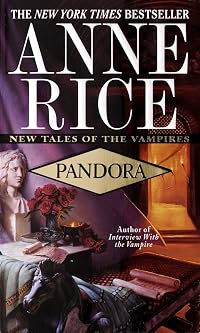
Check it out, it's Bella's baby - ten years before Twilight. Or at least the race to which she ought to belong. Hmm, I wonder if Meyer read this one? Much better writing than Twilight. If you are not a fan of odd and somewhat melodramatic settings, you are not a fan of Anne Rice. Thankfully though, this is before she entered her extremely weird phase, from which, as far as I know, she has yet to return - the one dating from about Pandora on. If you liked her earlier work, or enjoy both the supernatural and a little romance, you will probably like this one. Or if you are a Meyer fan, and wonder what to read next, you should definitely try Anne Rice. I'd probably start with The Vampire Lestat or The Witching Hour, though.
Anne Rice is a master at legend building. She has masterfully built the legend and history not only of a family of witches but of a "mythical" creature as well. Although I still think that Lasher is my favorite of the Mayfair Witch trilogy, Taltos is a great ending to the series. For those who, like me felt that The Witching Hour was a slow start to the series I would recommend continuing because it is all necessary for the story and it finishes really strong.
Members
- Recently Added By
Lists

Books Read in 2017
4,249 works; 130 members

Witchy Fiction
253 works; 126 members

Lives of the Mayfair Witches - Anne Rice
3 works; 1 member
Author Information

132+ Works 189,697 Members
Anne Rice was born Howard Allen O'Brien on October 4, 1941 in New Orleans, Louisiana. She received a bachelor's degree in political science in 1964 and master's degree in English and creative writing in 1972 from San Francisco State University. She published her first short story in 1965 called October 4, 1948. Her first book, Interview with the show more Vampire, was published in 1976. It was made into a film starring Brad Pitt, Kirsten Dunst, and Tom Cruise in 1994. She wrote various series in the same genre including the rest of the Vampire Chronicles, the Mayfair Witches books, and The Wolf Gift Chronicles. Her novel, Feast of All Saints, became a Showtime mini-series in 2001. Her other works include Cry to Heaven, Servant of the Bones, and Violin. In 1998, Rice returned to the Catholic Church and for some time only wrote for Christ or about Christ. These works include Christ the Lord: Out of Egypt, Christ the Lord: The Road to Cana, and Called Out of Darkness. Anne Rice died on December 11, 2021 at the age of 80. (Bowker Author Biography) show less
Awards and Honors
Distinctions
Series

Belongs to Publisher Series
Work Relationships
Is contained in
10 Anne Rice Books: Interview with the Vampire, The Feast of All Saints, Tale of the Body Thief, Lasher, Taltos, Servant by Anne Rice
Collector's Set (5-Paperback Books): Taltos, The Tale Of The Body Thief, Queen Of The Damned, The Vampire Lestat, Interview With The Vampire by Anne Rice
Lasher / Cry to Heaven / Pandora / The Feast of All Saints / The Mummy / Memnoch the Devil / The Tale of the Body Thief / Taltos / Servant of the Bones by Anne Rice
Vittorio the Vampire / The Vampire Lestat / Interview With the Vampire / The Vampire Armand / Queen of the Damned / Merrick / The Witching Hour / Blood Canticle / The Mummy / Memnoch the Devil / Taltos by Anne Rice
Contains
Is abridged in
Has as a reference guide/companion
Has as a student's study guide
Common Knowledge
- Canonical title
- Taltos
- Original title
- Taltos
- Original publication date
- 1994
- People/Characters
- Ashlar Templeton; Mona Mayfair; Rowan Mayfair; Michael Curry; Yuri Stefano; Stuart Gordon (show all 8); Morrigan Mayfair; Mary Jane Mayfair
- Important places
- New Orleans, Louisiana, USA; New York, New York, USA
- Epigraph
- THE GARDEN OF LOVE
I went to the Garden of Love,
And saw what I never had seen:
A Chapel was built in the midst,
Where I used to play on the green.
And the gates of this Chapel were shut,
And "Thou s... (show all)halt not" writ over the door;
So I turned to the Garden of Love,
That so many sweet flowers bore;
And I saw it was filled with graves,
And tombstones where flowers should be;
And Priests in black gowns were walking their rounds,
And binding with briers my joys and desires.
From Songs of Experience,
William Blake - Dedication
- Dedicated with Love
to Stan, Christopher, and Michele Rice,
to John Preston and to Margaret and Stanley Rice, Sr. - First words
- It had snowed all day.
- Last words
- (Click to show. Warning: May contain spoilers.)And the dark car sped out of the multishaded gloom, leaving behind the somber corner and its regal house, the great leafy branches holding darkness like ripe fruit beneath the violet sky, the car a projectile destined for the green heart of the world, carrying them inside it, the two, male and female, together.
- Original language*
- Amerikanisch
*Some information comes from Common Knowledge in other languages. Click "Edit" for more information.
Classifications
Statistics
- Members
- 6,528
- Popularity
- 1,857
- Reviews
- 37
- Rating
- (3.49)
- Languages
- 12 — Czech, Danish, Dutch, English, French, German, Hungarian, Italian, Polish, Portuguese, Russian, Spanish
- Media
- Paper, Audiobook, Ebook
- ISBNs
- 58
- UPCs
- 1
- ASINs
- 23