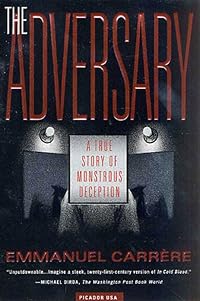
The Adversary: A True Story of Monstrous Deception
by Emmanuel Carrère
On This Page
Description
The true story of a man who spun a web of lies around his life ventures into the mind of a psychotic murderer who managed to convince thousands of people that he was a successful, credentialed physician.Tags
Recommendations

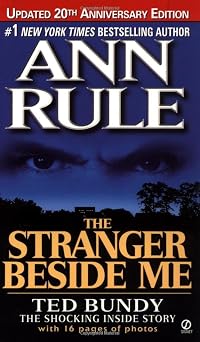
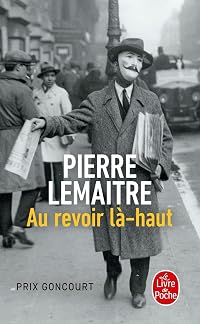
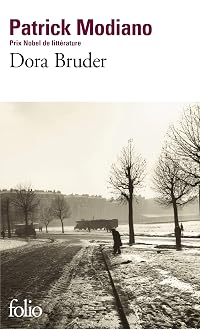
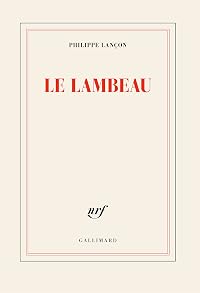








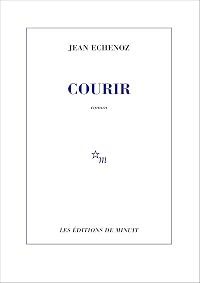
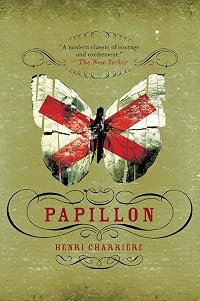
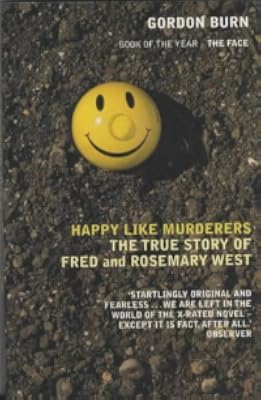

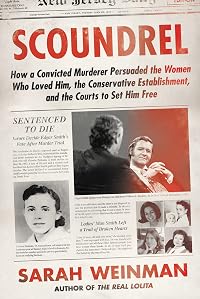

Member Recommendations
Member Reviews
Coming off the heels of “I’ll Be Gone in the Dark”, I was looking for another true crime story. “The Adversary” is about Jean-Claude Romand, a French man who basically mind-fucked his friends and family by pretending to be a doctor for 18 years before brutally murdering his wife, children and parents. It’s a short book but an unsettling one with a chilling opening line:
“On the Saturday morning of January 9th, 1993, while Jean-Claude Romand was killing his wife and children, I was with mine at a parent-teacher meeting…”
How can someone sustain 18 years of deception without being caught? Despite his own revulsion, author Emmanuel Carrere went full “In Cold Blood” to learn more about the man who watched morning show more cartoons with his children, shot them in their sleep and finally set the damn house on fire. Is…is my sliding glass door locked? show less
“On the Saturday morning of January 9th, 1993, while Jean-Claude Romand was killing his wife and children, I was with mine at a parent-teacher meeting…”
How can someone sustain 18 years of deception without being caught? Despite his own revulsion, author Emmanuel Carrere went full “In Cold Blood” to learn more about the man who watched morning show more cartoons with his children, shot them in their sleep and finally set the damn house on fire. Is…is my sliding glass door locked? show less
Non è un romanzo, non è un saggio. Una fatto di cronaca accaduto realmente, una strage familiare perpetuata da un uomo normale. Studente brillante, medico luminare, marito innamorato, padre affettuoso, figlio premuroso e amante passionale. Ma niente di tutto questo era vero e messo alle strette, dopo 18 anni, ha ammazzato tutti.
L'avversario è il racconto di quanto è successo, per quanto possibile senza giudizi, ma con il sentore che il Bene insito in ogni uomo (e quindi anche in lui) avesse un Avversario e che quest'ultimo, anche quando tutto è compiuto, la pena scontata, le lacrime versate, stia ancora vincendo.
Un'altra forma della banalità del male.
Una lettura incredibile, nel senso anche letterale del termine.
L'avversario è il racconto di quanto è successo, per quanto possibile senza giudizi, ma con il sentore che il Bene insito in ogni uomo (e quindi anche in lui) avesse un Avversario e che quest'ultimo, anche quando tutto è compiuto, la pena scontata, le lacrime versate, stia ancora vincendo.
Un'altra forma della banalità del male.
Una lettura incredibile, nel senso anche letterale del termine.
Per me, anche un 4 stelle e mezzo. Carrère racconta il suo racconto di un evento di cronaca. Racconta il suo racconto perché non si limita a descrivere i frutti delle sue ricerche ma il percorso stesso delle sue ricerche, quasi fosse, in alcuni punti, la prefazione ad un romanzo.
Scritto benissimo, con un ritmo incalzante.
*Aggiornamento* Avevo voglia di rileggerlo e me lo sono ascoltato. Una grande occasione persa: un piccolo capolavoro letto veramente male.
Scritto benissimo, con un ritmo incalzante.
*Aggiornamento* Avevo voglia di rileggerlo e me lo sono ascoltato. Una grande occasione persa: un piccolo capolavoro letto veramente male.
The New York Times Book Review podcast features a short discussion about what they're reading each week and all summer long they were, one by one, falling for French author Emmanuel Carrère. My library system owns a single book by Carrère and so I read The Adversary, which is a non-fiction piece about a murderer.
Jean-Claude Romand was a prominent doctor working for the World Health Organization in Geneva, and who lived in a pleasant village where he had good friends and was respected across the border in France with his storybook family. It was also all a lie. He'd never taken his first set of exams in medical school, but had simple continued along as though he were doing well. Once his class had graduated, he married his college show more sweetheart and continued the masquerade for years, leaving to attend important conferences, buying a home, even taking a Parisian mistress.
The reasons why he murdered his family are clear; he was running out of options and realized that the careful illusion he had created was soon to be shattered, but how he managed for so long makes for a fascinating story. show less
Jean-Claude Romand was a prominent doctor working for the World Health Organization in Geneva, and who lived in a pleasant village where he had good friends and was respected across the border in France with his storybook family. It was also all a lie. He'd never taken his first set of exams in medical school, but had simple continued along as though he were doing well. Once his class had graduated, he married his college show more sweetheart and continued the masquerade for years, leaving to attend important conferences, buying a home, even taking a Parisian mistress.
The reasons why he murdered his family are clear; he was running out of options and realized that the careful illusion he had created was soon to be shattered, but how he managed for so long makes for a fascinating story. show less
Much as I enjoy a good action-thriller film every once in a while I do not generally read crime fiction, or crime non-fiction for that matter. I have been a victim of crime more times than I care to discuss and I have very low regard for criminals. I mean really low. It was by accident that I was lured into this account of Jean-Claude Romand. Romand is no "romantic" criminal. Except for maybe Robin Hood, there are no romantic criminals for me. In the telling of this story there is a man with a great void in him. And stupidity. And cowardice. There is an emptiness of meaning. In some ways this story is a distillation of some of my greatest fears. My fears that I will some day let down my family. My fears that I myself am an empty vessel. show more At the same time it is a call to me not to be consumed by my fears, and not to let what little truth I know escape into the emptiness of space. show less
"Why would he lie?"
"I don't know. Actually, yes, I do know. Because he lies. That's his mode of being, he can't do otherwise, and I think he does it more to fool himself than to fool others."
This is an odd, depressing book that tells the tale of an odd, depressing (and often depressed) man who deceived everyone he knew for 18 years, convincing them that he was a successful medical researcher working for the WHO. When his web of lies started to unravel, he killed his wife, children, and parents, then set his house on fire.
The book is short and I read it quickly, just wanting it to end. I don't hate it with the fire of a thousand suns, but I wish I hadn't read it.
"I don't know. Actually, yes, I do know. Because he lies. That's his mode of being, he can't do otherwise, and I think he does it more to fool himself than to fool others."
This is an odd, depressing book that tells the tale of an odd, depressing (and often depressed) man who deceived everyone he knew for 18 years, convincing them that he was a successful medical researcher working for the WHO. When his web of lies started to unravel, he killed his wife, children, and parents, then set his house on fire.
The book is short and I read it quickly, just wanting it to end. I don't hate it with the fire of a thousand suns, but I wish I hadn't read it.
Absolument fascinant. L'histoire vraie du faux docteur Jean-Claude Romand, qui a menti sur sa vie à sa propre famille pendant dix-huit ans, se mêle à un essai sur la difficulté de l'écrivain à écrire sur ces faits.
Le style dépouillé de ces 200 pages s'accorde parfaitement à cette histoire incroyable.
Le style dépouillé de ces 200 pages s'accorde parfaitement à cette histoire incroyable.
Members
- Recently Added By
Lists

True Crime
156 works; 1 member

contemporary literary fiction list to check out
47 works; 1 member

Favorite French Fiction
211 works; 100 members
Author Information

51+ Works 6,914 Members
Emmanuel Carrere is one of France's most critically acclaimed writers, author of screenplays, a biography of Philip K. Dick, and two novels, including CLASS TRIP, which won the prestigious Prix Femina. A major bestseller in France, THE ADVERSARY is being published in eighteen countries. Carrere lives in Paris (Bowker Author Biography)
Some Editions
Awards and Honors
Series
Belongs to Publisher Series
Work Relationships
Common Knowledge
- Canonical title*
- L'avversario
- Original title
- L'adversaire
- Alternate titles
- The adversary: a true story of murder and deception
- Original publication date
- 2000 (English translation) (English translation); 2000
- People/Characters*
- Jean-Claude Romand; Emmanuelle Carrère
- Important places*
- Ferney-Voltaire, Auvergne-Rhône-Alpes, Francia; Ginevra, Ginevra, Svizzera; Francia; Svizzera
- Related movies
- L'adversaire (2002 | IMDb)
- First words*
- La mattina del sabato 9 gennaio 1993, mentre Jean-Claude Romand uccideva sua moglie e i suoi figli, io ero a una riunione all'asilo di Gabriel, il mio figlio maggiore, insieme a tutta la famiglia. Gabriel aveva cinque anni, l... (show all)a stessa età di Antoine Romand. Più tardi siamo andati a pranzo dai miei genitori, e Romand dai suoi. Dopo mangiato ha ucciso anche loro. Ho trascorso da solo, nel mio studio, il pomeriggio del sabato e l'intera domenica, in genere dedicati alla vita familiare, perché stavo finendo un libro al quale lavoravo da un anno: la biografia dello scrittore di fantascienza Philip K. Dick. L'ultimo capitolo raccontava i giorni che lo scrittore aveva passato in coma prima di morire. Ho finito il martedì sera, e il mercoledì mattina ho letto il primo articolo di "Libération" sul caso Romand.
- Quotations*
- Tout au long de l'instruction le juge n'a cessé de s'étonner que ces coups de fils n'aient pas été passé plus tôt, sans malice ni soupçon, simplement parce que, même quand on est "très cloisonné", travailler pendant... (show all) dix ans sans que jamais votre femme ni vos amis ne vous appelle au bureau, cela n'existe pas. Il est impossible de penser à cette histoire sans se dire qu'il y a là un mystère et une explication cachée. Mais le mystère, c'est qu'il n'y a pas d'explication et que, si invraisemblable que cela paraisse, cela s'est passé ainsi.
- Last words*
- (Click to show. Warning: May contain spoilers.)Ho pensato che scrivere questa storia non poteva essere altro che un crimine o una preghiera.
- Blurbers
- Morrison, Blake
- Original language
- French
*Some information comes from Common Knowledge in other languages. Click "Edit" for more information.
Classifications
- Genre
- Biography & Memoir
- DDC/MDS
- 364.15 — Society, government, & culture Social problems and social services Crime Criminal offenses Offenses against the person
- LCC
- HV6535 .F8 .G47313 — Social sciences Social pathology. Social and public welfare. Criminology Social pathology. Social and public welfare. Criminology Crimes and offenses
- BISAC
Statistics
- Members
- 1,284
- Popularity
- 19,088
- Reviews
- 47
- Rating
- (3.78)
- Languages
- 14 — Catalan, Chinese, Danish, Dutch, English, Estonian, Finnish, French, German, Italian, Norwegian (Bokmål), Portuguese, Spanish, Swedish
- Media
- Paper, Audiobook, Ebook
- ISBNs
- 55
- ASINs
- 19