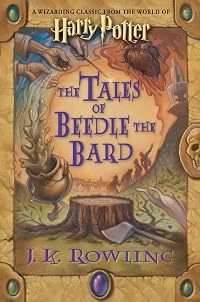
The Tales of Beedle the Bard
by J. K. Rowling, Beedle the Bard
Harry Potter's Schoolbooks (3), Harry Potter (Harry Potter's Schoolbooks — Novella #3)
On This Page
Description
The Tales of Beedle the Bard, a Wizarding classic, first came to Muggle readers' attention in the book known as Harry Potter and the Deathly Hallows. Now, thanks to Hermione Granger's new translation from the ancient runes, we present this stunning edition with an introduction, notes, and illustrations by J. K. Rowling, and extensive commentary by Albus Dumbledore. Never before have Muggles been privy to these richly imaginative tales.Tags
Recommendations


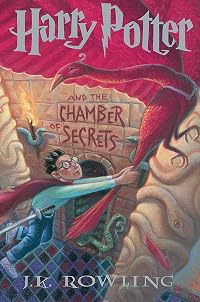
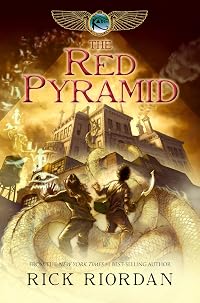


Member Recommendations

ckm63 The Imagicators takes the idea of magic to a new level. You don't need magic wands or spells if you can imagine something down to the finest detail. And the whole world where The Imagicators takes place was itself imagicated by someone with that power! If you've run out of Harry Potter books, this should be next on your list.
Also recommended by spense
fyrefly98 More original fairy tales from a YA fantasy author.
11
Member Reviews
I wasn't particularly impressed with the previous illustrated book from the Wizarding World of Harry Potter that I read, but thankfully the illstrated version of the Tales of Beedle the Bard was a delight! Chris Riddell's cartoonish but slightly strange illustrative styleis well-suited for depicting the fairy tales of the wizarding world, because it strikes just the right balance between reality and whimsy, placing the stories just to one side of reality - just like the wizarding world itself. The stories themselves remain the same as the regular published edition, partnered with pithy and insightful commentary by none other than Albus Dumbledore, meant to give readers a glimpse into the childhood stories of young witches and wizards. I show more was not really into the stories when I first read the book, but this time around I definitely appreciated them more. The illustrations definitely helped, bringing the stories visually to life, just like the collections of Grimms and Hans Christian Andersen were brought alive by Arthur Rackham and Kay Neilsen, and Riddell's choice to illustrate even Dumbledore's commentary section was well done. Riddell is known for personally illustrating his own books and we saw a published attempt at the style with Neil Gaiman's Neverwhere (not very successfully, in my opinion), so to the reader's eye these sections looke like Dumbledore himself is doodling away alongside his commentary! An excellent pairing choice of content with author - this is definitely the edition of Tales of Beedle the Bard that I would suggest to future readers! show less
Here is a set of Chinese boxes, fitting intricately one inside the other. As the title implies, a fifteenth-century bard called Beedle is said to have written them down in runes, subsequently translated by "the brightest witch of her age," Hermione Granger. The translation is itself nested within Albus Dumbledore's footnotes, then bookended by Jo Rowling's Introduction (the author added illustrations and additional footnotes) and by Baroness Nicholson of Winterbourne's missive about the Children's High Level Group charity which supports over a quarter of a million vulnerable children in residential homes across Europe.
Bearing in mind the NGO's compassionate aims it's unsurprising that most of these five tales aren't simply about fantasy show more or magic (though of course these are present); like many fairytales they are implicitly advocating charitable attitudes and ethical behaviour -- in short, common humanity.
Learning to soften one's heart is the message from 'The Wizard and the Hopping Pot', while 'The Fountain of Fair Fortune' promotes cooperative behaviour for the benefit of all. Dumbledore characterised the first two tales as being about generosity, tolerance and love but suggested that 'The Warlock's Hairy Heart' is about guarding against "the greatest, and least acknowledged, temptations of magic: the quest for invulnerability." One need not add that it's not just magic that tempts individuals to seek that sense of invulnerability: the possession of both power and money has itself been an irresistible incentive for some.
The final two tales deal with perhaps life's greatest human mystery: death. 'Babbitty Rabbitty and her Cackling Stump' underlines the fact that no-one can bring the dead back to life, a truth that's reiterated in 'The Tale of the Three Brothers'. This latter was alluded to in Harry Potter and the Deathly Hallows and brilliantly animated in Part I of the filmed version. As we all know by now, the interlaced triangle, circle and line symbol represents the Cloak of Invisibility, a stone to bring back the dead and the unbeatable Elder Wand.
What of the tales themselves? Rowling (for in truth she is "the onlie begetter" of these pieces) has managed to conjure up five short stories which are in the great tradition of literary fables or fairytales. The pace, like Goldilock's purloined porridge, is just right (not too long, not too short) and the tropes are all in place (three witches or three brothers, magical objects, quests, the lowliest raised up, and so on). There is humour and there is melancholy, poetic justice and repeated refrains. There are wizards and witches, warlocks and fake magicians, there is a foolish king, a dismal-looking knight and there is Death. And, leavening it all, there are Albus Dumbledore's footnotes, with comments both enlightening and tangential -- who can forget, once they've read it, his description of the disastrous Hogwarts pantomime?
What of the eponymous Beedle? Perhaps Rowling took the name from a traditional medieval official whose anachronistic office has survived into modern times: a beadle was originally someone who summoned others to a meeting, a herald or even a messenger. A bard of course is a minstrel or poet; the two juxtaposed names strongly signify the important role of the teller of tales, oral or literary, a role that Rowling has been singularly successful at. Like all good fantasy, these pieces tell essential truths; and Rowling quotes Dumbledore's advice to Harry Potter about truth:
'It is a beautiful and terrible thing, and should therefore be treated with great caution.'
If there is a criticism then it's not a literary one. This UK mass market edition (there have others since) features the author's own line drawings. These, while charming in their way, add little to the quality of the writing and would have served better as preparatory sketches to guide a professional artist for the published work. But it's nice to see Rowling's own vision of how the tales should be presented.
https://wp.me/s2oNj1-beedle show less
Bearing in mind the NGO's compassionate aims it's unsurprising that most of these five tales aren't simply about fantasy show more or magic (though of course these are present); like many fairytales they are implicitly advocating charitable attitudes and ethical behaviour -- in short, common humanity.
Learning to soften one's heart is the message from 'The Wizard and the Hopping Pot', while 'The Fountain of Fair Fortune' promotes cooperative behaviour for the benefit of all. Dumbledore characterised the first two tales as being about generosity, tolerance and love but suggested that 'The Warlock's Hairy Heart' is about guarding against "the greatest, and least acknowledged, temptations of magic: the quest for invulnerability." One need not add that it's not just magic that tempts individuals to seek that sense of invulnerability: the possession of both power and money has itself been an irresistible incentive for some.
The final two tales deal with perhaps life's greatest human mystery: death. 'Babbitty Rabbitty and her Cackling Stump' underlines the fact that no-one can bring the dead back to life, a truth that's reiterated in 'The Tale of the Three Brothers'. This latter was alluded to in Harry Potter and the Deathly Hallows and brilliantly animated in Part I of the filmed version. As we all know by now, the interlaced triangle, circle and line symbol represents the Cloak of Invisibility, a stone to bring back the dead and the unbeatable Elder Wand.
What of the tales themselves? Rowling (for in truth she is "the onlie begetter" of these pieces) has managed to conjure up five short stories which are in the great tradition of literary fables or fairytales. The pace, like Goldilock's purloined porridge, is just right (not too long, not too short) and the tropes are all in place (three witches or three brothers, magical objects, quests, the lowliest raised up, and so on). There is humour and there is melancholy, poetic justice and repeated refrains. There are wizards and witches, warlocks and fake magicians, there is a foolish king, a dismal-looking knight and there is Death. And, leavening it all, there are Albus Dumbledore's footnotes, with comments both enlightening and tangential -- who can forget, once they've read it, his description of the disastrous Hogwarts pantomime?
What of the eponymous Beedle? Perhaps Rowling took the name from a traditional medieval official whose anachronistic office has survived into modern times: a beadle was originally someone who summoned others to a meeting, a herald or even a messenger. A bard of course is a minstrel or poet; the two juxtaposed names strongly signify the important role of the teller of tales, oral or literary, a role that Rowling has been singularly successful at. Like all good fantasy, these pieces tell essential truths; and Rowling quotes Dumbledore's advice to Harry Potter about truth:
'It is a beautiful and terrible thing, and should therefore be treated with great caution.'
If there is a criticism then it's not a literary one. This UK mass market edition (there have others since) features the author's own line drawings. These, while charming in their way, add little to the quality of the writing and would have served better as preparatory sketches to guide a professional artist for the published work. But it's nice to see Rowling's own vision of how the tales should be presented.
https://wp.me/s2oNj1-beedle show less
First off, I would like to thank J.K. Rowling for allowing me to continue to live under the allusion that wizards really do exist out there and that there are wizards like Dumbledore who are kind enough to give us a few insights into what their lives are really about.
I really appreciated what Dumbledore said in the introduction that wizard fairy tales aren't a whole lot different from Muggle fairy tales: they teach morality and honesty, and magic isn't the solution to all problems. Wizards still have many of the same problems that Muggles have.
I thoroughly enjoyed Dumbledore's commentaries; they were by far the best part of the book. Yet another indicator that Harry Potter's world is real. I found it interesting that he wrote the show more commentary 18 months before he died, which would have been during Harry's 4th year. I wonder when Dumbledore found the time amidst the Triwizard Tournament and whisperings of Voldemort's return to dedicate some time to children's stories. It makes them seem a lot more important than they really are. Of course, Dumbledore didn't know that his life was soon to come to an end, but he had very pressing things on his mind during Harry's 4th year. So he must have felt it was important to dedicate some time to those children's tales. So this book is all the more precious to me.
To all those who are suffering from the pangs of Harry Potter Withdrawals, this book is a good book to turn to. You learn many delightful things about wizards you thought you knew and wizards that have only been mentioned. You finally learn what the difference is between a wizard and a warlock. In short, this book allows you to still live in Harry's world while your heart finally accepts that it is okay to let go of the characters for awhile. They are still out there doing what they always do—fighting evil, laughing, eating, learning, and loving. Even if we aren't immersed in Harry's world, it still continues to live on—and that is deeply comforting. show less
I really appreciated what Dumbledore said in the introduction that wizard fairy tales aren't a whole lot different from Muggle fairy tales: they teach morality and honesty, and magic isn't the solution to all problems. Wizards still have many of the same problems that Muggles have.
I thoroughly enjoyed Dumbledore's commentaries; they were by far the best part of the book. Yet another indicator that Harry Potter's world is real. I found it interesting that he wrote the show more commentary 18 months before he died, which would have been during Harry's 4th year. I wonder when Dumbledore found the time amidst the Triwizard Tournament and whisperings of Voldemort's return to dedicate some time to children's stories. It makes them seem a lot more important than they really are. Of course, Dumbledore didn't know that his life was soon to come to an end, but he had very pressing things on his mind during Harry's 4th year. So he must have felt it was important to dedicate some time to those children's tales. So this book is all the more precious to me.
To all those who are suffering from the pangs of Harry Potter Withdrawals, this book is a good book to turn to. You learn many delightful things about wizards you thought you knew and wizards that have only been mentioned. You finally learn what the difference is between a wizard and a warlock. In short, this book allows you to still live in Harry's world while your heart finally accepts that it is okay to let go of the characters for awhile. They are still out there doing what they always do—fighting evil, laughing, eating, learning, and loving. Even if we aren't immersed in Harry's world, it still continues to live on—and that is deeply comforting. show less
Even though I have not yet finished the Harry Potter series yet, I have taken a break from Deathly Hollows to read this little gem. I enjoyed the short stories and Dumdledore's explanations after each one. All were good and I really didn't have a favorite story... although I was leaning towards the hopping pot as my favorite. The hairy heart was weird and funny and the 3 brothers was definitely interesting. I enjoyed the fountain which had a happy ending. All in all a great read.
What fun! I had this short book on my shelf and never picked it up, thinking it was just some tales. Well, they are, but what makes the book is the analysis by Dumbledore. JKR is displaying her sharp wit, such as Dumbledore sprinkling in footnotes to tout his own greatness, making potshots at people who "sanitize" old children's stories, or criticize them for being politically incorrect or unsuitable for their agenda. There are amusing anecdotes sprinkled in, and references to characters in the Harry Potter books. One of my favorites is the footnote explaining how McGonagall became an Animagus, without "criminal purposes", another is the witty and snotty exchange with Lucious Malfoy about the subject of intermarriage between Muggles and show more wizards.
Really fun and very short, must read for all Harry Potter fans. show less
Really fun and very short, must read for all Harry Potter fans. show less
A brief comparison with Grimm's Fairy Tales reveals Rowling's genius in using these "wizard fables" to introduce young readers to the standard format of the traditional fairy tale, in addition to creating a basic primer on symbols, archetypes, fictional telescoping and a wonderful example of intertextuality. (Not to mention an understanding of how to read and rely on footnotes.) Furthermore, Dumbledore's "commentary" is a fabulous introduction to the world of literary criticism. Here, the notes following each story are just as engaging as the stories themselves and offer additional views on the works based on Dumbledore's knowledge and experience. Through his commentary, Dumbledore shows young readers that discussing these fairy tales show more are just as interesting as reading them. My only complaint is that it was too short! show less
I love the imagination that has gone into creating these stories. I had never gotten around to reading the previous edition of the Tales, and I feel my enjoyment of the illustrated version was made greater by having no preconceived notions. My favorite tale, by far, is the Fount of Fair Fortune. The illustrations are lovely, and Dumbledore's eyebrows are majestic.
Members
- Recently Added By
Lists

Unread books
1,063 works; 83 members

Books Read in 2014
2,343 works; 86 members

Books Read in 2016
4,666 works; 199 members

Books Read in 2018
4,360 works; 110 members

Books Read in 2020
4,379 works; 123 members

READ IN 2021
239 works; 4 members

Lucy's Long List
69 works; 1 member

Contemporary Fantasy to Read
63 works; 5 members

Elaina's
183 works; 1 member

Favorite Fairy Tales
269 works; 103 members

Other Wizard Fiction
45 works; 1 member

Books tagged favorites
390 works; 30 members

Childhood Favorites
427 works; 24 members
Talk Discussions
Past Discussions
Harry Potter and the Re/Read of The Supplemental Reading List in 75 Books Challenge for 2014 (August 2014)
Author Information

365+ Works 1,030,825 Members
J. K. (Joanne Kathleen) Rowling was born in Gloucestershire, U. K. on July 31, 1965. She also writes fiction novels under the name of Robert Galbraith. Rowling attended Tutshill Primary and then went on to Wyedean Comprehensive where she was made Head Girl in her final year. She received a degree in French from Exeter University. She later took show more some teaching classes at Moray House Teacher Training College and a teacher-training course in Manchester, England. This extensive education created a perfect foundation to spark the Harry Potter series that Rowling is renowned for. After college, Rowling moved to London to work for Amnesty International, where she researched human rights abuses in Francophone Africa, and worked as a bilingual secretary. In 1992, Rowling quit office work to move to Portugal and teach English as a Second Language. There she met and married her husband, a Portuguese TV journalist. But the marriage dissolved soon after the birth of their daughter. It was after her stint teaching in Portugal that Rowling began to write the premise for Harry Potter. She returned to Britain and settled in Edinburgh to be near her sister, and attempted to at least finish her book, before looking for another teaching job. Rowling was working as a French teacher when her book, Harry Potter and the Philosopher's Stone was published in June of 1997 and was an overnight sensation. Harry Potter and the Philosopher's Stone won the British Book Awards Children's Book of the Year, was shortlisted for the Guardian Fiction Award, and received a Commended citation in the Carnegie Medal awards. She also received 8,000 pounds from the Scottish Arts Council, which contributed to the finishing touches on The Chamber of Secrets. Rowling continued on to win the Smarties Book Prize three years in a row, the only author ever to do so. At the Bologna Book Fair, Arthur Levine from Scholastic Books, bought the American rights to Harry Potter and the Philosopher's Stone for the unprecedented amount of $105,000.00. The book was retitled Harry Potter and the Sorcerer's Stone for it's American release, and proceeded to top the Best Seller's lists for children's and adult books. The American edition won Best of the Year in the School Library Journal, Publishers Weekly, Parenting Magazine and the Cooperative Children's Book Center. It was also noted as an ALA Notable Children's Book as well as Number One on the Top Ten of ALA's Best Books for Young Adults. The Harry Potter Series consists of seven books, one for each year of the main character's attendance at the Hogwarts School of Witchcraft and Wizardry. All of the books in the series have been made into successful movies. She is number 1 on the Hollywood Reporter's '25 Most Powerful Authors' 2016 list. She has also written Fantastic Beasts and Where to Find Them, Quidditch Through the Ages, and The Tales of Beedle the Bard. She won the 2016 PEN/Allen Foundation Literary Service Award. In 2016 she, along with Jack Thorne and John Tiffany, published the script of the play Harry Potter and the cursed child. It became an instant bestseller. Rowling's first novel for an adult audience,The Casual Vacancy, was published by Little Brown in September 2012. She made The New York Times Best Seller List with her title Very Good Lives: The Fringe Benefits of Failure and the Importance of Imagination. She published two bestselling fiction novels under the name of Robert Galbraith: The Cuckoo's Calling and The Silkworm. (Bowker Author Biography) show less

1 Work 27,320 Members
Some Editions
Awards and Honors
Awards
Distinctions
Series


Work Relationships
Common Knowledge
- Canonical title
- The Tales of Beedle the Bard
- Original title
- The Tales of Beedle the Bard
- Alternate titles*
- Velho ja pomppiva pata; Oivan onnen alkulähde; Tietäjän karvainen sydän; Tanili Kanilin käkättävä kanto; Tarina kolmesta veljeksestä
- Original publication date
- 2008-12-04
- People/Characters
- Albus Percival Wulfric Brian Dumbledore; Asha; Altheda; Amata; Babbitty Rabbitty; The King (show all 10); Sir Luckless; The maiden; Death; Aberforth Dumbledore
- Important places
- England, UK; United Kingdom
- Related movies
- Harry Potter and the Sorcerer's Stone (2001 | IMDb); Harry Potter and the Chamber of Secrets (2002 | IMDb); Harry Potter and the Order of the Phoenix (2007 | IMDb); Harry Potter and the Prisoner of Azkaban (2004 | IMDb); Harry Potter and the Goblet of Fire (2005 | IMDb); Harry Potter and the Half-Blood Prince (2009 | IMDb) (show all 8); Harry Potter and the Deathly Hallows: Part 1 (2010 | IMDb); Harry Potter and the Deathly Hallows: Part 2 (2011 | IMDb)
- First words
- Introduction:
The Tales of Beedle the Bard is a collection of stories written for young wizards and witches.
There was once a kindly old wizard who used his magic generously and wisely for the benefit of his neighbors. - Last words
- (Click to show. Warning: May contain spoilers.)Even I, Albus Dumbledore, would find it easiest to refuse the Invisibility Cloak; which only goes to show that, clever as I am, I remain just as big a fool as anyone else.
- Publisher's editor
- Levine, Arthur A.
- Original language
- English UK
- Canonical DDC/MDS
- 823.92
- Canonical LCC
- PZ7.R79835
*Some information comes from Common Knowledge in other languages. Click "Edit" for more information.
Classifications
Statistics
- Members
- 27,323
- Popularity
- 150
- Reviews
- 494
- Rating
- (3.81)
- Languages
- 31 — Catalan, Chinese, Czech, Danish, Dutch, English, Estonian, Finnish, French, German, Greek, Hungarian, Indonesian, Italian, Japanese, Korean, Lithuanian, Norwegian (Bokmål), Norwegian, Polish, Russian, Serbian, Croatian, Slovak, Spanish, Swedish, Thai, Turkish, Ukrainian, Portuguese (Portugal), Portuguese (Brazil)
- Media
- Paper, Audiobook, Ebook
- ISBNs
- 126
- UPCs
- 1
- ASINs
- 56