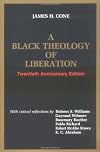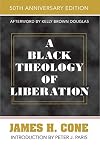
A Black Theology of Liberation
by James H. Cone
On This Page
Description
"The classic text in black theology, with a new foreword by Peter J. Paris and a new afterword by Kelly Brown Douglas"--Tags
Recommendations










Member Reviews
A black theology composed in 1970 in light of what the civil rights movement had and had not yet accomplished and in conversation with Continental theology.
The emphasis of said theology is liberation. The author understands everything in the Gospel and theology in terms of God's liberation of oppressed people. He understands the plight of the oppressed in terms of the Black experience. To this end he speaks of God as Black, Jesus as Black, and the people of God as having the Black experience.
One is supposed to strenuously make plain that one does not fully agree with Cone's theology. But Cone expects as much, especially from anyone of a European background. He would find such people too entrenched in their oppressor status to be able show more to fully understand or agree. In a later introduction he confesses his previous ignorance of the plight of other oppressed persons in different parts of the world and the need for their liberation.
So even Cone understands his work in a very specific context, and this is also borne out by his conversation with mid-century German Continental theology. It would have been interesting to see Cone engage with more of the "3rd wave" of Jesus studies, but his conversation with the theology of the day is still compelling.
So of course one will not entirely agree with Cone. But you should read him and grapple with what he is saying. You need to let him challenge you and cause great discomfort. Sure, attempting to dismiss parts of Scripture which do not align with the liberation project goes beyond what is seemly, but how many times have we suppressed the strong emphasis on liberation in Scripture? And so on with all of what Cone is doing.
Recommended for consideration. show less
The emphasis of said theology is liberation. The author understands everything in the Gospel and theology in terms of God's liberation of oppressed people. He understands the plight of the oppressed in terms of the Black experience. To this end he speaks of God as Black, Jesus as Black, and the people of God as having the Black experience.
One is supposed to strenuously make plain that one does not fully agree with Cone's theology. But Cone expects as much, especially from anyone of a European background. He would find such people too entrenched in their oppressor status to be able show more to fully understand or agree. In a later introduction he confesses his previous ignorance of the plight of other oppressed persons in different parts of the world and the need for their liberation.
So even Cone understands his work in a very specific context, and this is also borne out by his conversation with mid-century German Continental theology. It would have been interesting to see Cone engage with more of the "3rd wave" of Jesus studies, but his conversation with the theology of the day is still compelling.
So of course one will not entirely agree with Cone. But you should read him and grapple with what he is saying. You need to let him challenge you and cause great discomfort. Sure, attempting to dismiss parts of Scripture which do not align with the liberation project goes beyond what is seemly, but how many times have we suppressed the strong emphasis on liberation in Scripture? And so on with all of what Cone is doing.
Recommended for consideration. show less
This book has achieved the status of a classic. Cone clearly shows the need for a Black theology of liberation, and then with equal clarity he outlines what such a theology would look like. He is an excellent writer (unlike so many academic theologians who seem to think that theology requires turgid and unreadable prose); he writes clearly and concisely, with no wasted words.
In addition to providing a clear outline of a Black theology of liberation, this book can also serve as an excellent brief introduction to systematic theology. Following the introductory chapters, there are chapters outlining specific areas of theology (eschatology, etc.).
The book does appear dated in many respects today. This book has received serious criticism show more from feminist theologians, and rightly so; Cone responded to this criticism in some of his later writing, but today's readers will notice that Cone simply was not aware that women might have different experiences than do men. Cone wrote this book before North Americans had much access to Latin American liberation theology, and the U.S.-centric point of view can be problematic in an exposition of a systematic theology. Anyone who has been exposed to the theory of intersectionality will find other, similar, weaknesses.
Yet in spite of its weaknesses, "A Black Theology of Liberation" is more than just a period piece. It is still an excellent introduction to systematic theology. It is still a model of clear theological writing. It is still an exciting, and galvanizing, call to action. show less
In addition to providing a clear outline of a Black theology of liberation, this book can also serve as an excellent brief introduction to systematic theology. Following the introductory chapters, there are chapters outlining specific areas of theology (eschatology, etc.).
The book does appear dated in many respects today. This book has received serious criticism show more from feminist theologians, and rightly so; Cone responded to this criticism in some of his later writing, but today's readers will notice that Cone simply was not aware that women might have different experiences than do men. Cone wrote this book before North Americans had much access to Latin American liberation theology, and the U.S.-centric point of view can be problematic in an exposition of a systematic theology. Anyone who has been exposed to the theory of intersectionality will find other, similar, weaknesses.
Yet in spite of its weaknesses, "A Black Theology of Liberation" is more than just a period piece. It is still an excellent introduction to systematic theology. It is still a model of clear theological writing. It is still an exciting, and galvanizing, call to action. show less
Challenging. Worth reading. One of those books that you don't agree with everything, but learned something important.
This book is probably the most radical of all Cone's works.
Ratings
Members
- Recently Added By
Author Information

22+ Works 3,886 Members
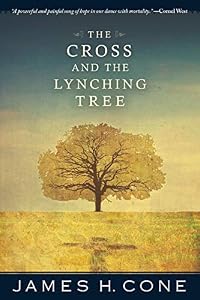
James Hal Cone was born in Fordyce, Arkansas on August 5, 1938. He received a bachelor of divinity degree from Garrett Theological Seminary and a master's degree and a Ph.D. from Northwestern University. He became a central figure in the development of black liberation theology in the 1960s and 1970s. He spoke about racial inequalities that show more persisted in the form of economic injustice, mass incarceration, and police shootings. He joined the faculty of Union Theological Seminary in 1969 and was appointed to the distinguished Charles A. Biggs chair of systematic theology in 1977. He wrote several books including Black Theology and Black Power, A Black Theology of Liberation, Crosscurrents, and The Cross and the Lynching Tree, which received the Grawemeyer Award in Religion in 2018. He died on April 28, 2018 at the age of 79. (Bowker Author Biography) show less
Series
Belongs to Publisher Series
Common Knowledge
- Canonical title
- A Black Theology of Liberation
- Original publication date
- 1970
Classifications
Statistics
- Members
- 664
- Popularity
- 43,158
- Reviews
- 4
- Rating
- (3.87)
- Languages
- English, Italian
- Media
- Paper, Ebook
- ISBNs
- 9
- ASINs
- 9