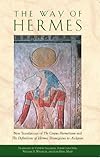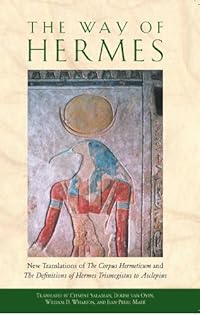
The Way of Hermes: New Translations of The Corpus Hermeticum and The Definitions of Hermes Trismegistus to Asclepius
by Clement Salaman, Hermes Trismegistus
On This Page
Description
Paperback edition of the recent translation of the esoteric masterpiece, including the first English translation of The Definitions of Hermes Trismegistus to Asclepius * A resource for scholars and religious seekers alike * The Definitions of Hermes Trismegistus to Asclepius provides new insights into the actual workings of the gnostic spiritual path The Corpus Hermeticum, a powerful fusion of Greek and Egyptian thought, is one of the cornerstones of the Western esoteric tradition. A show more collection of short philosophical treatises, it was written in Greek between the first and third centuries C.E. and translated into Latin during the Renaissance by the great scholar and philosopher Marsilio Ficino. These treatises were central to the spiritual work of hermetic societies in Late Antique Alexandria (200-700 C.E.) and aimed to awaken gnosis, the direct realization of the unity of the individual and the Supreme. In addition to this new translation of The Corpus Hermeticum, which seeks to reflect the inspirational intent of the original, The Way of Hermes includes the first English translation of the recently rediscovered manuscript of The Definitions of Hermes Trismegistus to Asclepius, a collection of aphorisms used by the hermetic student to strengthen the mind during meditation. With the proper mental orientation, a state of pure perception can be achieved in which the true face of God appears. This document is of enormous value to the contemporary student of gnostic studies for its insights into the actual workings of this spiritual path. show lessTags
Recommendations








Member Reviews
Read enough to discover that this so-called root of the "Western esoteric tradition" is basically a Gnostic gospel = this book has nothing to do with either Greek or Egyptian religions, and simply regurgitates and rehashes bits and pieces of the New Testament with some Neo-Platonism and calls it magic. Useful for historical context only.
I was expecting the Corpus Hermeticum to be more ethereal and focused on The All and collective consciousness. Maybe it was the translation, but this seemed very much to me to be early Christian teachings hidden under a thin veil of esoteric thought. I did appreciate the newly translated Definitions of Hermes Trismegistus to Asclepius though. It was a great collection of thoughts and observations.
WAYS OP HERMES
A SURVEY OF THE EXHIBITIONS IN FLORENCE ЛND VENICE
Now IN AMSTERDAM
In recent years the Bibliotheca Philosophica Hermetica mounted two
major exhibitions in Italy, in Florence (1999), and in Venice (2002). By
returning to the cradle of the Renaissance and searching for the presence
of Hermes in that period, a clearer picture has emerged of the development
of Hermetic philosophy through the centuries. The exhibitions
were organized in collaboration with two renowned libraries founded in
the Renaissance: the Biblioteca Medicea Laurenziana in Florence and the
Biblioteca Marciana in Venice. In all, more than 75,00o visitors to the two
exhibitions were able to take part in a journey through the history of th
Hermetica by seeing the show more sources, often unique manuscripts deriving from
one of the three libraries, in their historical context, thereby witnessing
the birth moment of the Corpus Hermeticum in the Renaissance.
The books and manuscripts in the present exhibition Ways of Hermes in
Amsterdam are a selection from a wealth of texts which were on show
the Biblioteca Laurenziana in Florence and in the Biblioteca Marciana in
Venice. These two libraries hold treasures such as the (incomplete) Greek
Corpus Hermeticum manuscript used by Ficino for his Latin translation
and also - not very well known - another Greek manuscript of this text,
complete this time, which had been purchased by Cardinal Bessariorn
some years before. All manuscripts and printed works testify to the con
tinuity of a Hermetic tradition which at various moments in time, before
and after Ficino, achieved a direct recognition: from the so-called
'Renaissance of the 12th century' to the Enlightenment, from Alanus de
Insulis to Paracelsus and the 'Gold- und Rosenkreuzer. The results achie
ved by the compiler of the original exhibitions, Carlos Gilly, are an
important step forward in the research initiated by pioneers like Paul
Oskar Kristeller and Frances Yates
The present exhibition and accompanying brief guide offer a first... show less
A SURVEY OF THE EXHIBITIONS IN FLORENCE ЛND VENICE
Now IN AMSTERDAM
In recent years the Bibliotheca Philosophica Hermetica mounted two
major exhibitions in Italy, in Florence (1999), and in Venice (2002). By
returning to the cradle of the Renaissance and searching for the presence
of Hermes in that period, a clearer picture has emerged of the development
of Hermetic philosophy through the centuries. The exhibitions
were organized in collaboration with two renowned libraries founded in
the Renaissance: the Biblioteca Medicea Laurenziana in Florence and the
Biblioteca Marciana in Venice. In all, more than 75,00o visitors to the two
exhibitions were able to take part in a journey through the history of th
Hermetica by seeing the show more sources, often unique manuscripts deriving from
one of the three libraries, in their historical context, thereby witnessing
the birth moment of the Corpus Hermeticum in the Renaissance.
The books and manuscripts in the present exhibition Ways of Hermes in
Amsterdam are a selection from a wealth of texts which were on show
the Biblioteca Laurenziana in Florence and in the Biblioteca Marciana in
Venice. These two libraries hold treasures such as the (incomplete) Greek
Corpus Hermeticum manuscript used by Ficino for his Latin translation
and also - not very well known - another Greek manuscript of this text,
complete this time, which had been purchased by Cardinal Bessariorn
some years before. All manuscripts and printed works testify to the con
tinuity of a Hermetic tradition which at various moments in time, before
and after Ficino, achieved a direct recognition: from the so-called
'Renaissance of the 12th century' to the Enlightenment, from Alanus de
Insulis to Paracelsus and the 'Gold- und Rosenkreuzer. The results achie
ved by the compiler of the original exhibitions, Carlos Gilly, are an
important step forward in the research initiated by pioneers like Paul
Oskar Kristeller and Frances Yates
The present exhibition and accompanying brief guide offer a first... show less
Apr 6, 2018Spanish
Ratings
Members
- Recently Added By
Lists

Books Recommended by ESOTERICA Youtube Channel (Dr Justin Sledge)
29 works; 1 member

The ESOTERICA Library by Dr. Justin Sledge (Foundational Primary Texts)
18 works; 1 member

The ESOTERICA Library by Dr. Justin Sledge (Hermeticism)
6 works; 1 member
Author Information
3+ Works 364 Members

116 Works 2,144 Members
Classifications
Statistics
- Members
- 263
- Popularity
- 122,427
- Reviews
- 4
- Rating
- (3.89)
- Languages
- English
- Media
- Paper
- ISBNs
- 4