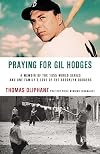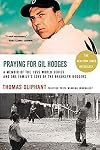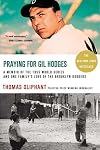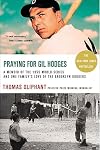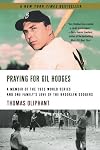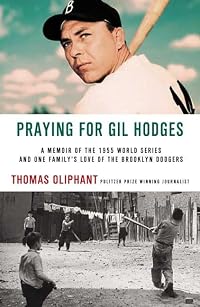
Praying for Gil Hodges: A Memoir of the 1955 World Series and One Family's Love of the Brooklyn Dodgers
by Thomas Oliphant
On This Page
Description
Thomas Oliphant's Praying for Gil Hodges is a brilliant work capturing the majesty of baseball, the issue of race in America, and the love that one young boy, his parents, and the borough of Brooklyn had for their team. On a steamy hot Sunday, the Reverend Herbert Redmond was celebrating Mass at a church in Brooklyn, when he startled his congregation thus: "It's far too hot for a sermon. Keep the Commandments and say a prayer for Gil Hodges."Praying for Gil Hodges is built around a detailed show more reconstruction of the seventh game of the 1955 World Series, which has always been on the short list of great moments in baseball history. On a sunny, breezy October afternoon, something happened in New York City that had never happened before and never would again: the Brooklyn Dodgers won the world championship of baseball. For one hour and forty-four minutes, behind a gutsy, twenty-three-year-old kid left-hander from the iron-mining region of upstate New York named Johnny Podres, everything that had gone wrong before went gloriously right for a change. Until that afternoon, leaving out the war years, the Dodgers and their legions of fans had endured ten seasons during which they lost the World Series to the New York Yankees five times and lost the National League pennant on the final day of the season three times--facts of history that give the famous cry of "Wait Till Next Year!" its defiant meaning.Pitch by pitch and inning by inning, Thomas Oliphant re-creates a relentless melodrama that shows this final game in its true glory. As we move through the game, he builds a remarkable history of the hapless "Bums," exploring the Dodgers' status as a national team, based on their fabled history of near-triumphs and disasters that made them classic underdogs. He weaves into this brilliant recounting a winning memoir of his own family's story and their time together on that fateful day that the final game was played.This victory thrilled the national African-American community, still mired in the evils of segregation, who had erupted in joy at the arrival of Jackie Robinson eight years earlier and rooted unabashedly for this integrated team at a time when the country was thoroughly segregated.And it also thrilled a nine-year-old boy on the East Side of Manhattan in a loving, struggling family for whom the Dodgers were a rare source of the joys and symbols that bring families together through tough times. show lessTags
Recommendations






















Member Reviews
A lifelong Dodger fan, I certainly enjoyed the detailed recreation of the Dodger's only title in Brooklyn but that is only the surface of Oliphant's look at his childhood. The continually thwarted aspirations of the Dodgers mirrored his loving parent's struggles with financial and health problems while steeping their only child in the unique art and culture of a condensed and thriving Brooklyn post WW II. The Dodger's victory acts as a kind of familial crescendo of bonding, love and the understanding that some moments crystalize perfectly who we are, what we want and just what we need to hold onto.
Thomas Oliphant’s Praying for Gil Hodges is his very personal account of the 1955 Brooklyn Dodgers and, in particular, of Game 7 of that year’s World Series in which the Dodgers finally beat the hated New York Yankees to become baseball world champions. But this book is about much more than baseball; it is about how a child can form a bond with a sports team that will last him a lifetime and how a team can often bring whole families closer together by giving them a common love upon which to focus their energies for half a year at a time. And if that team is an underdog, and if it finally wins the big one after years of coming close, there is nothing sweeter on the face of the earth, something that all baseball fans understand deep show more in their hearts.
The Brooklyn Dodgers of the 1950s were unique to baseball in the sense that, in addition to breaking the color barrier by adding Jackie Robinson to their infield in 1947, they went on to become baseball’s first truly integrated team by adding additional minority players on a regular basis. By 1955 Robinson had been joined by Roy Campanella, Sandy Amoros, Jim Gilliam and Don Newcombe, all major contributors to the Dodger’s success on the field. Interestingly enough, these players were part of the team that finally beat the more conservative New York Yankees to bring the championship to Brooklyn.
Thomas Oliphant, son of a World War II veteran who found it difficult to work because of the illnesses he suffered as a result of his service years, was an only child whose mother worked as a legal secretary to support the family. His parents were originally from the Midwest, home of several of the Dodger players, so it was natural that they would become Dodgers fans. Oliphant’s early childhood was spent in the years in which the Dodgers were repeatedly beaten by the Yankees just when it seemed that they might finally win a Series. It happened to them in 1949, 1952, and 1953, and most Brooklyn fans had grown so used to losing the big game to the Yankees by 1955 that very few of them were ready to believe that they had any kind of chance of winning the best-of-seven series that year, even nine-year old Thomas.
Baseball fans, especially those who live and die with their teams each day for six months of the year, will see themselves clearly in the scenes described by Oliphant as he and his father watch the Dodgers shut out the Yankees 2-0 in game seven on a little black and white television set. They will recognize the nerve-wracking anguish of watching the other team put runners on base with no one out and their heavy hitters coming up. They will understand how difficult it is to forget that feeling of impending doom even when their team has a small lead going into the late innings. And they will certainly understand the agony of watching their team maintain that lead when it comes time to count the remaining outs they need to get on just two hands.
Oliphant has written a book about a team’s relationship to its fans and to its city and neighborhood. The book is not perfect by any means. Even avid baseball fans are likely to grow weary of some of the game-by-game detail that Oliphant includes in his section on the World Series leading up to the 1955 season, for instance. But those same readers will be so much in sync with Oliphant, his parents and everyone who celebrated on the streets of Brooklyn after the final out was finally collected that day that they will remember this book for a long time.
Rated at: 4.0 show less
The Brooklyn Dodgers of the 1950s were unique to baseball in the sense that, in addition to breaking the color barrier by adding Jackie Robinson to their infield in 1947, they went on to become baseball’s first truly integrated team by adding additional minority players on a regular basis. By 1955 Robinson had been joined by Roy Campanella, Sandy Amoros, Jim Gilliam and Don Newcombe, all major contributors to the Dodger’s success on the field. Interestingly enough, these players were part of the team that finally beat the more conservative New York Yankees to bring the championship to Brooklyn.
Thomas Oliphant, son of a World War II veteran who found it difficult to work because of the illnesses he suffered as a result of his service years, was an only child whose mother worked as a legal secretary to support the family. His parents were originally from the Midwest, home of several of the Dodger players, so it was natural that they would become Dodgers fans. Oliphant’s early childhood was spent in the years in which the Dodgers were repeatedly beaten by the Yankees just when it seemed that they might finally win a Series. It happened to them in 1949, 1952, and 1953, and most Brooklyn fans had grown so used to losing the big game to the Yankees by 1955 that very few of them were ready to believe that they had any kind of chance of winning the best-of-seven series that year, even nine-year old Thomas.
Baseball fans, especially those who live and die with their teams each day for six months of the year, will see themselves clearly in the scenes described by Oliphant as he and his father watch the Dodgers shut out the Yankees 2-0 in game seven on a little black and white television set. They will recognize the nerve-wracking anguish of watching the other team put runners on base with no one out and their heavy hitters coming up. They will understand how difficult it is to forget that feeling of impending doom even when their team has a small lead going into the late innings. And they will certainly understand the agony of watching their team maintain that lead when it comes time to count the remaining outs they need to get on just two hands.
Oliphant has written a book about a team’s relationship to its fans and to its city and neighborhood. The book is not perfect by any means. Even avid baseball fans are likely to grow weary of some of the game-by-game detail that Oliphant includes in his section on the World Series leading up to the 1955 season, for instance. But those same readers will be so much in sync with Oliphant, his parents and everyone who celebrated on the streets of Brooklyn after the final out was finally collected that day that they will remember this book for a long time.
Rated at: 4.0 show less
Ron Kaplan's review, along with an interview with the author, appeared on Bookreporter.com
Interview: http://www.bookreporter.com/authors/au-oliphant-thomas.asp
Review: http://www.bookreporter.com/features/051021-baseball.asp
Interview: http://www.bookreporter.com/authors/au-oliphant-thomas.asp
Review: http://www.bookreporter.com/features/051021-baseball.asp
Ratings
Members
- Recently Added By
Author Information

4 Works 452 Members
Thomas Oliphant is the author of The New York Times bestselling book Praying for Gil Hodges and he lives in Washington, D.C., with his wife, CBS correspondent Susan Spencer
Awards and Honors
Distinctions
Common Knowledge
- Original publication date
- 2005
- People/Characters
- Brooklyn Dodgers
- Important places
- New York, New York, USA
Classifications
- Genres
- Sports and Leisure, Nonfiction, Biography & Memoir, General Nonfiction, History
- DDC/MDS
- 796.357 — Arts & recreation Recreation, sports, and performing arts Sports Ball sports Ball and stick sports Baseball
- LCC
- GV875 .B7 .O55 — Geography, Anthropology and Recreation Recreation. Leisure Recreation. Leisure Sports Ball games: Baseball, football, golf, etc.
- BISAC
Statistics
- Members
- 131
- Popularity
- 244,898
- Reviews
- 4
- Rating
- (3.66)
- Languages
- English
- Media
- Paper, Ebook
- ISBNs
- 3
- ASINs
- 3