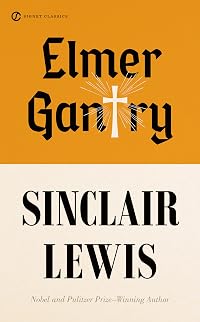
Elmer Gantry
by Sinclair Lewis
On This Page
Description
Elmer Gantry is the portrait of a silver-tongued evangelist who rises to power within his church, yet lives a life of hypocrisy, sensuality, and ruthless self-indulgence. The title character starts out as a greedy, shallow, philandering Baptist minister, turns to evangelism, and eventually becomes the leader of a large Methodist congregation. Throughout the novel, Gantry encounters fellow religious hypocrites. Although often exposed as a fraud, Gantry is never fully discredited. Elmer Gantry show more is considered a landmark in American literature and one of the most penetrating studies of hypocrisy in modern literature. The novel also represents the evangelistic activity of America in the 1920s and people's attitudes toward it. show lessTags
Recommendations



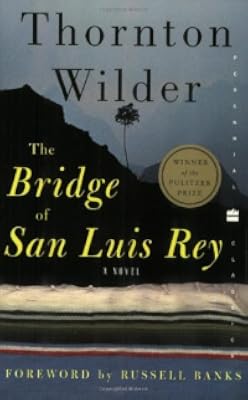


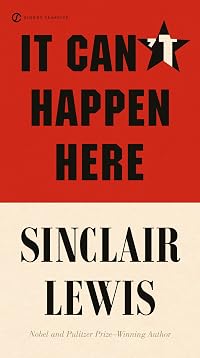


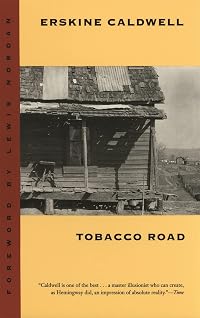
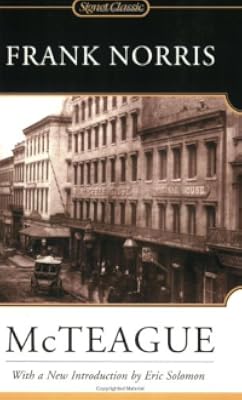

















Member Recommendations
Member Reviews
What makes this such a fascinating story is that, in spite of how villainous Elmer Gantry is (I'm assuming I didn't need to put "spoiler alert" before that, you were already aware of that, weren't you?), he doesn't know it; he feels he has no choice in the things he does, he can justify any action, and he truly believes he will turn over a new leaf. It would be easy to misunderstand how Elmer reacts, thinking he lets life lead him along like a Camus character. But Elmer, after letting life set him on the original path, takes control and drives the decisions that are made.
The story starts with Elmer's college years where he is compelled to come to Christ. Normally, when speaking of the power of Christ compelling someone, it would be the show more power of the Holy Spirit. However, it is the people in Elmer's life that compel him (which he admits, then backs away from.) It is then that he learns he has a gift for giving powerful speeches. With that revelation, he begins to take control of his life, paying less and less attention to what others say and paying more attention to getting whatever it is he wants. He builds his power through the ministry, while continuing to display the more base attributes of human kind.
One of the more depressing aspects of this story is how relevant it is to today's situations. Suffice to say that condemnation for sin, back room deals and payoffs, blackmail, and mindless stoicism are not a brand new product of today's world.
The reader expects a comeuppance. But, after a while, you know it isn't going to happen. It is like the cliché of watching a train run headlong to a disaster. And with each dangerous curve, disaster seems more likely. And yet, for Elmer, the train never crashes, and he careens forward reaping undeserved success after undeserved success. Even at the end of the book, (to continue this belabored analogy) the brakeman let's go and more fire is fed into the boiler, with Elmer smiling at the handle. show less
The story starts with Elmer's college years where he is compelled to come to Christ. Normally, when speaking of the power of Christ compelling someone, it would be the show more power of the Holy Spirit. However, it is the people in Elmer's life that compel him (which he admits, then backs away from.) It is then that he learns he has a gift for giving powerful speeches. With that revelation, he begins to take control of his life, paying less and less attention to what others say and paying more attention to getting whatever it is he wants. He builds his power through the ministry, while continuing to display the more base attributes of human kind.
One of the more depressing aspects of this story is how relevant it is to today's situations. Suffice to say that condemnation for sin, back room deals and payoffs, blackmail, and mindless stoicism are not a brand new product of today's world.
The reader expects a comeuppance. But, after a while, you know it isn't going to happen. It is like the cliché of watching a train run headlong to a disaster. And with each dangerous curve, disaster seems more likely. And yet, for Elmer, the train never crashes, and he careens forward reaping undeserved success after undeserved success. Even at the end of the book, (to continue this belabored analogy) the brakeman let's go and more fire is fed into the boiler, with Elmer smiling at the handle. show less
Some of today's readers might find this book a little wordy, much as Dickens seems in this day and age of tighter, faster prose. And I did have a few moments where I wanted to say, "Move along." However, I found it well worth the time spent.
Unlike (apparently) so many other readers, I didn't find his scathing view of hypocrisy in religion unreadable. Quite the opposite. Further, while a charlatan preacher is the vehicle taking us on the journey, it's also contemptuous of pharisaical politics and ethic-less capitalism. Not to mention, of course, of the repudiation of science (the book was written in the wake of the Scopes trial).
Despite the fact that we are merely a couple of years away from a century on this book, we have only to show more sample headlines about religious leaders and politicians and corporate elite to see Elmer Gantry all around us. I would say that Sinclair Lewis was a prophet, except that it wasn't prophecy ... it was simply observing what was true then and has not changed since. show less
Unlike (apparently) so many other readers, I didn't find his scathing view of hypocrisy in religion unreadable. Quite the opposite. Further, while a charlatan preacher is the vehicle taking us on the journey, it's also contemptuous of pharisaical politics and ethic-less capitalism. Not to mention, of course, of the repudiation of science (the book was written in the wake of the Scopes trial).
Despite the fact that we are merely a couple of years away from a century on this book, we have only to show more sample headlines about religious leaders and politicians and corporate elite to see Elmer Gantry all around us. I would say that Sinclair Lewis was a prophet, except that it wasn't prophecy ... it was simply observing what was true then and has not changed since. show less
With evangelicals attempting a hold on political power in the name of morality, this book is as relevant today as it was when it was first penned around 100 years ago. Personally, I’m a devout Christian and coordinate a Sunday School class. I’m also a lover of truth and, like Sinclair Lewis, find the evangelical movement’s unwillingness to accept uncomfortable truths troublesome. This book scandalized the American public in 1927, and its study of humans’ religious nature can transform our world today. It needs to be reread and rediscussed.
Elmer Gantry is an up-and-coming pastor amidst the fundamentalist-liberal split in American religion in the early 1900s. He struggles with his call and even works in business for a time. Yet he show more possesses all the bells and whistles of eloquence and charisma to make himself a success.
All is not well, however. His naked ambition is revolting. He’s less concerned with Christian spirituality than the self-interest of being on top. In his preaching, he uses the whipping boy of vice to curry favor with the masses and rich donors. Further, let’s just say he has troubles keeping his pants zipped with attractive female parishioners. Lewis takes these traits, commonly still seen among the pastoral crowd, and spins off a social commentary as crystal clear and close to the bone as any before seen.
Most admirably, this critique does not contain pure cynicism towards religion. It contains well-constructed observations about liberal Christianity and about true Christianity. As we’d say today, Lewis was not interested in merely fanning the flames of the culture wars; rather, he paints a laudable (and dare I say, historical and Biblical) portrayal of Christianity’s role in maintaining the social fabric, particularly by helping those marginalized.
It doesn’t take a PhD in English literature to make the leap that these forces still operate in American evangelicalism and politics today. Skin-deep religious figures still live hypocritical lives. Self-interested leaders still take advantage of a well-meaning laity’s faith steeped in ignorance. Lewis won Nobel and Pulitzer Prizes in his day because of his words’ power. He deserves to be heard afresh today. True religion and a noble democracy depend on it. show less
Elmer Gantry is an up-and-coming pastor amidst the fundamentalist-liberal split in American religion in the early 1900s. He struggles with his call and even works in business for a time. Yet he show more possesses all the bells and whistles of eloquence and charisma to make himself a success.
All is not well, however. His naked ambition is revolting. He’s less concerned with Christian spirituality than the self-interest of being on top. In his preaching, he uses the whipping boy of vice to curry favor with the masses and rich donors. Further, let’s just say he has troubles keeping his pants zipped with attractive female parishioners. Lewis takes these traits, commonly still seen among the pastoral crowd, and spins off a social commentary as crystal clear and close to the bone as any before seen.
Most admirably, this critique does not contain pure cynicism towards religion. It contains well-constructed observations about liberal Christianity and about true Christianity. As we’d say today, Lewis was not interested in merely fanning the flames of the culture wars; rather, he paints a laudable (and dare I say, historical and Biblical) portrayal of Christianity’s role in maintaining the social fabric, particularly by helping those marginalized.
It doesn’t take a PhD in English literature to make the leap that these forces still operate in American evangelicalism and politics today. Skin-deep religious figures still live hypocritical lives. Self-interested leaders still take advantage of a well-meaning laity’s faith steeped in ignorance. Lewis won Nobel and Pulitzer Prizes in his day because of his words’ power. He deserves to be heard afresh today. True religion and a noble democracy depend on it. show less
BkC 56
Rating: 4.25* of five
The Book Description: Today universally recognized as a landmark in American literature, Elmer Gantry scandalized readers when it was first published, causing Sinclair Lewis to be "invited" to a jail cell in New Hampshire and to his own lynching in Virginia. His portrait of a golden-tongued evangelist who rises to power within his church - a saver of souls who lives a life of hypocrisy, sensuality, and ruthless self-indulgence - is also the record of a period, a reign of grotesque vulgarity, which but for Lewis would have left no record of itself. Elmer Gantry has been called the greatest, most vital, and most penetrating study of hypocrisy that has been written since Voltaire.
My Review: I grew up in a show more single-parent household. My mother was a pedophile, and I was her philed pedo. She was also the most thunderational kind of christian nutball, the most conservative kind of social fascist conformist, and a chilly, appearance-obsessed harpy. Unless you were a stranger, when she presented as a pious, charming, lovely woman.
So Elmer Gantry was, for me, a documentary not a novel. I read it at maybe fifteen or so, just after I read Babbitt, and was astounded to read my own experiences of the asshole religiosifiers who surrounded me in a book over fifty years old! I hated them, powerfully and corrosively, then as now, and there was for me a giant pouring of balm over my outraged soul as I read this book: These people aren't the first! These people didn't invent this idiocy! If Lewis escaped to tell about it, so can I!
The rise of Fox News and Rush Limbaugh and that ignorant ilk is not new, ladies and gents, it's happened before. This novel will show you that this kind of perverted conservative religious stupidity has always been with us, and its basic small-souled evil isn't unique to our times either.
Depending on my mood, that's either a comfort or a misery. But it always makes me feel less alone, less like I'm missing something and misinterpreting other things, to read this classic exposé of the long-standing culture of ignorant and evil exploitive "salvation artists." show less
Rating: 4.25* of five
The Book Description: Today universally recognized as a landmark in American literature, Elmer Gantry scandalized readers when it was first published, causing Sinclair Lewis to be "invited" to a jail cell in New Hampshire and to his own lynching in Virginia. His portrait of a golden-tongued evangelist who rises to power within his church - a saver of souls who lives a life of hypocrisy, sensuality, and ruthless self-indulgence - is also the record of a period, a reign of grotesque vulgarity, which but for Lewis would have left no record of itself. Elmer Gantry has been called the greatest, most vital, and most penetrating study of hypocrisy that has been written since Voltaire.
My Review: I grew up in a show more single-parent household. My mother was a pedophile, and I was her philed pedo. She was also the most thunderational kind of christian nutball, the most conservative kind of social fascist conformist, and a chilly, appearance-obsessed harpy. Unless you were a stranger, when she presented as a pious, charming, lovely woman.
So Elmer Gantry was, for me, a documentary not a novel. I read it at maybe fifteen or so, just after I read Babbitt, and was astounded to read my own experiences of the asshole religiosifiers who surrounded me in a book over fifty years old! I hated them, powerfully and corrosively, then as now, and there was for me a giant pouring of balm over my outraged soul as I read this book: These people aren't the first! These people didn't invent this idiocy! If Lewis escaped to tell about it, so can I!
The rise of Fox News and Rush Limbaugh and that ignorant ilk is not new, ladies and gents, it's happened before. This novel will show you that this kind of perverted conservative religious stupidity has always been with us, and its basic small-souled evil isn't unique to our times either.
Depending on my mood, that's either a comfort or a misery. But it always makes me feel less alone, less like I'm missing something and misinterpreting other things, to read this classic exposé of the long-standing culture of ignorant and evil exploitive "salvation artists." show less
I had expected that I would know the basics from having seen the movie but the book was completely different! Excellent satire about evangelical Christians, small town America & hypocrisy and the Anthony Heald narration was very good.
Elmer Gantry is a hypocrite but he doesn't even seem to realize it (or only dimly)! So many aspects of Elmer reminded me of Donald Trump that at times it was hard to continue (and made me hate the ending when despite having his hypocrisy revealed to the public, Elmer manages (with help) to bribe & threaten the witnesses and spin the press so that he ends up being the winner. -- great for satire but awful for the real world).
Elmer Gantry is a hypocrite but he doesn't even seem to realize it (or only dimly)! So many aspects of Elmer reminded me of Donald Trump that at times it was hard to continue (and made me hate the ending
Coming from a hyper-religious backround I was blown away when I read this book. Lewis nailed it! Hypocrisy, manipulation, hidden vices and abuses, it was all there. One of the things I was impressed with is how the stages of hypocrisy got worse as the story progressed. In the beginning they were somewhat harmless, almost comical, but wow, very nasty by the end. From reading the introduction I understand he was "invited" to a jail cell upon publication. That says alot and not about Lewis. Hats off for exposing what many would rather keep hidden.
Yes - horrifying and scabrously grotesque in all the expected ways, at times the broad force of Lewis's satire rubbing up against the limitations of his philosophical arguments (or are they his? It's never clear how seriously one is meant to take Frank Shallard, often a pitiable figure at sea in Gantry's world, but similarly blinkered in his intellectual development by a lack of sincere peers). A late-stage invocation of the KKK brings the themes of Gantry's college years back to the fore, where the only thing more valuable than education was educating the right attractive white men.
Unexpectedly also a chronicle of male adulthood and the struggles of reconciling one's own yearning for maturity with the demands of adult relationships. show more Disastrous and abhorrent as Gantry's behavior within his marriage to Cleo Benham may be, I close with this passage which was ickily familiar to me:
"It is possible that the presence of the elder Benhams, preventing too close a communion with Cleo, kept Elmer from understanding what it meant that he should not greatly have longed to embrace her. He translated his lack of urgency into virtue; and went about assuring himself that he was indeed a reformed and perfect character...and so went home and hung about the kitchen, chattering with little Jane Clark in pastoral jokiness.
Even when he was alone with Cleo, when she drove him in the proud Benham motor for calls in the country, even while he volubly telling himself how handsome she was, he was never quite natural with her." (p. 281) show less
Unexpectedly also a chronicle of male adulthood and the struggles of reconciling one's own yearning for maturity with the demands of adult relationships. show more Disastrous and abhorrent as Gantry's behavior within his marriage to Cleo Benham may be, I close with this passage which was ickily familiar to me:
"It is possible that the presence of the elder Benhams, preventing too close a communion with Cleo, kept Elmer from understanding what it meant that he should not greatly have longed to embrace her. He translated his lack of urgency into virtue; and went about assuring himself that he was indeed a reformed and perfect character...and so went home and hung about the kitchen, chattering with little Jane Clark in pastoral jokiness.
Even when he was alone with Cleo, when she drove him in the proud Benham motor for calls in the country, even while he volubly telling himself how handsome she was, he was never quite natural with her." (p. 281) show less
Members
- Recently Added By
Lists

The Guardian's 1000 Novels Everyone Must Read
1,005 works; 552 members

Great American Novels
158 works; 42 members

Novels from The Guardian's Great American Novelist Tournament
148 works; 24 members
In and About the 1920s
181 works; 31 members

Recommend the 20 best books you've read in the last five years
2,168 works; 609 members
20th Century Literature
1,161 works; 55 members

Favourite Books
1,820 works; 316 members
The American Experience
173 works; 18 members

Midwestern Books
17 works; 4 members

Favorite Sinclair Lewis Novels
10 works; 3 members

Best First Lines
133 works; 8 members

Best books read in the first half of 2012
38 works; 6 members
1920s
141 works; 6 members

5 Best 5 Years
71 works; 4 members

Best Books of 1926-1935
403 works; 10 members

Rory Gilmore Challenge 101-200
33 works; 1 member

Publisher's Weekly Bestsellers Part I - 1895-1939
399 works; 8 members

The Complete Rory Gilmore Reading List
506 works; 5 members

Fiction with Men's Given Names in the Title
302 works; 11 members
Best Satire
188 works; 28 members
Author Information

127+ Works 23,112 Members
Harry Sinclair Lewis was born on February 7, 1885 in Minnesota. He was an American novelist, short-story writer, and playwright. In 1930, he became the first writer from the United States to receive the Nobel Prize in Literature. A lonely child, Lewis immersed himself in reading and diary writing. While studying at Yale University and living in show more writer Upton Sinclair's communal house, he wrote for Yale Literary Magazine and helped to build the Panama Canal. After graduating from Yale in 1908, Lewis began writing fiction, publishing 22 novels by the end of his career. His early works, while often praised by literary critics, did not reach popularity but with Main Street (1920), Babbitt (1922), Arrowsmith (1925), Elmer Gantry (1927), and Dodsworth (1929), Sinclair Lewis achieved fame as a writer. His style of choice was satire; he explored American small-town life, conformity, hypocrisy, and materialism. Sinclair Lewis was married and divorced twice. As his career wound down, he spent his later life in Europe and died in Rome on January 10, 1951. (Bowker Author Biography) show less
Some Editions
Awards and Honors
Awards
Distinctions
Series
Belongs to Publisher Series
Work Relationships
Is contained in
Has the adaptation
Has as a commentary on the text
Has as a student's study guide
Common Knowledge
- Canonical title
- Elmer Gantry
- Original title
- Elmer Gantry
- Original publication date
- 1927
- People/Characters
- Elmer Gantry; Jim Lefferts; Sharon Falconer; Frank Shallard
- Important places
- Zenith, Winnemac; Terwillinger College; Gritzmacher Springs, Kansas, USA
- Related movies
- Elmer Gantry (1960 | IMDb)
- Dedication
- To
H. L. MENCKEN
with profound admiration - First words
- Elmer Gantry was drunk.
- Canonical DDC/MDS
- 813.52
- Canonical LCC
- PS3523.E94
Classifications
Statistics
- Members
- 1,716
- Popularity
- 12,986
- Reviews
- 50
- Rating
- (3.96)
- Languages
- 9 — Catalan, Czech, English, Finnish, French, German, Polish, Russian, Swedish
- Media
- Paper, Audiobook, Ebook
- ISBNs
- 48
- UPCs
- 1
- ASINs
- 68