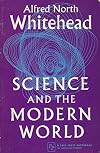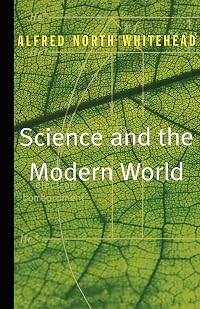
Science and the Modern World
by Alfred North Whitehead
On This Page
Description
Alfred North Whitehead's SCIENCE AND THE MODERN WORLD, originally published in 1925, redefines the concept of modern science. Presaging by more than half a century most of today's cutting-edge thought on the cultural ramifications of science and technology, Whitehead demands that readers understand and celebrate the contemporary, historical, and cultural context of scientific discovery. Taking readers through the history of modern science, Whitehead shows how cultural history has affected show more science over the ages in relation to such major intellectual themes as romanticism, relativity, quantum theory, religion, and movements for social progress. show lessTags
Recommendations




















Member Reviews
What did I just read? This guy is speaking from a totally different level (universe) than I can seem to find.
this edition (1948) not found
Ratings
Members
- Recently Added By
Lists


Filosofía - Clásicos
217 works; 1 member

1964 College Preparatory Reading List
202 works; 8 members

How to Read a Book's Recommended Reading List
309 works; 10 members

Books Referenced by Izetbegovic's Islam Between East and West
233 works; 2 members
Author Information

64+ Works 6,250 Members
Alfred North Whitehead, who began his career as a mathematician, ranks as the foremost philosopher in the twentieth century to construct a speculative system of philosophical cosmology. After his graduation from Cambridge University, he lectured there until 1910 on mathematics. Like Bertrand Russell (see also Vol. 5), his most brilliant pupil, show more Whitehead viewed philosophy at the start from the standpoint of mathematics, and, with Russell, he wrote Principia Mathematica (1910--13). This work established the derivation of mathematics from logical foundations and has transformed the philosophical discipline of logic. From his work on mathematics and its logical foundations, Whitehead proceeded to what has been regarded as the second phase of his career. In 1910 he left Cambridge for the University of London, where he lectured until he was appointed professor of applied mathematics at the Imperial College of Science and Technology. During his period in London, Whitehead produced works on the epistemological and metaphysical principles of science. The major works of this period are An Enquiry Concerning the Principles of Natural Knowledge (1919), The Concept of Nature (1920), and The Principles of Relativity (1922). In 1924, at age 63, Whitehead retired from his position at the Imperial College and accepted an appointment as professor of philosophy at Harvard University, where he began his most creative period in speculative philosophy. In Science and the Modern World (1925) he explored the history of the development of science, examining its foundations in categories of philosophical import, and remarked that with the revolutions in biology and physics in the nineteenth and early twentieth centuries a revision of these categories was in order. Whitehead unveiled his proposals for a new list of categories supporting a comprehensive philosophical cosmology in Process and Reality (1929), a work hailed as the greatest expression of process philosophy and theology. Adventures of Ideas (1933) is an essay in the philosophy of culture; it centers on what Whitehead considered the key ideas that have shaped Western culture. (Bowker Author Biography) show less
Series
Belongs to Publisher Series
Lowell Lectures (1925)
Filozofické odkazy (Pravda). Rad B: Súčasná nemarxistická filozofia (1989, 3303. publikácia)
Aula-boeken (19)
Common Knowledge
- Original publication date
- 1925
Classifications
Statistics
- Members
- 984
- Popularity
- 26,819
- Reviews
- 4
- Rating
- (3.66)
- Languages
- 8 — Dutch, English, French, German, Italian, Polish, Portuguese, Turkish
- Media
- Paper, Ebook
- ISBNs
- 28
- ASINs
- 45