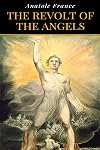
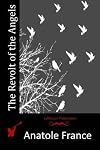
The Revolt of the Angels
by Anatole France
On This Page
Description
Books are missing from the archbishop's shelves and the librarian is helpless to explain until the culprit is revealed: Arcade, the clergyman's guardian angel, has been educating himself. Immersion in works of philosophy and science has convinced Arcade that God is a cruel tyrant. Revolution is the only answer, and Arcade joins a host of fallen angels to mount a rebellion that proposes to install Satan on the throne of heaven.This 1914 novel by Nobel laureate Anatole France offers a show more brilliant satire of war, government, and religion. Published on the eve of World War I, the fable voices an ever show lessTags
Recommendations





















Member Recommendations

elenchus Anatole France and James Branch Cabell broadly share a stylised prose and a winking social commentary, hidden in tales of adventure and whimsy. A place to start is France's The Revolt of the Angels and Cabell's The Silver Stallion, if you like either it's a good bet you'll enjoy further reading in their respective bibilographies.
Member Reviews
Wherein we shall see revealed a dark and secret mystery and learn how it comes about that empires are often hurled against empires, and ruin falls alike upon the victors and the vanquished; and the wise reader (if such there be -- which I doubt) will meditate upon this important utterance: "A war is a matter of business."
-- Epigraph to Chapter XXVII
France imagines a literal angelic resurrection as an opportunity to examine the revolutionary aspirations of the Parisian classes, and finds everyone --men & angels alike-- subject to all manner of distraction: bruising of egos, seduction and chicanery, imagined slights, delusions of grandeur. Behind the satire of Church and State there lies, perhaps, a Gnostic critique of theology and social show more change. Ialdabaoth is named as the pretender to the throne, against whom the angels revolt, yet ironically these angels themselves root their insurrection in gnosis (Arcade plunders books from the library of the human for whom he is guardian) and seem to have no greater claim to rule than this self-professed knowledge. I sense France places these allusions as commentary on the story, and not as any key to interpreting them.
//
I've long been curious about Anatole France, named more than once in connection with James Branch Cabell and leaving the impression perhaps Cabell was an admirer. That may be true: Cabell introduced the Modern Library edition of The Queen Pedauque (though I've not read it, perhaps he skewers author & text cruelly). I've since learned Cabell claimed not to have been familiar with France's work until after Cabell's own style was established, so while potentially still an admirer apparently Cabell was not inspired by France.
Without knowing how representative is The Revolt of the Angels of France's novels generally, I found it amusing in premise and pleasurably Cabellian in both structure and characterisation. There is much to like. show less
-- Epigraph to Chapter XXVII
France imagines a literal angelic resurrection as an opportunity to examine the revolutionary aspirations of the Parisian classes, and finds everyone --men & angels alike-- subject to all manner of distraction: bruising of egos, seduction and chicanery, imagined slights, delusions of grandeur. Behind the satire of Church and State there lies, perhaps, a Gnostic critique of theology and social show more change. Ialdabaoth is named as the pretender to the throne, against whom the angels revolt, yet ironically these angels themselves root their insurrection in gnosis (Arcade plunders books from the library of the human for whom he is guardian) and seem to have no greater claim to rule than this self-professed knowledge. I sense France places these allusions as commentary on the story, and not as any key to interpreting them.
//
I've long been curious about Anatole France, named more than once in connection with James Branch Cabell and leaving the impression perhaps Cabell was an admirer. That may be true: Cabell introduced the Modern Library edition of The Queen Pedauque (though I've not read it, perhaps he skewers author & text cruelly). I've since learned Cabell claimed not to have been familiar with France's work until after Cabell's own style was established, so while potentially still an admirer apparently Cabell was not inspired by France.
Without knowing how representative is The Revolt of the Angels of France's novels generally, I found it amusing in premise and pleasurably Cabellian in both structure and characterisation. There is much to like. show less
Perhaps only an author whose literary reputation was firmly established could have published this novel in 1914. It has elements of science fiction, certainly of fantasy, yet is a satire on war, government and religion; and places the reader firmly in Paris, at a time when the city was braced for war. It is a delight to read with a writing style that looks back towards "le fin de siècle" rather than forwards to 20th century modernism.
The disparate elements which make up this novel hold together reasonably well, because the reader never loses the charm with which it is written. It starts off as a mystery with books disappearing from the wealthy family d'Esparvieu's private library. Poor Sariette the family librarian cannot explain the show more weird things going on in the library, books displaced, thrown around, found outside the library and worst of all randomly desecrated. Arcade is soon revealed as the culprit; an angel who materialises in front of Maurice d'Esparvieu and is using the library to gain an education. There is no call for an education in heaven and with the help of his reading Arcade is planning a revolution that will dethrone God and replace him with Lucifer. Arcade however is Maurice's guardian angel, but he cannot lead a revolution and keep his day job as a guardian to Maurice, and there is a further complication as angels are notoriously liable to desire mortal women and he wants Maurice's mistress; Madame des Aubels.
There is a group of characters around the art forger Guinardon that become closely linked with other fallen angels and Maurice enters their world in pursuit of Arcade, but these tales of life and loves in Paris are a backdrop to the coming revolution in heaven. We learn that God is in fact Ialdabaoth a minor demiurge who has gained control of heaven through his lies and deceitful ways. He is a narrow minded tyrant, only one of many who operate in our galaxy, he has based his power on the fable of Christianity, which Anatole France says, could influence those feeble intellects that are to be found everywhere in great masses and enjoy the idea of suffering in this world to gain an advantage in the next. Anatole France then launches the reader on an alternative version of a history of creation and the domination of man in our world, before dropping back to the fallen angels and their dealings with the local Parisians in present times. On the way through all of this there is plenty of opportunity for satire and some choice remarks:
Max Everdirgen is a fallen angel who has become a financier who encourages war because of course it is good for business. Ialdabaoth (God) has little general culture but is a soldier - to the marrow of his bones, The organisation of paradise is a thoroughly military operation, it is founded on hierarchy and discipline. Passive obedience is imposed there as a fundamental law. The fallen angels are lectured on the advantages of modern warfare where numbers of men are all important and the fact that promotion in the military is based on time served rather than brilliant generalship. The heading to chapter XXVII starts with a typical summary by the author:
wherein we shall see revealed a dark and secret mystery and learn how it comes about, that empires are often hurled against empires, and ruin falls alike upon the victors and the vanquished; and the wise reader (if such there be - which I doubt) will meditate on the important utterance "a war is a matter of business"
The lives of the Parisians on the ground and the final battle in heaven provide a climax to the book. There are lessons to be learned and Anatole France's wry views on the human condition permeate throughout his fantastical story.
Just so as the reader is in no doubt that this is a French novel written by a Frenchman Anatole reminds us that:
French cooking is the best in the world. It is a glory that will transcend all others when humanity has grown wise enough to put the spit before the sword
Just as H G Wells' story of a fallen angel [The Wonderful Visit] published 20 years earlier gave a parochial feeling of Southern England Anatole Frances' book gives us Paris, but a city nervous about a war coming ever closer. Frances' book is of a grander scale but the angels are curiously similar to Wells' angel, We might want them to be friends and guardians, but we might need to keep them away from our partners. A thoroughly enjoyable read which I rate at 4 stars. show less
The disparate elements which make up this novel hold together reasonably well, because the reader never loses the charm with which it is written. It starts off as a mystery with books disappearing from the wealthy family d'Esparvieu's private library. Poor Sariette the family librarian cannot explain the show more weird things going on in the library, books displaced, thrown around, found outside the library and worst of all randomly desecrated. Arcade is soon revealed as the culprit; an angel who materialises in front of Maurice d'Esparvieu and is using the library to gain an education. There is no call for an education in heaven and with the help of his reading Arcade is planning a revolution that will dethrone God and replace him with Lucifer. Arcade however is Maurice's guardian angel, but he cannot lead a revolution and keep his day job as a guardian to Maurice, and there is a further complication as angels are notoriously liable to desire mortal women and he wants Maurice's mistress; Madame des Aubels.
There is a group of characters around the art forger Guinardon that become closely linked with other fallen angels and Maurice enters their world in pursuit of Arcade, but these tales of life and loves in Paris are a backdrop to the coming revolution in heaven. We learn that God is in fact Ialdabaoth a minor demiurge who has gained control of heaven through his lies and deceitful ways. He is a narrow minded tyrant, only one of many who operate in our galaxy, he has based his power on the fable of Christianity, which Anatole France says, could influence those feeble intellects that are to be found everywhere in great masses and enjoy the idea of suffering in this world to gain an advantage in the next. Anatole France then launches the reader on an alternative version of a history of creation and the domination of man in our world, before dropping back to the fallen angels and their dealings with the local Parisians in present times. On the way through all of this there is plenty of opportunity for satire and some choice remarks:
Max Everdirgen is a fallen angel who has become a financier who encourages war because of course it is good for business. Ialdabaoth (God) has little general culture but is a soldier - to the marrow of his bones, The organisation of paradise is a thoroughly military operation, it is founded on hierarchy and discipline. Passive obedience is imposed there as a fundamental law. The fallen angels are lectured on the advantages of modern warfare where numbers of men are all important and the fact that promotion in the military is based on time served rather than brilliant generalship. The heading to chapter XXVII starts with a typical summary by the author:
wherein we shall see revealed a dark and secret mystery and learn how it comes about, that empires are often hurled against empires, and ruin falls alike upon the victors and the vanquished; and the wise reader (if such there be - which I doubt) will meditate on the important utterance "a war is a matter of business"
The lives of the Parisians on the ground and the final battle in heaven provide a climax to the book. There are lessons to be learned and Anatole France's wry views on the human condition permeate throughout his fantastical story.
Just so as the reader is in no doubt that this is a French novel written by a Frenchman Anatole reminds us that:
French cooking is the best in the world. It is a glory that will transcend all others when humanity has grown wise enough to put the spit before the sword
Just as H G Wells' story of a fallen angel [The Wonderful Visit] published 20 years earlier gave a parochial feeling of Southern England Anatole Frances' book gives us Paris, but a city nervous about a war coming ever closer. Frances' book is of a grander scale but the angels are curiously similar to Wells' angel, We might want them to be friends and guardians, but we might need to keep them away from our partners. A thoroughly enjoyable read which I rate at 4 stars. show less
I picked this one up after reading Dumas Club and getting reacquainted with the Milton's Paradise Lost. After few people remarked that Revolt of the Angels is much better book on the relations between Heaven and Hell, and famous fall of The Rebels I was hooked and went to read this one.
Style-wise, book is relatively hard to read. It has archaic sentence structure and - at least for me - it is very very verbose. It is short book in any case but could be shorter still. Again this is something that can be said for every book from this age and I guess use of more sophisticated style was mark of the reader's own literacy level.
Now, story-wise ..... I will put this under spoilers because I will definitely mention them so be warned.
Story starts slow, and I mean slow. We get introduced to the family d'Esparvieu, its history, important members of the family etc and this goes on and on and on. In what might be called the foundation of the family, great library, strange things start to happen - books end up thrown on the floor, they are missing and then found in gutters of Paris. All of this starts to upset the librarian and poor soul starts to go crazy because of all of these events. It is not uninteresting, mind you but after chapter 3 I was like - OK, did they send me wrong book? Was not this about War in Heaven? And then actual story starts when the guardian angel of one of the family scions, Maurice, shows up while Maurice is having an affair (one of many) in a hotel. Guardian angel shows up and states he is leaving Maurice for a greater cause - fight against the impostor in Heaven (Pullman's book "Golden Compass" has a very similar twist). What happened is that this guardian angel (named Arcadia) while disgusted with Maurice's choice of women started reading books in family library and acquired knowledge that showed him he is is serving the wrong master in Heaven. So he decides to rebel and join the Fallen Angels roaming the world under various disguises.
So if we look at this, and time when the book was written (1914) it is obvious that Arcadia starts to play the role of the young revolutionary who reads works he takes for granted (I mean he reads works of mortal humans, creatures he alone says are below him, and finds heavenly truths in them (!?!)) and decides to take arms against what is seen as a perversion and great danger. Enter any revolutionary pamphlet or text here that calls for rebellion against "the others".
As a matter of fact as story progresses we can see that angels are very emotional and when in contact with Earth and especially humans they tend to lose their reason and give themselves completely to emotions. And those that embrace emotions the most fall the lowest - I think that author was giving not so subtle parallels with revolutionaries of the time, [violent] anarchist movements, who were people who sought something - without knowing what exactly - and decided to take arms and blow things up a bit to achieve it.
In general Arcadia and other Fallen Angels become activists, people taken away by emotions, concentrated on a single goal - violent takeover of power - without knowing (or even thinking) about the ultimate question - what then?
So our rebels decide that now is time to make Second War in Heaven - this time they will utilize technology and weaponry developed by humanity (explosives, firearms etc) and this will ensure their victory. Their meetings echo so much meetings of revolutionaries of early 20th century, where stories are told of old times that were beautiful and about all the progress that these activist's brought to the humans at the time (focus here is solely on Christendom, there is no mention of Islam here, which is weird considering what is meant by Fallen as one the greatest tragedies is loss of art and beautiful presentation of nature and humanity, ability to live the life of pleasure always and to the fullest and in this religion, human presentation is forbidden as is heavy drinking and general over-indulgence in life; I assume author was working with what was familiar to him so he skipped this).
To cut it short, Fallen Ones origin story is story how they brought everything that is beautiful to the world and it was only because of dictator from Heaven that suffering and decay entered the world (because in ancient times, especially in old Pharaoh land, there was no suffering, slaves and war - yeah, right :)). As can be taken from above this is very one-sided story, it rightly sounds like a myth, fairy tale to everyone else except those involved - our rebels just cannot accept any other version of the story. Other side is corrupt, dictatorial and they [rebels] are the true ones, protectors of life and all that is beautiful.
Soon they organize the great armies of angels to be hurtled against the Heaven but on their path they start to behave more and more like humans - they become greedy, jealous and possessive, they drink, get drunk and cause mayhem. It comes to a point that Maurice starts to act as guardian to Arcadia because he wants him turned back from the rebels. This in turn raises suspicion of French police because they start to see these loud, mysterious persons as opponents of the French government (especially when informers get information that revolution is on a way). When earthly police gets involved rebels do not think twice, they dispatch them in such a violent way that it should make them think, what have we become. Alas, this does not happen.
One of the small side-elements here are financiers. We are introduced to a wealthy man, who is also one of the original Fallen, ready to finance the rebels against Heaven. Why? Simple, he wants them off his land (France) because he wants to keep his base safe. On the other side other financial forces are financing the military might of the Heaven. Sounds familiar? Should be because here we again have parallels with the real world - heartless international financiers who give money to all sides in war because it is good business. Only condition - don't wage it on my turf.
And then comes the finale. Rebels are in need of leader so they go back to Big S (or L :)) and he says to them no. And thus rebellion fails.
Now, you may ask why not strike? Well Big S figures out that moment he sits on the Throne of Heaven (and he is sure it is doable with all the technology behind it) he will become the new tyrant. All the virtues that he sees in himself as a rebel for good would pass to the one he dethroned and sent to rule in Hell, while he will become what he despises. Basically he will switch the places and become the tyrant who everyone will want to bring down in a couple of millennia.
When it comes to parallels isn't this what happen to Russia after Tsar was deposed? Or let us look what happened when the "carrot-man-who-must-not-be-named" was replaced by another - what actually changed except division and enforcing of authority just grew more stronger (and not just here but also in a special places down under and all around the world)?
You might say that Big S decided to be a realist instead of activist. Instead of taking the throne and becoming what he is currently fighting against he decides to remain where he is and live his life with an image of the eternal rebel. Since he wont be able to answer the hard questions [that would come up if he has the ultimate power] he can always tell a story of small rebel against the gigantic tyrant and play the role of one who tried but failed, but is moral victor. Isn't this the situation with eternal political opposition - just make sure you are always against the power in place? And when you take power (the greatest fear for them all) then, hey, we need to take some drastic action. Please look the other way, nothing to see here, we "know" what we are doing here - right?
Roles might be changed but it is always the same players on both sides. And the oppression? It remains in place but now it supports the "right" guy :) actual people manning the police and other control mechanisms, they never change, they remain the same, only thing that gets changed is a badge or some other identification.
In this case Big S shows more reason than humanity and our band of rebels, and by deciding to remain eternal "rebel" he chooses to live in exile and at times point his finger and say "He is the enemy" and continue living without stirring any actual trouble.
I heard this book was forbidden/censored by Rome. I think that reason is this very ending, indication that every social movement that comes to power through revolution, ends up more strict and suffocating than the one before it. And when you put religious aspect to this .... well it does not sound good to general populace. Might sound strange doesn't it (especially in modern times), but keep in mind that secular forces have heavily censored hundreds of books and dozen of authors in last two years because of similarly ridiculous reasons. Activists, what else can be said......
All in all interesting book, to be honest not something I have expected but I truly liked the ending. It is way different book than Milton's and it has completely different message.
Recommended. show less
Style-wise, book is relatively hard to read. It has archaic sentence structure and - at least for me - it is very very verbose. It is short book in any case but could be shorter still. Again this is something that can be said for every book from this age and I guess use of more sophisticated style was mark of the reader's own literacy level.
Now, story-wise ..... I will put this under spoilers because I will definitely mention them so be warned.
Story
So if we look at this, and time when the book was written (1914) it is obvious that Arcadia starts to play the role of the young revolutionary who reads works he takes for granted (I mean he reads works of mortal humans, creatures he alone says are below him, and finds heavenly truths in them (!?!)) and decides to take arms against what is seen as a perversion and great danger. Enter any revolutionary pamphlet or text here that calls for rebellion against "the others".
As a matter of fact as story progresses we can see that angels are very emotional and when in contact with Earth and especially humans they tend to lose their reason and give themselves completely to emotions. And those that embrace emotions the most fall the lowest - I think that author was giving not so subtle parallels with revolutionaries of the time, [violent] anarchist movements, who were people who sought something - without knowing what exactly - and decided to take arms and blow things up a bit to achieve it.
In general Arcadia and other Fallen Angels become activists, people taken away by emotions, concentrated on a single goal - violent takeover of power - without knowing (or even thinking) about the ultimate question - what then?
So our rebels decide that now is time to make Second War in Heaven - this time they will utilize technology and weaponry developed by humanity (explosives, firearms etc) and this will ensure their victory. Their meetings echo so much meetings of revolutionaries of early 20th century, where stories are told of old times that were beautiful and about all the progress that these activist's brought to the humans at the time (focus here is solely on Christendom, there is no mention of Islam here, which is weird considering what is meant by Fallen as one the greatest tragedies is loss of art and beautiful presentation of nature and humanity, ability to live the life of pleasure always and to the fullest and in this religion, human presentation is forbidden as is heavy drinking and general over-indulgence in life; I assume author was working with what was familiar to him so he skipped this).
To cut it short, Fallen Ones origin story is story how they brought everything that is beautiful to the world and it was only because of dictator from Heaven that suffering and decay entered the world (because in ancient times, especially in old Pharaoh land, there was no suffering, slaves and war - yeah, right :)). As can be taken from above this is very one-sided story, it rightly sounds like a myth, fairy tale to everyone else except those involved - our rebels just cannot accept any other version of the story. Other side is corrupt, dictatorial and they [rebels] are the true ones, protectors of life and all that is beautiful.
Soon they organize the great armies of angels to be hurtled against the Heaven but on their path they start to behave more and more like humans - they become greedy, jealous and possessive, they drink, get drunk and cause mayhem. It comes to a point that Maurice starts to act as guardian to Arcadia because he wants him turned back from the rebels. This in turn raises suspicion of French police because they start to see these loud, mysterious persons as opponents of the French government (especially when informers get information that revolution is on a way). When earthly police gets involved rebels do not think twice, they dispatch them in such a violent way that it should make them think, what have we become. Alas, this does not happen.
One of the small side-elements here are financiers. We are introduced to a wealthy man, who is also one of the original Fallen, ready to finance the rebels against Heaven. Why? Simple, he wants them off his land (France) because he wants to keep his base safe. On the other side other financial forces are financing the military might of the Heaven. Sounds familiar? Should be because here we again have parallels with the real world - heartless international financiers who give money to all sides in war because it is good business. Only condition - don't wage it on my turf.
And then comes the finale. Rebels are in need of leader so they go back to Big S (or L :)) and he says to them no. And thus rebellion fails.
Now, you may ask why not strike? Well Big S figures out that moment he sits on the Throne of Heaven (and he is sure it is doable with all the technology behind it) he will become the new tyrant. All the virtues that he sees in himself as a rebel for good would pass to the one he dethroned and sent to rule in Hell, while he will become what he despises. Basically he will switch the places and become the tyrant who everyone will want to bring down in a couple of millennia.
When it comes to parallels isn't this what happen to Russia after Tsar was deposed? Or let us look what happened when the "carrot-man-who-must-not-be-named" was replaced by another - what actually changed except division and enforcing of authority just grew more stronger (and not just here but also in a special places down under and all around the world)?
You might say that Big S decided to be a realist instead of activist. Instead of taking the throne and becoming what he is currently fighting against he decides to remain where he is and live his life with an image of the eternal rebel. Since he wont be able to answer the hard questions [that would come up if he has the ultimate power] he can always tell a story of small rebel against the gigantic tyrant and play the role of one who tried but failed, but is moral victor. Isn't this the situation with eternal political opposition - just make sure you are always against the power in place? And when you take power (the greatest fear for them all) then, hey, we need to take some drastic action. Please look the other way, nothing to see here, we "know" what we are doing here - right?
Roles might be changed but it is always the same players on both sides. And the oppression? It remains in place but now it supports the "right" guy :) actual people manning the police and other control mechanisms, they never change, they remain the same, only thing that gets changed is a badge or some other identification.
In this case Big S shows more reason than humanity and our band of rebels, and by deciding to remain eternal "rebel" he chooses to live in exile and at times point his finger and say "He is the enemy" and continue living without stirring any actual trouble.
I heard this book was forbidden/censored by Rome. I think that reason is this very ending, indication that every social movement that comes to power through revolution, ends up more strict and suffocating than the one before it. And when you put religious aspect to this .... well it does not sound good to general populace. Might sound strange doesn't it (especially in modern times), but keep in mind that secular forces have heavily censored hundreds of books and dozen of authors in last two years because of similarly ridiculous reasons. Activists, what else can be said......
All in all interesting book, to be honest not something I have expected but I truly liked the ending. It is way different book than Milton's and it has completely different message.
Recommended. show less
My Amazon review of the mp3 audiobook they sell...
Beware of the mp3 audio cd advertised here. For one thing, I think it's bootlegged from Librivox (the free-audio program) instead of coming from a reputable audio producer like Blackstone, Naxos or even Audible. So you can get the same thing free on youtube, but the problem with Librivox is that they're all done by amateur readers, volunteers. That's fine when you get a good reader, but being a good audio reader requires special talents and few amateurs possess those -- good intentions are not enough. And good audio producers also employ editors to monitor the reading and catch and correct errors.
Well, whoever 'edited' this recording of The Revolt of the Angels was either passed out on show more the floor drunk or was royally incompetent. This reader of this sophisticated French novel sounds like a robot from Iowa reading a business report. His characters and dialogue all sound identical, whether male or female, young or old, aristocrat or servant -- they all sound like a robot on downers. What's worse is the large variety of ignorant mispronunciations -- I don't know whether to be embarrassed for the reader or amused. He has added an extra syllable to Baudelaire, has no clue as to how to pronounce the names Hippolyte and Theophile, can't even manage regular English words like 'archangel'.
I keep listening because I don't have time to read this from a real book. And it's almost like a game to see what mangled pronunciations the reader will come up with next. But unless you're up for this kind of freakshow, save your money. Read the book. I give it one star because I like Anatole France, and negative 5 stars for the performance. show less
Beware of the mp3 audio cd advertised here. For one thing, I think it's bootlegged from Librivox (the free-audio program) instead of coming from a reputable audio producer like Blackstone, Naxos or even Audible. So you can get the same thing free on youtube, but the problem with Librivox is that they're all done by amateur readers, volunteers. That's fine when you get a good reader, but being a good audio reader requires special talents and few amateurs possess those -- good intentions are not enough. And good audio producers also employ editors to monitor the reading and catch and correct errors.
Well, whoever 'edited' this recording of The Revolt of the Angels was either passed out on show more the floor drunk or was royally incompetent. This reader of this sophisticated French novel sounds like a robot from Iowa reading a business report. His characters and dialogue all sound identical, whether male or female, young or old, aristocrat or servant -- they all sound like a robot on downers. What's worse is the large variety of ignorant mispronunciations -- I don't know whether to be embarrassed for the reader or amused. He has added an extra syllable to Baudelaire, has no clue as to how to pronounce the names Hippolyte and Theophile, can't even manage regular English words like 'archangel'.
I keep listening because I don't have time to read this from a real book. And it's almost like a game to see what mangled pronunciations the reader will come up with next. But unless you're up for this kind of freakshow, save your money. Read the book. I give it one star because I like Anatole France, and negative 5 stars for the performance. show less
Great novel, not too long (165 pages), and very readable. It's a bit like a shorter and more Satanic version of Milton's Paradise Lost.
The author, who was a poet and journalist and supporter of the 1917 Russian Revolution and French Communist Party when it started in 1920, writes it fully from the perspective of the rebel angels. Perhaps unsurprisingly, after it was published the novel was placed on the Catholic Church's list of banned books.
Like Satan in the Book of Job, the angels are wandering about the earth. The action of the novel takes place in Paris. The bohemian demi-monde there is nicely evoked. For example,there's a scene where two angelic organisers, on a recruiting drive, arrive at a pub:
" As his eye lighted on a tavern, show more whence, through the mist, the light fell golden on the pavement, Theophile suddenly bethought himself of the Archangel Ithuriel who, in the guise of a poor but beautiful woman, was living in wretched lodgings on La Butte and came every evening to read the papers at this tavern." p. 50
Aside from being a great story, the the author's take on theology is very interesting. How did El, the god of the Canaanites who created the world, come to be thought of as God, the only God? As he has the angel Abdiel ("Arcade", in human form) explain:
"I believe in Him, since my existence depends on His, and if He
should fail to exist, I myself should fall into nothingness. I believe
in Him, even as the Satyrs and the Mænads believed in Dionysus
and for the same reason. I believe in the God of the Jews and the
Christians. But I deny that He created the world; at the most He
organised but an inferior part of it, and all that He touched bears
the mark of His rough and unforeseeing touch. I do not think He is
either eternal or infinite, for it is absurd to conceive of a being who is not bounded by space or time. I think Him limited, even very limited. I no longer believe Him to be the only God. For a long time He did not believe it Himself; in the beginning He was a polytheist;
later, His pride and the flattery of His worshippers made Him a
monotheist. His ideas have little connection; He is less powerful
than He is thought to be. And, to speak candidly, He is not so much
a god as a vain and ignorant demiurge. Those who, like myself,
know His true nature, call Him Ialdabaoth."
"What's that you say?"
"Ialdabaoth."
"Ialdabaoth. What's that?"
"I have already told you. It is the demiurge whom, in your blind-
ness, you adore as the one and only God." show less
The author, who was a poet and journalist and supporter of the 1917 Russian Revolution and French Communist Party when it started in 1920, writes it fully from the perspective of the rebel angels. Perhaps unsurprisingly, after it was published the novel was placed on the Catholic Church's list of banned books.
Like Satan in the Book of Job, the angels are wandering about the earth. The action of the novel takes place in Paris. The bohemian demi-monde there is nicely evoked. For example,there's a scene where two angelic organisers, on a recruiting drive, arrive at a pub:
" As his eye lighted on a tavern, show more whence, through the mist, the light fell golden on the pavement, Theophile suddenly bethought himself of the Archangel Ithuriel who, in the guise of a poor but beautiful woman, was living in wretched lodgings on La Butte and came every evening to read the papers at this tavern." p. 50
Aside from being a great story, the the author's take on theology is very interesting. How did El, the god of the Canaanites who created the world, come to be thought of as God, the only God? As he has the angel Abdiel ("Arcade", in human form) explain:
"I believe in Him, since my existence depends on His, and if He
should fail to exist, I myself should fall into nothingness. I believe
in Him, even as the Satyrs and the Mænads believed in Dionysus
and for the same reason. I believe in the God of the Jews and the
Christians. But I deny that He created the world; at the most He
organised but an inferior part of it, and all that He touched bears
the mark of His rough and unforeseeing touch. I do not think He is
either eternal or infinite, for it is absurd to conceive of a being who is not bounded by space or time. I think Him limited, even very limited. I no longer believe Him to be the only God. For a long time He did not believe it Himself; in the beginning He was a polytheist;
later, His pride and the flattery of His worshippers made Him a
monotheist. His ideas have little connection; He is less powerful
than He is thought to be. And, to speak candidly, He is not so much
a god as a vain and ignorant demiurge. Those who, like myself,
know His true nature, call Him Ialdabaoth."
"What's that you say?"
"Ialdabaoth."
"Ialdabaoth. What's that?"
"I have already told you. It is the demiurge whom, in your blind-
ness, you adore as the one and only God." show less
Sometimes you read a novel which has a great idea, a well thought out concept and a style that completely nullifies all of the amazing thoughts embedded in the work. The Revolt of the Angels is such a book. Much like Paradise Lost and Dante's Divine Comedy, the novel takes on such big concepts as the ever raging conquest of heaven and the eternal struggle between good and evil. In this case however God (or Good) is shown to be very human and not as all powerful or righteous as we have assumed it to be and Evil is portrayed in very much a humanitarian way doomed to suffer for all his misdeeds. By diminishing humanity's role in the novel and by describing unearthly beings as us humans, we gain more insight in what it means to be human. show more This book is not about angels at all, it is about people.
A guardian angel by the name of Arcade after leaving heaven discovers a vast library somewhere in Paris. Through his readings he discovers that much is to be admired about humans and that God is not as almighty or as all Awesome as we so far have assumed. Through his human charge, Arcade, the guardian angel discovers that earth's population is at least half made up of former angels. Acrade having discovered human knowledge and the limits of his creator sets out to bring about a revolt of those angels dwelling here on earth. But as angels do when they are no longer part of the heavenly abode they soon fall in love with our lowly customs and habits. If the earthly angels manage to take over heaven is for the reader to discover and I will not reveal much more.
Frans Anatole, as Somerset Maugham irritably noted in his imaginary autobiography: The Summing Up, was completely enamored with the language and writing style of the 18th century. Through the first couple of chapters the reader is perhaps slightly unnerved or confused since here and there the author hints at placing the book in contemporary times, meaning early 20th century. But when Anatole starts describing both cars, buses and sword duals in the same paragraphs things get a bit confusing. A saving grace throughout all this is a steady sense of humor, which ultimately carries the story. It does work, the story does work and it is difficult not to be pleased by the grace with which Frans Anatole describes complex issues. Religion is completely left out of this novel, impressive for a book that discusses the fate of God, the Devil, Humanity and a legion of miscellaneous angels. But it works, it does work. Anatole brings deities on our level without diminishing their important, their grace or their divinity. At the same time he shows us how we all in our own ways can be angelic.
With all the flowery language and choice of stuffy otherwise boring 18th century characters, it is interesting to wonder what would have happened if the setting had been more contemporary. Did Anatole's writing style hamper his message? Could he have won more than one Nobel prize, or are all the choices appropriate? Maybe we're too used to slick language designed to move the reader through at text as smoothly as possible. Perhaps Somerset Maugham would have liked this novel if it had been written in the style of The Girl with the Dragon Tattoo? show less
A guardian angel by the name of Arcade after leaving heaven discovers a vast library somewhere in Paris. Through his readings he discovers that much is to be admired about humans and that God is not as almighty or as all Awesome as we so far have assumed. Through his human charge, Arcade, the guardian angel discovers that earth's population is at least half made up of former angels. Acrade having discovered human knowledge and the limits of his creator sets out to bring about a revolt of those angels dwelling here on earth. But as angels do when they are no longer part of the heavenly abode they soon fall in love with our lowly customs and habits. If the earthly angels manage to take over heaven is for the reader to discover and I will not reveal much more.
Frans Anatole, as Somerset Maugham irritably noted in his imaginary autobiography: The Summing Up, was completely enamored with the language and writing style of the 18th century. Through the first couple of chapters the reader is perhaps slightly unnerved or confused since here and there the author hints at placing the book in contemporary times, meaning early 20th century. But when Anatole starts describing both cars, buses and sword duals in the same paragraphs things get a bit confusing. A saving grace throughout all this is a steady sense of humor, which ultimately carries the story. It does work, the story does work and it is difficult not to be pleased by the grace with which Frans Anatole describes complex issues. Religion is completely left out of this novel, impressive for a book that discusses the fate of God, the Devil, Humanity and a legion of miscellaneous angels. But it works, it does work. Anatole brings deities on our level without diminishing their important, their grace or their divinity. At the same time he shows us how we all in our own ways can be angelic.
With all the flowery language and choice of stuffy otherwise boring 18th century characters, it is interesting to wonder what would have happened if the setting had been more contemporary. Did Anatole's writing style hamper his message? Could he have won more than one Nobel prize, or are all the choices appropriate? Maybe we're too used to slick language designed to move the reader through at text as smoothly as possible. Perhaps Somerset Maugham would have liked this novel if it had been written in the style of The Girl with the Dragon Tattoo? show less
Classicamente francese, ammiccante a Dumas e Hugo, irrestibilmente umoristico, divinamente sulfureo, eppure profondo nella sua perspicace analisi del bene e del male e dei rispettivi rapporti.
Ma come ho potuto trascurare sin'ora Anatole France?
Ma come ho potuto trascurare sin'ora Anatole France?
Members
- Recently Added By
Lists

Best Fantasy Originally Published in a Language Other Than English
84 works; 25 members

F. Scott Fitzgerald's 22 Essential Books (1936)
22 works; 3 members

Best Neglected Fantasy Books 1900-1955
30 works; 6 members
Talk Discussions
Past Discussions
1914 Anatole France: The Revolt of the Angels in Literary Centennials (October 2017)
Author Information

Anatole France was the pen name of Jacques Anatole Francois Thibault, who was born in Paris in 1844. The son of a bookseller, Thibault had a lifelong interest in literature. He worked as a schoolteacher, as a reader and editor for publishing houses, and as an assistant librarian in Paris' Senate Library, in addition to writing fiction, plays, show more poetry, criticism, and autobiographical stories. In his lifetime, Thibault was considered one of France's most beloved authors, and he received the Nobel Prize for literature in 1921. France's first novel was The Famished Cat, published in 1879. France's best-known novels include Monsieur Bergeret in Paris, The Crime of Sylvestre Bonnard, Member of the Institute (for which he received an award from the French Academy in 1881), At the Sign of the Reine Pedauque, Penguin Island, Thais (which became the basis for an opera), The Gods Are Athirst, and The Revolt of the Angels. During the late 1890s Thibault became very involved in political and social issues. He was especially committed to socialism and to the fight against anti-Semitism, mainly as a result of the Dreyfuss affair. This new awareness was reflected in his writing, particularly in books such as Penguin Island, which criticized contemporary French society, and The Revolt of the Angels, which parodied the Catholic Church. He also became the literary advisor to l'Humanitie, an influential socialist newspaper, and frequently contributed articles to it until, dissatisfied with the Communist party that had eventually evolved, he renounced all political ties to the left just before his death in 1924. (Bowker Author Biography) show less
Some Editions
Series
Belongs to Publisher Series
Work Relationships
Is contained in
Inspired
Common Knowledge
- Canonical title*
- La Révolte des anges; La Révolte des anges
- Original title
- La Révolte des anges
- Original publication date
- 1914
- First words
- Beneath the shadow of St. Sulpice the ancient mansion of the d'Esparvieu family rears its austere three stories between a moss-grown forecourt and a garden hemmed in, as the years have elapsed, by ever loftier and more intrus... (show all)ive buildings, wherein, nevertheless, two tall chestnut trees still lift their withered heads.
- Quotations
- While Napoleon’s amusements were throwing Europe into a turmoil, we congratulated ourselves on our wisdom, a little sad, withal, at seeing the era of philosophy ushered in with massacre, torture, and war…War and Romantici... (show all)sm, what terrible scourges! And how pitiful to see these same people nursing a childish and savage love for muskets and drums! They did not understand that war, which trained the courage and founded the cities of barbarous and ignorant men, brings to the victor himself but ruin and misery, and is nothing but a horrible and stupid crime when nations are united together by common bonds of art, science, and trade.
War never was an exact science, a clearly defined art. The genius of the race, or the brain of the individual, has ever modified it. Now how are we to define the qualities necessary for a general in command in the war of the ... (show all)future, where one must consider greater masses and a larger number of movements than the intelligence of man can conceive? The multiplication of technical means, by infinitely multiplying the opportunities for mistake, paralyses the genius of those in command. At a certain stage in the progress of military science, a stage which our models, the Europeans, are about to reach, the cleverest leader and the most ignorant become equalized by reason of their incapacity. Another result of great modern armaments is, that the law of numbers tends to rule with inflexible rigour…Great numbers, in war as elsewhere, annihilate intelligence and individual superiority in favour of a sort of exceedingly rudimentary collective soul.
“Can it be that we are the sport of financiers?”
“Pooh!” said the beautiful archangel. “War is a business. It has always been a business.” - Last words
- (Click to show. Warning: May contain spoilers.)We were conquered because we failed to understand that Victory is a Spirit, and that it is in ourselves and in ourselves alone that we must attack and destroy Ialdabaoth
- Original language
- English
*Some information comes from Common Knowledge in other languages. Click "Edit" for more information.
Classifications
- Genres
- Fiction and Literature, General Fiction, Fantasy
- DDC/MDS
- 843.8 — Literature & rhetoric French Literature French fiction Later 19th century 1848–1900
- LCC
- PQ2254 .R6 .E6 — Language and Literature French, Italian, Spanish and Portuguese literatures French literature Modern literature 19th century
- BISAC
Statistics
- Members
- 564
- Popularity
- 52,235
- Reviews
- 14
- Rating
- (3.99)
- Languages
- 12 — Dutch, English, Finnish, French, German, Greek, Hungarian, Italian, Portuguese, Russian, Spanish, Swedish
- Media
- Paper, Audiobook, Ebook
- ISBNs
- 62
- UPCs
- 2
- ASINs
- 47