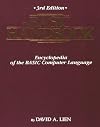
The BASIC handbook, an encyclopedia of the BASIC computer language
by David A. Lien
On This Page
Tags
Recommendations











Member Reviews
Dr. Lien included every word (N=250, 1st Edition; N=500, 2nd Edition) in the BASIC programming language in this truly encyclopedic reference volume. Every dialect of BASIC is included, from pocket computers to mainframes. For example, each of the following computer makers uses a different dialect of the BASIC programming language: Apple, TRS-80, Atari, IBM, DEC, ABC-80, Sharp, Exidy, NEC, Hewlett-Packard, Heath, System 80, Texas Instruments, PET, NorthStar, Sinclair, Wang, Varian, Ohio Scientific, IMSAI, SWTPC, Altair, and KIM. Dr. Lien's handbook takes all of their differences into consideration.
If you are confronted with the task of translating one dialect of BASIC into another, this book is an indispensable reference.
The layout of show more the book is easy to follow. Each word is classified as a statement, command, function, or operator. If the word is included in standard BASIC as identified by the American National Standards Institute, it is identified as an ANSI word.
Following a detailed explanation of the word, there is a short test program, output from a sample run, an explanation of variations in usage, plus cross-references to related words in the BASIC programming language.
Summary of Features:
•this book is a reference manual for extinct dialects of BASIC, not a textbook
•this handbook is indispensable for translating from an old version of BASIC to a modern version of BASIC
•each statement, command, operator, and function is listed alphabetically, explaining and illustrating by example what it did in the system that used it
Bottom Line: Dr. Lien taught me that the size of the computer (micro, mini, maxi) matters less than the version of BASIC that runs on it. When it came to number crunching, for example, Level II BASIC running on my TRS-80 Model I Microcomputer was vastly superior to MICOS BASIC running on my institution's Data General NOVA Minicomputer. show less
If you are confronted with the task of translating one dialect of BASIC into another, this book is an indispensable reference.
The layout of show more the book is easy to follow. Each word is classified as a statement, command, function, or operator. If the word is included in standard BASIC as identified by the American National Standards Institute, it is identified as an ANSI word.
Following a detailed explanation of the word, there is a short test program, output from a sample run, an explanation of variations in usage, plus cross-references to related words in the BASIC programming language.
Summary of Features:
•this book is a reference manual for extinct dialects of BASIC, not a textbook
•this handbook is indispensable for translating from an old version of BASIC to a modern version of BASIC
•each statement, command, operator, and function is listed alphabetically, explaining and illustrating by example what it did in the system that used it
Bottom Line: Dr. Lien taught me that the size of the computer (micro, mini, maxi) matters less than the version of BASIC that runs on it. When it came to number crunching, for example, Level II BASIC running on my TRS-80 Model I Microcomputer was vastly superior to MICOS BASIC running on my institution's Data General NOVA Minicomputer. show less
Ratings
Members
- Recently Added By
Author Information
22 Works 86 Members
Classifications
- Genres
- Technology, Nonfiction, General Nonfiction
- DDC/MDS
- 001.64 — Computer science, information & general works Computer science, knowledge & systems Knowledge and learning in general [Formerly: Data Processing] [formerly : Electronic]
- LCC
- QA76.73 .B3 .L53 — Science Mathematics Mathematics Instruments and machines Calculating machines Electronic computers. Computer science
Statistics
- Members
- 38
- Popularity
- 761,640
- Reviews
- 1
- Rating
- (4.13)
- Languages
- English
- Media
- Paper
- ISBNs
- 3