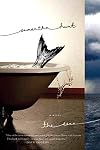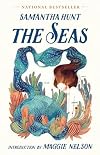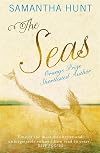
The Seas
by Samantha Hunt
On This Page
Description
Moored in a coastal fishing town so far north that the highways only run south, the unnamed narrator of The Seas is a misfit. She's often the subject of cruel local gossip. Her father, a sailor, walked into the ocean eleven years earlier and never returned, leaving his wife and daughter to keep a forlorn vigil. Surrounded by water and beckoned by the sea, she clings to what her father once told her: that she is a mermaid. True to myth, she finds herself in hard love with a land-bound man, an show more Iraq War veteran thirteen years her senior. The mesmerizing, fevered coming-of-age tale that follows will land her in jail. Her otherworldly escape will become the stuff of legend. With the inventive brilliance and psychological insight that have earned her international acclaim, Samantha Hunt pulls listeners into an undertow of impossible love and intoxication, blurring the lines between reality and fairy tale, hope and delusion, sanity and madness. show lessTags
Recommendations













Member Reviews
I picked this book up on a whim on vacation and I think it will be one of my favorites of the year.
[The Seas] is the story of a young woman as she approaches adulthood. She lives in a small coastal town with the highest rate of alcoholics in the nation. Her father walked into the ocean and she and her mother wait for him. Her grandfather uses a printing press to create backward letters and works on his dictionary. And Jude, the 33 year old man she is in love with, is highly damaged from his war experience in Iraq. Oh, and did I mention that the narrator is a mermaid?
I know it all sounds crazy but it works so beautifully. It's smart and sad and fantastical and real. Quite a feat for a debut novel.
[The Seas] is the story of a young woman as she approaches adulthood. She lives in a small coastal town with the highest rate of alcoholics in the nation. Her father walked into the ocean and she and her mother wait for him. Her grandfather uses a printing press to create backward letters and works on his dictionary. And Jude, the 33 year old man she is in love with, is highly damaged from his war experience in Iraq. Oh, and did I mention that the narrator is a mermaid?
I know it all sounds crazy but it works so beautifully. It's smart and sad and fantastical and real. Quite a feat for a debut novel.
“I fell and fell and fell until I was so deep in love that love resembles a well, steep sides with no way out.”
There are some books that no matter how eloquent you may be, you won’t find the appropriate words to do them justice.
This is one of those books.
‘’It was a dark and stormy night,
and the ship was on the sea…’’
Our unnamed nineteen-year-old woman is the narrator of her story. A mermaid child, daughter of a merman and a mortal woman, she is waiting for her father who disappeared eleven years ago. And she was waiting, she fell in love with a handsome fisherman who decided to fight a war. A war that broke him. Waiting for anything is one of the most torturing feelings a human can experience. How much more difficult it show more is to wait for the two men you love the most…
‘’And the ocean spits what it thinks, like a storm, ‘’Don’t you ever try that again…’’
Isolation and entrapment are crucial themes in this beautiful story. This is a town that won’t let you leave. A community of silence, an eerie cage formed by storms and fogs, and sadness, and death. A community that clearly demonstrates the limited choices that are spoon-fed to its women. A community drained in misery and loss. There is no escape. From them, from yourself.
‘’I don’t think I can outrun the ocean, but I’ll try for your sake.’’
So, love becomes the means for survival. In sensual writing, with orgasmic metaphor, Hunt captures the raw, bodily longing the young woman feels for Jude...for Jude, the centre of her entire existence. Obsession? Yes, we could call it that. But sometimes, the deepest kind of love is the best obsession and here we have a ferocious kind of love that makes the reader wonder if they have ever fallen in love so deeply. And Jude? Well, let us hope we all have someone who would kill someone with their bare hands to protect us.
‘’Because doctor, this making a mortal love me is tasking business and I’m running out of time. So I tried to drown myself. I want to go back to the ocean.’’
Hunt’s prose carries the same eerie, elemental weight found in Daisy Johnson — the kind of writing that doesn’t try to impress, but instead seeps into you, and stays.
Though it echoes the shape of familiar myths — Undine, the Little Mermaid, the selkie tales — The Seas refuses to become a cautionary fable. The unnamed narrator, a girl who believes herself to be a mermaid, is not punished for her longing. Her love for Jude, fierce and devotional, is never mocked by the narrative. Her grief over her absent father is not pathologised. Samantha Hunt offers something rare and deeply humane: a story that does not punish the girl for hoping. Even at the end, as she walks into the sea, it is not surrender but return. She carries both men inside her — the one who left and the one who never truly arrived — and she keeps loving them, not out of delusion, but out of a belief so profound it reshapes reality. The novel draws from myth, but it doesn’t moralise. There is no 'lesson' here. Only the truth that even in madness, hope persists. And in that hope, the girl becomes something more than myth. She becomes mythic.
At one point, the narrator says of Jude: ‘He holds me. He hollows me. He hells me.’ It’s a line that could have tumbled straight out of Cathy Earnshaw’s mouth — feral, aching, utterly undone by love that is not tender but total. In this moment, the sensual becomes brutal. It’s not about seduction — it’s about how desire scrapes the soul raw. This is the kind of woman Hunt gives us: one who doesn’t fall in love — she falls into the fire and lets it consume her.
Our narrator doesn’t know who she is.
A girl? A mermaid? A grieving child? A madwoman? She is the girl in the book who wants too much, hopes too hard, loves too deeply. And unlike the world around her, she does not apologise for it. In a society that conditions women to swallow their longing, to package their passion into something pleasing or manageable, this narrator does the opposite: she confesses. She yearns. She says the thing out loud. And in doing so, she becomes not just a mythic figure — but a radical one. In this novel, the true rebellion isn’t becoming a mermaid. It’s daring to feel fully, in a world that insists on numbness.
She’s waiting for her father.For the sea to give her a sign.For someone to see her.
For meaning to reveal itself.And she waits in a town that never changes, in a life that refuses to move forward, with a love that is always just out of reach.
One of the most startling motifs in the novel is the narrator’s repeated reference to howling. Not crying, not speaking — howling. It’s a raw, almost animalistic expression of grief, desire, and helplessness. In a world where so much is misunderstood or left unsaid, howling becomes the most honest language. Hunt taps into something ancient here: the mythic, cry that echoes through folklore and sorrow alike. The howl is not madness. It’s memory. It’s longing. It’s life trying not to drown
The novel asks, quietly but relentlessly: Are we directing our lives, or simply responding to unseen variables? Are we the scientist, or the specimen? And in a world where grief, desire, and identity defy logic, even the illusion of control begins to unravel. It’s not a scientific process. It’s something messier, sadder, and more human.
*Beautiful, haunting Introduction by Maggie Nelson*
“He gave me an inside of ice so I'd never love you… But it didn't work. You are so close. You are sleeping in the next room. You are the only warm thing to me. So warm, I am melting.” — Jude
My reviews can also be found on https://theopinionatedreaderblog.wordpress.com/ show less
There are some books that no matter how eloquent you may be, you won’t find the appropriate words to do them justice.
This is one of those books.
‘’It was a dark and stormy night,
and the ship was on the sea…’’
Our unnamed nineteen-year-old woman is the narrator of her story. A mermaid child, daughter of a merman and a mortal woman, she is waiting for her father who disappeared eleven years ago. And she was waiting, she fell in love with a handsome fisherman who decided to fight a war. A war that broke him. Waiting for anything is one of the most torturing feelings a human can experience. How much more difficult it show more is to wait for the two men you love the most…
‘’And the ocean spits what it thinks, like a storm, ‘’Don’t you ever try that again…’’
Isolation and entrapment are crucial themes in this beautiful story. This is a town that won’t let you leave. A community of silence, an eerie cage formed by storms and fogs, and sadness, and death. A community that clearly demonstrates the limited choices that are spoon-fed to its women. A community drained in misery and loss. There is no escape. From them, from yourself.
‘’I don’t think I can outrun the ocean, but I’ll try for your sake.’’
So, love becomes the means for survival. In sensual writing, with orgasmic metaphor, Hunt captures the raw, bodily longing the young woman feels for Jude...for Jude, the centre of her entire existence. Obsession? Yes, we could call it that. But sometimes, the deepest kind of love is the best obsession and here we have a ferocious kind of love that makes the reader wonder if they have ever fallen in love so deeply. And Jude? Well, let us hope we all have someone who would kill someone with their bare hands to protect us.
‘’Because doctor, this making a mortal love me is tasking business and I’m running out of time. So I tried to drown myself. I want to go back to the ocean.’’
Hunt’s prose carries the same eerie, elemental weight found in Daisy Johnson — the kind of writing that doesn’t try to impress, but instead seeps into you, and stays.
Though it echoes the shape of familiar myths — Undine, the Little Mermaid, the selkie tales — The Seas refuses to become a cautionary fable. The unnamed narrator, a girl who believes herself to be a mermaid, is not punished for her longing. Her love for Jude, fierce and devotional, is never mocked by the narrative. Her grief over her absent father is not pathologised. Samantha Hunt offers something rare and deeply humane: a story that does not punish the girl for hoping. Even at the end, as she walks into the sea, it is not surrender but return. She carries both men inside her — the one who left and the one who never truly arrived — and she keeps loving them, not out of delusion, but out of a belief so profound it reshapes reality. The novel draws from myth, but it doesn’t moralise. There is no 'lesson' here. Only the truth that even in madness, hope persists. And in that hope, the girl becomes something more than myth. She becomes mythic.
At one point, the narrator says of Jude: ‘He holds me. He hollows me. He hells me.’ It’s a line that could have tumbled straight out of Cathy Earnshaw’s mouth — feral, aching, utterly undone by love that is not tender but total. In this moment, the sensual becomes brutal. It’s not about seduction — it’s about how desire scrapes the soul raw. This is the kind of woman Hunt gives us: one who doesn’t fall in love — she falls into the fire and lets it consume her.
Our narrator doesn’t know who she is.
A girl? A mermaid? A grieving child? A madwoman? She is the girl in the book who wants too much, hopes too hard, loves too deeply. And unlike the world around her, she does not apologise for it. In a society that conditions women to swallow their longing, to package their passion into something pleasing or manageable, this narrator does the opposite: she confesses. She yearns. She says the thing out loud. And in doing so, she becomes not just a mythic figure — but a radical one. In this novel, the true rebellion isn’t becoming a mermaid. It’s daring to feel fully, in a world that insists on numbness.
She’s waiting for her father.For the sea to give her a sign.For someone to see her.
For meaning to reveal itself.And she waits in a town that never changes, in a life that refuses to move forward, with a love that is always just out of reach.
One of the most startling motifs in the novel is the narrator’s repeated reference to howling. Not crying, not speaking — howling. It’s a raw, almost animalistic expression of grief, desire, and helplessness. In a world where so much is misunderstood or left unsaid, howling becomes the most honest language. Hunt taps into something ancient here: the mythic, cry that echoes through folklore and sorrow alike. The howl is not madness. It’s memory. It’s longing. It’s life trying not to drown
The novel asks, quietly but relentlessly: Are we directing our lives, or simply responding to unseen variables? Are we the scientist, or the specimen? And in a world where grief, desire, and identity defy logic, even the illusion of control begins to unravel. It’s not a scientific process. It’s something messier, sadder, and more human.
*Beautiful, haunting Introduction by Maggie Nelson*
“He gave me an inside of ice so I'd never love you… But it didn't work. You are so close. You are sleeping in the next room. You are the only warm thing to me. So warm, I am melting.” — Jude
My reviews can also be found on https://theopinionatedreaderblog.wordpress.com/ show less
after the being told about Mr. Splitfoot by a friend I decided I also needed to check out the other book by the author which was this delight.
I read as little as I could about this book but read enough to know I was so completely in love with the idea. I don't have any really words to describe this one. I cried because the writing has way to put feelings into scenes that you can feel. It was messed up and lovely, I could definitely pick it up again already. I sat down and finished it in a day because putting it down would have been a crime.
Also how can you go wrong with mermaids?
I read as little as I could about this book but read enough to know I was so completely in love with the idea. I don't have any really words to describe this one. I cried because the writing has way to put feelings into scenes that you can feel. It was messed up and lovely, I could definitely pick it up again already. I sat down and finished it in a day because putting it down would have been a crime.
Also how can you go wrong with mermaids?
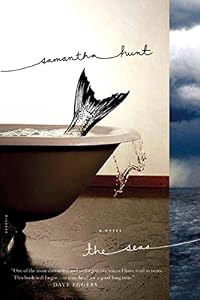
I may have read something about this book somewhere, but the decision to check this out at the library was based solely on its swoon-worthy cover coupled with the Tin House logo on the back. I then grabbed it on the way out the door to my first visit to a new doctor's office and was truly, deeply annoyed each time my wait was interrupted. (By, you know, being called back, the nurse showing up, the doctor showing up, etc.) I was submerged from the very start.
The basic idea is this. The unnamed narrator, a young woman, believes she is a mermaid. Her father used to tell her that she was, before he walked into the ocean and never returned. She is in love with an older man who was damaged by war. He is her only friend, but will not be with show more her, instead sleeping with nearly every other woman in town, making her incredibly desperate until she comes to believe that the sea will have its revenge on him -- the land-locked man who has captured her heart, keeping her on land, even as he does not love her.
Everything is from her point of view, which leaves the lines extremely blurry. Is she a mermaid? Is there magic? Or is it as most everyone else in the town believes -- that she is mentally ill?
There isn't much in the way of happiness in this book, or clarity, but it is so very spell-binding. It is as strange and powerful as the ocean that rules her tiny coastal town. As hard to fight when it has you in its grasp.
A marvelous achievement. show less
The basic idea is this. The unnamed narrator, a young woman, believes she is a mermaid. Her father used to tell her that she was, before he walked into the ocean and never returned. She is in love with an older man who was damaged by war. He is her only friend, but will not be with show more her, instead sleeping with nearly every other woman in town, making her incredibly desperate until she comes to believe that the sea will have its revenge on him -- the land-locked man who has captured her heart, keeping her on land, even as he does not love her.
Everything is from her point of view, which leaves the lines extremely blurry. Is she a mermaid? Is there magic? Or is it as most everyone else in the town believes -- that she is mentally ill?
There isn't much in the way of happiness in this book, or clarity, but it is so very spell-binding. It is as strange and powerful as the ocean that rules her tiny coastal town. As hard to fight when it has you in its grasp.
A marvelous achievement. show less
In a small coastal town, a young girl lives as an outcast thinking she is a mermaid. She spends her days working as an occasional hotel maid and a sardine factory worker. Her love interest is a war veteran who doesn't seem very interested in her.
The Seas is a rare piece of fiction in American literature. It reads very familiar and European to me in its sensibilities and style. The genre boundaries are blurred, or, to be specific, magical realism is more experimental and in service of the text than an actual genre I would put this in.
This was a fresh and dark text, very emotional, but it avoided the trap of being sentimental. I loved how Hunt plays with words and text in general. As is expected with texts like this, it is a little bit show more pretentious at times. show less
The Seas is a rare piece of fiction in American literature. It reads very familiar and European to me in its sensibilities and style. The genre boundaries are blurred, or, to be specific, magical realism is more experimental and in service of the text than an actual genre I would put this in.
This was a fresh and dark text, very emotional, but it avoided the trap of being sentimental. I loved how Hunt plays with words and text in general. As is expected with texts like this, it is a little bit show more pretentious at times. show less
A beautifully layered, intricately textured, and poetic novel about trauma and the forms that it takes. The Seas tackles subjects as diverse as war, abandonment, suicide, alcoholism, love, fear, and loneliness and yet unites them lovingly and gently. It is, in turns, hopeful and fraught, tender and strong, exquisite and appalling. As much as I adore reading, it's rare that I'm moved or surprised; this novel did just that.
“King Neptune smiles like god. Like ninety-seven percent of the world’s water is in ocean. Like seventy-five percent of the world is covered with ocean. Like everything is his fault.”
The Seas is a deeply imaginative story narrated by a young woman who believes she is a mermaid. The unnamed and unreliable narrator is an outsider in her small, coastal town full of alcoholics. Her father walked into the sea years ago and never returned leaving her family in a constant state of grief and denial. The narrator is infatuated with Jude, a shell-shocked veteran of the Gulf War who is 13 years her senior. Jude cares for her but does not reciprocate her feelings which leaves her crestfallen.
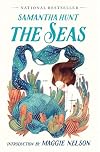
There is so much to take away from this mysterious show more story. Hunt’s lyrical style transported me to the small seaside town. My toes were in the sand and I listened to the waves crash against the rocks while drifting through the narrator’s fantastical fever dream. The gorgeous cover on this re-issue is perfect for this haunting tale about broken souls. Available 7/10. Thanks for this beautiful book, @tin_house. show less
The Seas is a deeply imaginative story narrated by a young woman who believes she is a mermaid. The unnamed and unreliable narrator is an outsider in her small, coastal town full of alcoholics. Her father walked into the sea years ago and never returned leaving her family in a constant state of grief and denial. The narrator is infatuated with Jude, a shell-shocked veteran of the Gulf War who is 13 years her senior. Jude cares for her but does not reciprocate her feelings which leaves her crestfallen.
There is so much to take away from this mysterious show more story. Hunt’s lyrical style transported me to the small seaside town. My toes were in the sand and I listened to the waves crash against the rocks while drifting through the narrator’s fantastical fever dream. The gorgeous cover on this re-issue is perfect for this haunting tale about broken souls. Available 7/10. Thanks for this beautiful book, @tin_house. show less
Members
- Recently Added By
Lists

Favourite Women's Prize for Fiction, Orange & Bailey's Prize contenders
132 works; 52 members

Magic Realism
371 works; 52 members

BingoDOG - Books With Mythical Creatures
57 works; 15 members

BingoDOG - Genre Benders
74 works; 14 members

Biggest Disappointments
606 works; 168 members

el
1,139 works; 1 member
Talk Discussions
Past Discussions
The Seas by Samantha Hunt in Orange January/July (August 2011)
Author Information

13+ Works 2,474 Members
Some Editions
Awards and Honors
Awards
Distinctions
Common Knowledge
- Original publication date
- 2004
- Epigraph
- It was a dark and stormy night,
and the ship was on the sea.
The captain said, "Sailor, tell us a story,"
and the sailor began.
"It was a dark and stormy night,
and the ship was on the sea..." - Dedication
- For Walter and Diane
- First words
- The highway only goes south from here.
- Last words
- (Click to show. Warning: May contain spoilers.)That is how I feel, only there's no ship, just the sea to rescue me.
- Blurbers
- Eggers, Dave; Barrett, Andrea; Tea, Michelle
- Original language
- English
Classifications
Statistics
- Members
- 537
- Popularity
- 55,261
- Reviews
- 31
- Rating
- (3.92)
- Languages
- Dutch, English, French, German
- Media
- Paper, Audiobook, Ebook
- ISBNs
- 15
- ASINs
- 4