On This Page
Description
Erindringer.Tags
Recommendations




















Member Reviews
This review is for the entire trilogy 'My Childhood', 'My Apprenticeship', and 'My Universities'
When one thinks about Russian classical literature, two names invariably pop up: Dostoevsky and Tolstoy. Often somebody would mention Chekhov in the same breath, some would rightly point out that Pushkin deserves his place on the pedestal, others would insist that Turgenev should be put side-by-side with his two most recognized contemporaries.
Ever since I read 'My Childhood' by Maxim Gorky, the first part of his autobiographic trilogy, the trio of Russian giants was firmly established for me : Dostoevsky, Gorky, Tolstoy - in that order.
The first sentence of this book sets the tone:
"Father lay on the floor, by the window of a small, darkened show more room, dressed in white, and looking terribly long. His feet were bare and his toes were strangely splayed out. His gentle fingers, now peacefully resting on his chest, were also distorted, and the black discs of copper coins firmly sealed his once shining eyes. His kind face had darkened and its nastily bared teeth frightened me"
I did not misspeak - this is one sentence in Russian, fittingly broken up by Ronald Wilks in his English translation (which is supposed to be quite good).
Already after reading this you realize that you are in for something unusual. The book never lets up, it holds you firmly in its grip, you are bound to remember some passages long after the book is closed and put away.
The pen name of the author - Gorky - translates from Russian as 'bitter' and you will get to taste the bitterness when you read this trilogy. Deaths are scattered around the pages, they are noted and recounted in a matter-of-fact voice of a child as regular, commonplace events. But it is not all doom and gloom, the darkness is followed by light and some of the most memorable passages are filled with tenderness and joy.
“For sadness and gladness live within us side by side, almost inseparable; the one succeeding the other with an elusive, inappreciable swiftness.”
“In recalling my childhood I like to picture myself as a beehive to which various simple obscure people brought the honey of their knowledge and thoughts on life, generously enriching my character with their own experience. Often this honey was dirty and bitter, but every scrap of knowledge was honey all the same.”
It is these "simple obscure people" that light the pages of the book. Uneducated, uncouth, rough and often violent these people from the end of the 19th century Russia come alive in short but precise descriptions of the writer at the height of his powers. It is rare to find character sketches so economically executed and yet so complete.
The main two characters are of course grandmother and grandfather of the little Alexei, seemingly representing two opposing forces shaping up his life, leaving the traces of warmth and the scars of anger behind. At the age of fourteen Alexei has to quit his grandparents' home to earn his living.
The second book is translated as 'My Apprenticeship' or 'In the World' and here the voice of a teenager, hardened beyond his years, picks up where the voice of a child left off. Dissatisfied with what he sees around him Alexei aims to break free from this monotonous existence and finds his release in books, in words. He sees education as the only way out.
The third book 'My Universities', probably the weakest of the three, was written seven years later. Alexei meets with students, idealists with a revolutionary agenda. However, he is disillusioned, having lived through the torture of his young years he no longer believes in the inherent goodness of people. There is less hope and more bitterness in this book, probably reflecting the writer's state of mind while in exile. The book ends with Alexei leaving on an aimless journey on foot across Russia that would last for five years.
Gorky was initially extremely critical of the Soviets and personally of Lenin. Gorky eventually returned from his exile in Italy to Soviet Russia and seemingly accepted the ideology of the regime. He was most likely killed by Stalin's thugs. show less
When one thinks about Russian classical literature, two names invariably pop up: Dostoevsky and Tolstoy. Often somebody would mention Chekhov in the same breath, some would rightly point out that Pushkin deserves his place on the pedestal, others would insist that Turgenev should be put side-by-side with his two most recognized contemporaries.
Ever since I read 'My Childhood' by Maxim Gorky, the first part of his autobiographic trilogy, the trio of Russian giants was firmly established for me : Dostoevsky, Gorky, Tolstoy - in that order.
The first sentence of this book sets the tone:
"Father lay on the floor, by the window of a small, darkened show more room, dressed in white, and looking terribly long. His feet were bare and his toes were strangely splayed out. His gentle fingers, now peacefully resting on his chest, were also distorted, and the black discs of copper coins firmly sealed his once shining eyes. His kind face had darkened and its nastily bared teeth frightened me"
I did not misspeak - this is one sentence in Russian, fittingly broken up by Ronald Wilks in his English translation (which is supposed to be quite good).
Already after reading this you realize that you are in for something unusual. The book never lets up, it holds you firmly in its grip, you are bound to remember some passages long after the book is closed and put away.
The pen name of the author - Gorky - translates from Russian as 'bitter' and you will get to taste the bitterness when you read this trilogy. Deaths are scattered around the pages, they are noted and recounted in a matter-of-fact voice of a child as regular, commonplace events. But it is not all doom and gloom, the darkness is followed by light and some of the most memorable passages are filled with tenderness and joy.
“For sadness and gladness live within us side by side, almost inseparable; the one succeeding the other with an elusive, inappreciable swiftness.”
“In recalling my childhood I like to picture myself as a beehive to which various simple obscure people brought the honey of their knowledge and thoughts on life, generously enriching my character with their own experience. Often this honey was dirty and bitter, but every scrap of knowledge was honey all the same.”
It is these "simple obscure people" that light the pages of the book. Uneducated, uncouth, rough and often violent these people from the end of the 19th century Russia come alive in short but precise descriptions of the writer at the height of his powers. It is rare to find character sketches so economically executed and yet so complete.
The main two characters are of course grandmother and grandfather of the little Alexei, seemingly representing two opposing forces shaping up his life, leaving the traces of warmth and the scars of anger behind. At the age of fourteen Alexei has to quit his grandparents' home to earn his living.
The second book is translated as 'My Apprenticeship' or 'In the World' and here the voice of a teenager, hardened beyond his years, picks up where the voice of a child left off. Dissatisfied with what he sees around him Alexei aims to break free from this monotonous existence and finds his release in books, in words. He sees education as the only way out.
The third book 'My Universities', probably the weakest of the three, was written seven years later. Alexei meets with students, idealists with a revolutionary agenda. However, he is disillusioned, having lived through the torture of his young years he no longer believes in the inherent goodness of people. There is less hope and more bitterness in this book, probably reflecting the writer's state of mind while in exile. The book ends with Alexei leaving on an aimless journey on foot across Russia that would last for five years.
Gorky was initially extremely critical of the Soviets and personally of Lenin. Gorky eventually returned from his exile in Italy to Soviet Russia and seemingly accepted the ideology of the regime. He was most likely killed by Stalin's thugs. show less
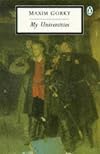
This book covers Gorky's life in Kazan from 1884 to 1888, when he turned twenty. It's divided between his time at work in a bakery where young people, who opposed the tsar would meet, and after a suicide attempt, a period working on a fruit farm collective. The collective is set up to counter the high prices of kulak peasants.
Gorky emphasises the apathy, violence and vindictiveness of peasant life. The lot of the peasant is not as Tolstoy would have one believe. They do not display simple virtues and they are not kind. Gorky's tough experiences in his first twenty years produces disillusion with the philosophies and argument he reads about and hears from enthusiastic students
Gorky emphasises the apathy, violence and vindictiveness of peasant life. The lot of the peasant is not as Tolstoy would have one believe. They do not display simple virtues and they are not kind. Gorky's tough experiences in his first twenty years produces disillusion with the philosophies and argument he reads about and hears from enthusiastic students
Biblioteka "Reč i misao", knjiga br. 20
Die Seitenzahlen beziehen sich auf die Ausgabe in: Bd.4 der Werke in vier Bänden, Aufbau-Verlag Berlin 1977
Meine Universitäten: Dies der dritte Band seiner Autobiographie. Auf Vorschlag des Gymnasiasten J. geht er, achtzehn- oder neunzehnjährig, nach Kazan, um an der Universität zu studieren - wie optimistisch! Er sucht Arbeit an den Wolga Anlegebrücken, dort unter Menschen voll Lebensgier, spöttisch zu allem, fühlt er sich wohl, lebt mit Heruntergekommenen, Studenten und Prostituierten in einem großen verfallenen Haus.
Andrej Derenkow und sein kleiner Laden, seine geheime Bibliothek - Treffpunkt der Narodniki, der revolutionären Studenten; ihre wilden Reden scheinen ihm die Freiheit zu versprechen, sie sahen etwas show more herablassend den jungen Maxim ‘an wie Tischler ein Stück Holz, aus dem man etwas machen kann.’ (34)
Dort trifft er erstmals den schweigsamen Michail Antonow Romas, “Chochol” genannt, kürzlich aus 10 jähriger Verbannung zurückgekehrt (36).
Er nimmt eine Stellung in einer Bäckerei an (später beschreibt er dies in den Erzählungen “Der Brotherr”, “Konowalow” und “Sechsundzwanzig und eine”), arbeitet 14 Stunden am Tag, verliert dadurch den Kontakt zur Derenkow Gruppe, eine körperlich und seelisch schwere Zeit. Er hasst die ‘ergebene Hoffnungslosigkeit’ der Menschen (42), Reden von der ‘Sinnlosigkeit des Lebens’ (49).
Er erfährt von dem Tode der Großmutter, der Mensch, der ihm am nächsten stand (62).
Er liest von christlichen und humanistischen Ideen des Mitgefühls; der Widerspruch zu den Hartherzigkeiten und dem ‘Kampf um den Besitz von Nichtigkeiten’ im täglichen Lebens fast aller Menschen um ihn herum quält ihn. Er braucht nur Bücher, alles andere ist ihm belanglos (87)
Ihn quält das ‘launische Spiel’ der Widersprüche in Worten, Handlungen und im Fühlen bei fast allen Menschen, auch bei sich selbst bemerkt er es (89). Er fühlt sich wie ein Verkrüppelter; tödlicher Kummer ergreift ihn. Er beschließt, sein Leben zu enden, überlebt den Versuch aber, fühlt sich verlegen, schämt sich (94).
Romas schlägt vor, mit ihm auf ein 1/2 Tagesreise entferntes Dorf (Krasnowidowo) an der unteren Wolga zu kommen und dort im Genossenschaftsladen zu arbeiten, der, ähnlich Derenkows, als Deckung für politische Arbeit dient. Er sagt sofort zu.
Romas zeigt ihm seine Bücher, rät ihm, Hobbes’ “Leviathan”, Machiavelli zu lesen.
Romas über die ‘Liebe zum Volk’(102): das sind Schwätzereien der Studenten! “Lieben bedeutet einverstanden sein, Nachsicht üben, übersehen, verzeihen. .. Kann man denn dem Volk seine Bestialitäten verzeihen? ”
Romas über die Bauern, diese erst vor 30 Jahren aus der Leibeigenschaft befreit (107): der Bauer “wartet auf den Tag, an dem der Zar ihm den Sinn der Freiheit verkünden wird … es muß lernen, die Macht aus den Händen des Zaren in die eigenen zu übernehmen.” Jetzt würden sie Romas am liebsten erschlagen, wie sie dann den Fischer Isot erschlugen. Chochol verliert seine Ruhe nicht, selbst als ihm das Haus in Brand gesteckt wird: die Bauern sind nur dumm, sagt er. Bosheit ist Dummheit, aber man solle sie nicht voreilig verurteilen. (149f) Maxim lernt viel von Romas.
Nachdem Romas wieder verhaftet wird, verlässt auch er mit einem Kameraden das Dorf; sie folgen der Wolga bis ans Kaspische Meer.
Dieser Band enthält außerdem noch sechs längere autobiographische Erzählungen und Gorkis Erinnerungen an Lenin und Tolstoi. Er ist sorgfältig herausgegeben und mit Anmerkungen versehen. (IV-17)
(IX-20) Ich las es wieder nach drei Jahren und stellte ein Personenregister auf (die Namen sind etwas verwirrend):
Über die Orte:
I. Kasan (1885): 7 - 95
Alexej Maximovitsch Peschkow - seit 1892, dem Jahr der Veröffentlichung seiner ersten Erzählung, nennt er sich Maxim Gorki - trifft Pletnjow und zieht ins Haus «Marussowka», arbeitet im ersten Kasaner Winter in der Bäckerei Wassilij Semjonows: 38 ( beschrieben in „Der Brotherr“ (Bd.4), „Konowalow“ (Bd.1), „Sechsundzwanzig und eine“ (Bd.1)
II. Krasnowidowo: 95 - 151
Nikanor Grigoryevich Chernetsov (Tchernezov, Чернецов) (1805-79) malte 1839 eine „Ansicht der Wolga bei dem Dorf Krasnowidowo“, heute in der Tretjakow-Galerie, Moskau. Eine gute Reproduktion hier: http://svistanet.com/wp-content/uploads/2020/01/xudozhnik_Nikanor_Chernecov_12.j...
Personen:
I. in Kasan:
Gurij Pletnjow - Student, politisch aktiv, Leben im Haus «Marussowka»: 15-23, verhaftet: 78f
Nikiforytsch - Polizist: 22f, legt die „Schlingen eines unsichtbaren Fadens“ aus: 62 - 68, versucht ihn als Spitzel anzuwerben: 78 - 82
Andrej Derenkow - seine geheime Bibliothek: 30ff, eröffnet eine Bäckerei: 52, 70 Peschkow (Gorki) arbeitet als Vertrauter des ‘Prinzipals’ und ‘Gehilfe’ des Bäckermeisters Lutonin;
Marja Derenkowa - seine Schwester: 31f, 38, 54, 59, 66f, 78 (in Krasnowidowo: 132, 138)
Nastja, rotlockig: 32f, 77
‘Chochol’ (Michailo Antonow Romas) 36, 94f (in Krasnowidowo: 95 -150)
Fedossejew: 69f
Nikita Rubzow, ein alter Weber: 73ff, 90ff
II. in Krasnowidowo:
Michailo Antonow Romas, genannt ‘Chochol’: 36, 94 -150
Wassilij Pankow: 95ff, 105, 113ff, 126, 132, 147ff
Stepan Kukuschkin: 96ff, 104ff, 112ff, 127, 133ff, 144, 146
Isot: 99ff, 109ff, 114, 120ff, 126, 133ff: ermordet
Migun: 101, 104ff, 122, 127ff, 148
Matwej Barinow: 104f, 122, 129ff: Liederjan, Prahlhans, Faulpelz, Klatschmaul, Vagabund und Freund, 144, 146, 148, 150ff
Suslow: 105f, 122, 126, 131
Krotow, der Schmied: 122, 146
Michka Kostin, abgedankter Soldat: 122f, 125, 145
Aksinja, die Köchin: 123ff, 140: “Es brennt”, 142
Marija Derenkowa ‘Mascha’: 31f, 132, 138
Kusmin 143, 145ff show less
Meine Universitäten: Dies der dritte Band seiner Autobiographie. Auf Vorschlag des Gymnasiasten J. geht er, achtzehn- oder neunzehnjährig, nach Kazan, um an der Universität zu studieren - wie optimistisch! Er sucht Arbeit an den Wolga Anlegebrücken, dort unter Menschen voll Lebensgier, spöttisch zu allem, fühlt er sich wohl, lebt mit Heruntergekommenen, Studenten und Prostituierten in einem großen verfallenen Haus.
Andrej Derenkow und sein kleiner Laden, seine geheime Bibliothek - Treffpunkt der Narodniki, der revolutionären Studenten; ihre wilden Reden scheinen ihm die Freiheit zu versprechen, sie sahen etwas show more herablassend den jungen Maxim ‘an wie Tischler ein Stück Holz, aus dem man etwas machen kann.’ (34)
Dort trifft er erstmals den schweigsamen Michail Antonow Romas, “Chochol” genannt, kürzlich aus 10 jähriger Verbannung zurückgekehrt (36).
Er nimmt eine Stellung in einer Bäckerei an (später beschreibt er dies in den Erzählungen “Der Brotherr”, “Konowalow” und “Sechsundzwanzig und eine”), arbeitet 14 Stunden am Tag, verliert dadurch den Kontakt zur Derenkow Gruppe, eine körperlich und seelisch schwere Zeit. Er hasst die ‘ergebene Hoffnungslosigkeit’ der Menschen (42), Reden von der ‘Sinnlosigkeit des Lebens’ (49).
Er erfährt von dem Tode der Großmutter, der Mensch, der ihm am nächsten stand (62).
Er liest von christlichen und humanistischen Ideen des Mitgefühls; der Widerspruch zu den Hartherzigkeiten und dem ‘Kampf um den Besitz von Nichtigkeiten’ im täglichen Lebens fast aller Menschen um ihn herum quält ihn. Er braucht nur Bücher, alles andere ist ihm belanglos (87)
Ihn quält das ‘launische Spiel’ der Widersprüche in Worten, Handlungen und im Fühlen bei fast allen Menschen, auch bei sich selbst bemerkt er es (89). Er fühlt sich wie ein Verkrüppelter; tödlicher Kummer ergreift ihn. Er beschließt, sein Leben zu enden, überlebt den Versuch aber, fühlt sich verlegen, schämt sich (94).
Romas schlägt vor, mit ihm auf ein 1/2 Tagesreise entferntes Dorf (Krasnowidowo) an der unteren Wolga zu kommen und dort im Genossenschaftsladen zu arbeiten, der, ähnlich Derenkows, als Deckung für politische Arbeit dient. Er sagt sofort zu.
Romas zeigt ihm seine Bücher, rät ihm, Hobbes’ “Leviathan”, Machiavelli zu lesen.
Romas über die ‘Liebe zum Volk’(102): das sind Schwätzereien der Studenten! “Lieben bedeutet einverstanden sein, Nachsicht üben, übersehen, verzeihen. .. Kann man denn dem Volk seine Bestialitäten verzeihen? ”
Romas über die Bauern, diese erst vor 30 Jahren aus der Leibeigenschaft befreit (107): der Bauer “wartet auf den Tag, an dem der Zar ihm den Sinn der Freiheit verkünden wird … es muß lernen, die Macht aus den Händen des Zaren in die eigenen zu übernehmen.” Jetzt würden sie Romas am liebsten erschlagen, wie sie dann den Fischer Isot erschlugen. Chochol verliert seine Ruhe nicht, selbst als ihm das Haus in Brand gesteckt wird: die Bauern sind nur dumm, sagt er. Bosheit ist Dummheit, aber man solle sie nicht voreilig verurteilen. (149f) Maxim lernt viel von Romas.
Nachdem Romas wieder verhaftet wird, verlässt auch er mit einem Kameraden das Dorf; sie folgen der Wolga bis ans Kaspische Meer.
Dieser Band enthält außerdem noch sechs längere autobiographische Erzählungen und Gorkis Erinnerungen an Lenin und Tolstoi. Er ist sorgfältig herausgegeben und mit Anmerkungen versehen. (IV-17)
(IX-20) Ich las es wieder nach drei Jahren und stellte ein Personenregister auf (die Namen sind etwas verwirrend):
Über die Orte:
I. Kasan (1885): 7 - 95
Alexej Maximovitsch Peschkow - seit 1892, dem Jahr der Veröffentlichung seiner ersten Erzählung, nennt er sich Maxim Gorki - trifft Pletnjow und zieht ins Haus «Marussowka», arbeitet im ersten Kasaner Winter in der Bäckerei Wassilij Semjonows: 38 ( beschrieben in „Der Brotherr“ (Bd.4), „Konowalow“ (Bd.1), „Sechsundzwanzig und eine“ (Bd.1)
II. Krasnowidowo: 95 - 151
Nikanor Grigoryevich Chernetsov (Tchernezov, Чернецов) (1805-79) malte 1839 eine „Ansicht der Wolga bei dem Dorf Krasnowidowo“, heute in der Tretjakow-Galerie, Moskau. Eine gute Reproduktion hier: http://svistanet.com/wp-content/uploads/2020/01/xudozhnik_Nikanor_Chernecov_12.j...
Personen:
I. in Kasan:
Gurij Pletnjow - Student, politisch aktiv, Leben im Haus «Marussowka»: 15-23, verhaftet: 78f
Nikiforytsch - Polizist: 22f, legt die „Schlingen eines unsichtbaren Fadens“ aus: 62 - 68, versucht ihn als Spitzel anzuwerben: 78 - 82
Andrej Derenkow - seine geheime Bibliothek: 30ff, eröffnet eine Bäckerei: 52, 70 Peschkow (Gorki) arbeitet als Vertrauter des ‘Prinzipals’ und ‘Gehilfe’ des Bäckermeisters Lutonin;
Marja Derenkowa - seine Schwester: 31f, 38, 54, 59, 66f, 78 (in Krasnowidowo: 132, 138)
Nastja, rotlockig: 32f, 77
‘Chochol’ (Michailo Antonow Romas) 36, 94f (in Krasnowidowo: 95 -150)
Fedossejew: 69f
Nikita Rubzow, ein alter Weber: 73ff, 90ff
II. in Krasnowidowo:
Michailo Antonow Romas, genannt ‘Chochol’: 36, 94 -150
Wassilij Pankow: 95ff, 105, 113ff, 126, 132, 147ff
Stepan Kukuschkin: 96ff, 104ff, 112ff, 127, 133ff, 144, 146
Isot: 99ff, 109ff, 114, 120ff, 126, 133ff: ermordet
Migun: 101, 104ff, 122, 127ff, 148
Matwej Barinow: 104f, 122, 129ff: Liederjan, Prahlhans, Faulpelz, Klatschmaul, Vagabund und Freund, 144, 146, 148, 150ff
Suslow: 105f, 122, 126, 131
Krotow, der Schmied: 122, 146
Michka Kostin, abgedankter Soldat: 122f, 125, 145
Aksinja, die Köchin: 123ff, 140: “Es brennt”, 142
Marija Derenkowa ‘Mascha’: 31f, 132, 138
Kusmin 143, 145ff show less
Apr 17, 2017 (Edited)German
Fuld af så mange forskellige mennesker og miljøer med forskellige tilgange til livet. Læst sommer 2018. Står på reolen.
Aug 20, 2018Danish
Indeholder "Mine universiteter", "I landsbyen", "Nattevagt", "Korolenko-tiden", "Filosofisk delirium", "Min første kærlighed", "Erindringer om Korolenko".
"Mine universiteter" handler om ???
"I landsbyen" handler om ???
"Nattevagt" handler om ???
"Korolenko-tiden" handler om ???
"Filosofisk delirium" handler om ???
"Min første kærlighed" handler om ???
"Erindringer om Korolenko" handler om ???
???
"Mine universiteter" handler om ???
"I landsbyen" handler om ???
"Nattevagt" handler om ???
"Korolenko-tiden" handler om ???
"Filosofisk delirium" handler om ???
"Min første kærlighed" handler om ???
"Erindringer om Korolenko" handler om ???
???
Apr 5, 2021Danish
Members
- Recently Added By
Author Information

923+ Works 8,220 Members
Alexei Maximovich Peshkov, better known as Maxim (Maksim) Gorky, was born on March 28th, 1968. Until the recent collapse of the Soviet state, Gorky was officially viewed as the greatest Russian writer of the twentieth century---an evaluation far above the true measure of his nevertheless considerable talent. Proclaimed the founder of socialist show more realism, he significantly influenced many Soviet writers, as well as others in Europe and in the developing world, and his works were for decades part of the Soviet school curriculum. His formal education was minimal. From the age of 11, he fended for himself with a variety of jobs. Self-taught, he published his first story, "Makar Chudra," in 1892. His first collection, Sketches and Stories (1898), is a romantic celebration of society's strong outcasts---the hobos and the drifters---and helped to popularize such literary protagonists. Foma Gordeyev (1899), Gorky's first novel, depicts generational conflict within the Russian bourgeoisie. A popular public figure on the left, Gorky was often in trouble with the tsarist government. During the 1900s, he was the central figure in the Znanie publishing house, which produced realist prose with a social conscience. Some of his own works were extremely successful. The play The Lower Depths (1902), set in a poorhouse and a strong indictment of social injustice, was not only a staple of Soviet theater but also influential in the United States. Eugene O'Neill's The Iceman Cometh was influenced by it. The propagandistic, extraordinarily influential novel Mother (1906) presents an iconic working-class woman who is transformed into a saint of the Revolution; its optimism in the ultimate triumph of the cause made it a prototype of socialist-realist fiction. During the years prior to 1917, Gorky published a number of autobiographical stories: All Over Russia (1912--18) (also Through Russia) and his memoirs; My Childhood (1913--14), My Apprenticeship (1915--16), and My Universities (1923). This trilogy shows his art at its best and includes some very lively reminiscences of such writers as Tolstoy and Chekhov. Although a Bolshevik party member since 1905, Gorky strongly criticized the new regime after the October Revolution: His collected articles from 1917-18, Untimely Thoughts, remained unpublished in the Soviet Union until recently. A cultural activist, he helped to save the lives of many writers, artists, and scholars during the cold and hungry years of the civil war. In 1921 he left Russia for Italy but returned permanently a decade later, recognized as the grand old man of Soviet literature. He then worked for Stalin's economic policies and presided over the institutionalization of socialist realism. At his death, he left unfinished a major novel of considerable interest, The Life of Klim Samgin, which he had been working on since 1925. (Bowker Author Biography) show less
Some Editions
Awards and Honors
Series

Belongs to Publisher Series
Work Relationships
Common Knowledge
- Canonical title
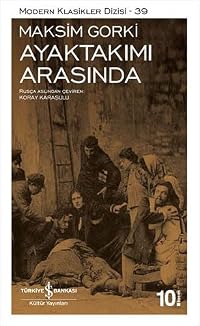
- My Universities
- Original title
- Мои университеты
- Original publication date
- 1923 (original Russian) (original Russian); 1979 (English: Wilks) (English: Wilks)
- People/Characters
- Maxim Gorky
- Important places
- Gorki
- First words*
- Also – jetzt gehe ich nach Kasan auf die Universität und studiere! Tatsächlich!
- Last words*
- (Click to show. Warning: May contain spoilers.)Dort fanden wir Beschäftigung bei einer kleinen Fischereigenossenschaft in dem schmutzigen kalmückischen Fischerort Kabankul-Bai.
*Some information comes from Common Knowledge in other languages. Click "Edit" for more information.
Classifications
- Genre
- Biography & Memoir
- DDC/MDS
- 920 — History & geography Biographies, Genealogy, Healdry Biographies
- LCC
- PG3465 .A34 .W54 — Language and Literature Slavic languages and literatures. Baltic languages. Albanian language Slavic. Baltic. Albanian Russian literature Individual authors and works 1870-1917 Gorky
- BISAC
Statistics
- Members
- 376
- Popularity
- 82,995
- Reviews
- 7
- Rating
- (3.81)
- Languages
- 16 — Catalan, Danish, Dutch, English, Estonian, Finnish, French, German, Hungarian, Italian, Lithuanian, Portuguese (Portugal), Russian, Spanish, Swedish, Turkish
- Media
- Paper, Ebook
- ISBNs
- 31
- ASINs
- 9