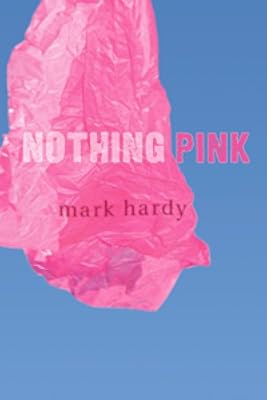
Nothing Pink
by Mark Hardy
On This Page
Description
Vincent Harris, the teenaged son of a Baptist minister, has always known he is gay and uses his faith to avoid any sinful thoughts or acts, but when his family moves to a new church in the late 1970s he meets Robert Ingle, falls in love, and begins to wonder if God is really asking him to repent and change.Tags
Recommendations















Member Recommendations
Member Reviews
Nothing Pink is a pretty straight forward coming out story. That said, it's a very well done coming out story. Vincent does a lot of struggling within himself, with the help of his strict Baptist upbringing, about his sexuality. He does everything he can to try to change himself including making out with girls, avoiding TV shows featuring guys in tight pants, and a whole lot of praying. But this is not the focus of the book. This all happens before the book starts, though it is alluded to throughout the beginning. The book actually starts on the day things start to get better, the day Vincent meets Robert. Even though Vincent still has doubts about the morality of his relationship with Robert and has to hide the extent of their show more relationship from his parents, this is mostly a happy book about Vincent's first love and eventual acceptance of himself.
A lot of Vincent's happiness with himself hinges on religion, or rather, God. His relationship with God factors largely into Vincent's life and the story. Vincent is moved by his father's sermons, hymns, and prayer. He acutely feels God's presence in his life. He is a devout and upstanding Christian, except for his sexuality. That's why he's so confused and hurt by God's lack of response to his prayers to be straight. As he becomes more comfortable with Robert and his relationship with him, he becomes more convinced that God is okay with it too. It's great. His parents, however, do not agree. When they figure out what's going on, they give him a talking-to that centers around this oft heard sentiment:
"We love you, Vincent...But God hates the sin of homosexuality, so we must hate it too, son."
p.99
To their credit, they never say that God hates Vincent, and they stress that they love him unconditionally, though Vincent doubts that their version of "unconditional" should count when they hate something that is so much a part of him. I did get the feeling that the mom, at least, would come around at some point after the end of the book.
During the talk with his parents and later when he is at church camp, Vincent does a lot of defending himself. In his own head. I love that he didn't have to stand up and be out and and proud right away or a spokesperson/defender of all people queer in his Baptist community. Sometimes that's all you can do, and it's great that Hardy provides this positive role model of someone who can only hold it together for himself but is still not weak. Outwardly, Vincent simply stops asking God to make him straight. Internally, he does a lot of building himself up, and that involves a lot of "God-talk." The religious over tones and general message of God loves the gays becomes a bit redundant and heavy-handed toward the end. This is definitely not a book for readers uncomfortable with Christianity. I appreciated the message, but it did kind of take over the book in a couple of places and pull me out of Vincent's story. But given how heavy-handed much of the anti-gay, religious literature can be, I had to forgive this repeated positive religious message.
Also, and this surprised me a bit, the book is set in the 70s. It's not overly obvious and so led to some confusing moments for me, such as when Vincent lists the TV shows he avoids and its clear that I should have recognized the titles. Other than that, only the feathered hair and continual Barry Manilow references tipped me off (and the title verso, which is where I got the actual decade of the setting from). And I do mean continual, with the Barry Manilow. You'll be singing Copa Cabana for days after reading this one.
Book source: Philly Free Library show less
A lot of Vincent's happiness with himself hinges on religion, or rather, God. His relationship with God factors largely into Vincent's life and the story. Vincent is moved by his father's sermons, hymns, and prayer. He acutely feels God's presence in his life. He is a devout and upstanding Christian, except for his sexuality. That's why he's so confused and hurt by God's lack of response to his prayers to be straight. As he becomes more comfortable with Robert and his relationship with him, he becomes more convinced that God is okay with it too. It's great. His parents, however, do not agree. When they figure out what's going on, they give him a talking-to that centers around this oft heard sentiment:
"We love you, Vincent...But God hates the sin of homosexuality, so we must hate it too, son."
p.99
To their credit, they never say that God hates Vincent, and they stress that they love him unconditionally, though Vincent doubts that their version of "unconditional" should count when they hate something that is so much a part of him. I did get the feeling that the mom, at least, would come around at some point after the end of the book.
During the talk with his parents and later when he is at church camp, Vincent does a lot of defending himself. In his own head. I love that he didn't have to stand up and be out and and proud right away or a spokesperson/defender of all people queer in his Baptist community. Sometimes that's all you can do, and it's great that Hardy provides this positive role model of someone who can only hold it together for himself but is still not weak. Outwardly, Vincent simply stops asking God to make him straight. Internally, he does a lot of building himself up, and that involves a lot of "God-talk." The religious over tones and general message of God loves the gays becomes a bit redundant and heavy-handed toward the end. This is definitely not a book for readers uncomfortable with Christianity. I appreciated the message, but it did kind of take over the book in a couple of places and pull me out of Vincent's story. But given how heavy-handed much of the anti-gay, religious literature can be, I had to forgive this repeated positive religious message.
Also, and this surprised me a bit, the book is set in the 70s. It's not overly obvious and so led to some confusing moments for me, such as when Vincent lists the TV shows he avoids and its clear that I should have recognized the titles. Other than that, only the feathered hair and continual Barry Manilow references tipped me off (and the title verso, which is where I got the actual decade of the setting from). And I do mean continual, with the Barry Manilow. You'll be singing Copa Cabana for days after reading this one.
Book source: Philly Free Library show less
The last YA novel I read was by Caroline B Cooney. It was part of her vampire series and I read it in 5th grade. It was for a book report and I even made a diorama. The walls of the shoe box was covered with stones I found around my neighborhood. I made a bed out of cotton balls and Q-tips. I told my class that this was where the vampire lured teenage girls. "To do what?" "I don't know. Use your imagination, but it has to be bad."
YA novels have ever since been a blur of vampires and sometimes werewolves. The success of the Twilight Saga has reinforced that, and then everything after that (the vampire avalanche, I call it), confirmed it.
Reading Mark Hardy's debut was not like that. There were not vampires, not even a gay one. Indeed, show more Hardy's novel explored the coming of age story of Vincent Harris, during the summer of his coming out in the 1970s. While there are a slew of gay YA novels about coming out, this one has a slight twist: Vincent's a pastor's son, which probably stemmed from Hardy's own life. Raised in Virginia (also the book's setting), he too is a preacher's son. But as his biography states, that's where the similarities end.
Hardy grew up, became a teacher, and now writes (He was a Lambda Literary Foundation Emerging Writer). Vincent on the other hand, is bound forever in the present tense. By the end of the novel he comes out out to his parents, falls in love, and goes to church camp, but the beauty of this novel is that we do not know what happens afterwards, not really. We just have the present of Vincent's life.
In that way, reading Nothing Pink is like memory. Any adult (any queer adult) reading this will instantly conjure up memories of his/her coming out. How it was for them: the struggle of identity, that instant of recognition in another queer person, and of course porn. The novel unravels like memory. Even though its a scant 100 or so pages, some scenes are beautifully rendered in a slowness that in other hands might have just ended up muddled and slow. But in Hardy's voice, the slowness of the scene is part of the reminsicing, part of the tone. And the wording is simply beautiful. For example, take this scene from the beginning of the book:
"I sink in the tub until only my knees and neck and head remain out of water. Now that my shoulders are immerse I realize how cold the air is and how chilly things are with my mother.
She puts the magazine down on the counter and picks up the dental floss. She tears off a long piece of it and wraps one end around each pointer finger, then watches herself wrap and wrap until the floss between her two fingers is perfect length.
She's waiting for me to go next, to explain my lie."
Hardy's prose is full of precision more akin to a short story writer than a novelist. His observations--its pacing and its silences--are packed with keen observations and loaded with meaning the same way our memories play in slow motion and then we finally understand why, what, and who we are.
Yet it is precisely this that makes Hardy's novel less of a YA novel, and more of a novel about a teenager. The fact that it takes place in the 70s begs the question: can today's youth can relate to this? This is especially the question when Hardy alludes to Tom of Finland and First Hand and even eight tracks. (I personally didn't even hear of Tom of Finland until I was in college and visited a gay bookstore in DC; First Hand is new to me; I don't know what an eight track is, I just know it's very old).
But perhaps this is just my interpretation of it as an adult (albeit a younger one). The only inkling that this might be geared specifically towards YA readers is near the end when Vincent contemplates God and God's meanings and purpose. Any queer adult would probably understand it already, but perhaps for younger readers, this is the crux and ephiphany of the novel. To older readers, however ,it just seems didatical and slow, in a bad way.
Overall, Hardy's debut is strong and poetic. He paints characters as whole people, not just caricatures. His gay teens not only contemplate God, but about boys and Barry Manilow. His religious fanatics are less fanatics, than parents trying to navigate their child's world (Chapter 9 is heart breaking!) His prose and style flows like memory and is bound to please adults as well as teenagers (perhaps even more so).
www.youfightlikeannerice.blogspot.com show less
YA novels have ever since been a blur of vampires and sometimes werewolves. The success of the Twilight Saga has reinforced that, and then everything after that (the vampire avalanche, I call it), confirmed it.
Reading Mark Hardy's debut was not like that. There were not vampires, not even a gay one. Indeed, show more Hardy's novel explored the coming of age story of Vincent Harris, during the summer of his coming out in the 1970s. While there are a slew of gay YA novels about coming out, this one has a slight twist: Vincent's a pastor's son, which probably stemmed from Hardy's own life. Raised in Virginia (also the book's setting), he too is a preacher's son. But as his biography states, that's where the similarities end.
Hardy grew up, became a teacher, and now writes (He was a Lambda Literary Foundation Emerging Writer). Vincent on the other hand, is bound forever in the present tense. By the end of the novel he comes out out to his parents, falls in love, and goes to church camp, but the beauty of this novel is that we do not know what happens afterwards, not really. We just have the present of Vincent's life.
In that way, reading Nothing Pink is like memory. Any adult (any queer adult) reading this will instantly conjure up memories of his/her coming out. How it was for them: the struggle of identity, that instant of recognition in another queer person, and of course porn. The novel unravels like memory. Even though its a scant 100 or so pages, some scenes are beautifully rendered in a slowness that in other hands might have just ended up muddled and slow. But in Hardy's voice, the slowness of the scene is part of the reminsicing, part of the tone. And the wording is simply beautiful. For example, take this scene from the beginning of the book:
"I sink in the tub until only my knees and neck and head remain out of water. Now that my shoulders are immerse I realize how cold the air is and how chilly things are with my mother.
She puts the magazine down on the counter and picks up the dental floss. She tears off a long piece of it and wraps one end around each pointer finger, then watches herself wrap and wrap until the floss between her two fingers is perfect length.
She's waiting for me to go next, to explain my lie."
Hardy's prose is full of precision more akin to a short story writer than a novelist. His observations--its pacing and its silences--are packed with keen observations and loaded with meaning the same way our memories play in slow motion and then we finally understand why, what, and who we are.
Yet it is precisely this that makes Hardy's novel less of a YA novel, and more of a novel about a teenager. The fact that it takes place in the 70s begs the question: can today's youth can relate to this? This is especially the question when Hardy alludes to Tom of Finland and First Hand and even eight tracks. (I personally didn't even hear of Tom of Finland until I was in college and visited a gay bookstore in DC; First Hand is new to me; I don't know what an eight track is, I just know it's very old).
But perhaps this is just my interpretation of it as an adult (albeit a younger one). The only inkling that this might be geared specifically towards YA readers is near the end when Vincent contemplates God and God's meanings and purpose. Any queer adult would probably understand it already, but perhaps for younger readers, this is the crux and ephiphany of the novel. To older readers, however ,it just seems didatical and slow, in a bad way.
Overall, Hardy's debut is strong and poetic. He paints characters as whole people, not just caricatures. His gay teens not only contemplate God, but about boys and Barry Manilow. His religious fanatics are less fanatics, than parents trying to navigate their child's world (Chapter 9 is heart breaking!) His prose and style flows like memory and is bound to please adults as well as teenagers (perhaps even more so).
www.youfightlikeannerice.blogspot.com show less
At first glance this seems like another "problem novel" about a gay teenager with a disapproving Christian family. But what I liked about this book is that rather than rejecting religion entirely, at the end, the main character figures that if God wanted him to be straight, it would have happened already, so God must love him the way he is. I bet there are some kids out there who would benefit from a book that says you don't have to choose between spirituality and sexuality.
This was hard to read even though it was a page turner. To see a young man with the amount of self hate Vincent had was striking to me. The book is set in the late 70's and at that time there was still a massive amount of stigma towards homosexuality. On top of all that, Vincent grew up the son of a Baptist minister and that must have been amazingly hard.
The way I saw Vincent early on in the book was as someone who was living a life that was on both sides of the spectrum. He is gay but at the same time his religious up bringing tells him he is filthy and going to hell. He was a person divided. This all changes after he meets another homosexual boy, Robert. To compound the matter even further his mother finds an erotic magazine in his show more room and both of his parents are so adamantly against him bring homosexual that they actually try to force the demons out of him.
All of this is strikingly in contrast to when we see Vincent and his mother interact on certain occasions. When they are alone you can almost see his mother let down her "guard." She is almost acceptant of his "gayness" in a few screens.
By the end of the book Vincent is a man transformed. He is now at one with himself and no longer believes homosexuality is a bad thing. God has told him that he likes him just the way God intended him to be. Which is the most powerful message in this book. show less
The way I saw Vincent early on in the book was as someone who was living a life that was on both sides of the spectrum. He is gay but at the same time his religious up bringing tells him he is filthy and going to hell. He was a person divided. This all changes after he meets another homosexual boy, Robert. To compound the matter even further his mother finds an erotic magazine in his show more room and both of his parents are so adamantly against him bring homosexual that they actually try to force the demons out of him.
All of this is strikingly in contrast to when we see Vincent and his mother interact on certain occasions. When they are alone you can almost see his mother let down her "guard." She is almost acceptant of his "gayness" in a few screens.
By the end of the book Vincent is a man transformed. He is now at one with himself and no longer believes homosexuality is a bad thing. God has told him that he likes him just the way God intended him to be. Which is the most powerful message in this book. show less
Nothing Pink is almost a fairy tale (no pun intended), not since it’s unrealistic, but since it preserves all the innocence of young age, and like in a fairy tale, there is a prince who comes to rescue the love of his life.
Vincent is the 15 years old son of a Baptist minister and he is gay. Vincent has never kissed a boy, he has never ever met another gay boy, or man, but he knows deep inside that he is gay; he knows since he was a little child, since his favourite shirt was a pink one, and when the realization struck on him, that he was gay, he swore out pink from his life. For all his life he has behaved like the good son of the preacher, he goes to all the function, he does the chores at home, he is the perfect good boy and he show more avoids everything that is “gay”. But the gayness is inside him, and he seems to not be able to get rid of it, no matter how many prayers he says.
And then the gayness arrives even in the safe shelter of his father’s church, when he moves with the family on a new town and he meets Robert, one of the new parishioners, 16 years old and gay. It’s like the meeting of two souls, or maybe it’s only that they are alone among all the others, it seems natural to stay together. Love for them is riding together on the same horse, having a picnic alone on the top of an hill overlooking the horizon, or walking together side by side. There is time for what it will come, for now is enough for Vincent to know that he is not alone.
It’s not simple for Vincent and he knows it. He knows that it will arrive the time when he will have to leave his parents’ house since they love him, and he knows that, but they will never accept his homosexuality. Even in a fairy tale like this one, where he is able to meet his prince charming, the happy ending of his parents’ acceptance is not possible. Nevertheless, the story is innocent and fresh, maybe since it’s about teenager, or maybe it’s since the time is the beginning of the ’80, when the AIDS plague was not part of the trouble a young gay boy will have to fear.
Maybe Vincent is too clever for his age, maybe he has lost the chance to be a careless teenager, but at least I think he will be able to find his path in the world, far from his family, that, I highlight again, it’s not cruel or unwelcoming, it’s simple not the family in whose embrace he can live forever. But Vincent has learned the more important lesson, to love himself so that everyone, even God, will love him, and I think that, despite all, he learned it from his family.
http://www.amazon.com/dp/1932425241/?tag=elimyrevandra-20 show less
Vincent is the 15 years old son of a Baptist minister and he is gay. Vincent has never kissed a boy, he has never ever met another gay boy, or man, but he knows deep inside that he is gay; he knows since he was a little child, since his favourite shirt was a pink one, and when the realization struck on him, that he was gay, he swore out pink from his life. For all his life he has behaved like the good son of the preacher, he goes to all the function, he does the chores at home, he is the perfect good boy and he show more avoids everything that is “gay”. But the gayness is inside him, and he seems to not be able to get rid of it, no matter how many prayers he says.
And then the gayness arrives even in the safe shelter of his father’s church, when he moves with the family on a new town and he meets Robert, one of the new parishioners, 16 years old and gay. It’s like the meeting of two souls, or maybe it’s only that they are alone among all the others, it seems natural to stay together. Love for them is riding together on the same horse, having a picnic alone on the top of an hill overlooking the horizon, or walking together side by side. There is time for what it will come, for now is enough for Vincent to know that he is not alone.
It’s not simple for Vincent and he knows it. He knows that it will arrive the time when he will have to leave his parents’ house since they love him, and he knows that, but they will never accept his homosexuality. Even in a fairy tale like this one, where he is able to meet his prince charming, the happy ending of his parents’ acceptance is not possible. Nevertheless, the story is innocent and fresh, maybe since it’s about teenager, or maybe it’s since the time is the beginning of the ’80, when the AIDS plague was not part of the trouble a young gay boy will have to fear.
Maybe Vincent is too clever for his age, maybe he has lost the chance to be a careless teenager, but at least I think he will be able to find his path in the world, far from his family, that, I highlight again, it’s not cruel or unwelcoming, it’s simple not the family in whose embrace he can live forever. But Vincent has learned the more important lesson, to love himself so that everyone, even God, will love him, and I think that, despite all, he learned it from his family.
http://www.amazon.com/dp/1932425241/?tag=elimyrevandra-20 show less
Vincent, the teenage son of an evangelical pastor, struggles against his sexual orientation. He falls in love with another adolescent, Robert. Vincent reconciles his homosexuality to his religion (and not the other way around). In other words, Vincent comes to believe that homosexuality is not a sin and that God loves him and created him just the way he is.
I could use this with any student struggling with emerging issues of sexual identity, and hopefully to breed compassion among straight students. The same issues inherent in sharing Aristotle and Dante Discover the Secrets of the Universe exist with this book, and I think Ari and Dante, so much more fleshed out as "real boys" appeal more to readers. However, for readers who may not be show more as avid, this book could fit the bill.
Sidenote: the explicit struggle to identify as gay against a backdrop of religious pushback does make me realize that a certain type of reader may resonate with this book over Ari and Dante. I suppose it's not an either or proposition. show less
I could use this with any student struggling with emerging issues of sexual identity, and hopefully to breed compassion among straight students. The same issues inherent in sharing Aristotle and Dante Discover the Secrets of the Universe exist with this book, and I think Ari and Dante, so much more fleshed out as "real boys" appeal more to readers. However, for readers who may not be show more as avid, this book could fit the bill.
Sidenote: the explicit struggle to identify as gay against a backdrop of religious pushback does make me realize that a certain type of reader may resonate with this book over Ari and Dante. I suppose it's not an either or proposition. show less
Vincent Harris is a 14-year old preacher's son who has known he was gay since he was a wee lad. He walks like a sissy, feathers his hair, and was excessively fond of a pink short suit when he was 6. He pounds his gayness down inside him, tries to pray his problem away, flings himself upon the altar at church and begs God to rip his homosexuality right out of his body. Then, he meets a boy.
Robert Ingle is a sexy teenage son of a farmer who approaches Vincent at a church potluck. He and Vincent become friends, then begin a tentative, forbidden teenage romance.
Because of his connection with Robert, Vincent starts to question whether denying his desires is truly what "God" wants. Should he continue listening to his parents and his church, show more who love him but treat him as a demon-possessed sinner? Or should he follow his heart to the land of milk and honey?
This was a decent short read, not terribly well-written or compelling, but will definitely satisfy a teenage urge for a sweet gay romance. It was set in the late 70s, which didn't come through as much as it should have. There were a few details about linoleum floors and Charlie's Angels, and the boys spent a lot of time listening to Barry Manilow. This just seems kind of dated and hokey, and might impede a young person's ability to get into the story. It would have been just as compelling if it were set today, when young people listen to artists that aren't currently basically punch lines. Also, on page 12, Vincent claims that no one thinks that John Travolta is gay, which made me chuckle. Maybe they didn't back then!
I wouldn't rave about it to everyone I meet, but I would definitely recommend it to a teen who asked. show less
Robert Ingle is a sexy teenage son of a farmer who approaches Vincent at a church potluck. He and Vincent become friends, then begin a tentative, forbidden teenage romance.
Because of his connection with Robert, Vincent starts to question whether denying his desires is truly what "God" wants. Should he continue listening to his parents and his church, show more who love him but treat him as a demon-possessed sinner? Or should he follow his heart to the land of milk and honey?
This was a decent short read, not terribly well-written or compelling, but will definitely satisfy a teenage urge for a sweet gay romance. It was set in the late 70s, which didn't come through as much as it should have. There were a few details about linoleum floors and Charlie's Angels, and the boys spent a lot of time listening to Barry Manilow. This just seems kind of dated and hokey, and might impede a young person's ability to get into the story. It would have been just as compelling if it were set today, when young people listen to artists that aren't currently basically punch lines. Also, on page 12, Vincent claims that no one thinks that John Travolta is gay, which made me chuckle. Maybe they didn't back then!
I wouldn't rave about it to everyone I meet, but I would definitely recommend it to a teen who asked. show less
Members
- Recently Added By
Author Information
2+ Works 89 Members
Awards and Honors
Awards
Common Knowledge
- People/Characters
- Vincent Harris; Robert Ingle
- Dedication
- For Jim, and in memory of Carolyn and Skip Anderson
- First words
- My father begs people to come down to the altar, to get right with God.
- Last words
- (Click to show. Warning: May contain spoilers.)This time tomorrow, I'll be kissing Robert.
Classifications
Statistics
- Members
- 88
- Popularity
- 363,557
- Reviews
- 11
- Rating
- (3.38)
- Languages
- English
- Media
- Paper, Ebook
- ISBNs
- 5