On This Page
Description
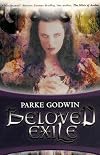
After Arthur's death, Guenevere's enemies plot to seize Camelot. She is expelled from her kingdom and made a slave, yet she dreams of one day returning to her homeland.Tags
Recommendations



















Member Reviews
Awful. Even made me requestion my appreciation of the original (Firelord). Cover is plastered with accolades from famous writers like Marion Zimmer Bradley, but as was published 2 years after Mists of Avalon and is so inferior in comparison, I can't imagine what she was thinking except an attempt at self-effacement. The focus on the nobility and democracy of early Saxon society is tedious and tired and the suggestion the Romano-British or Celts deserved to lose control of most of the island because they weren't democratic enough is insulting and preposterous. The characterization of Guinevere so lauded on the cover creates a protagonist largely unlikeable to the reader, and whose attitude towards leadership and governance just doesn't show more ring true enough, while utterly failing in her schemes anyways. Godwin struck a chord with his careful and loving analysis of Anglo-Saxon society in the wake of Norman invasion in Sherwood, but here it is far less appropriate - one would have expected the same approach for Celtic or Romano-British society so that we would more keenly feel their loss, but no, Godwin seems to have no appreciation in that regard. He tried in Firelord (at least with the Prydn), and was not nearly as successful as in Sherwood with the Anglo-Saxons. Without that element, this book suffers from a kind of who really cares syndrome - I mean Arthur's already dead, Guinevere does not successfully succeed him, so I don't have any idea what this book is supposed to be about apart from a character study of a) a woman hard to be sympathetic towards, and b) the Saxons, who if we read Firelord, are supposed to be the enemy, and are not treated sympathetically enough to be the heroes. I'm left wondering, why did I read this? show less
This is the sequel to 'Firelord,' but, unlike many sequels, I thought it was a much better book. Where 'Firelord' spent a lot of time working in elements of the traditional story, this tale of Guinevere leaves what we 'knew' behind as it creates a rich historical fiction of what may have happened in Britain after Arthur's death.
While Guinevere in 'Firelord' may have seemed scheming, jealous and cruel (although a brilliant politician), here in this story told from her point of view, her character comes alive, and we can fully understand her motives and emotions.
We also see the 'other side' of the story - as Guinevere fails in her efforts to keep the warring tribes of Britain together, and falls in the chaos to slavers... but over time show more comes to grow as a person and come to a greater understanding of those who were 'her' people. We get to see the perspective of the foreign 'invading' tribes, and the point of view of the peasants who struggle only to survive as lords battle... Godwin does inject a political, pro-democracy slant that rings a little bit false for its historical setting, to me, but overall, I enjoyed the book. show less
While Guinevere in 'Firelord' may have seemed scheming, jealous and cruel (although a brilliant politician), here in this story told from her point of view, her character comes alive, and we can fully understand her motives and emotions.
We also see the 'other side' of the story - as Guinevere fails in her efforts to keep the warring tribes of Britain together, and falls in the chaos to slavers... but over time show more comes to grow as a person and come to a greater understanding of those who were 'her' people. We get to see the perspective of the foreign 'invading' tribes, and the point of view of the peasants who struggle only to survive as lords battle... Godwin does inject a political, pro-democracy slant that rings a little bit false for its historical setting, to me, but overall, I enjoyed the book. show less
The sequel to "Firelord." Guinevere tells her story after the Fall of Camelot. This woman is a queen, whose family line goes back centuries. Now nominally a Christian, the women of her family were once priestesses of Epona, with all the sexual priveleges that entailed. Daughter of a formidable king, it was she who taught young Arthur how to rule a kingdom.
Her story begins with the political challenges arising with the Arthur's death, and continues with betrayal, flight, and then capture and enslavement by the very Saxons Arthur fought so hard against.
No matter what her circumstances, Guinevere is a formidable woman. She has serious flaws, but over time she grows in wisdom and compassion, and finally returns to the land where she once show more ruled to take a final hand in the future of Britian. show less
Her story begins with the political challenges arising with the Arthur's death, and continues with betrayal, flight, and then capture and enslavement by the very Saxons Arthur fought so hard against.
No matter what her circumstances, Guinevere is a formidable woman. She has serious flaws, but over time she grows in wisdom and compassion, and finally returns to the land where she once show more ruled to take a final hand in the future of Britian. show less
An imaginative expansion on the Arthur legend, this book tells the story of Guinevere, mainly dealing with what happens to her after Arthur dies. Parts of the Arthur story are told in flashback, as the reader follows along with her inner musings on the past. But mostly in follows the former queen as she becomes enslaved by Saxon's and learns to admire their democratic system of governing. When she returns to her own people she is much changed for the better, but will her countrymen accept her strange new ideas?
An interesting blend of fantasy, legend, and history. It peaked my interest in history, but I didn't like the rambling thoughts of the main character sometimes. Still, this is a great way to experience some English history with a show more dash of the Arhur legend, albiet told in a more realistic manner. show less
An interesting blend of fantasy, legend, and history. It peaked my interest in history, but I didn't like the rambling thoughts of the main character sometimes. Still, this is a great way to experience some English history with a show more dash of the Arhur legend, albiet told in a more realistic manner. show less
This is the story of what happened to Guinevere AFTER King Arthur's death. A fun read.
Ratings
Members
- Recently Added By
Lists

Modern Arthurian Fiction
237 works; 16 members
Author Information

34+ Works 3,611 Members
Some Editions
Series

Common Knowledge
- Original publication date
- 1985
- People/Characters
- Ambrosius Aurelianus
- First words
- See that day as I remember it.
- Last words
- (Click to show. Warning: May contain spoilers.)Tell me about the flowers, child.
Classifications
- Genres
- Fiction and Literature, Fantasy, General Fiction, Historical Fiction
- DDC/MDS
- 813.54 — Literature & rhetoric American literature in English American fiction in English 1900-1999 1945-1999
- LCC
- PS3557 .O316 .B4 — Language and Literature American literature American literature Individual authors 1961-
- BISAC
Statistics
- Members
- 300
- Popularity
- 107,196
- Reviews
- 5
- Rating
- (3.74)
- Languages
- English
- Media
- Paper
- ISBNs
- 7
- ASINs
- 4