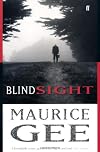
Blindsight
by Maurice Gee
On This Page
Description
Blindsight is the story of a good though damaged man and his less than virtuous sister. As their childhood closeness unravels, Alice moves into her career in science (she's a mycologist), while Gordon descents into vagrancy and silence. For more than thirty years they do not meet. Then a young man appears at Alice's door, claiming a relationship she never knew she had. As he bcomes part of her carefully guarded world, she cautiously begins to reveal the past. But is she telling him show more everything? Jealousy, ambition and love shape the fates of Alice and Gordon in this compelling story of loyalty and family ties. show lessTags
Recommendations






















Member Reviews
I have always admired Maurice Gee’s novels and ‘Blindsight’, is one of his best. He has the ability to capture a disturbing dark side of the Kiwi psyche, flawed but ordinary characters, their actions or inaction and the repercussions that follow. It has a twist at the end that leaves you thinking now why didn't I see that coming - but then he draws you along so adeptly with Alice, the unreliable narrator, and the portrayal of lives and secrets that are not always as they seem. He calls it blindsight, ‘where your vision is knocked out on one side, yet another pathway allows you to put your hand on things you cannot see.’
Gee took the source of his character, Gordon, from a homeless man who lived on the streets of Wellington show more carrying his possessions in a bucket. He hardly spoke and avoided eye contact but was a local identity for years until he died in 2003. The story is told by Gordon’s sister, Alice and begins and ends with ‘Father taught us how not to love.’ They grow up in Loomis; Gordon – kind and sensitive but with an inability to fit in, Alice – sharp, clever and contemptuous and fiercely protective of her brother. She describes herself as ‘a fixed star, far away, glittering, unchanging and pointing him along the way to go; but a star close at hand as well, that he could pluck down and slide into his pocket to keep him warm.’ She has a scientific career and Gordon works as a hospital porter but they drift apart until Alice finds him, thirty years later, living as a vagrant in Wellington. Then Adrian turns up claiming Gordon is his grandfather and the past starts to unravel for Alice.
Gee uses the image of drowning to describe Gordon’s saving of their parent’s marriage: ‘You pull a swimmer back from the edge of drowning and put him, or her, through the pain and indignity, the choking and mucus-spitting fighting for breath, of resuscitation and stand him up, wrap him in blankets, support him to a warm bed, feed him broth – but the horror remains, the memory…’ Drowning is also an image that applies to Alice and her relationship with Richie (‘No one’s worth drowning in’), Gordon’s life on the streets and Gordon’s girlfriend Marlene – they either succumb or manage to stay afloat in their own way and perhaps find some sort of peace in the end.
‘Blindsight’ is quite a slim book (192 p) so I hesitated at the retail price. It was always out at the library when I looked, so when I finally found it in a second hand shop I was delighted. I won’t be parting with my copy – it’s a gem. show less
Gee took the source of his character, Gordon, from a homeless man who lived on the streets of Wellington show more carrying his possessions in a bucket. He hardly spoke and avoided eye contact but was a local identity for years until he died in 2003. The story is told by Gordon’s sister, Alice and begins and ends with ‘Father taught us how not to love.’ They grow up in Loomis; Gordon – kind and sensitive but with an inability to fit in, Alice – sharp, clever and contemptuous and fiercely protective of her brother. She describes herself as ‘a fixed star, far away, glittering, unchanging and pointing him along the way to go; but a star close at hand as well, that he could pluck down and slide into his pocket to keep him warm.’ She has a scientific career and Gordon works as a hospital porter but they drift apart until Alice finds him, thirty years later, living as a vagrant in Wellington. Then Adrian turns up claiming Gordon is his grandfather and the past starts to unravel for Alice.
Gee uses the image of drowning to describe Gordon’s saving of their parent’s marriage: ‘You pull a swimmer back from the edge of drowning and put him, or her, through the pain and indignity, the choking and mucus-spitting fighting for breath, of resuscitation and stand him up, wrap him in blankets, support him to a warm bed, feed him broth – but the horror remains, the memory…’ Drowning is also an image that applies to Alice and her relationship with Richie (‘No one’s worth drowning in’), Gordon’s life on the streets and Gordon’s girlfriend Marlene – they either succumb or manage to stay afloat in their own way and perhaps find some sort of peace in the end.
‘Blindsight’ is quite a slim book (192 p) so I hesitated at the retail price. It was always out at the library when I looked, so when I finally found it in a second hand shop I was delighted. I won’t be parting with my copy – it’s a gem. show less
A very tense, interesting story. I had no expectations, just a note on NZ authors to read eventually. Quite pleased with this exploration of personalities.
I'm pretty sure that this is the first NZ title I have ever read. Winner of the 2006 Montana Book Award, it was a good first choice.
From the blurb on the back cover: "At the heart of the story lies the strange relationship between Alice and her brother, Gordon, the mystery behind their estrangement, and the entrance into Alice's life of Adrian, the nephew she never knew existed. Telling the story solely from Alice's point-of-view, Gee masterfully constructs a tale of unreliability, as he traces these troubled lives over a period of forty years and only gradually reveals the dark family truths."
I don't think we're meant to like Alice, the narrator, but I'm afraid she endeared herself to me. Particularly with this: "I'm offended by some show more of the words people use today. The "f" one - which I used once to my father - is by no means the worst. They pick them up from American movies. I'm no prude. I hate the feebleness more than the ugliness - I mean the impoverishment - and it pains me when I hear someone I love sliding down there, even when he's moved by strong feelings." Gee draws a portrait of a very believable, crotchety old dame bearing her fair share of the scars inflicted by life. The portrait of her brother is equally accomplished but I cannot reveal the details for fear of spoilers.
I like Gee's prose. The tale is told well without unnecessary flourish. The pacing too is excellent. The mysterious events at the heart of the novel are not overtly sensational, yet the resulting tragedy is absolutely heartbreaking. show less
From the blurb on the back cover: "At the heart of the story lies the strange relationship between Alice and her brother, Gordon, the mystery behind their estrangement, and the entrance into Alice's life of Adrian, the nephew she never knew existed. Telling the story solely from Alice's point-of-view, Gee masterfully constructs a tale of unreliability, as he traces these troubled lives over a period of forty years and only gradually reveals the dark family truths."
I don't think we're meant to like Alice, the narrator, but I'm afraid she endeared herself to me. Particularly with this: "I'm offended by some show more of the words people use today. The "f" one - which I used once to my father - is by no means the worst. They pick them up from American movies. I'm no prude. I hate the feebleness more than the ugliness - I mean the impoverishment - and it pains me when I hear someone I love sliding down there, even when he's moved by strong feelings." Gee draws a portrait of a very believable, crotchety old dame bearing her fair share of the scars inflicted by life. The portrait of her brother is equally accomplished but I cannot reveal the details for fear of spoilers.
I like Gee's prose. The tale is told well without unnecessary flourish. The pacing too is excellent. The mysterious events at the heart of the novel are not overtly sensational, yet the resulting tragedy is absolutely heartbreaking. show less
"Blindsight" is the story of a good though damaged man and his less than virtuous sister. As their childhood closeness unravels, Alice moves into her career in science (she's a mycologist), while Gordon descends into vagrancy and silence. For more than thirty years they do not meet. Then a young man appears at Alice's door, claiming a relationship she never knew she had. As he becomes part of her carefully guarded world, she cautiously begins to reveal the past. But is she telling him everything? Jealousy, ambition and love shape the fates of Alice and Gordon in this story of loyalty and family ties.
To review it is to invite spoilers ... i will avoid only by saying that Gee, as almost ever, simply reminds us that every broken read has a whakapapa, and I like Neville... go figure. Or read.
Powerful novel about family ties and love. Psychological drama.
Ratings
Members
- Recently Added By
Author Information

45+ Works 2,448 Members
Maurice Gee of New Zealand is a novelist and author of children's books. Gee's first book, The Big Season, was published in 1962. He has since produced nearly two dozens novels and collections of short stories and his work has appeared in such publications as Arena, Mate, Landfall, Islands, and Listener. Gee received the New Zealand Book Award in show more fiction in 1979 for Plumb, in 1982 for Meg, and in 1991 for The Burning Boy. Going West won the Goodman Fielder Wattie Book Award in 1993. In 1995 The Fat Man won the AIM Children's Book Award for Junior Fiction, as well as The Esther Glen Award, given for the most distinguished contribution to New Zealand literature for children and young adults. He had previously received The Esther Glen Award in 1983 for Motherstone. (Bowker Author Biography) show less
Awards and Honors
Common Knowledge
- Original publication date
- 2005
Classifications
Statistics
- Members
- 98
- Popularity
- 328,927
- Reviews
- 6
- Rating
- (3.70)
- Languages
- English
- Media
- Paper
- ISBNs
- 4
- ASINs
- 1